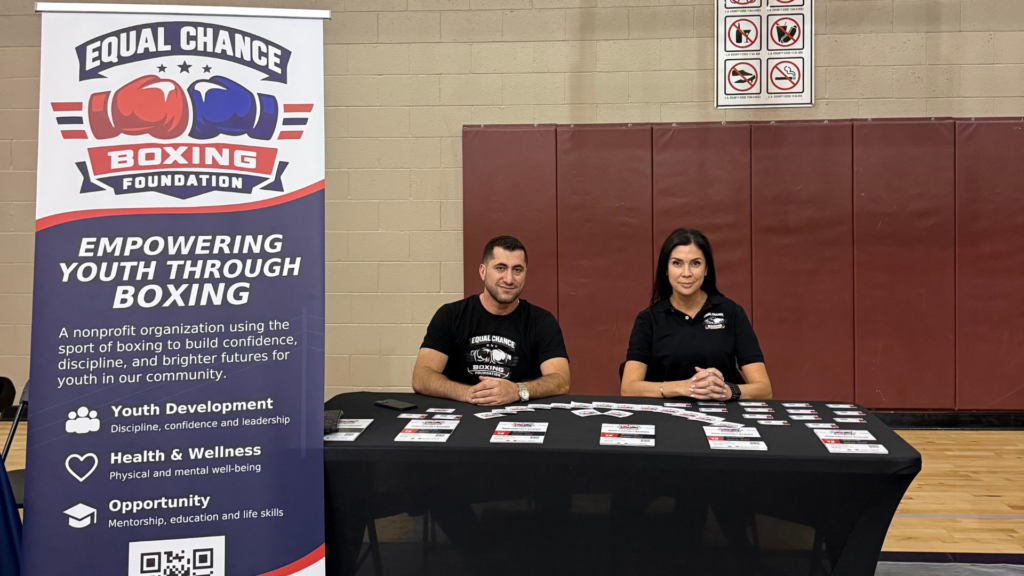
Some community events are valuable because of what happens during the event itself. Others matter because of the conversations they make possible afterward. A Thanksgiving gathering at City Terrace Park offered Equal Chance Boxing Foundation an opportunity to do something simple but important: meet local families where they already were, introduce the foundation, and explain that a free after-school non-contact boxing program for young people is available in the same community.
There was no need to make the moment more complicated than that. Families were already coming together at City Terrace Park around Thanksgiving, and the foundation had an opportunity to be present, talk with parents, and make a youth program that might otherwise remain unfamiliar feel more approachable. For a parent who has never looked for a boxing program, seeing the foundation in a familiar neighborhood setting can make the difference between hearing about an organization and actually understanding what it offers.
Equal Chance Boxing Foundation came to the event to introduce its work and its free youth program at City Terrace Park. The program is open to young people ages 6–18, welcomes all skill levels, and does not require previous boxing experience. Training equipment is provided, and the focus is on structured non-contact boxing, footwork, movement, coaching, discipline, and learning together after school.
That information matters because many families assume youth sports require experience, expensive equipment, travel, or a financial commitment before a child can even try. Our program was designed to remove those first barriers.
Why Meeting Families in the Community Matters
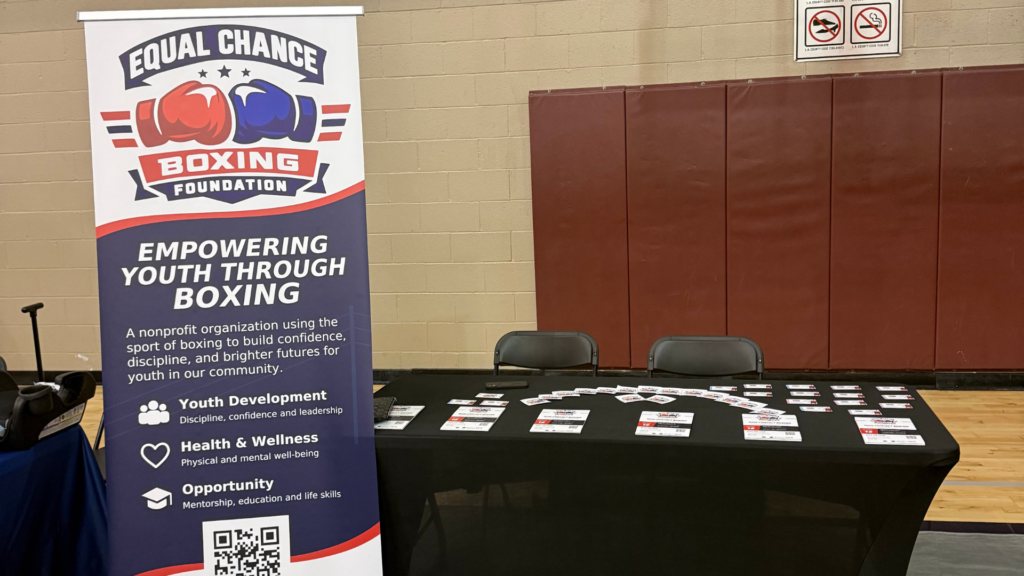
A website can explain a program. A flyer can list the schedule. A social media post can reach hundreds or thousands of people. None of those things completely replaces a real conversation between a parent and someone representing the organization.
Community events create room for those conversations without asking families to make a special trip or commit to anything first. A parent can learn that the program exists, ask a basic question, take information home, and decide later whether it is right for their child. A young person can hear the words “non-contact boxing” and begin to understand that starting does not mean being thrown into competition or expected to already know how to box.
For Equal Chance Boxing Foundation, being present at the Thanksgiving event at City Terrace Park was therefore not separate from our youth work. It was one of the ways that work reaches the families it is meant to serve.
Our Youth Boxing Program is built around the idea that access should come before talent. A child should not have to prove athletic ability before being given an opportunity to learn. A teenager should not have to arrive confident before being welcomed into a structured environment. Beginners need a first day, and families need a realistic way to reach that first day.
The Program We Introduced at City Terrace Park
The program presented to families is straightforward.
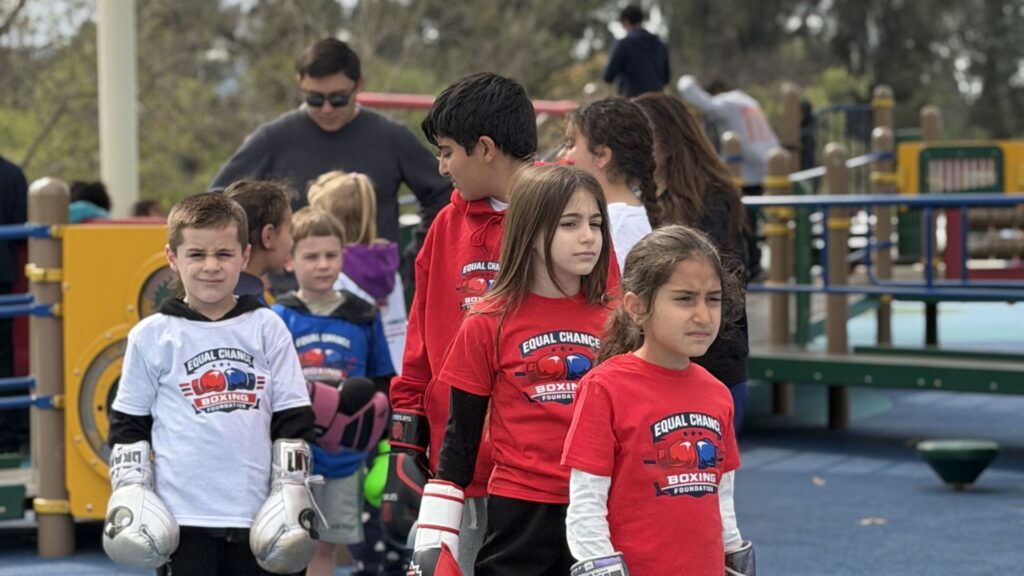
Equal Chance Boxing Foundation offers free after-school non-contact boxing at City Terrace Park for youth ages 6–18. All skill levels are welcome, including children and teenagers who have never tried boxing before.
The current program schedule runs Monday through Friday from 4:00 PM to 5:00 PM at City Terrace Park, 1126 N Hazard Ave, Los Angeles, CA 90063. The session period begins November 16, 2026 and continues through February 26, 2027.
Training equipment is provided. Families do not need to purchase boxing gear simply to allow their child to begin. Participants should come prepared for physical activity, bring water, and wear comfortable athletic shoes.
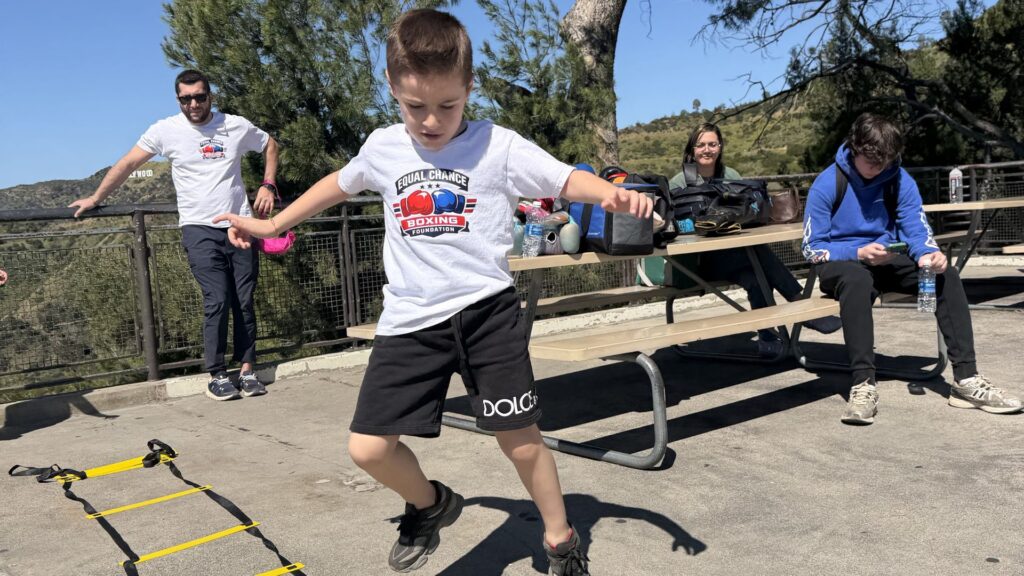
During training, coaches guide young people through non-contact boxing footwork, movement, fundamentals, and structured drills. The objective is not to create an atmosphere in which beginners have to prove themselves. It is to give young people a place where they can learn how to listen, move, practice, make mistakes, accept correction, and try again.
Those details may sound ordinary, but for a parent deciding whether to let a child participate, they answer some of the most important questions: Is my child old enough? Can a beginner join? Do I have to buy equipment? Is this contact fighting? When does it happen? Where does it happen?
A community event provides an opportunity to answer those questions before uncertainty becomes a reason not to participate.
Non-Contact Boxing Means Learning Before Competing
The word “boxing” can create an immediate image in a parent’s mind, and that image is often professional competition. That is not what families are being invited into at City Terrace Park.
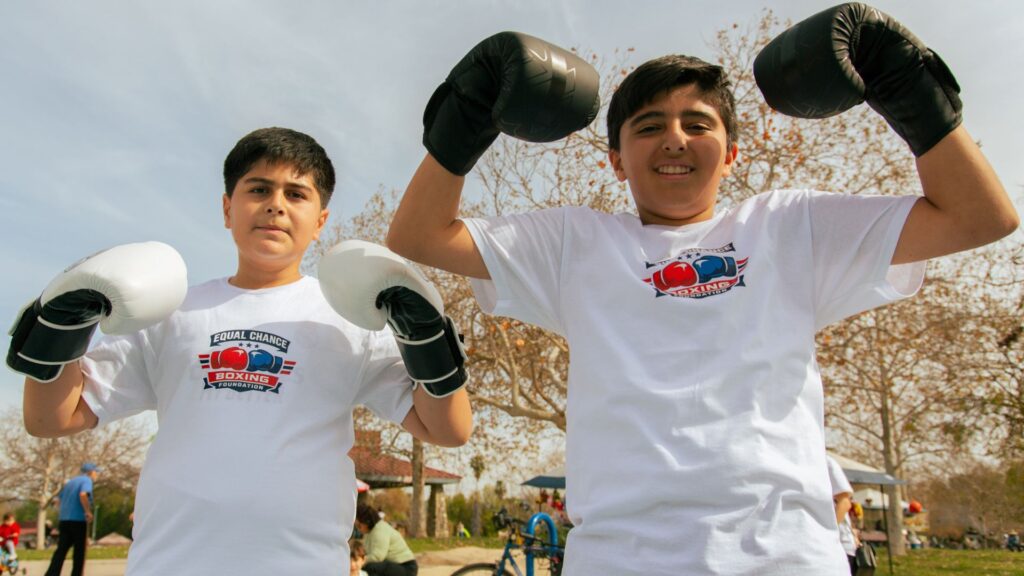
The program is built around non-contact boxing instruction for young people. Participants can work on stance, balance, footwork, movement, coordination, conditioning, listening, and controlled technique without the expectation that they need to fight another child.
That distinction is especially important for beginners.
A six-year-old entering a new activity and a seventeen-year-old trying organized training for the first time will arrive with very different levels of maturity, coordination, confidence, and physical ability. A responsible youth program needs room for those differences. It cannot assume that every child learns at the same speed or enters with the same motivation.
Structured drills give young people a practical way to improve. A movement is demonstrated, the participant tries it, receives feedback, and repeats it. Progress is built through repetition rather than pressure.
This is also why parents should not expect one session to create a dramatic transformation. The more realistic value of a consistent program appears over time. A young person may begin remembering what to bring without being reminded. They may become more comfortable asking a coach a question. They may learn to receive a correction without treating it as a personal failure. They may become more willing to return after a difficult session.
Those are small changes, but small changes repeated consistently are how habits develop.
Why City Terrace Park Is an Important Place for This Work
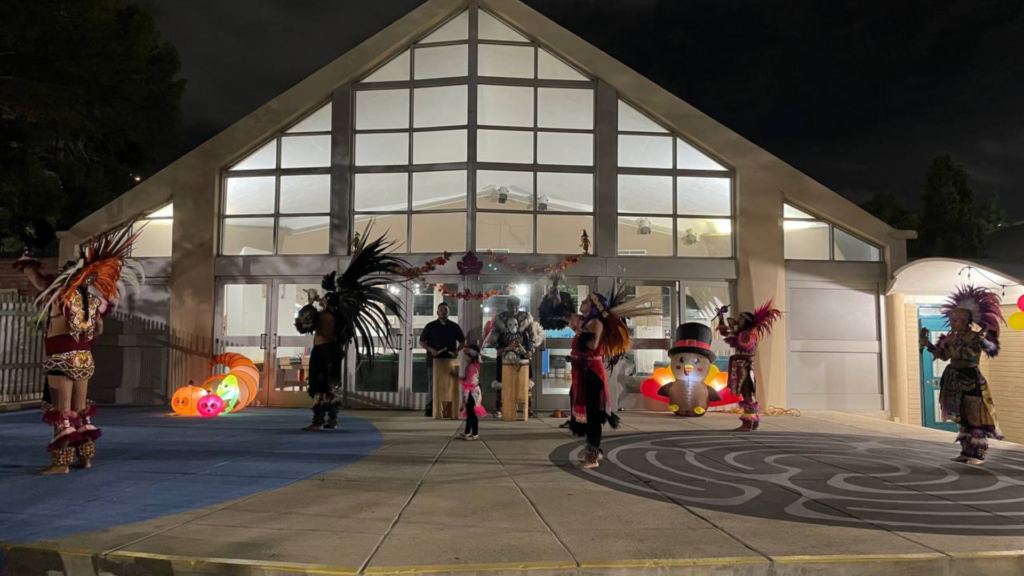
There is a practical advantage to offering a youth program in a familiar community location. Families do not have to discover an unfamiliar training facility somewhere else in Los Angeles before they can participate. The program exists at City Terrace Park, a place already used by local children, parents, and community members.
The Thanksgiving event made that connection especially clear. Families could encounter Equal Chance Boxing Foundation in the same place where the program operates.
That reduces one of the invisible barriers that can keep families from trying something new. An unfamiliar organization can feel distant even when its website says everyone is welcome. Seeing that organization participating in community life makes the invitation more concrete.
The park also gives the program a broader context. Young people are not simply entering an isolated sports activity. They are participating in something located inside their own community, alongside the other programs, families, and activities that already make City Terrace Park part of neighborhood life.
Equal Chance Boxing Foundation’s Community Training reflects the same principle. Youth development is stronger when programs are not separated from the communities they serve.
Thanksgiving Is Also About Showing Up
Thanksgiving naturally creates conversations about gratitude, family, and community. For a nonprofit organization, however, gratitude should not exist only as a message. It should also be visible in where the organization chooses to spend its time.
Participating in a community event is one small way of showing that the foundation does not want families to encounter it only when they are ready to enroll in a program or make a donation. Community relationships need ordinary points of contact too.
A parent may meet the foundation and decide that the program is not right for their child. Another may take the information home and return to it several weeks later. A teenager may see the program information and become interested before a parent is ready to discuss it. Someone else may simply learn that a free youth opportunity exists at the park.
All of those outcomes are legitimate.
Community outreach does not need to force every conversation toward registration. Its first responsibility is making information available and making the organization accessible enough that families know where to go if they want to learn more.
That approach is particularly important when a program is free. Families sometimes assume that “free” means there must be a hidden qualification, an application they will not meet, or a catch that has not yet been explained. Clear communication matters. The program is for youth ages 6–18, beginners are welcome, training equipment is provided, and parents or guardians can submit the Youth Interest Form to begin the process.
Giving the Hours After School More Structure
The time immediately after school can be difficult for families to organize. Parents may still be working. Teenagers may have several hours without a clear plan. Children may return home with school energy still in their bodies but no structured place to direct it.
No single program can solve every challenge connected to after-school hours, and youth sports should not be presented that way. But a dependable activity can give part of the week a clearer shape.
When training begins at the same time and place, young people learn that participation requires preparation. They have to think about transportation, water, clothing, school responsibilities, and arrival time. Those decisions become part of the experience.
The value is not simply “keeping kids busy.” Young people already have endless ways to stay busy. What is harder to find is an activity where effort has structure, adults are paying attention, and progress depends on returning consistently.
Non-contact boxing can provide that structure because improvement is easy to experience physically. Footwork that feels awkward begins to make more sense. Balance improves. A participant remembers a sequence that previously required constant prompting. Conditioning that was difficult becomes more manageable.
Those improvements give young people evidence that repetition matters.
For families looking for longer-term after-school support, the foundation’s Summer & Afterschool Mentorship Camp provides another way to understand how movement, mentorship, routine, and community can work together.
Beginners Do Not Need to Arrive Confident
One of the most important messages we can give families is that confidence is not an entrance requirement.
A young person may be curious about boxing and still feel nervous. A child may want to participate while worrying about looking inexperienced. A teenager may act uninterested precisely because admitting interest would make failure feel more uncomfortable.
None of that disqualifies them.
A good beginner environment gives participants permission to learn in public. They will make mistakes. Their feet will be in the wrong position. They will forget instructions. They may become tired sooner than expected. They may watch another participant learn something more quickly.
The important part is what happens next.
If the environment is structured correctly, a mistake becomes information rather than embarrassment. A coach explains the correction. The participant tries again. The next attempt may still be imperfect, but it is more informed than the first.
That process is one reason structured sports can help young people develop a healthier relationship with difficulty. They begin learning that being new at something is temporary if they continue working.
Confidence built this way is different from encouragement alone. Adults can tell a young person, “You can do it,” but eventually the young person needs personal evidence. Repetition provides that evidence.
What Parents Can Expect From the First Few Sessions
Parents do not need to judge the entire program based on whether their child comes home enthusiastic after the first day.
Some participants immediately enjoy a new environment. Others need time.
A child may be quiet because they were concentrating. A teenager may say very little because they are still deciding how they feel about being a beginner. Another participant may focus almost entirely on what they could not do yet rather than what went well.
This is normal in many new activities.
A more useful question is whether the environment gives the young person a reasonable opportunity to return and continue learning. Did they understand what was expected? Were instructions clear? Could they ask questions? Were they treated respectfully? Do they know what the next session will look like?
Consistency turns an unfamiliar place into a predictable one.
After several visits, the participant knows where to go, how training begins, what basic instructions mean, and what the coach expects. That familiarity frees attention for actual learning.
Parents can support the process without turning every ride home into a performance review. Questions such as “What did you practice today?” or “What felt easier than last time?” often create better conversations than “Were you good at it?”
Equipment Should Not Be the Reason a Child Cannot Start
Youth athletics can become expensive before a family knows whether a child will stay interested. Registration fees, uniforms, equipment, transportation, and recurring costs can turn a simple experiment into a financial decision.
Equal Chance Boxing Foundation’s City Terrace Park program removes part of that pressure by providing training equipment and offering the classes free of charge.
This is not a minor detail.
A young person should be able to discover whether they enjoy an activity before their family has to invest heavily in it. Parents should not have to decide whether to purchase specialized equipment for a child who has never completed a first week.
Removing those initial costs changes the decision from “Can we afford to try this?” to “Would this be useful for our child?”
That is one of the most direct ways a community organization can expand access.
The broader goal is not to make youth sports feel inexpensive. It is to make the first opportunity real. Once a young person can enter the room, meet the coaches, participate, and see what the activity actually involves, the family can make decisions based on experience rather than assumptions.
Community Events Help Programs Reach Beyond the Families Already Looking
There is an important difference between serving people who already know how to find a program and reaching people who would benefit but are not actively searching.
A parent who types “free youth boxing Los Angeles” into a search engine has already crossed several barriers. They know what activity they want. They believe their child might be interested. They have decided to look for a program.
Many families never reach that stage.
They may not know non-contact boxing is available. They may assume their child is too young, too inexperienced, or not athletic enough. They may think equipment will be expensive. They may simply be occupied with enough other responsibilities that searching for a new after-school program never reaches the top of the list.
That is why events such as the Thanksgiving gathering at City Terrace Park matter to a community organization. They allow information to travel through ordinary community life instead of depending entirely on families actively seeking it.
The foundation can be present, explain the program, and let families decide what to do with that information.
No exaggerated promise is necessary. We do not need to tell every parent that boxing will transform their child. We can say something more useful: there is a free, structured non-contact program here at City Terrace Park; beginners are welcome; equipment is provided; and if you think your child may benefit from the opportunity, there is a clear way to ask about joining.
Mentorship Develops Through Repeated Contact
The athletic portion of training is visible. Mentorship is quieter.
It develops when the same young person returns and encounters adults who maintain consistent expectations. A coach notices whether a participant is listening. The participant begins understanding how the coach communicates. Corrections become easier to receive because they come from someone familiar rather than a stranger.
Trust cannot be compressed into one motivational speech.
It grows through repeated evidence.
A young person learns that the adult giving a correction will also be there during the next session. They learn that a difficult day does not remove their place in the program. They discover that standards can remain firm without becoming humiliating.
This is why regular programming matters so much. A single community event can introduce an organization. A consistent weekly schedule is what allows relationships to deepen afterward.
The Thanksgiving gathering created the first type of opportunity: introduction. The City Terrace Park program creates the second: continuity.
What Progress Can Look Like Without Making Big Promises
Youth organizations should be careful with the language of transformation.
Children and teenagers are influenced by family life, school, friendships, health, personality, age, and countless experiences outside any sports program. It would be irresponsible to claim that participation in non-contact boxing automatically changes behavior, fixes emotional difficulties, or produces specific life outcomes.
Progress is usually more ordinary.
A participant begins arriving with less hesitation. A child becomes more independent about preparing for training. A teenager who became frustrated quickly learns to reset and continue a drill. Someone who rarely asked questions begins speaking directly to a coach. A beginner becomes more comfortable being seen while still learning.
Those changes should not be exaggerated, but they should not be dismissed either.
They represent young people practicing skills that matter beyond sport: preparation, patience, communication, responsibility, and persistence.
Structured physical activity may support emotional regulation and help some young people feel more grounded, but youth non-contact boxing is not a substitute for professional medical or mental health care when such care is needed.
The foundation’s role is specific. We can provide a structured environment, consistent coaching, physical activity, mentorship, and community connection. We do not need to claim that we can provide everything in order for those things to matter.
A Thanksgiving Event Can Become a Beginning
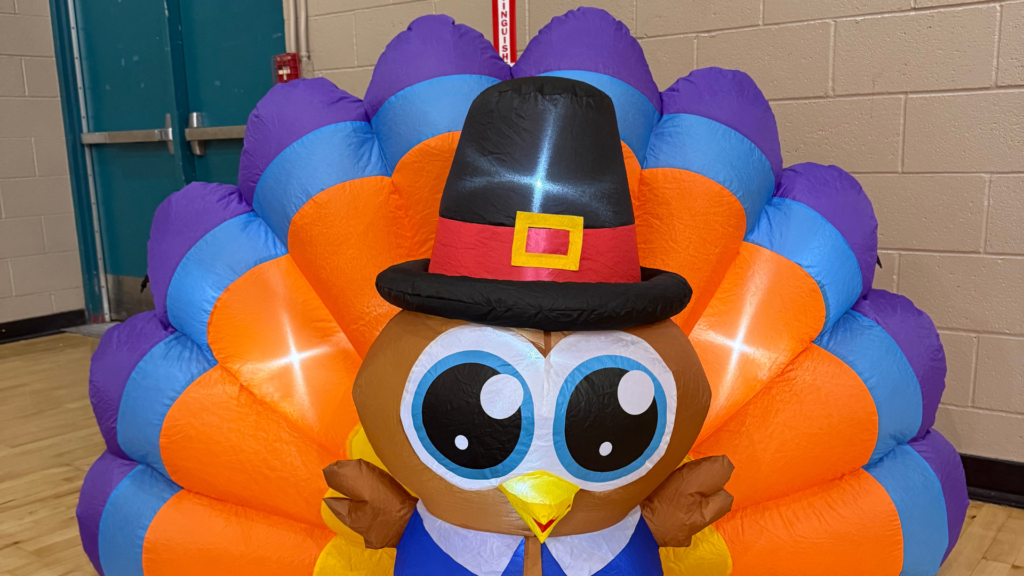
For most families who encountered Equal Chance Boxing Foundation at City Terrace Park, the Thanksgiving event was simply a community event. That is exactly what it should have been.
But for some families, learning about the program may become the beginning of something else.
A parent may submit a Youth Interest Form. A child may walk into their first session unsure of what to expect. A teenager may discover that non-contact boxing feels different from the image they had in mind. Someone may try an activity they would not have searched for on their own.
Community work often develops through moments that are difficult to measure. A conversation near a table. A flyer taken home. A question asked after someone has walked past twice. A parent realizing that the program being described happens in the same park their family already knows.
No individual moment needs to carry too much meaning.
What matters is that the door becomes visible.
Equal Chance Boxing Foundation wants local families to know that the door is open.
Thank You to the City Terrace Community
Thanksgiving is an appropriate moment to recognize the community that makes programs like this meaningful.
Equal Chance Boxing Foundation can provide coaches, equipment, structure, and an opportunity to train. The program becomes a community program only when families trust it enough to participate, young people decide to return, volunteers contribute their time, partners help connect people, and supporters make free access possible.
Being able to introduce the foundation and the City Terrace Park program during a Thanksgiving community event gave us an opportunity to speak directly with the neighborhood we are here to serve.
We are grateful for every family willing to learn more, every young person willing to try something unfamiliar, and every community member who helps make local youth opportunities easier to find.
The next step is intentionally simple.
Parents and guardians interested in the program can complete the Youth Interest Form. The foundation can then follow up about availability and next steps.
Step Into the Ring. Let’s Build Our Community Together.
For Parents: Give Your Child a Place to Begin
Your child does not need previous boxing experience to start. Equal Chance Boxing Foundation’s free after-school non-contact boxing program at City Terrace Park welcomes youth ages 6–18 at all skill levels. Training equipment is provided, and beginners are welcome.
ENROLL IN OUR YOUTH BOXING PROGRAM TODAY
For Supporters: Help Keep the First Opportunity Free
Free access does not happen without support. Donations help sustain coaching, equipment, community outreach, mentorship, and consistent programming so families can consider an opportunity based on what their child needs rather than what they can afford.
DONATE TO THE EQUAL CHANCE BOXING FOUNDATION
For Community Partners: Help More Families Find the Door
Community organizations and local businesses can help youth programs reach families who may never encounter them through traditional advertising. Partnerships, shared events, and local outreach strengthen the network around young people.
LEARN ABOUT CORPORATE SPONSORSHIP
Questions About Our City Terrace Park Youth Program
What families who met us in the community may want to know next.
No. The City Terrace Park program welcomes youth ages 6–18 at all skill levels, including children and teenagers trying boxing for the first time. Coaches introduce participants to non-contact boxing fundamentals, footwork, movement, and structured drills at an appropriate starting level.
The after-school program is free and training equipment is provided. Participants should bring water and wear comfortable athletic shoes. Removing the initial cost of equipment helps families allow their child to experience the program before making additional decisions about participation.
The current program is scheduled at City Terrace Park, 1126 N Hazard Ave, Los Angeles, CA 90063, Monday through Friday from 4:00 PM to 5:00 PM. The listed session period runs from November 16, 2026 through February 26, 2027.
Parents and guardians can complete the foundation’s Youth Interest Form. After the form is submitted, Equal Chance Boxing Foundation can follow up about availability and next steps. Families are also welcome to contact the foundation when they have questions before enrolling.