
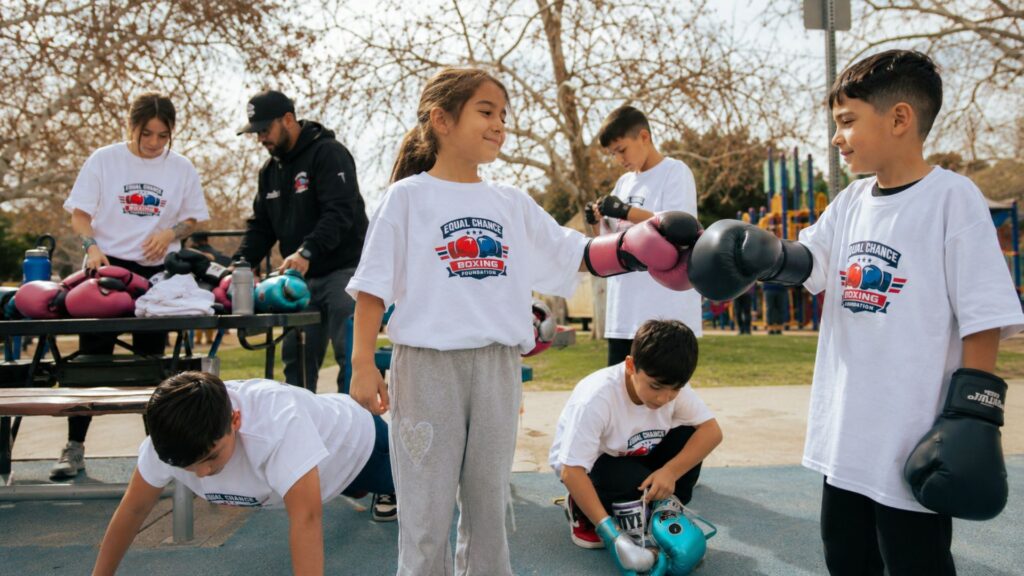
Most conversations about youth boxing focus on what happens once the gloves go on. Parents ask about drills, coaches talk about technique, and young people describe the workout itself when someone asks how practice went. But anyone who has spent real time inside a youth boxing gym knows that the most important part of a session often happens before a single punch is thrown. The walk through the door, the quiet minute of changing shoes, the short exchange with a coach who asks how the day went — these moments rarely make it into a description of “what boxing does for kids,” yet they are often where the actual work begins.
At Equal Chance Boxing Foundation, this is not an incidental observation. It shapes how a training environment is built and how coaches are expected to show up every single day. A program can have excellent equipment, a well-designed curriculum, and a safe facility, and still fail to help a young person if the minutes before training are treated as dead time. Those minutes are where a teenager decides, without saying it out loud, whether this is a place worth showing up to again.
The Walk Through the Door
For a lot of teenagers, arriving anywhere new carries a small amount of risk. Will someone notice if I’m having a bad day? Will I be judged for how I move, how I look, or how nervous I seem? Will anyone actually see me, or will I just blend into a room full of people who already know each other? These questions are rarely spoken aloud, but they are present, especially for a young person who has felt overlooked at school or unsure of themselves in other group settings.
A well-run youth boxing program treats the entrance to the gym as a moment that matters just as much as anything that happens on the mats. Coaches and staff who greet each young person by name, who notice when someone seems off, and who make space for a nod or a short conversation before training begins are doing something that looks small but is not. They are answering the unspoken question before it needs to be asked out loud: yes, you are seen here, and yes, this is a place where you belong. That single signal, repeated consistently over weeks and months, does more to build trust than any single dramatic moment of encouragement ever could.
This is part of why the Youth Boxing Program at Equal Chance Boxing Foundation is designed around consistency rather than intensity. A teenager does not need every session to feel like a breakthrough. What they need is the reliable experience of walking through the same door, being greeted by the same familiar faces, and settling into a rhythm that does not depend on how their day has gone so far. Over time, that rhythm becomes something a young person can lean on, even when very little else in their week feels steady.
Hands Wrapped, Mind Settling
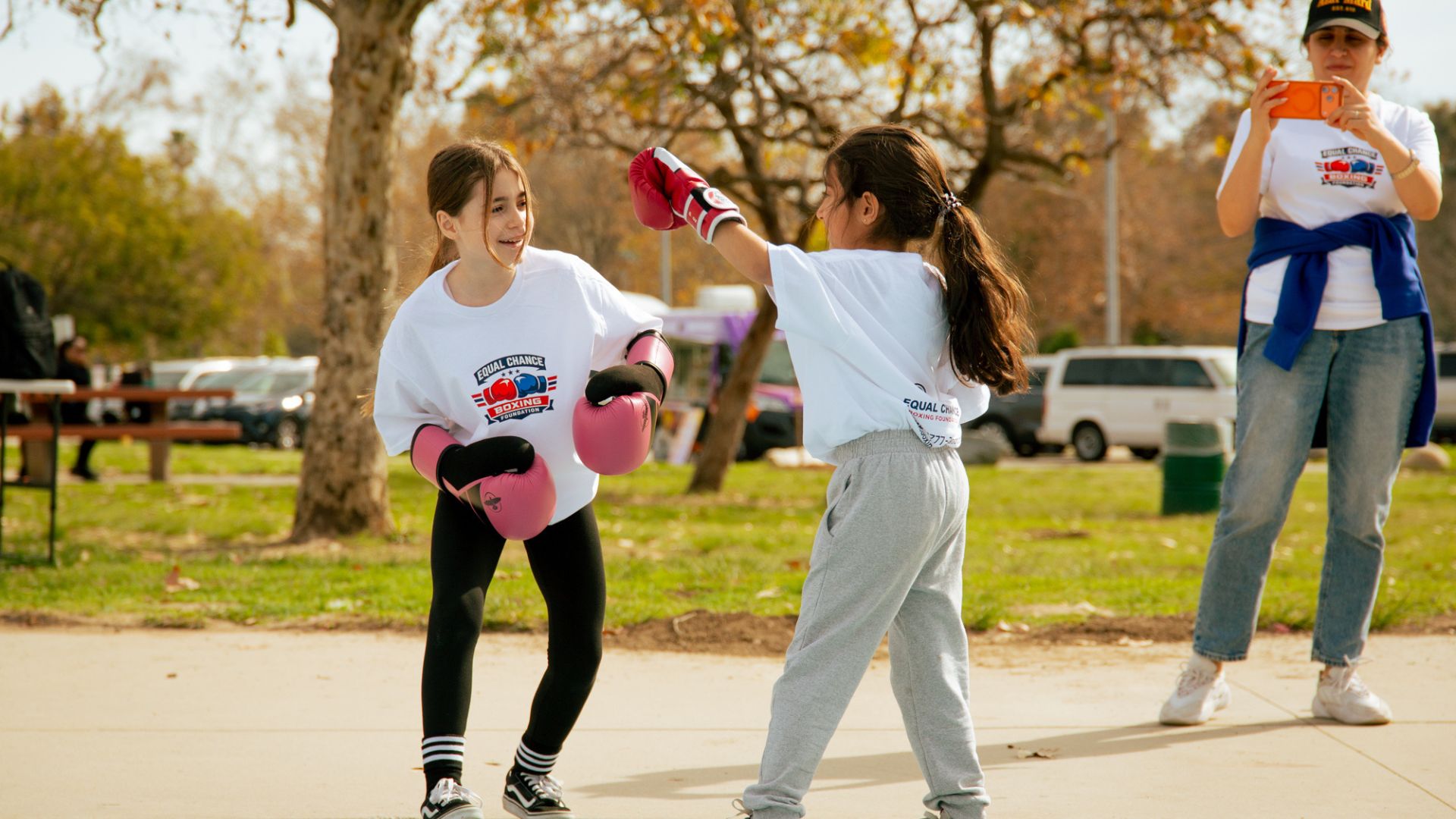
Wrapping the hands before training is a practical necessity — it protects the wrists and knuckles and helps prevent injury. But for many young people, it also becomes something closer to a ritual, and rituals do real psychological work. The repetitive motion of winding cloth around the hand, the brief quiet required to do it correctly, and the shift from street clothes to training gear all create a natural transition point between whatever the day has been and whatever the next hour is going to be.
This transition matters more than it might seem. Teenagers move through school, social pressure, family expectations, and screens at a pace that rarely allows for a pause. A few minutes spent on a physical, repetitive task before training gives the nervous system a chance to downshift. It is not a substitute for rest or for professional support when a young person is struggling, but it is a small, structured pause that can help someone arrive more fully in the room they are actually standing in, rather than still carrying the noise of the hour before.
Coaches who understand this do not rush this part of the process. They allow the few minutes of preparation to happen at something close to its own pace, because they know that a teenager who is still mentally somewhere else will get far less out of a drill than one who has had a moment to settle. This is one of the quieter ways that structure, rather than motivation alone, ends up doing the heavy lifting in a young person’s development.
What Coaches Are Actually Watching For
Parents sometimes assume that a coach’s attention is focused entirely on form — the position of the feet, the height of the guard, the timing of a combination. Technique matters, and it is taught carefully. But an experienced youth coach is reading a room long before any of that becomes relevant. They are noticing who came in quieter than usual, who seems distracted, who avoided eye contact, and who is visibly more relaxed than they were the week before.

This kind of attention is not about diagnosing a young person or treating a gym like a substitute for professional support. It is about recognizing that a teenager who is having a hard week may need a slightly different kind of session than one who is having an easy one — perhaps a bit more encouragement, perhaps a task that offers an easy early win, perhaps simply a coach who checks in without making a big production of it. Structured physical activity may support emotional regulation, and a coach who is paying attention in these first few minutes is often the reason a session ends up helping a young person settle rather than adding to their stress.
It is worth being direct about the limits of this kind of attention. Youth boxing is not a substitute for therapy, counseling, or medical care, and a caring coach is not a clinician. What a good program can offer is a consistent adult presence that notices patterns over time, treats young people with respect rather than suspicion, and creates an environment where a teenager does not have to perform confidence they do not feel. That combination — noticing without diagnosing, caring without overstepping — is part of what makes Community Training at Equal Chance Boxing Foundation feel different from a purely transactional fitness class.
[ecbf_donate_banner_1]
Why These Minutes Build the Discipline Parents See Later
Parents often come to a youth boxing program hoping for a fairly specific outcome: more discipline, more focus, more respect at home. These are reasonable hopes, and structured training genuinely can support them. But the discipline that shows up later — the teenager who starts packing their own gym bag, who arrives on time without being reminded, who accepts a coach’s correction without getting defensive — is not built primarily during the physically demanding parts of a session. It is built in these quieter, repeated moments of preparation that happen the same way, session after session, until they become habit.
Discipline of this kind is rarely dramatic. It looks like a young person learning that showing up on time is simply what happens here, that wrapping their hands correctly is worth doing well even when no one is watching closely, and that a coach’s attention is earned through consistency rather than performance. None of this requires a lecture. It requires structure that repeats often enough for a habit to form, and adults who model the behavior they want to see rather than simply demanding it.
This is also why realistic expectations matter so much for parents watching this process from the outside. A teenager is unlikely to transform in a single dramatic session, and it would be misleading to promise otherwise. What tends to happen instead is gradual: a young person becomes a little more independent in preparing for practice, accepts feedback with a bit less friction, asks questions more comfortably, and recovers from a frustrating moment more quickly than they used to. These shifts are easy to miss if a parent is looking for a single turning point, but they are the actual shape that lasting change usually takes.
What This Looks Like for a Teen Who’s Had a Hard Day
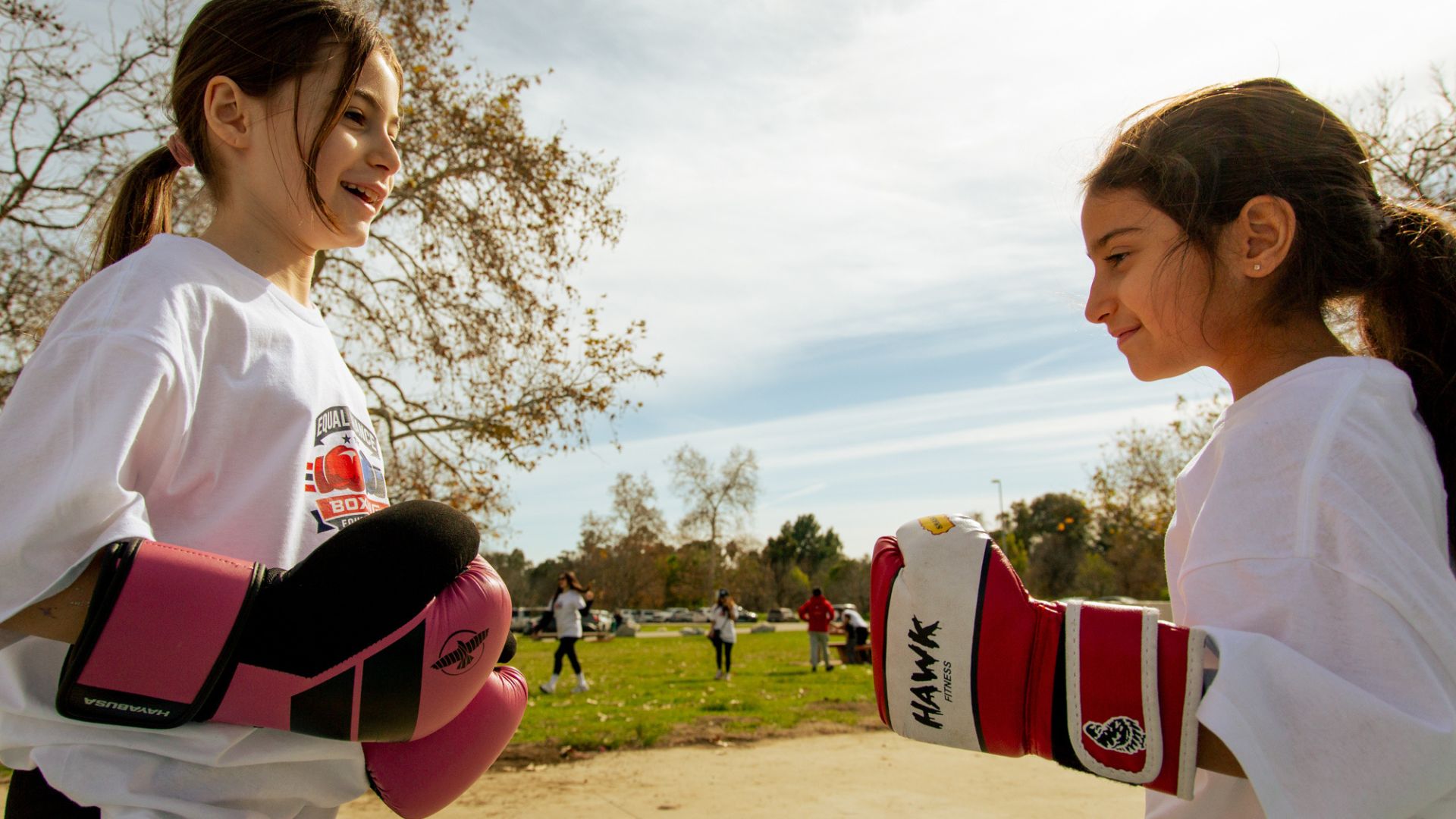
Consider a fairly ordinary scenario: a teenager arrives at the gym after a difficult day at school. Maybe there was a conflict with a friend, a disappointing grade, or simply the accumulated weight of a schedule that left no time to decompress. In many settings, that teenager would be expected to simply push through — to sit in another class, attend another obligation, or scroll through a phone in an attempt to switch off for a while, often without much success.
A well-structured training environment offers something different. The physical warm-up, the hand-wrapping, the short check-in with a coach, and the predictable rhythm of the session give that same teenager a concrete, physical outlet and a place where the expectations are clear and achievable. Youth boxing can provide a positive structured outlet in exactly these moments — not by erasing whatever happened earlier in the day, but by offering a contained, physically engaging alternative to sitting alone with unresolved stress. Movement, routine, and a supportive adult presence can help some young people feel more grounded, even when nothing about the underlying situation has changed yet.
It is important to be clear that this is a support, not a solution. If a young person is dealing with ongoing anxiety, depression, or another mental health concern, a boxing program is not a replacement for professional care, and a responsible program should never present it as one. What it can offer is a reliable, judgment-free hour in the week where a teenager gets to be physically active, mentally focused on something achievable, and surrounded by adults who are paying attention. For many families, that combination becomes a meaningful complement to whatever other support a young person has in place, rather than a stand-in for it.
[ecbf_donate_banner_4]
The Role of Community and Consistency
None of this happens by accident, and none of it is free to sustain. Keeping a program’s doors open, its coaching staff consistent, and its training free or low-cost for families requires ongoing support from donors, sponsors, and community partners who understand that the value of a youth program is not just in the equipment it provides but in the entire system built around a young person’s development.
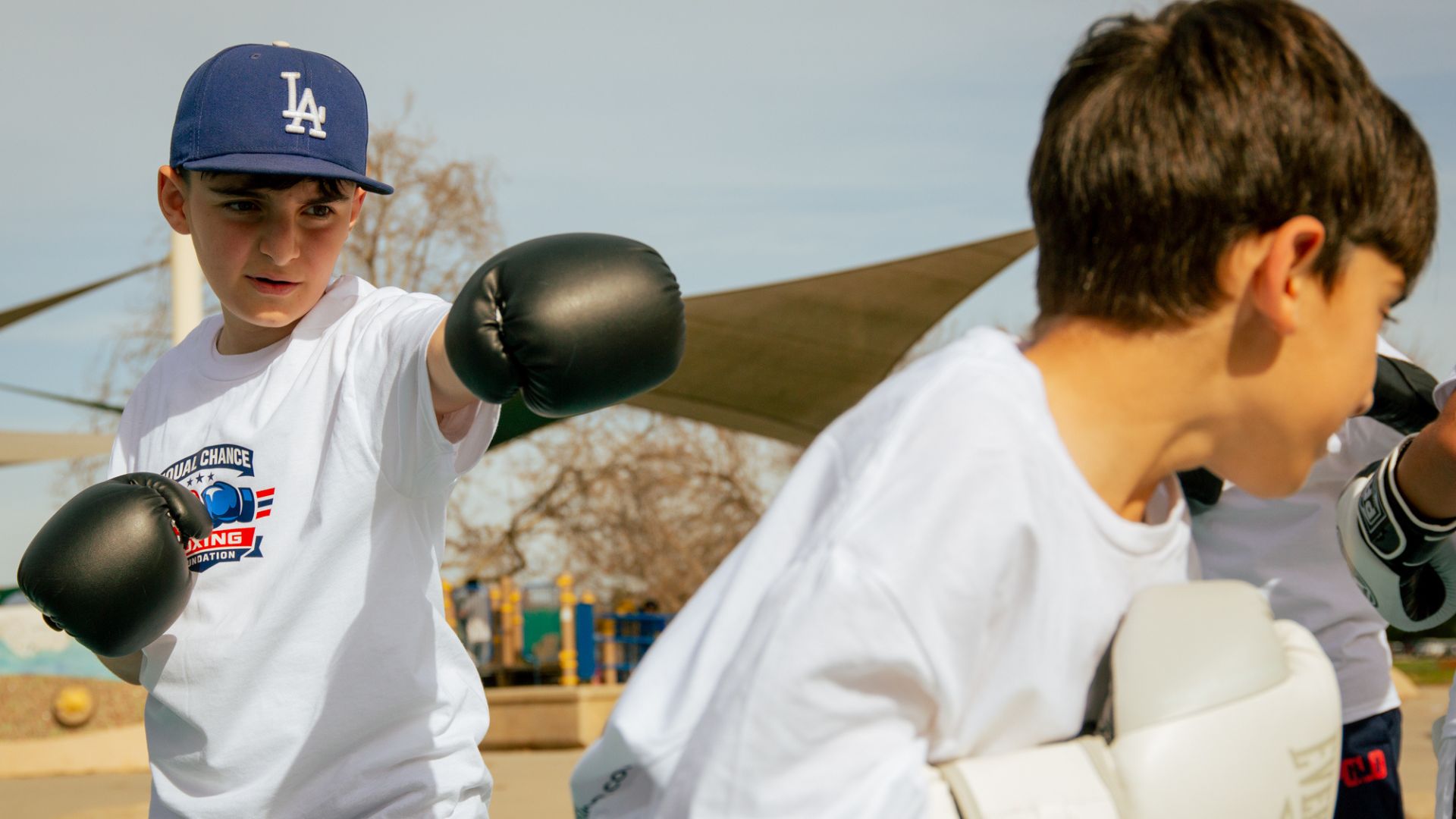
Across Los Angeles and LA County, cost, transportation, and scheduling remain real barriers for many families who would otherwise want their child in a structured after-school activity. A parent working multiple jobs may not have the flexibility to shuttle a teenager across town for practice. A family stretched thin financially may not be able to absorb the cost of equipment, uniforms, or program fees, even when they can see how much their child would benefit from consistent mentorship and physical activity. Removing these barriers is not a side project for a program like this one — it is the foundation that makes everything else possible.
This is where the wider community plays a direct role. Donations support coaching salaries, safe facilities, and consistent programming, which in turn is what allows the quiet, unglamorous moments described throughout this article to happen the same way, week after week, for every young person who walks through the door. Corporate sponsors and local businesses who contribute resources or visibility are not simply attaching their name to a good cause; they are helping fund the predictability that makes a program trustworthy to families who have learned, often for good reason, to be cautious about promises made to their kids. Programs such as the Summer & Afterschool Mentorship Camp depend on exactly this kind of sustained backing to keep serving families throughout the year, not just during a single season.
Step Into the Ring. Let’s Build Our Community Together.
For Parents
If your teenager needs more than encouragement — if what they could really use is a place with consistent structure, adults who pay attention to the small things, and a rhythm they can count on — a youth boxing program built around mentorship may be worth exploring. Progress tends to show up gradually, in the form of steadier habits and a calmer response to frustration, rather than as a single dramatic change.
ENROLL IN OUR YOUTH BOXING PROGRAM TODAY
For Supporters
Every dollar donated to Equal Chance Boxing Foundation helps fund the coaching, safe training environments, and consistent scheduling that make the quiet moments before training possible for every young person in the program. Your support directly sustains a system, not just a single session.
DONATE TO THE EQUAL CHANCE BOXING FOUNDATION
For Community Partners
Local businesses and organizations that partner with youth programs help remove the barriers — cost, transportation, access — that keep too many families from getting through the door in the first place. There are several ways to get involved, from training partnerships to broader sponsorship.
EXPLORE COMMUNITY TRAINING
LEARN ABOUT CORPORATE SPONSORSHIP
Frequently Asked Questions
What Parents Ask About the Minutes Before Training
The minutes before a session — arriving, wrapping hands, checking in with a coach — set the tone for everything that follows. A young person who feels seen and settled during this time is far more likely to engage fully once training begins, and these repeated small moments are where habits like punctuality, preparation, and respect actually take root.
No. Coaches aim to notice and welcome each young person, not put anyone on the spot. A quiet nod, a simple hello, or just settling into the routine without conversation is completely acceptable. The goal is a low-pressure environment where a teenager can arrive on their own terms.
Structured physical activity may support emotional regulation and help some young people feel more grounded after a difficult day. That said, youth boxing is not a substitute for professional medical or mental health care. For a teen dealing with ongoing anxiety, depression, or another concern, a program like this can be a helpful complement to professional support, not a replacement for it.
Change tends to be gradual rather than immediate. Many parents notice their child preparing more independently for practice, accepting correction more calmly, or recovering from frustration a bit faster after a few consistent months, rather than after any single session. Consistency in attendance is usually what drives these shifts.