
Picture the mind of a modern teenager as a high-performance engine that is constantly running in the red zone. Between skyrocketing academic expectations, the relentless, 24/7 comparison engine of social media, and the natural hormonal turbulence of growing up, young people today are carrying an invisible but incredibly heavy load of chronic stress.
When a young adult feels overwhelmed, anxious, inexplicably angry, or completely shut down, the most common societal response is to offer words. We tell them to “take a deep breath,” “calm down,” “think positive,” or “sit down and talk about it.” But for a nervous system that feels like it is vibrating with trapped, nervous energy, sitting still and analyzing emotions is often the most agonizing thing a teenager can do.
Here is a fundamental truth that elite athletes have known for centuries, and which modern neuroscience is finally proving in the lab: You cannot always talk your way out of a dark mood or a spiral of anxiety. More often than not, you have to sweat your way out of it.
Whether you are a teenager desperately looking for a way to turn down the volume of your own thoughts, or a parent searching for a real-world, highly effective intervention to help your teen navigate emotional turbulence, the answer is not more advice. The answer is action.
In this comprehensive, deep-dive guide, we will explore the profound science of why controlled physical effort—specifically through structured disciplines like boxing—is the most effective, natural, and powerful way to dramatically improve mood, eradicate anxiety, and build lifelong mental resilience.
[ecbf_donate_banner_1]
The Chemistry of the Grind: Rewiring the Teenage Brain
To understand why physical effort is the ultimate mood-changer, we must stop looking at a “bad mood” as just an attitude problem. A teenager’s mood is a chemical state in the brain. You cannot argue with chemistry, but you can alter it through physical output.
Flushing the “Fight or Flight” Toxins
When a young person faces stress—whether it is a looming exam, a social rejection, or a confrontation—their body reacts exactly as it would if they were being chased by a predator. The brain floods the system with cortisol and adrenaline.
Thousands of years ago, this chemical cocktail gave humans the explosive energy needed to survive physically. Today, a teenager gets that exact same chemical spike while sitting completely still at a desk or looking at a phone. The energy has nowhere to go. It becomes trapped in the body, manifesting as panic attacks, leg-bouncing anxiety, irritability, or depressive lethargy.
Intense, controlled physical exertion provides the biological release valve the body is screaming for. Hitting a heavy bag or sprinting through a conditioning circuit literally burns the excess cortisol out of the bloodstream, returning the nervous system to a baseline of calm.
Endorphins and The “Miracle-Gro” of the Brain (BDNF)
We all know about endorphins—the brain’s natural painkillers that produce the “runner’s high” and leave an athlete feeling profoundly relaxed after a grueling workout. But the benefits go much deeper.
Intense physical training stimulates the release of a protein called Brain-Derived Neurotrophic Factor (BDNF). Neuroscientists often refer to BDNF as “Miracle-Gro for the brain.” It actively repairs brain cells damaged by stress and helps build new neural pathways. When a teenager is engaged in the physical effort of learning to box, they aren’t just blowing off steam; they are biologically upgrading their brain’s ability to process stress, regulate emotions, and maintain a stable, positive mood.
The Silent Mood Killer: How Training Rescues Sleep
You cannot discuss a teenager’s mood without discussing sleep. We are currently facing an epidemic of youth insomnia and sleep deprivation, largely driven by late-night screen time and high-functioning anxiety. A sleep-deprived brain is hyper-reactive, irritable, and prone to depression.
Controlled physical effort is the ultimate cure for broken sleep architecture.
- Physical vs. Mental Exhaustion: A teenager often goes to bed mentally exhausted but physically restless. A boxing workout flips this dynamic. It guarantees deep, physical fatigue.
- Resetting the Circadian Rhythm: The intense output of an evening or afternoon training session drops the core body temperature afterward, signaling to the brain that it is time to shut down and recover.
When a youth trades tossing and turning for eight hours of deep, restorative sleep, their baseline mood the next morning is fundamentally transformed.
The Crucial Difference: Chaos vs. “Controlled” Effort
It is vital to understand that not all movement yields the same psychological benefits. Lashing out in anger, punching a wall, or engaging in chaotic, unstructured activity does not heal the mind. The magic happens in controlled physical effort.
Boxing is frequently misunderstood by outsiders as a sport of aggression. In reality, it is a masterclass in emotional regulation and extreme cognitive control.
The Moving Meditation of the Ring
When a teenager is emotionally overwhelmed, their thoughts are scattered. Boxing forces the mind to snap entirely into the present moment.
- Bilateral Coordination: Throwing a complex combination requires the left and right hemispheres of the brain to communicate instantly. You cannot fixate on what someone said about you on social media when you are trying to coordinate your hips, shoulders, and feet to slip a jab. The intense focus required is a form of active meditation.
- Rhythm and Breath: Striking a bag or jumping rope requires rhythm. It forces the athlete to synchronize their breath with their movement. Deep, rhythmic breathing acts as a powerful, manual override for the central nervous system, drastically lowering the heart rate and killing anxiety on the spot.
Breaking the Cycle: Active Training vs. Passive Consumption
To clearly see why controlled physical effort is the ultimate mood booster, we must contrast it with the default coping mechanism of today’s youth: passive digital scrolling.
The Contrast in Coping Mechanisms
| Feature | Passive Digital Consumption (Scrolling/Gaming) | Controlled Physical Effort (Boxing/Training) |
| Immediate Effect | Numbing distraction, temporary escape from reality. | Intense focus, grounding in the present, physical presence. |
| Chemical Result | Spikes of “cheap” dopamine followed by sharp emotional crashes. | Burns cortisol, releases stable endorphins, and provides “earned” dopamine. |
| Physical State | Sluggishness, poor posture, shallow breathing, neck tension. | Increased blood flow, rhythmic breathing, physical fatigue, power. |
| Sleep Impact | Blue light disrupts melatonin; leads to racing thoughts and insomnia. | Physical exhaustion guarantees deep, restorative sleep cycles. |
| Social Aspect | Isolation, comparison, and the illusion of connection. | Genuine camaraderie, shared struggle, and eye contact. |
| Long-Term Mood | Increased feelings of anxiety, inadequacy, and depression. | Increased self-respect, emotional stability, and unshakeable confidence. |
The Power of the Tribe: Curing the Loneliness Epidemic
A massive contributor to poor mood in young people is profound loneliness. Even teens with thousands of online followers often feel completely isolated in the real world.
The boxing gym provides an immediate cure for this isolation. In a gym, you are part of a tribe. You suffer through the same grueling workouts, you sweat on the same mats, and you respect each other for the sheer effort put in. There is no social hierarchy based on what clothes you wear or what your grades are; the only currency that matters is how hard you are willing to work. This shared vulnerability breeds deep, authentic friendships that stabilize a teenager’s mood and give them a profound sense of belonging.
: Forging Discipline on the Heavy Bag
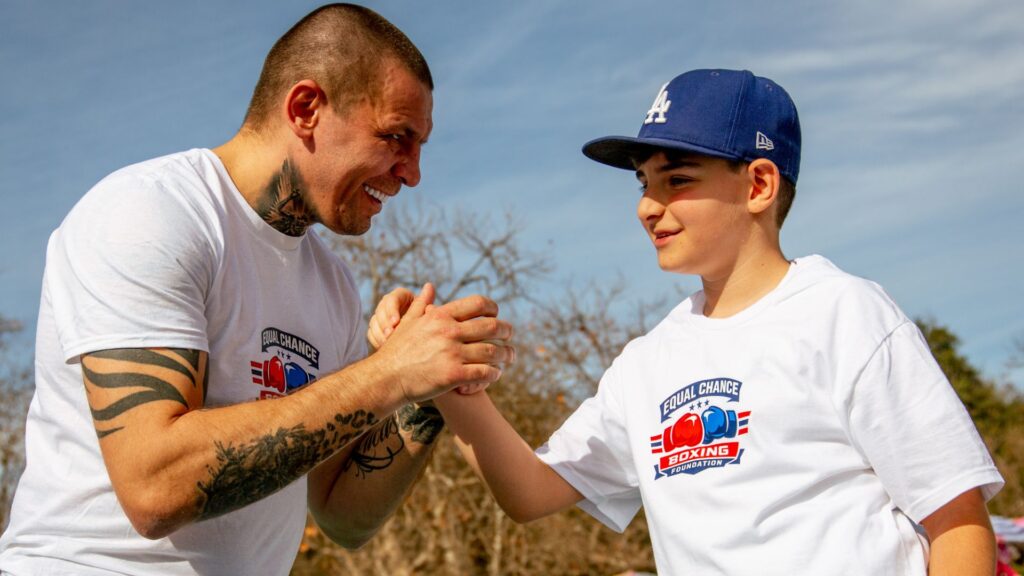
At the Equal Chance Boxing Foundation (ECBF), this philosophy of using physical exertion to master the mind is the beating heart of our program. It is a philosophy lived and breathed by our Head Coach and professional boxer, .
understands the internal storms that young people face because he fought his way through them. Growing up in the uncompromising environments of sports boarding schools in Ukraine, learned early that frustration, anger, and anxiety are simply raw energy. If left unchecked, that energy destroys you. But if channeled into a controlled environment, it becomes the ultimate fuel for success.
Mentorship Beyond the Gloves
When a teenager walks into our gym carrying the heavy, visible weight of a terrible day, does not ask them to sit in a circle and talk about their feelings. He knows that words are often useless in that moment.
Instead, he wraps their hands, points them to the heavy bag, and demands three rounds of everything they have inside them. teaches our youth that they have the ultimate power to manually shift their own mood. He shows them that the heavy bag is the greatest therapist in the world: it doesn’t judge, it doesn’t interrupt, and it can absorb every ounce of frustration you throw at it. Under ‘s mentorship, athletes learn that they are not victims of their dark moods; they are the undisputed masters of their own chemistry.
A Direct Challenge to the Youth: Take the Wheel
If you are a teenager or young adult reading this, let’s cut the lectures. You already know exactly what it feels like when your mood crashes. You know the suffocating feeling of anxiety, and you are likely tired of adults telling you to “just think positive.”
You do not need positive thoughts right now; you need a physical outlet. You need a place where you can drop the act, stop trying to look perfectly put together, and let the sheer physical work silence the screaming noise in your head.
You have the power to change your own brain chemistry.
If you are tired of feeling stressed out, it is time to put on the gloves. You do not need to be in shape, you do not need prior experience, and you do not need to have it all figured out. You just need the courage to show up and the willingness to sweat.
We have built a sanctuary specifically for you. You can train with professional protective gear and elite, world-class coaches without ever paying a single dime.
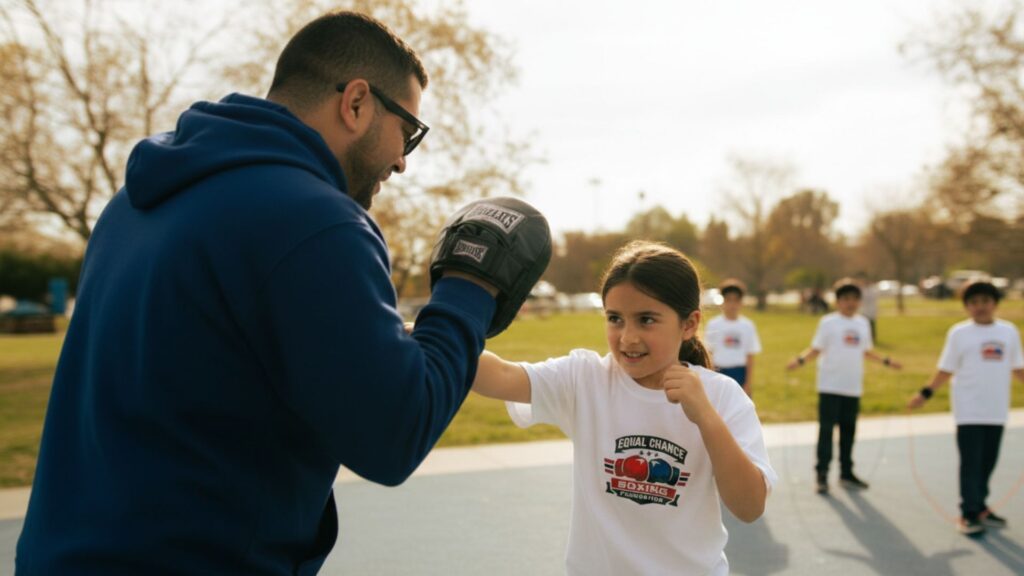
TAKE CONTROL OF YOUR MIND: Step into the gym, hit the bag, and join our entirely free Youth Boxing Program. Find out how good you are actually capable of feeling.
If getting to the main facility is a hurdle, we will not let that stop you. We are bringing the bags, the gloves, and the discipline directly to your local parks and neighborhoods.
TRAIN IN YOUR AREA: Find your local tribe and check out our Community Training sessions. Start your journey today.
A Note to Parents and Mentors: Become the Facilitator
For the parents and guardians reading this, we know that watching your child struggle with their mood, anxiety, or depression is a uniquely painful experience. The natural instinct is to try and “fix” them with advice, logic, or demands.
But as you have likely discovered, you cannot logic a teenager out of a bad mood. Your role is not to fix their emotional state; your role is to provide the environment where they can fix it themselves.
Instead of lecturing them about screen time or bad attitudes, offer them a powerful, undeniably cool alternative. Introduce them to an environment where physical exertion is respected, where discipline is the golden rule, and where they can safely exhaust the nervous energy that causes their mood swings. When you facilitate their entry into a boxing program, you aren’t just giving them a hobby—you are equipping them with a lifelong coping mechanism.
[ecbf_donate_banner_4]
Be the Catalyst: How You Can Build the Arena
The Equal Chance Boxing Foundation is fundamentally committed to saving and transforming the mental and physical well-being of our youth. We know, without a shadow of a doubt, that a teenager who knows how to regulate their mood, respect their body, and push through exhaustion becomes an unshakeable leader in their community.
This is exactly why we provide world-class facilities, top-tier professional equipment, and elite mentorship completely free of charge to the youth who need it most. But we cannot fight this battle alone. Maintaining this standard of excellence requires a united front. We rely entirely on the vision, generosity, and commitment of people who understand that investing in youth mental health is the most critical investment a society can make.

How You Can Change the Narrative
If you believe in the raw power of physical discipline to change young minds, we urge you to stand in our corner.
- Fuel the Fight: Your individual donation does not just buy boxing gloves; it buys a safe space. It funds the exact moment a teenager realizes they have the power to conquer their own anxiety. Be the reason a young adult finds their strength today. SUPPORT THE NEXT GENERATION: Make a direct impact and Donate to our mission.
- Corporate Leadership: Businesses hold the unique power to drive massive, systemic community change. By partnering with ECBF, your brand actively supports vital youth mental health initiatives and provides tangible, life-saving solutions for the next generation. LEAD BY EXAMPLE: Discover the impact you can make by becoming one of our Corporate Sponsors.
The Ultimate Override
We cannot shield young people from the stress, heartbreak, and pressure of the modern world. They will face brutal academic deadlines, complex social conflicts, and intense internal doubts. But we absolutely have the power to equip them with the tools to manage that stress and emerge victorious.
Controlled physical effort is not merely about building physical strength; it is about building an unshakeable, resilient mind. It is about teaching a teenager the profound lesson that no matter how chaotic the outside world gets, or how dark a mood feels internally, they always possess the ultimate override.
Questions?
We’ve got answers.
Controlled physical effort triggers a powerful biological response. When teens train at the Equal Chance Boxing Foundation, their bodies release endorphins and dopamine—natural mood lifters. Unlike the temporary high of scrolling social media, the exertion required to hit the heavy bag or jump rope provides a sustained sense of well-being and accomplishment that lasts long after the gloves come off.
Random physical activity burns energy, but controlled effort builds discipline. Boxing requires intense focus, specific breathing patterns, and precise techniques. This structured environment forces the brain to organize its thoughts. By channeling chaotic teenage energy into the strict, rhythmic combinations of boxing, youth experience a calming, meditative effect that deeply stabilizes their mood.
Physical exertion alone is great, but combining it with positive reinforcement is transformative. Mentors like provide constructive feedback and genuine encouragement during tough workouts. When a young person pushes through their physical limits and immediately receives validation from a respected coach, it creates a massive spike in self-esteem, confidence, and overall happiness.
Yes. Many adolescent mood swings are fueled by pent-up energy, daily stress, and hormonal changes. A rigorous boxing workout acts as a release valve for these pressures. By deliberately exhausting the body in a safe, productive way, teens leave the gym feeling relaxed and grounded. They simply have less anxious energy left to fuel irritability or sudden emotional shifts.