
Have you ever been completely paralyzed by your own thoughts?
If you are a teenager reading this, you probably know the feeling intimately. You are faced with a decision—whether it is raising your hand in class, sending a message to a friend, trying out for a team, or deciding what you want to do with your future—and suddenly, your brain hits the brakes. You start running through every possible scenario. What if I fail? What if I look stupid? What if they judge me?
Before you know it, an hour has passed, and you have done absolutely nothing. The anxiety builds, the opportunity slips away, and you are left feeling frustrated, stuck in a loop of endless overthinking.
If you are a parent or mentor watching a young person go through this, it is equally frustrating. You see a teenager with incredible potential trapping themselves in “analysis paralysis.” You try to encourage them to just “go for it,” but to a mind that is constantly calculating risk, those words hold very little weight.

The modern world has wired an entire generation to over-analyze every micro-interaction. But how do we break this cycle?
When we ask, “How boxing helps teens replace overthinking with action,” we are talking about a fundamental rewiring of the brain. At the Equal Chance Boxing Foundation, we know that you cannot simply talk a teenager out of overthinking. You have to put them in an environment where hesitation has an immediate consequence, and action is the only option.
In this comprehensive guide, we speak directly to the youth looking to break free from their own minds, and the adults looking to support them. We will explore the mechanics of analysis paralysis, how the raw reality of the boxing ring forces immediate decision-making, and how our Head Coach, professional boxer , mentors youth to stop doubting and start doing.
[ecbf_donate_banner_1]
The Trap of Analysis Paralysis in Adolescence
To fix the problem, you first have to understand why it is happening. Overthinking is not a personality flaw; it is a defensive mechanism that has gone into overdrive.
The “What If” Spiral and Digital Pressure
Today’s youth are the first generation to grow up with their entire social lives heavily documented and scrutinized online. Because every mistake can be recorded, the adolescent brain learns to treat every decision as a high-stakes event.
This creates the “What If” spiral. The brain attempts to predict and control every possible negative outcome before making a move. The problem is that the brain is a highly efficient anxiety machine—it will always find a reason to hesitate. When a teen spends all their energy predicting the future, they have no energy left to take action in the present.
Why Talking Isn’t Always Enough
When a young person is trapped in their head, traditional advice often fails. Asking an overthinker to “just stop thinking about it” is like asking someone to stop breathing.
Therapy and communication are vital, but for a nervous system trapped in a state of constant hesitation, words are not always enough. To break the physical sensation of paralysis, a youth needs a physical catalyst. They need an experience that forces the brain to bypass the planning phase and jump straight into execution.
The Sweet Science of Immediate Action
Boxing is the ultimate antidote to overthinking. It is a sport that strictly prohibits hesitation. When you step onto the canvas, the rules of engagement completely change the way your brain processes information.
You Cannot Overthink a Jab
Imagine standing in front of a heavy bag, or facing a coach holding focus mitts. The coach calls out a combination: “One-two-slip-three!”
If you pause to overthink your stance, wonder if your form is perfectly aesthetic, or worry about what the person on the next bag thinks of you, you will miss the beat. In a live drill, if you hesitate, you get hit.
Boxing forces total, uncompromising presence. It violently pulls a teenager out of their imagination and drops them directly into the physical moment. The brain realizes it doesn’t have time to run a risk analysis; it must act now.
Building Muscle Memory Over Mental Doubt
Overthinking happens when we don’t trust our instincts. Boxing systematically builds that trust.
Through thousands of repetitions, a young athlete builds muscle memory. When a punch comes toward them, they don’t think, “I should probably move my head to the right to avoid the impact.” They simply slip. The body reacts faster than the conscious mind can process.
When a teenager experiences this—when they realize their body is capable of making sharp, correct decisions without their anxious mind interfering—it is a revelation. This physical trust bleeds into their everyday life, teaching them to trust their gut rather than second-guessing every choice.
The Boxing Shift: Hesitation vs. Execution
To clearly see how the environment of a boxing gym rewires the teenage brain, let’s contrast the habits of an overthinker with the mentality of a trained athlete.
| Habit / Scenario | The Overthinking Mindset (Analysis Paralysis) | The Boxing Mindset (Action-Oriented) |
| Facing a New Challenge | Focuses on all the ways it could go wrong. Delays starting. | Focuses on the first physical step. Engages immediately. |
| Making a Mistake | Dwells on the error. Feels profound embarrassment. | Acknowledges the error, resets the guard, and focuses on the next round. |
| Perception of Perfection | Believes action should only be taken if the outcome is guaranteed perfect. | Understands that messy action is always better than perfect inaction. |
| Processing Fear | Lets fear dictate the decision, resulting in withdrawal. | Uses fear as adrenaline. Breathes through the pressure and steps forward. |
| Decision Speed | Slow, bogged down by seeking validation from others. | Fast, reliant on internal training, repetition, and instinct. |
4. Visualizing the Mental Shift: The Action Graph
The transition from a hesitant overthinker to a decisive action-taker is measurable. As a youth spends more time in the gym, their cognitive load drops, and their instinctual action rises. Interact with the chart below to see how consistent training kills hesitation.
: Training Instincts Over Doubts
A heavy bag alone cannot teach decisiveness. Youth need to be pushed by a mentor who understands the devastating cost of hesitation in the real world.
At the Equal Chance Boxing Foundation, our methodology is driven by our founder and Head Coach, professional boxer .
The Professional Consequence of Hesitation
In professional boxing, the margin for error is razor-thin. has competed at the highest levels of the sport, and he knows a fundamental truth: The fighter who hesitates is the fighter who loses.
brings this elite perspective to our youth. He teaches them that life, much like the ring, does not wait for you to feel completely “ready” or entirely free of doubt. If you wait for the perfect moment to throw a punch, the opportunity is gone. He instills a philosophy of calculated aggression: it is better to act and adjust than to stand still and be a target.
[ecbf_donate_banner_4]
5.2. Mentorship That Demands the Trigger Pull
When an overthinking teenager enters our facility, they are often looking for permission to hold back. does not give it to them.
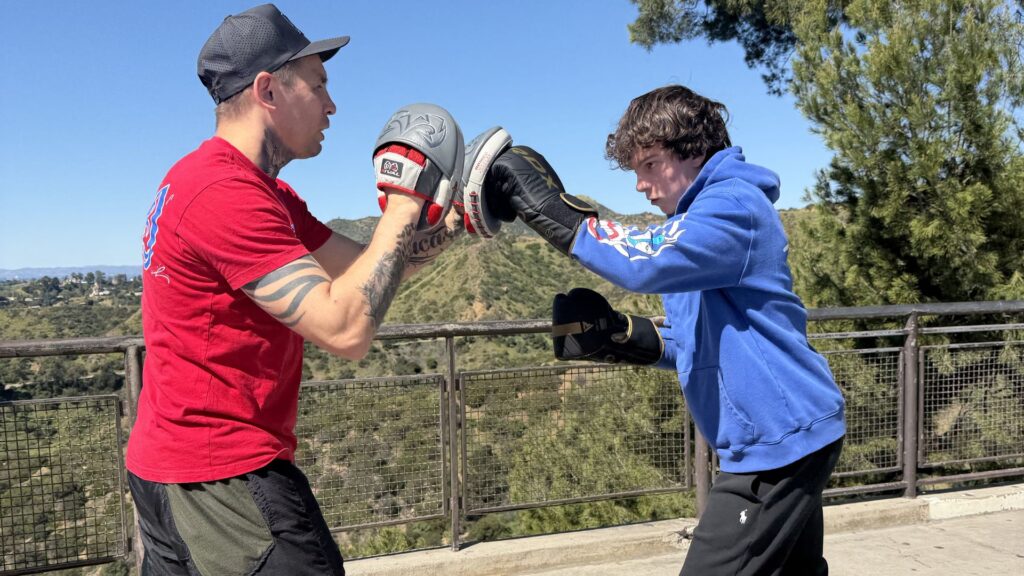
As an elite positive role model for youth, creates highly structured, fast-paced drills. He puts on the mitts and demands speed. Snap the jab! Move your head! Throw the cross! He intentionally overloads their cognitive brain so it is forced to shut down, leaving only the athlete’s raw instinct.
By constantly pushing them to “pull the trigger” in the gym, helps teenagers shatter their own mental barriers. They learn the profound difference between reckless impulsivity and trained, decisive action.
Stop Thinking. Start Moving: Your Turn in the Ring
If you are a young adult reading this, and you are exhausted by your own mind—if you are tired of watching opportunities pass you by because you couldn’t stop second-guessing yourself—it is time to change the rules of the game.
You cannot think your way out of overthinking. You have to act your way out. You need an environment that demands your total physical presence.
We know that taking the first step is the hardest part, especially when your brain is telling you to stay home. To make that first step easier, The Equal Chance Boxing Foundation has removed every possible barrier. We offer a world-class environment designed to help you build an iron mind, entirely for free.
The Youth Boxing Program
Leave the hesitation at the door. We provide elite coaching, a disciplined environment, and all the high-quality safety gear you need to start moving—at zero cost to you. No fees, no excuses.
STOP SECOND-GUESSING. ENROLL IN OUR FREE YOUTH BOXING PROGRAM TODAY.
Action in Your Neighborhood: Community Training
If logistics and distance are giving your brain an excuse to overthink, we are coming to you. Our mobile outreach programs bring the heavy bags, the gloves, and the coaches directly to local parks and community centers.
FIND YOUR NEAREST SESSION: DISCOVER OUR COMMUNITY TRAINING INITIATIVES.
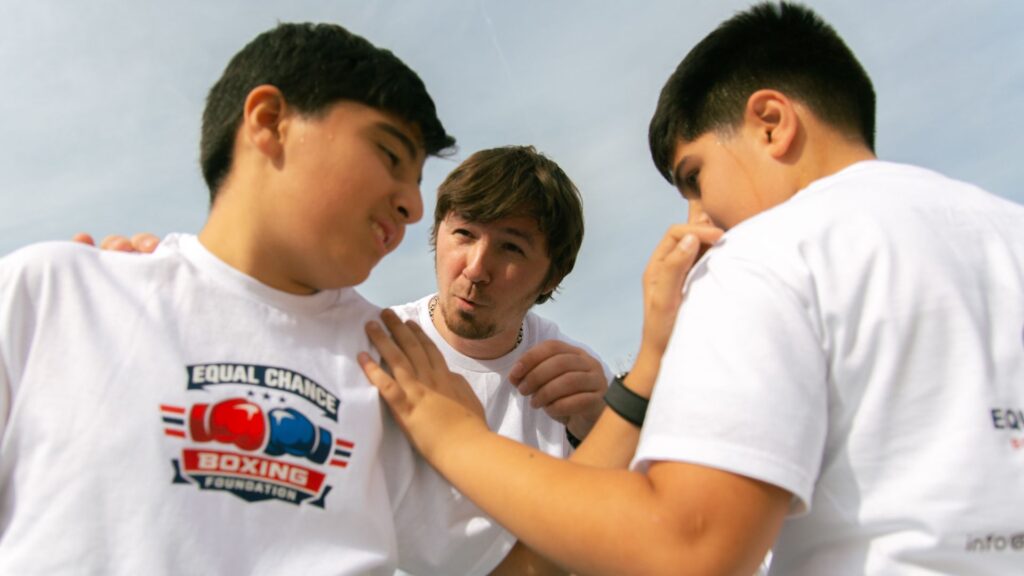
Be the Catalyst: Support the Shift from Thought to Action
If you are a parent, mentor, or community leader, you know the pain of watching a brilliant youth paralyze themselves with doubt. You also know that providing a safe, uncompromising environment where they can learn to take decisive action is critical for their future success in any field.
Operating a daily program that provides thousands of hours of intense, life-changing mentorship, a state-of-the-art facility, and professional gear—all entirely for free—is a massive undertaking. We rely on the vision and generosity of those who understand that teaching a kid to take action is the ultimate investment.
For Individual Donors
When you support the foundation, you are not just funding a gym. You are funding the exact moment a teenager decides to stop hesitating and finally throws the punch. Your contribution ensures that when a youth is ready to break out of their mental prison, our doors remain open to guide them.
EMPOWER DECISIVE ACTION: DONATE TO THE FOUNDATION HERE.
For Corporate Sponsors
Local businesses thrive on decisive leadership. By partnering with ECBF, your brand takes a definitive stand for youth development and mental resilience. Show your community that your company invests in building a generation of leaders who do not freeze under pressure, but act with confidence.
BUILD FUTURE LEADERS: BECOME A CORPORATE SPONSOR TODAY.
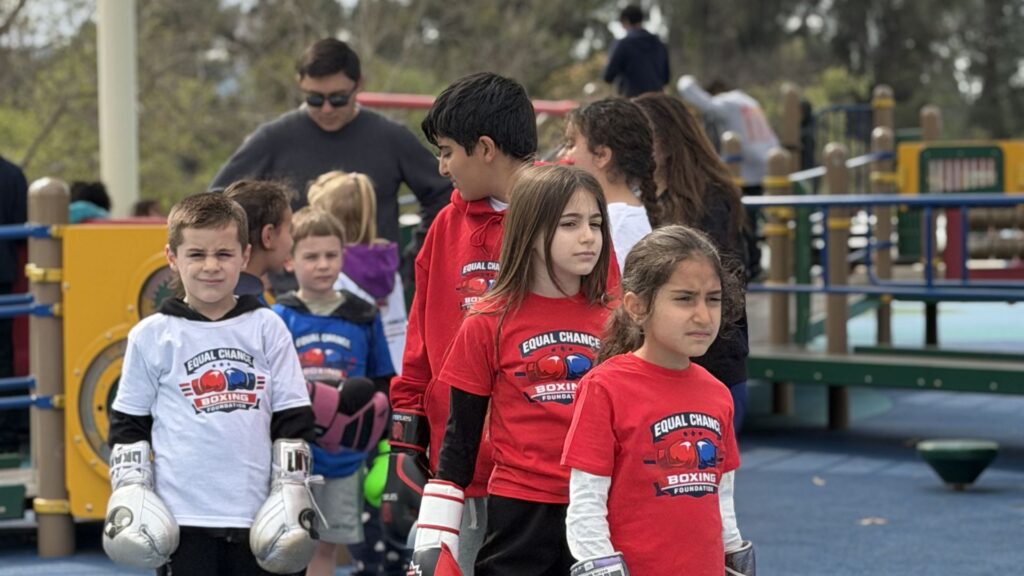
Pull the Trigger on Your Life
How does boxing help teens replace overthinking with action? It proves to them, through sweat and physical feedback, that they are capable of making the right choice without needing a guarantee.
Your mind will always try to keep you safe. It will always whisper that you aren’t ready, that you need more information, or that you might fail. But when you wrap your hands, step onto the canvas, and look across at holding the mitts, the whispering stops. The bell rings, and you have to move.
You learn that taking a risk and making a mistake is a hundred times better than standing frozen in fear. You learn to trust your training, trust your body, and most importantly, trust yourself.
Whether you are a young person looking to finally quiet your mind and start actually living your life, or an adult looking to support a generation that desperately needs to learn how to take action, the time for planning is over.
At the Equal Chance Boxing Foundation, we are ready to help you trade your analysis paralysis for explosive, purposeful momentum. Stop scrolling. Stop hesitating. Step into the ring and pull the trigger.
Questions?
We’ve got answers.
Overthinking thrives in inaction. When a teen steps into the ring at the Equal Chance Boxing Foundation, there is no time to analyze every possible outcome. If a punch is coming, you must move. Boxing forces the brain out of endless theoretical loops and into immediate, instinctual action, teaching youth that doing something is often better than perfectly planning everything.
You cannot out-think an overthinking mind. Anxiety traps teens in their heads, but physical movement grounds them in their bodies. Hitting the heavy bag or focusing on complex footwork demands 100% of their attention. This intense physical action acts as a reset button for the nervous system, replacing paralyzing mental loops with tangible, physical momentum.
Mentors like recognize when a young athlete is frozen by hesitation. In boxing, hesitating gets you hit. Coaches train teens to trust their preparation and let their muscle memory take over. By constantly prompting them to throw the combination rather than worry about doing it perfectly, teens learn to trust their instincts and act decisively under pressure.
Boxing is a high-speed environment where decisions must be made in fractions of a second. By practicing this rapid decision-making in the gym, teens build a habit of taking action rather than getting stuck in “analysis paralysis.” This confidence naturally spills over into their daily lives, helping them tackle homework, social situations, or personal goals without second-guessing every step.