

Picture a teenager standing in the middle of a crowded school hallway, holding a failed exam, while their phone continuously vibrates with social media notifications. To an adult, this might look like a standard Tuesday. But inside that young person’s mind, the alarm bells are ringing at maximum volume. Their heart is racing, their breathing is shallow, and their brain is flooded with panic.
We live in a world that puts an unprecedented amount of pressure on young people. Between academic expectations, the toxic comparison engine of the digital world, and the complex social dynamics of growing up, teenagers are constantly operating under a heavy, invisible weight.
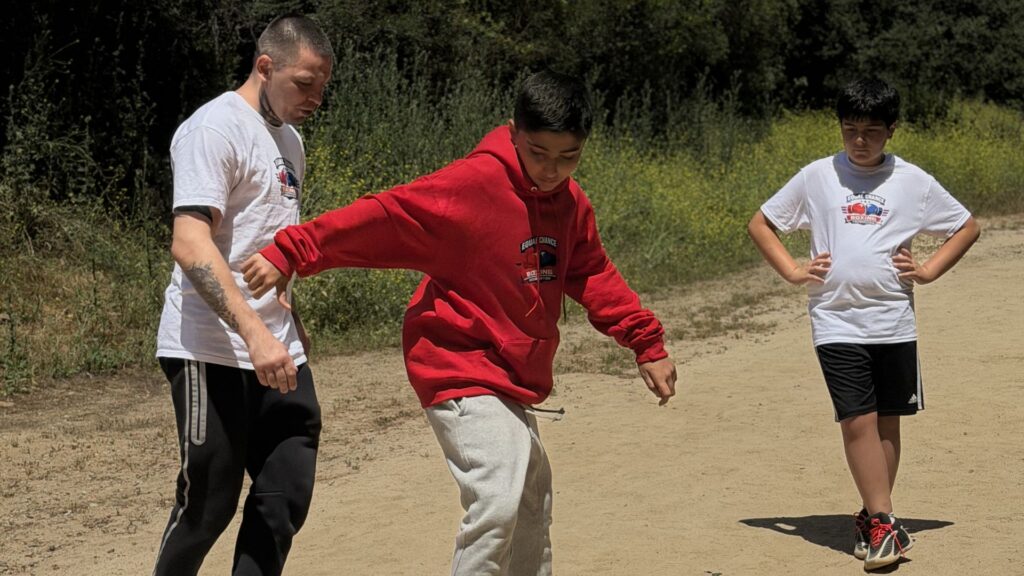
When the pressure peaks, the natural human instinct is to panic, freeze, or lash out. Society tells these kids to “just relax” or “take a deep breath,” but words are rarely enough to stop a nervous system in overdrive. They don’t need cliches; they need a physical blueprint for emotional survival.
Whether you are a young adult tired of feeling overwhelmed by stress, or a parent searching for a real-world environment that will forge your child’s resilience, the answer lies in an unexpected place: the boxing ring. In this comprehensive guide, we will explore exactly what boxing teaches kids about composure under pressure, and how the discipline of the “Sweet Science” builds an unshakeable mind.
[ecbf_donate_banner_1]
The Anatomy of Pressure: Why We Lose Control
To understand how to build composure, we must first understand why we lose it. When a young person is placed under sudden stress—like a confrontation with a bully, a crucial sports moment, or a major test—the brain’s amygdala (the fear center) takes over.
The “Fight, Flight, or Freeze” Response
The body releases a massive surge of adrenaline and cortisol. This chemical cocktail is designed to keep us alive in dangerous situations, but in modern society, it usually just causes a mental short-circuit.
- Flight: The teenager avoids the challenge entirely (skipping class, quitting the team, hiding in their room).
- Freeze: The mind goes blank. They cannot articulate their thoughts or defend themselves verbally.
- Fight (Uncontrolled): They lash out aggressively and impulsively, making the situation worse.
Composure is not a natural human instinct; it is a learned skill. It is the ability to feel the massive spike of adrenaline in your bloodstream and decide, “I am not going to let this feeling make my decisions for me.”
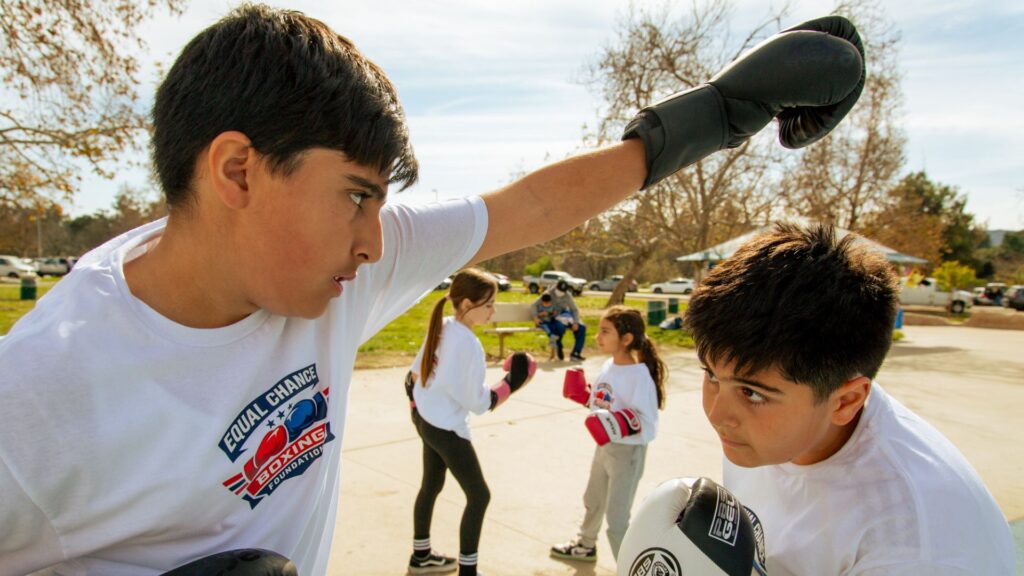
The Boxing Ring as the Ultimate Stress Simulator
You cannot learn composure by reading a book about it. You learn composure by being repeatedly exposed to stress in a safe, controlled environment. This is exactly what a high-level boxing gym provides.
When a youth steps into the ring for a drilling session or light sparring, they are subjected to immediate physical and mental pressure. Punches are coming at them. They are exhausted. Their natural instinct is to close their eyes, turn their back, or panic.
Rewiring the Nervous System
Boxing forces the brain to rewrite its panic response.
- Keeping the Eyes Open: The very first lesson a young boxer learns is to keep their eyes open when a punch is thrown. This is a profound psychological metaphor. It teaches them to look directly at the source of their stress instead of hiding from it.
- Breathing Through the Storm: Panic causes shallow breathing, which feeds anxiety. Boxing demands rhythmic, deep breathing. Even when a teen is backed into the ropes and tired, they are taught to exhale sharply and reset. This manual breathing regulation instantly lowers the heart rate.
- Strategic Pauses: Boxing is a game of inches and seconds. It teaches youth that even in the middle of chaos, you can take a half-step back, assess the situation, and respond strategically rather than reacting emotionally.
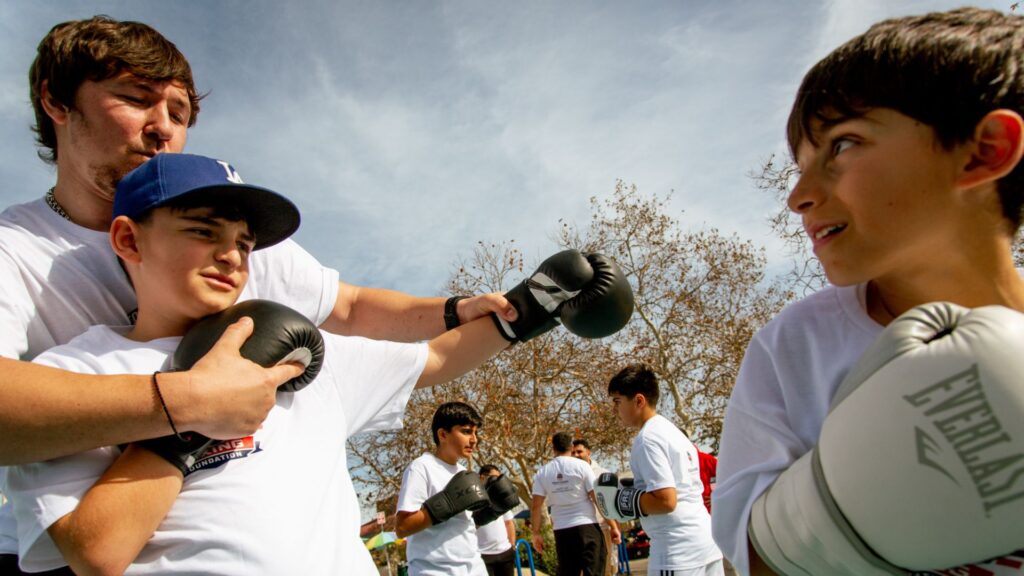
Reaction vs. Response: The Transformation
The difference between an untrained mind and a mind forged in the boxing gym is the difference between a reaction and a response. A reaction is impulsive and fear-based. A response is calculated and calm.
Here is how the composure learned in the gym translates directly to real-world pressure:
| Scenario / Trigger | The Untrained Reaction (Panic) | The Boxer’s Response (Composure) |
|---|---|---|
| Verbal Bullying / Confrontation | Heart races, voice shakes, impulsive anger, or freezing up. | Deep breath, maintaining eye contact, refusing to show fear, walking away with dignity. |
| Academic Pressure / Huge Exam | Procrastination out of fear, mind going blank during the test. | Breaking the challenge down into rounds. Steady breathing. Tackling one question at a time. |
| Social Media Anxiety / Peer Judgment | Obsessing over what others think, changing behavior to fit in. | Internal validation. Knowing that external opinions don’t matter as much as the hard work put in at the gym. |
| Failing at a New Task | Quitting immediately, feeling deep embarrassment and shame. | Assessing the mistake, adjusting the “stance,” and trying again without ego. |
The Standard: Mastering the Chaos
At the Equal Chance Boxing Foundation (ECBF), the principle of composure is not just a theory; it is the core of our curriculum. This standard is set by our Head Coach and professional boxer, .
knows intimately what it means to perform under crushing pressure. As a professional fighter who has competed on global stages, he has felt the weight of thousands of screaming fans, the physical exhaustion of championship rounds, and the intense scrutiny of the media.
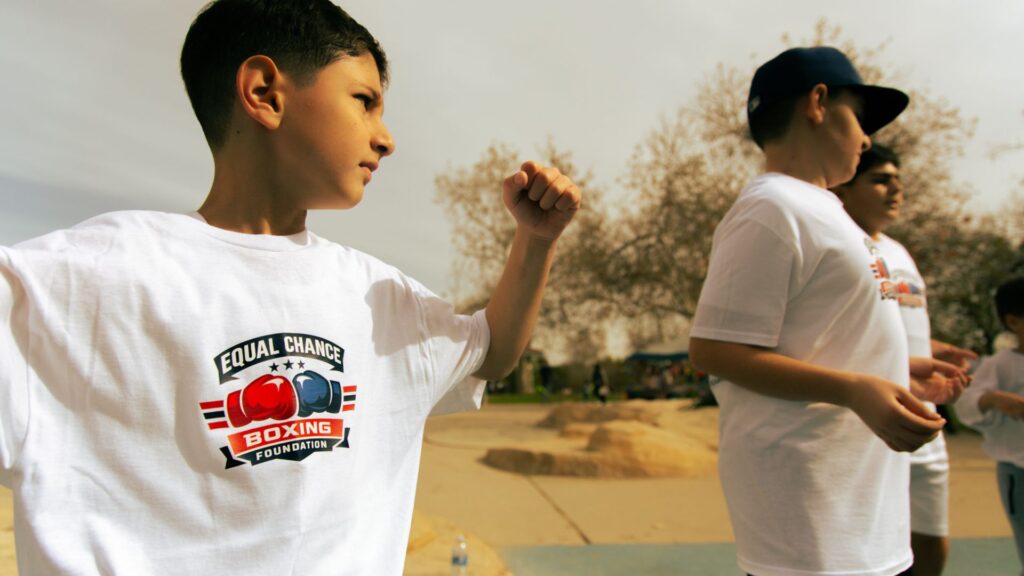
Mentorship Built on Reality
does not teach our youth to be aggressive; he teaches them to be emotionally bulletproof. When a young athlete at ECBF gets frustrated during a complex drill and starts throwing wild, angry punches, immediately stops the session.
He steps in not to yell, but to teach composure. He makes the teenager reset their feet, drop their shoulders, and take a deep breath. instills a vital philosophy: “Anger makes you weak. Focus makes you dangerous.”
Under his mentorship, teenagers learn that the person who loses their temper loses the fight—both in the ring and in life. By holding athletes to this high standard of emotional control, helps them build a quiet, unshakeable confidence that radiates from them when they walk the halls of their school.
A Direct Challenge to the Youth: Claim Your Power
If you are a teenager reading this, let’s be entirely honest. You know what anxiety feels like. You know the exact sensation of your stomach dropping when you are called on in class, or the panic that sets in when you feel like everyone is judging you.
It is exhausting to constantly worry about what other people think. It is exhausting to feel like you are at the mercy of your own stress.
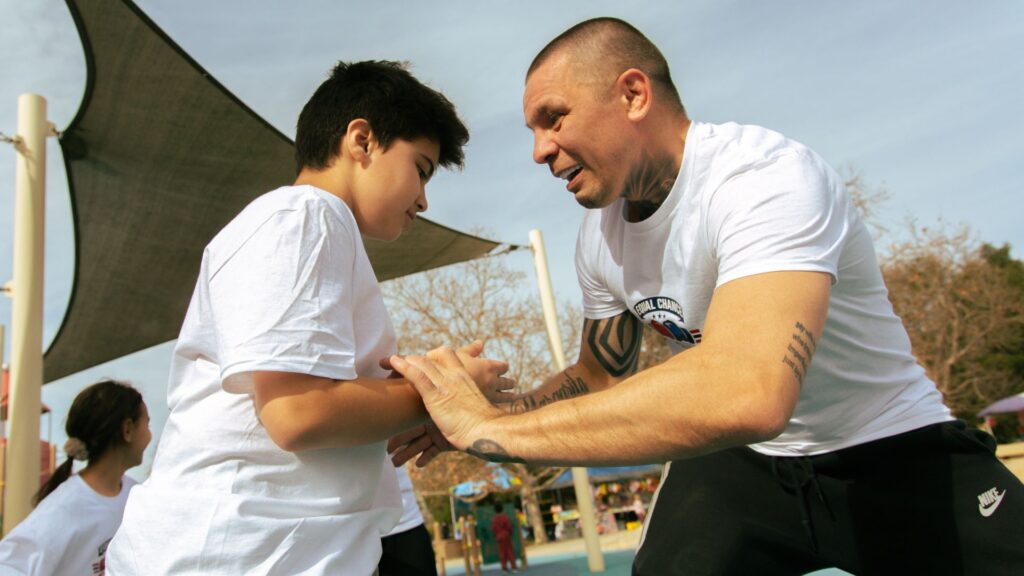
But what if you didn’t have to feel that way anymore?
You are not broken because you feel pressure; you just haven’t been trained on how to process the adrenaline yet. You have the power to build an armor of composure, but you cannot do it by sitting on your phone and wishing for it. You have to take action. You have to put yourself in a challenging environment and prove to your own brain that you can survive the storm.
We have built that environment for you. We provide the elite gear, the professional coaches, and the space—entirely for free. All you have to do is show up.
STOP WAITING, START BUILDING: Step into the ring and learn how to master your mind. Join our free Youth Boxing Program today.
If getting to the main gym feels like a hurdle, we are breaking down those barriers. We bring the bags, the gloves, and the exact same elite mentorship directly to your neighborhood.
TRAIN IN YOUR AREA: Find your local tribe and check out our Community Training sessions. Your journey to unshakeable confidence starts here.
[ecbf_donate_banner_4]
To the Parents and Mentors: Facilitating True Resilience
For parents, watching your child crumble under the pressure of modern life is heartbreaking. Your instinct is to remove the pressure—to call the teacher, intervene in the social drama, or clear the obstacles out of their path.
But clearing the path does not make your child stronger; it leaves them completely defenseless when they eventually face a challenge you cannot fix for them.
Do not remove the pressure; equip them to handle it.
By introducing your teenager to a structured boxing program, you are giving them the ultimate gift: a safe, controlled environment where they can experience stress, manage it, and emerge victorious. You are giving them the tools to regulate their own nervous system. When you watch them learn how to take a hit on the gloves, breathe, and fire back with a disciplined combination, you will realize you are watching them learn how to navigate life.
Fueling the Mission: Stand in Their Corner
Teaching a generation of anxious, stressed teenagers how to transform into composed, resilient leaders is a massive undertaking. The Equal Chance Boxing Foundation operates on the unwavering belief that every child deserves access to world-class mental and physical development, regardless of their family’s financial situation.
We absorb 100% of the costs so that these young athletes can focus entirely on building their character. But to keep our doors open, to maintain our professional facilities, and to expand our community outreach, we rely on the vision and generosity of people who understand the critical importance of youth development.

How You Can Change the Narrative
When you look at the rising rates of teen anxiety and depression, you have the power to fund a proven, action-based solution.
- For the Individual Believers: Your direct financial support pays for the gloves, the safety gear, and the safe spaces where these transformations happen. You are actively funding a child’s journey from anxiety to empowerment. EMPOWER A CHAMPION: Make a tangible difference and Donate to our mission today.
- For Visionary Businesses: Corporate leadership is about investing in the resilience of your local community. By partnering with ECBF, your brand aligns with the core values of mental health advocacy, discipline, and profound youth development. LEAD THE CHANGE: Discover the massive impact you can make by becoming one of our Corporate Sponsors.
The Ultimate Victory
Pressure is an unavoidable reality of human existence. The goal of youth development is not to create a world where our children never feel stress; that is impossible. The goal is to build young adults who can stand in the absolute center of the storm, feel the adrenaline rushing through their veins, and remain completely in control.
Boxing teaches kids that composure is not the absence of fear. Composure is the mastery of it. It is the deep, internal knowledge that no matter how hard life pushes, you have the discipline, the breath, and the training to push back intelligently.
Questions?
We’ve got answers.
In the ring, panicking uses up valuable energy and leaves you vulnerable. At the Equal Chance Boxing Foundation, kids learn to control their breathing and keep their eyes open, even when faced with high-intensity drills. This physical practice of remaining steady in a chaotic moment wires their brain to handle real-world stress—like tough exams or social conflicts—with a clear, composed mind.
Breathing is the first thing that changes under stress; it becomes shallow and fast, triggering anxiety. Boxers are trained to exhale sharply with every strike and breathe deeply during moments of rest. This rhythmic, intentional breathing naturally lowers the heart rate and signals the brain that it is safe. Youth carry this critical tool outside the gym, using it to pause and reset before reacting impulsively.
You cannot learn composure simply by reading about it; you have to experience pressure. Mentors like safely simulate high-pressure scenarios in the gym, such as intense pad-work or timed conditioning drills. When a child makes a mistake under pressure, the coach teaches them not to rush or flail, but to reset their stance and refocus. They learn that composure is a practiced choice, not just a personality trait.
The natural instinct when facing a sudden setback or physical shock is to freeze or lash out in anger. Boxing teaches the exact opposite. Taking a hit or messing up a combination teaches a teen to absorb the frustration, keep their guard up, and think about their next move instead of losing their temper. This builds an emotional “shock absorber,” allowing them to face sudden daily adversity with dignity and poise.