TRAINING SESSION #01 | NOVEMBER 16, 2026
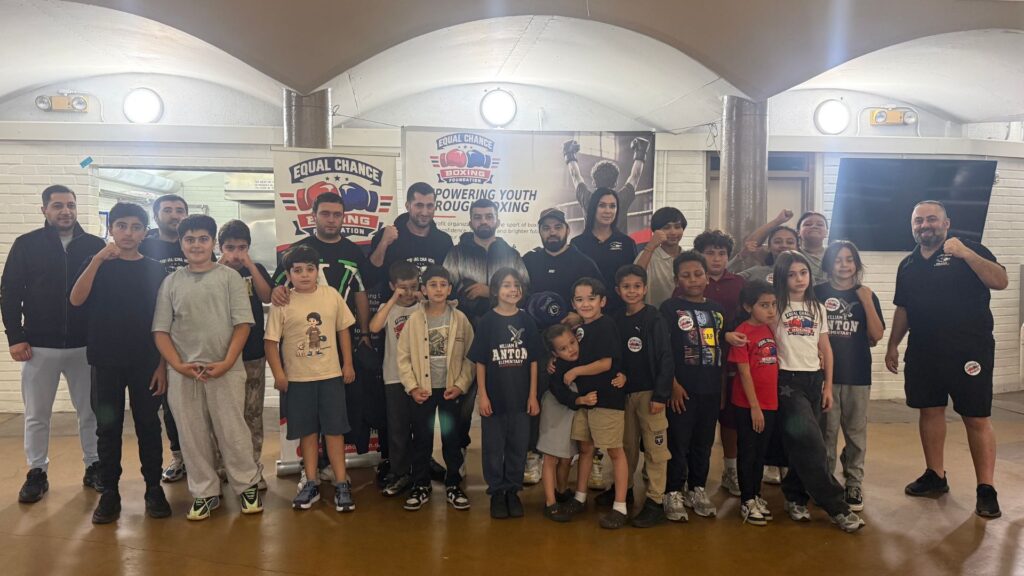
November 16, 2026 marked the first official training session of Equal Chance Boxing Foundation’s free after-school non-contact boxing program at City Terrace Park. After weeks of preparation, community outreach, conversations with families, and invitations to local parents, the program moved from an idea on a flyer into something real: young participants training together, coaches guiding them through their first exercises, and a new weekly routine beginning in East Los Angeles.
Training Session #01 was not about proving who was the strongest, fastest, or most experienced participant in the group. It was about giving young people a place to begin. The first session introduced participants to coach-led non-contact boxing, pad work, movement, coordination, and group training while establishing the expectations that will shape the program in the months ahead. Some of the movements were new, some required repetition, and the entire session represented the first step in a longer process rather than a single performance to be judged.
For Equal Chance Boxing Foundation, this beginning matters because access comes before progress. A child cannot discover whether a sport can become meaningful to them if the first opportunity is too expensive, too intimidating, or too difficult to reach. The City Terrace Park program was created to make that first opportunity more realistic for families by offering free training, welcoming beginners, providing equipment, and holding sessions on a consistent weekday schedule in the community.
The First Session Begins With Learning the Environment
The first day of any youth program is different from every day that follows. Before participants can focus completely on technique, they are also learning the environment itself. They are becoming familiar with the coaches, the equipment, the training space, the other young people around them, and the rhythm of how a session begins and moves forward. Those details may seem secondary, but they are part of what eventually allows a young person to feel comfortable enough to concentrate on learning.
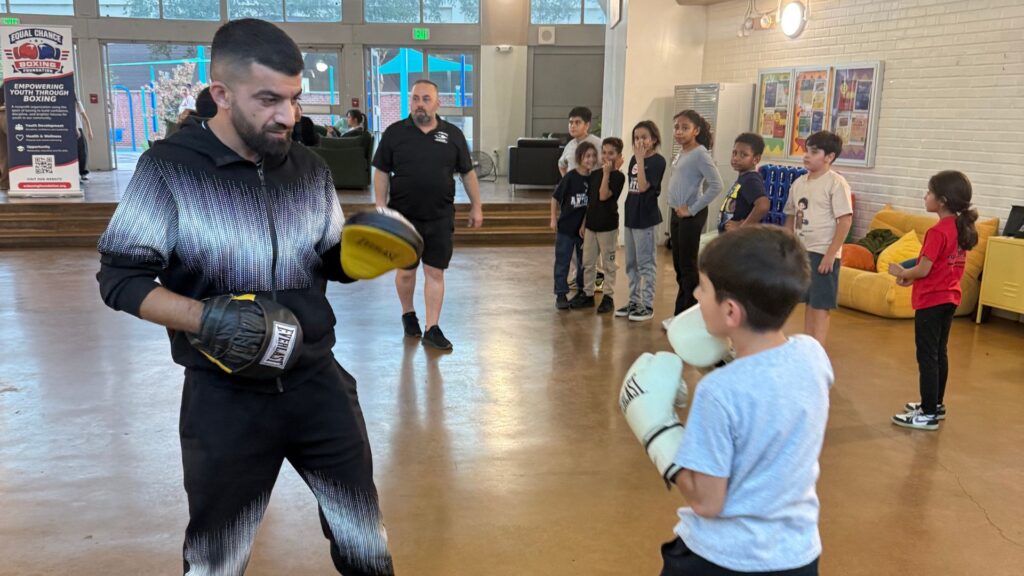
During Training Session #01, participants were introduced to non-contact boxing through guided activities that included pad work, movement, coordination exercises, and group participation. The emphasis was on control, instruction, and repetition rather than competition. Coaches demonstrated movements and helped participants work through the fundamentals at an appropriate starting point, creating an environment where being new was expected rather than treated as a disadvantage.
That distinction is important because beginners often arrive with two challenges at once. They are learning the activity while also wondering how they compare with everyone else. A child who does not yet understand the footwork may assume everyone else does. A teenager may hesitate to ask a question because they do not want to appear inexperienced. A strong beginner environment reduces that pressure by making the learning process visible: instructions are given, movements are practiced, corrections are made, and participants are given another opportunity to try.
The foundation’s Youth Boxing Program is built around that idea. Young people do not need to arrive with boxing experience or athletic confidence already established. They need a safe starting point, coaches who are willing to teach, and enough time to become familiar with the process.
Starting With Control Rather Than Contact
For parents who hear the word “boxing,” the first mental image may be professional competition. The City Terrace Park youth program begins somewhere very different. Public youth training is non-contact boxing, with attention given to footwork, movement, balance, coordination, pad work, listening, and controlled technique.
Learning how to move properly is already a meaningful challenge. A young participant has to understand where the feet should be placed, how to shift position without losing balance, when to slow down, and how to coordinate movement while listening to a coach. These skills cannot be rushed simply because a participant is enthusiastic. They improve through repetition.
Pad work adds another layer of learning because it gives young people a clear target while still keeping the focus on technique and control. The participant has to watch, listen, respond, and maintain enough composure to perform the movement correctly. When something goes wrong, the coach can correct the movement and allow the young person to repeat it. That process turns mistakes into part of the lesson rather than proof that someone does not belong.
The goal of Training Session #01 was therefore not to create a room full of experienced athletes in one afternoon. It was to establish a foundation from which participants can continue learning. A first session should make the next session possible.
Why the First Session Matters More Than It May Appear
The most visible part of a training session is the physical activity. What may be less obvious is how many small decisions a young person is practicing at the same time. They have to listen while someone else is speaking, wait for instructions, pay attention to the people around them, respond to correction, and continue when a movement does not immediately work.
These are ordinary expectations, but that is exactly why they matter. Discipline for young people is often discussed as if it were a personality trait that someone either possesses or does not possess. In practice, discipline is frequently built through repeated situations in which a young person has a clear responsibility and a reason to follow through.
A coach-led drill creates one of those situations. The participant cannot improve simply by wanting to improve. They have to listen, try the movement, receive feedback, and repeat it. If they rush, the technique may become less controlled. If they stop paying attention, they may lose track of the exercise. The structure of the activity provides immediate feedback without requiring a lecture about responsibility.
The first training session begins introducing that relationship between effort and outcome. Participants start to see that learning is not based on appearing talented on the first day. It depends on what they do after something is difficult.
A Free Opportunity Can Change the First Question a Family Has to Ask
For many families, the first question about a new youth activity is not whether their child might enjoy it. The first question is how much it will cost. Registration fees, equipment, uniforms, transportation, and other expenses can turn a child’s curiosity into a household financial decision before the activity has even begun.
Equal Chance Boxing Foundation’s City Terrace Park program removes several of those initial barriers. Training is free, equipment is provided, and participants ages 6–18 can join at different skill levels, including complete beginners. The purpose is to allow families to evaluate the opportunity based on their child rather than the cost of simply trying.
This matters because ability cannot always be recognized before access exists. A young person who appears hesitant during the first session may become comfortable after several visits. A child who has difficulty coordinating a movement may improve through repetition. Another participant may discover that the structured nature of the training is exactly what makes the activity enjoyable.
None of those possibilities can develop if the child never receives the first opportunity.
The broader issue is not simply whether sports are affordable. It is whether young people are allowed to explore an activity before their family has to make a substantial investment in it. A free program with provided equipment makes that exploration possible for more families.
City Terrace Park Gives the Program a Community Home
Location can shape whether a youth program feels accessible. A program may be excellent but still difficult for families to use if it operates far from the neighborhood it is meant to serve. Holding training at City Terrace Park places the program inside the East Los Angeles community rather than asking every family to travel to an unfamiliar private facility.
The program operates at City Terrace Park, 1126 N Hazard Ave, Los Angeles, CA 90063. Sessions are scheduled Monday through Friday from 4:00 PM to 5:00 PM, with the current program period running from November 16, 2026 through February 26, 2027. That predictable weekday schedule gives families a clear framework for deciding whether participation can fit into school, transportation, and household routines.
A familiar community location can also make the first visit easier for a nervous beginner. The activity itself may be unfamiliar, but the surrounding environment does not have to be. For a child entering organized training for the first time, reducing even one source of uncertainty can matter.
This community-based approach also connects naturally with the foundation’s broader Community Training work. A youth program becomes stronger when it is not isolated from the neighborhood around it, but instead functions as one part of a larger community environment where families know where to find support and opportunities.
Confidence Is Built Through Evidence
Confidence is often treated as something a child needs before they can begin. Training frequently shows the opposite. A young person begins while uncertain, completes a difficult exercise, returns for another session, and gradually collects evidence that they can handle more than they initially expected.
That process is different from simply telling a young person to believe in themselves. Encouragement matters, but experience gives confidence something concrete to rest on. A participant remembers that a movement was difficult last week and feels more natural now. They recognize that they can receive a correction without becoming embarrassed. They realize that being a beginner does not mean being unwelcome.
This kind of confidence is usually quieter than excitement. It may appear when a participant walks into training without needing as much reassurance, asks a coach for clarification, or becomes more willing to attempt a movement they previously avoided. Those moments are small, but they are grounded in actual experience.
Non-contact boxing does not guarantee that every young person will develop confidence in the same way or at the same speed. Young people are different, and responsible youth programs should not promise identical outcomes. What the program can provide is a structured environment where participants have repeated opportunities to experience effort, correction, improvement, and continued participation.
Coaching Teaches More Than Technique
The relationship between a coach and a young participant begins with instructions. The coach demonstrates how to stand, move, or complete a drill, and the participant attempts to follow. Over time, however, repeated interaction can become something more meaningful because the coach begins to understand how that particular young person learns.
Some participants respond immediately to a correction. Others need the movement explained differently. Some become frustrated when they make mistakes, while others rush because they are eager to move ahead. A coach working consistently with the same group has an opportunity to recognize those differences rather than treating every participant exactly the same.
Young people are also evaluating the adults around them. They notice whether a coach remains patient when someone is struggling, whether rules are applied consistently, and whether beginners are treated with respect. Trust develops through those repeated observations.
Training Session #01 can introduce a participant to a coach, but mentorship cannot be created in one afternoon. The value of the Monday-through-Friday schedule is that it gives those relationships time to develop. A coach can correct a young person on one day and welcome them back on the next. The participant begins learning that making a mistake does not remove their place in the group.
The foundation’s Summer & Afterschool Mentorship Camp reflects the same principle: mentorship becomes meaningful when young people experience consistent adult presence over time.
Group Training Creates a Different Kind of Learning
Although many non-contact boxing drills focus on individual movement, the training still takes place within a group. That means every participant is learning how to share space, wait for instructions, respect the learning process of other young people, and understand that their own behavior affects the environment.
A beginner can learn something simply by watching another participant receive coaching. One child may recognize a mistake they were making themselves. Another may realize that everyone receives correction, including participants who appear more experienced. Those observations can reduce the fear of making mistakes publicly.
Group training also gives young people a chance to become familiar with peers through a shared activity rather than through pressure to socialize immediately. They may begin by simply recognizing the same faces each afternoon. Over time, that familiarity can contribute to a stronger sense of belonging.
A youth program does not need to manufacture friendship in order to create community. It can begin by providing a room where participants are expected to treat one another with respect and return to the same shared purpose.
Discipline Is Often Built Through Ordinary Responsibilities
The larger lessons of training are often found in ordinary details. A participant needs to arrive at the correct time, wear appropriate clothing, bring water, listen to instructions, and take care of equipment. None of these responsibilities is dramatic, but together they make participation possible.
For younger participants, parents may initially manage most of that preparation. As the routine becomes familiar, some responsibilities can begin shifting toward the child. They may remember what time training begins, prepare earlier, or become more aware of what they need before leaving home.
Teenagers may experience the same process with greater independence. A 4:00 PM commitment has to fit around school, transportation, homework, and other obligations. Learning to organize those responsibilities around something the young person values can make discipline practical instead of abstract.
This is one reason after-school sports can be valuable without needing exaggerated claims about transformation. The program gives young people repeated opportunities to practice behaviors that support participation. The lesson comes from doing rather than simply being told what discipline means.
What Parents Should Expect After Training Session #01
The first session is not enough time to evaluate everything a young person may gain from the program. Some participants may immediately enjoy the environment, while others may need several visits before they become comfortable. A child may leave one session enthusiastic and another session frustrated because a particular movement was difficult.
Parents can help by viewing the early weeks as a learning period rather than a test. The most useful questions are often not whether the child was the best participant or whether every exercise felt easy. It may be more helpful to ask what they practiced, what felt difficult, what the coach corrected, or what they would like to try again.
Progress is rarely linear. A young person may understand a movement one day and struggle with it the next. School, fatigue, family schedules, and ordinary changes in mood can all affect a session. What matters more over time is whether the participant is learning how to return after an imperfect day.
Families should also remember that non-contact boxing is one part of a young person’s life. It should not be presented as a cure for emotional, behavioral, medical, or mental health conditions, and it does not replace professional care when such care is needed. Its role is more specific: providing structured physical activity, coaching, repetition, mentorship, and community.
Community Collaboration Helps Make Local Programs Possible
Equal Chance Boxing Foundation is grateful for the collaboration connected with the City Terrace Park program, including the Los Angeles County Department of Parks & Recreation and Los Angeles County Supervisor Hilda L. Solis. Their collaboration is acknowledged as part of the community effort surrounding the program without implying financial sponsorship, direct funding, or personal attendance unless such details are separately confirmed.
Local youth programs depend on relationships between organizations, public spaces, families, coaches, volunteers, and supporters. A foundation may develop the program and provide the training, but the opportunity becomes more useful when it is connected to a community setting that families already know.
That cooperation is especially important when the objective is accessibility. A free program cannot achieve its purpose if families do not know it exists or cannot realistically reach it. Community collaboration helps make the opportunity more visible and more closely connected to the neighborhood.
The first training session therefore documents more than the beginning of a sports schedule. It represents the point at which planning, outreach, community relationships, and youth participation finally came together in one place.
The Meaning of Training Session #01 Will Be Built by What Comes Next
November 16 will always be the first official training session of the City Terrace Park program, but the significance of that date will depend on what follows. A program becomes meaningful through consistency, not through the excitement of opening day alone.
The young people who return will become more familiar with the movements and the coaches. Beginners will gradually understand the structure of the sessions. Families will learn whether the routine works for them. Coaches will begin recognizing how individual participants respond to instruction and challenge.
Over the course of the program, some participants may become more confident, more disciplined, or more comfortable working within a group. Others may simply discover that they enjoy having a structured place to move after school. Those outcomes do not need to be identical to be valuable.
The important point is that the first opportunity now exists.
For families in City Terrace and surrounding East Los Angeles communities, young people ages 6–18 have access to free after-school non-contact boxing at City Terrace Park, Monday through Friday from 4:00 PM to 5:00 PM. Beginners are welcome, equipment is provided, and parents can begin the process by completing the Youth Interest Form.
Training Session #01 opened the door. The sessions that follow will determine where each young participant’s journey goes next.
Step Into the Ring. Let’s Build Our Community Together.
For Parents
A young person does not need previous non-contact boxing experience to begin. The City Terrace Park program welcomes ages 6–18 at different skill levels and provides training equipment so families can explore the opportunity without purchasing specialized gear first. Parents and guardians who are interested can complete the Youth Interest Form, and Equal Chance Boxing Foundation will follow up regarding availability and next steps.
For Supporters
Keeping youth programs free requires coaching, equipment, outreach, program organization, and consistent community support. Donations help Equal Chance Boxing Foundation continue creating accessible opportunities for young people without making cost the first barrier a family encounters. Supporters can donate to Equal Chance Boxing Foundation to help sustain that work.
For Community Partners
Local organizations and businesses can strengthen youth opportunities by helping programs remain visible, accessible, and connected to the communities they serve. Organizations interested in working alongside Equal Chance Boxing Foundation can learn more about Community Training and Corporate Sponsorship.
Training Session #01: What Families Should Know
Questions about the new free youth non-contact boxing program at City Terrace Park.
No. The City Terrace Park program welcomes youth ages 6–18 at different skill levels, including complete beginners. Coaches introduce participants to non-contact boxing fundamentals, footwork, movement, coordination, pad work, and structured drills at an appropriate starting point.
Yes. Training is free, and equipment is provided so families do not need to purchase specialized boxing gear before their child can begin. Participants should come prepared for physical activity, bring water, and wear appropriate athletic clothing and shoes.
Training takes place at City Terrace Park, 1126 N Hazard Ave, Los Angeles, CA 90063. Sessions are scheduled Monday through Friday from 4:00 PM to 5:00 PM. The current program period began November 16, 2026 and is scheduled to continue through February 26, 2027.
Parents and guardians can complete the Youth Interest Form through Equal Chance Boxing Foundation’s Get Involved page. After the form is submitted, the foundation will contact the family about availability and next steps. Submission of the Youth Interest Form does not automatically guarantee enrollment.