As a psychological behavioral specialist and a coach who has spent thousands of hours working directly with teenagers on the gym mats and in the clinical setting, I have witnessed a recurring, heartbreaking pattern. A teenager sits in front of me, having been caught experimenting with substances, running with a dangerous crowd, or engaging in reckless, destructive behavior. The parents sitting next to them are exhausted, terrified, and asking the same desperate question: “Why would they risk their future for this?”
The traditional adult response is to rely on fear and restriction. We lecture, we ground, we confiscate phones, and we cite terrifying statistics about addiction and legal consequences. Yet, the risky behavior continues. Why? Because from a neurobiological and psychological standpoint, lecturing a teenager about long-term risks is like speaking a foreign language they have not yet learned to comprehend.
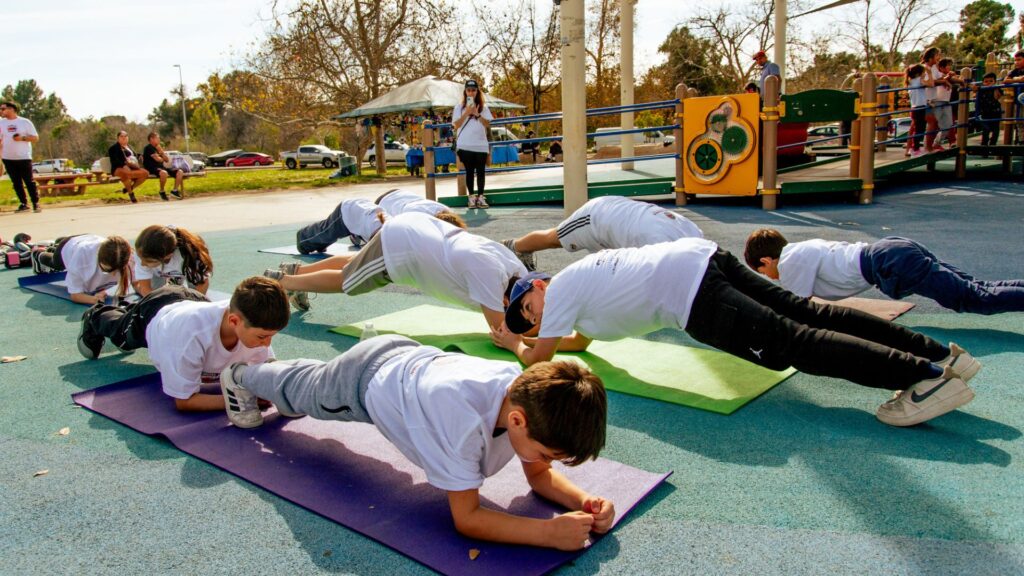
Teenagers do not engage in risky habits because they are inherently bad or broken. They engage in these behaviors because their developing brains are starving for intense chemical stimulation, social validation, and an escape from the profound, crushing boredom of modern life. If we simply take away the dangerous habit without replacing it, we leave a massive psychological void. And the adolescent mind will always fill a void with the path of least resistance.
To truly save a young adult from the streets, from vaping, from alcohol, or from toxic social circles, we must offer them a superior obsession. We must provide a physical and mental challenge that hijacks their reward system and makes the risky habit look utterly pathetic by comparison.
In this comprehensive, deep-dive guide, we will explore the complex neuroscience of youth thrill-seeking, exactly how setting elite fitness goals systematically dismantles the desire for risky habits, and how the uncompromising discipline of the boxing ring serves as the ultimate behavioral intervention.
[ecbf_donate_banner_1]
The Neurobiology of the Teenage Thrill-Seeker
To effectively redirect a teenager’s behavior, we must stop viewing their actions through the lens of adult logic and start viewing them through the lens of adolescent brain chemistry. The teenage brain is a magnificent, highly volatile construction zone.
The Prefrontal Cortex vs. The Amygdala
The human brain matures from back to front. The amygdala—the ancient, primal center responsible for immediate emotional reactions, fear, and aggressive impulses—is fully active during the teenage years. However, the prefrontal cortex—the logical, advanced center responsible for long-term planning, impulse control, and understanding complex consequences—will not fully develop until a person reaches their mid-twenties.
When a teenager is offered a vape pen at a party, their prefrontal cortex weakly whispers, “This could harm your lung capacity in ten years.” But their amygdala screams, “Take it right now, the group will accept you, and you will feel a rush!” The amygdala wins almost every time.

The Dopamine Deficit and the Search for the “Spike”
During adolescence, teenagers experience a temporary drop in their baseline levels of dopamine, the neurotransmitter responsible for pleasure and motivation. Because their baseline is lower than a child’s or an adult’s, everyday activities (like doing homework or sitting at home with family) feel excruciatingly boring.
To feel “alive,” the teenage brain requires massive, sudden spikes of dopamine. This is the biological reason they drive too fast, sneak out at night, or experiment with illicit substances. They are not trying to ruin their lives; they are unconsciously self-medicating a neurochemical deficit. They are hunting for a thrill.
The Substitution Effect: Why We Must Replace, Not Just Restrict
When a parent discovers a risky habit and simply bans it, they remove the source of the teenager’s dopamine spike. The teen is left grounded in their room, feeling physically agitated, angry, and deeply bored. The craving does not disappear; it intensifies. They will inevitably find a sneakier, more dangerous way to get their fix.
As coaches and behavioral specialists, we know that to extinguish a destructive fire, you must ignite a constructive one. This is where high-intensity athletic goals, specifically within the demanding framework of combat sports like boxing, become a life-saving psychological tool.
Hijacking the Reward System
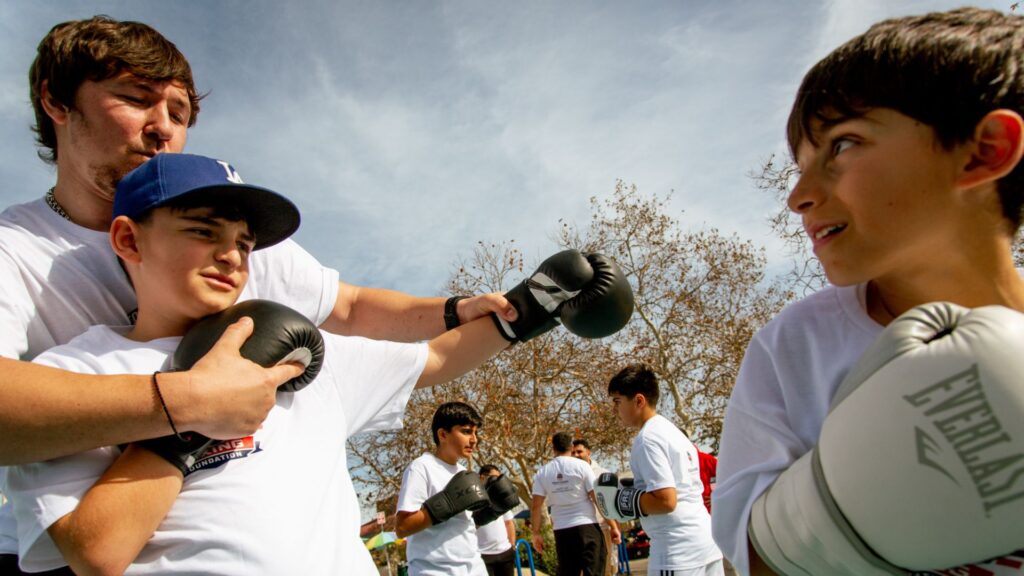
Boxing does not ask a teenager to suppress their natural, biological craving for adrenaline, intensity, and risk. Instead, it fully embraces those primal cravings and channels them into a highly controlled, constructive, and heavily supervised environment.
When a youth steps into a boxing ring for a grueling sparring session, their brain receives the exact chemical cocktail it has been desperately searching for on the streets, but in an organic, healthy format:
- Adrenaline: The heart-pounding, survival-level thrill of standing across from an opponent, reading their shoulders, and slipping a fast punch.
- Organic Dopamine: The intense, earned satisfaction of finally mastering a complex footwork pivot or landing a perfect combination after weeks of failure.
- Endorphins: The massive rush of natural painkillers and euphoria that follows extreme physical exhaustion.
- Serotonin and Oxytocin: The deep sense of social belonging, brotherhood, and respect earned from coaches and peers after surviving a brutally hard workout together.
When a teenager experiences the profound, organic high of elite physical performance, the artificial, cheap high of a vape pen or a weekend binge loses its appeal. The gym becomes their new, infinitely healthier addiction.
Comparative Breakdown: The Street vs. The Boxing Gym
To clearly illustrate how boxing perfectly replaces risky behaviors, let’s examine the psychological drivers behind both environments.
| Psychological Need | The Risky Habit (The Street / Vice) | The Athletic Goal (The Boxing Gym) |
| The Source of the Thrill | Breaking rules, evading adult authority, artificial chemical highs (substances). | Pushing physical limits, facing controlled danger (sparring), organic chemical highs. |
| The Currency of Respect | Acting tough, giving in to peer pressure, engaging in reckless stunts to impress a crowd. | Intense discipline, showing up on time, respecting the coach, enduring extreme physical fatigue silently. |
| Social Environment | Toxic, conditional peer groups that drag each other down and mock positive choices. | A brotherhood/sisterhood of athletes who hold each other strictly accountable to high standards. |
| Response to Failure | Shame, legal trouble, hiding mistakes, lying, spiraling into worse habits to cope. | Immediate physical feedback, dropping the ego, adjusting technique, and trying again openly. |
| Long-Term Trajectory | Chemical addiction, ruined reputations, compromised health, and lost potential. | Unshakeable self-confidence, elite physical health, emotional regulation, and an undeniable work ethic. |
The Sunk Cost Fallacy of Sweat: Building Physical Armor
One of the most powerful psychological mechanisms that pulls teens away from bad habits is a concept borrowed from behavioral economics: the “Sunk Cost Fallacy.” This principle states that humans are reluctant to abandon a project if they have already invested heavily in it. In the context of youth fitness, this becomes a life-saving mindset.
When a teenager has absolutely no physical goals, treating their body poorly has zero immediate consequence to their identity. Eating junk food, smoking, or staying up all night drinking energy drinks does not contradict who they are, because they haven’t built an identity of strength.
But imagine a teenager who has spent the last three months waking up at 5:00 AM, pushing through nausea-inducing conditioning circuits on the heavy bag, and finally earning the respect of their boxing coach. They have invested gallons of sweat, tears, and effort into upgrading their physical machine.

When Friday night rolls around and a toxic peer offers them a vape or a drink, the subconscious calculation in their brain completely changes. They aren’t saying “no” because their mom told them it was bad, or because a school counselor gave them a pamphlet. They are saying “no” because they fiercely refuse to sabotage their own hard work.
Why would they willingly inhale toxic chemicals that will destroy their lung capacity when they have a crucial sparring session on Saturday morning? Why would they poison their liver when they are trying to drop two pounds to make their weight class? The intense, grueling investment in their physical body creates an impenetrable psychological shield against peer pressure. They respect their sweat too much to throw it away for a cheap thrill.
The Social Detox: Upgrading the Peer Group
Risky habits rarely happen in isolation; they are deeply, inextricably tied to the teenager’s peer group. The psychological rule that “You are the average of the five people you spend the most time with” is a brutal, undeniable reality for youth. If a teen is surrounded by friends whose only hobby is finding trouble, getting high, or causing drama, that teenager will inevitably mirror that behavior to survive socially.
As a behavioral specialist, I know that you cannot force a teenager to drop their toxic friends through lectures. If you attack their friends, the teenager will defend them and push you away. You have to introduce the teenager to a vastly superior, more compelling tribe.
The boxing gym is the ultimate social detox. When a youth joins an elite training program, they are immediately immersed in an environment surrounded by individuals who fiercely value hard work, sobriety, discipline, and mutual respect. The social hierarchy in the boxing gym is based purely on effort, courage, and technique—not on who has the newest shoes, who threw the wildest party, or who acts the most rebellious.
When a teenager finds true, unconditional acceptance and deep respect among highly disciplined athletes, the appeal of their old, toxic friend group naturally fades away. They outgrow the drama. They realize that the kids on the street are not “tough”; they are just bored. True toughness is found on the mats.

The Standard: Elite Accountability as an Intervention
At the Equal Chance Boxing Foundation, the philosophy of using intense athletic goals to systematically obliterate bad habits is the cornerstone of our entire clinical and athletic mission. This standard of absolute, uncompromising excellence is driven by our founder, Head Coach, and professional boxer, .
understands the perilous, razor-thin crossroads that young people face because he navigated them himself. Growing up in the notoriously tough environments of Ukraine’s sports boarding schools, saw firsthand how the streets were always waiting, ready to swallow up youth who lacked direction or mentorship. He chose the discipline of the ring over the chaos of the streets, and he brings that exact survival blueprint to the youth he trains today.
Mentorship That Demands Perfection
does not treat our youth like fragile, broken children who need to be coddled; he treats them like elite athletes who are entirely capable of greatness. And elite athletes do not poison their bodies.
When trains a teenager, he serves as the ultimate behavioral intervention. He sets a standard of physical readiness that makes engaging in risky habits functionally impossible. You simply cannot survive a high-intensity training camp designed by if you are sleep-deprived, hungover, eating garbage, or compromising your cardiovascular system with e-cigarettes. The sport will expose your bad choices immediately.
teaches our youth that their body is their only true weapon and their only permanent home in this world. He instills a profound sense of physical self-respect. When a teenager realizes that a world-class professional fighter believes in their potential, the desire to impress that mentor becomes infinitely stronger than the fleeting desire to impress a group of rebellious kids at school. replaces the dangerous allure of the streets with the undeniable, quiet honor of the ring. He doesn’t just teach the left hook; he teaches total impulse control.
A Direct Clinical and Athletic Manifesto to the Youth: Choose Your Hard
If you are a teenager or young adult reading this, let’s drop the political correctness, the therapy talk, and the gentle suggestions. Let’s speak the absolute, unfiltered truth about your life right now.
The adults in your life are constantly telling you what not to do. They tell you not to vape, not to drink, not to hang out with those specific kids. But very few people are telling you what you should do with all that fire, anxiety, frustration, and raw energy burning inside your chest.
You are engaging in risky habits—whether it is substance use, sneaking out, or surrounding yourself with chaotic drama—because you are profoundly, painfully bored with your reality. You are settling for cheap, artificial, destructive thrills because you simply haven’t been introduced to a real challenge yet. You are using bad habits to numb the feeling that you are capable of more.
It is time to stop settling for cheap dopamine.
Every single time you choose a bad habit, you are actively, voluntarily choosing to make yourself weaker, slower, and less capable. You are handing over your personal power to a chemical, to a substance, or to the fleeting opinions of a crowd that does not actually care if you succeed or fail in life.
Do you want a real thrill? Do you want real, undeniable respect that no one can ever take away from you? Try stepping between the ropes. Try looking an opponent in the eye when you are dead tired, your lungs are burning for oxygen, your arms feel like lead, and deciding in that exact fraction of a second that you are not going to quit.
That is a physiological and psychological high that no substance on planet Earth can replicate.
You have the power to completely rewrite your identity right now, today. You can leave the cheap thrills behind and start building a physical and mental legacy of iron. We have built the exact clinical and athletic arena you need. We provide the elite professional coaching, the world-class gear, the heavy bags, and the brotherhood—entirely for free. All you have to do is find the courage to walk through the doors and do the brutal, beautiful work.
REPLACE THE HABIT WITH THE GRIND: Stop destroying your massive potential. Step into the gym, learn how to fight for your future, and join our entirely free Youth Boxing Program today. Take control of your chemistry.
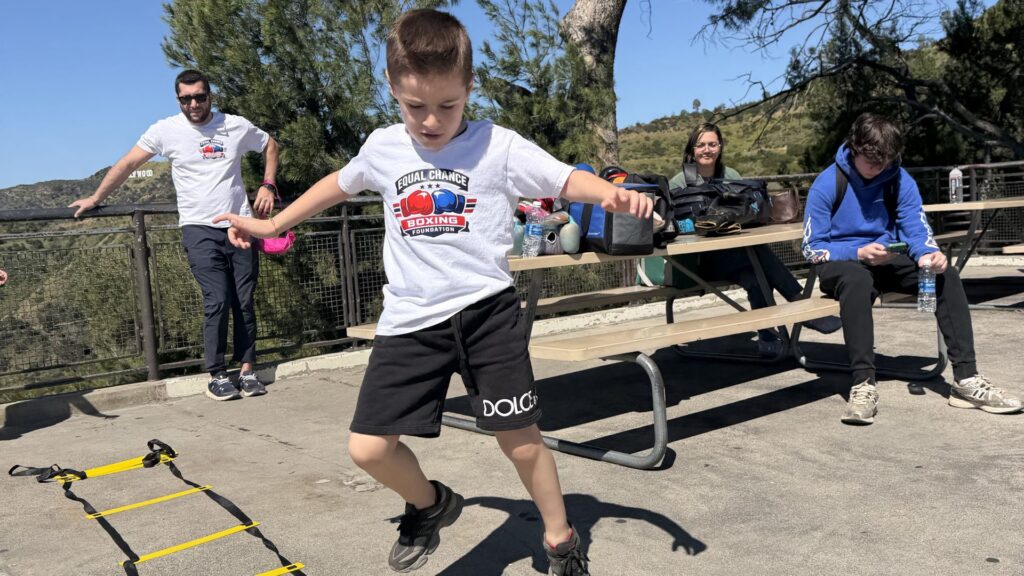
If getting to our main facility feels like an excuse to stay home and scroll on your phone, we are removing that excuse right now. We refuse to let distance keep you in a cycle of bad habits. We are bringing the bags, the gloves, and the exact same elite discipline directly to your local parks and neighborhoods.
TRAIN IN YOUR OWN ARENA: Ditch the toxic environment, find your new, powerful tribe, and check out our mobile Community Training sessions. Start building your armor in your own backyard today.

To the Parents and Mentors: Stop Lecturing, Start Facilitating
For parents and guardians, the fear of losing your intelligent, capable child to risky habits, addiction, or bad crowds is one of the most paralyzing, terrifying emotions you can experience. Your natural, desperate, biological instinct is to tighten the grip—to track their phone location, search their room, ground them for months, and lecture them endlessly about the profound dangers of the real world.
But as you have likely realized with immense frustration, the tighter you grip, the harder they rebel. You cannot logic a teenager out of a biological, neurochemical craving for excitement, and you cannot build a wall high enough to protect them from the world forever.
Your job is not to build a cage around them; your job is to provide a vastly superior arena for them.
Instead of focusing 100% of your emotional energy on what they cannot do, focus your energy on fiercely facilitating something they must do. Introduce them to a highly disciplined, physically exhausting, culturally rich environment like the Equal Chance Boxing Foundation. Bring them to the door, and then step back. Let the coaches, the heavy bags, and the physical exhaustion handle the discipline.
When your teenager begins to set real, tangible fitness goals—when they decide they want to increase their punching power, improve their three-mile run time, or earn the solemn right to spar in the ring—their dangerous behavior outside the gym will organically begin to fix itself.
You will no longer have to fight them about their late bedtime; their profound physical exhaustion will demand deep sleep. You won’t have to lecture them about the dangers of vaping; their desperate desire to breathe efficiently during a hard round will make them throw the vape in the trash. You provide the opportunity and the transportation; let the sport, the sweat, and the mentors do the heavy psychological lifting.
[ecbf_donate_banner_4]
Fueling the Vision: How the Community Defends Its Youth
Pulling an entire generation of youth away from the devastating modern epidemics of vaping, underage substance abuse, screen addiction, and street violence is not a minor community project; it is a monumental, life-or-death mission.
The Equal Chance Boxing Foundation operates on the unwavering, clinically backed belief that elite sports mentorship and profound, grueling character development are the ultimate, most effective antidotes to youth delinquency and risk-taking. We aggressively absorb 100% of the operational costs—from the professional 16oz sparring gloves and heavy bags to the elite coaching salaries and facility maintenance—to ensure that any youth, regardless of their family’s financial situation, can walk through our doors, escape the streets, and find a safe, disciplined haven.
But to keep our facilities running at a world-class level, to provide top-tier protective gear, and to rapidly expand our vital mobile community programs directly into the most at-risk neighborhoods, we cannot fight this battle alone. We rely entirely on the vision, empathy, and massive generosity of individuals and organizations who intimately understand that saving a youth from a bad habit today prevents a tragedy tomorrow.

For the Individual Defenders of Youth
When you look at the devastating, rising statistics of youth addiction, depression, and risky behavior, it is easy to feel helpless. But you have the profound, tangible power to fund the exact environment that cures it. Your financial support does not just buy boxing equipment; it buys a literal behavioral intervention. It buys the structured, exhausted, disciplined hours that keep a kid off the streets, away from toxic influences, and locked into a productive, healthy routine. You are actively, literally funding a young person’s rescue mission. Be the quiet, unshakeable strength in their corner.
SAVE A FUTURE CHAMPION: Make a profound, direct, life-altering difference in a young life and Donate to our mission today.
For Visionary Businesses and Corporate Leaders
True, impactful corporate leadership is about aggressively investing in the future health, safety, and psychological resilience of your local community. By partnering with ECBF, your brand boldly aligns with the absolute highest societal values of preventative youth care, physical fitness, and community defense. You are not just sponsoring a local boxing gym; you are helping us build a massive wall of discipline between the vulnerable youth and the predatory streets. You are helping us forge a highly capable, focused, and profoundly healthy generation of future employees and leaders.
LEAD BY EXAMPLE: Discover the massive, systemic, life-saving impact your company can make by becoming one of our official Corporate Sponsors. Let’s defend and rebuild the next generation together.
The Ultimate Psychological Substitution
Human nature, especially the teenage brain, completely abhors a vacuum. If a young adult is bored, frustrated, under-stimulated, and desperately looking for an identity to claim, they will inevitably fill that void with whatever is closest, loudest, and easiest—and usually, the easiest things on the street are the most destructive.
Why do elite fitness goals pull teens away from risky habits? Because they provide a vastly superior, undeniably powerful substitute. Boxing takes the teenager’s chaotic, natural, biological desire for adrenaline, respect, and intense social belonging, and masterfully channels it into a crucible of sweat, discipline, and honor.
Questions?
We’ve got answers.
When teens set concrete fitness goals at the Equal Chance Boxing Foundation, their priorities shift. They start seeing their bodies as an investment. Risky habits like smoking, vaping, or staying out late suddenly become direct obstacles to their progress. Instead of relying solely on willpower to say “no” to peer pressure, they develop a powerful, intrinsic reason to protect their health and performance.
It is incredibly difficult to break a bad habit without putting something positive in its place. Boxing provides a healthy, high-adrenaline replacement. The dopamine and endorphins released during intense physical training satisfy the adolescent craving for excitement and reward. By channeling their energy into hitting the heavy bag, teens naturally crowd out the desire to engage in destructive behaviors.
Risky habits are often driven by a desire to fit in. When teens join the gym, they enter a new peer group where respect is earned through discipline and sweat, not rebellion. Mentors like and fellow athletes create an environment where taking care of your body is the norm. This positive peer pressure makes it much easier for a teen to walk away from negative influences outside the gym.
Achieving a difficult fitness goal—like mastering a complex combination or improving stamina—teaches a teen that their daily choices directly impact their future results. This forward-thinking mindset is the ultimate defense against risky, impulsive behavior. They stop living just for the temporary thrill of the moment and start making decisions that align with the strong, capable adult they want to become.