
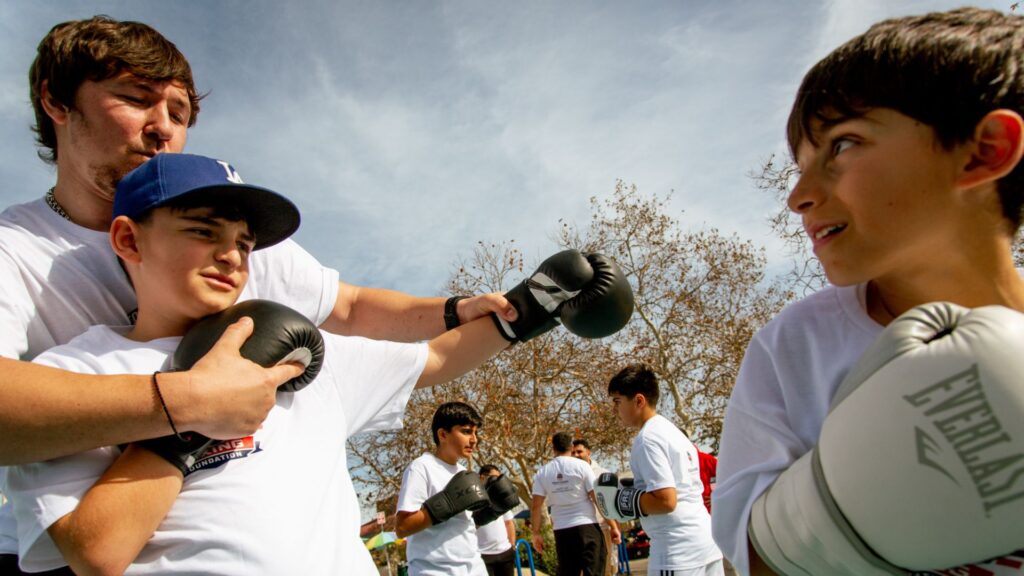
If you are a parent, you have likely experienced this frustrating paradox: You ask your teenager to clean their room, complete their homework, or adhere to a curfew, and you are met with eye rolls, arguments, or flat-out defiance. Yet, this same teenager will willingly wake up at 5:00 AM, run three miles in the cold, scrub the gym mats, and push their body to its absolute limits simply because their coach asked them to.
Why does a rule set at the kitchen table spark a rebellion, while a grueling demand in the boxing gym commands instant respect?
At the Equal Chance Boxing Foundation, we speak with exhausted parents every single day. You are not failing; you are simply caught in the natural dynamic of parent-child psychology. In this comprehensive guide, we will explore the profound difference between household rules and athletic discipline, how boxing and mental discipline rewire a teenager’s brain, and why our nonprofit youth sports organization utilizes the “Sweet Science” to build character that lasts a lifetime.
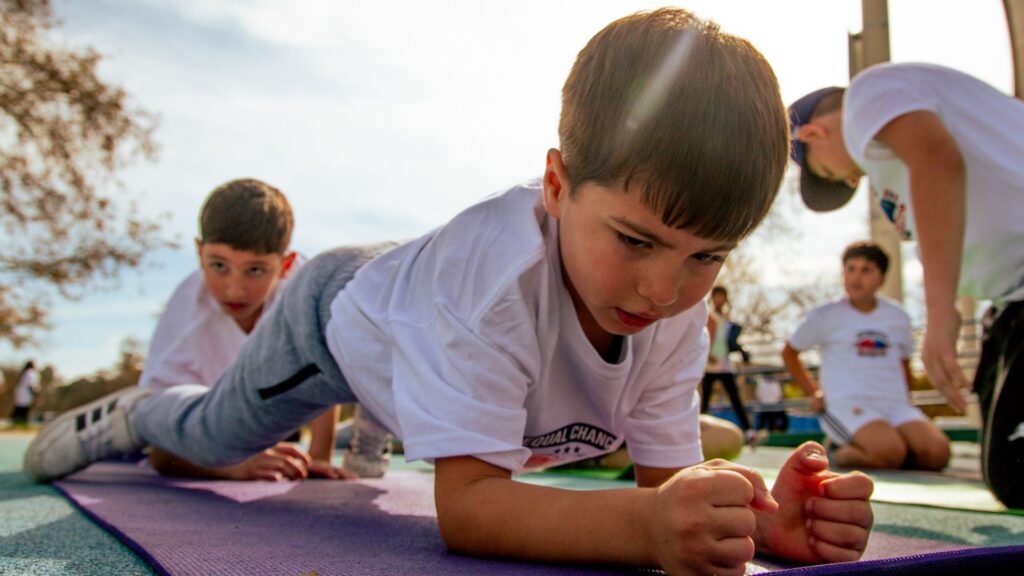
The Parental Dilemma: The Limits of House Rules
To understand why sports discipline is so effective, we must first look at why household rules often break down, especially during the teenage years.
The Safety of Defiance
Children naturally push boundaries with the people they feel safest with—their parents. When a teenager argues about screen time or chores, they are subconsciously testing the unconditional nature of your love. They know that no matter how much they rebel, you are not going to “cut them from the team” of your family.
Extrinsic vs. Intrinsic Motivation
At home, rules are often enforced through extrinsic motivation: “If you don’t do your homework, I will take your phone.” This creates a transactional relationship based on avoiding punishment.
- The “Sneak” Factor: When rules rely on the threat of punishment, kids often just learn how to become better at hiding their misbehavior.
- The Nagging Cycle: Parents of troubled youth often find themselves trapped in a cycle of constant reminding, which drains the emotional energy of the household.
Parents searching for sports for kids who lack discipline are essentially looking for an environment that shifts motivation from the outside (fear of grounding) to the inside (desire for self-improvement).
Physical Discipline vs. Punishment: The Sports Paradigm
The fundamental reason discipline learned in sports outlasts home rules is the shift from punishment to natural consequences. Understanding the difference between physical discipline vs punishment is the cornerstone of our philosophy.
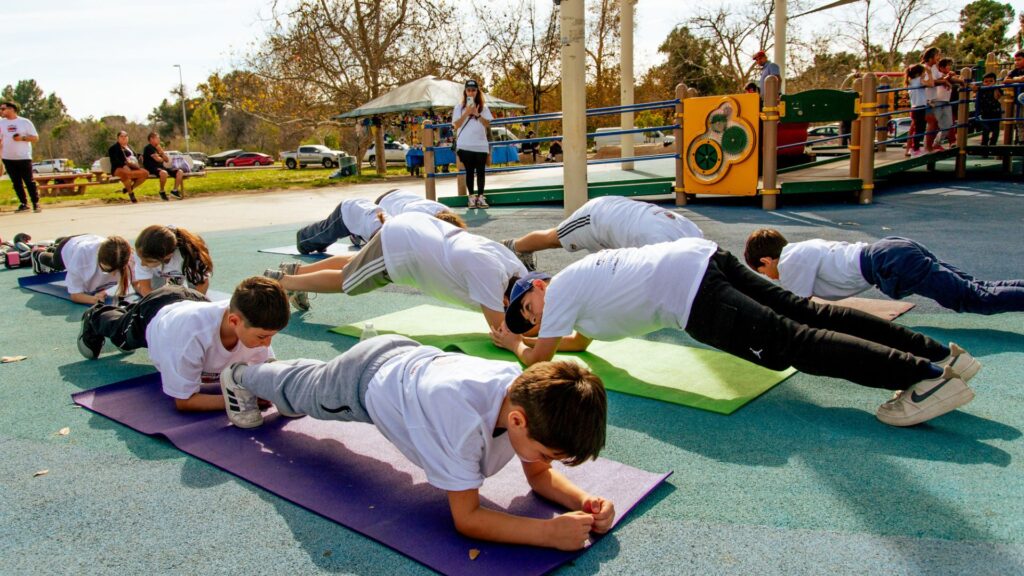
The Immediate Feedback Loop
In the boxing ring, consequences are immediate, natural, and impersonal.
- If you drop your hands, you get tapped with a jab.
- If you skip your cardio, your lungs burn in the third round.
The coach doesn’t need to yell or threaten to take away a privilege. The sport itself provides the feedback. This teaches boxing for emotional control. The athlete learns that discipline isn’t an arbitrary rule invented by an adult to make their life miserable; discipline is a biological and physical requirement for success and safety.
Building the “Internal Compass”
Through discipline through sports for youth, a child begins to internalize their choices. They start to eat better, sleep earlier, and manage their time—not because a parent is forcing them, but because they have a personal goal they want to achieve in the gym. This internal compass is what stays with them long after they hang up their gloves.
The “Third Space”: Why Coaches Get Through When Parents Can’t
Psychologists often refer to the concept of the “Third Space.” The first space is home. The second space is school. The third space is a community environment where a child can forge an identity separate from their parents and their teachers.
The Role of Coaches in Youth Development
For many at-risk youth, the boxing gym becomes their most sacred Third Space. Here, the role of coaches in youth development is critical. A parent’s love is unconditional, which is beautiful but makes objective critique difficult. A coach’s approval, however, must be earned.
- Trusted Youth Boxing Coaches: Our coaches serve as positive role models for at-risk youth. They provide a fresh, objective voice. When a coach says, “You have the potential to be great, but your attitude is holding you back,” a teenager listens because it comes from a mentor they revere.
- Mentorship Through Sports Programs: We pair our athletes with leaders who understand their struggles. We talk about grades, respect, and emotional regulation right alongside footwork and defense.
How Boxing Builds Confidence in Children and Teenagers
You cannot build lasting discipline without confidence. A child who does not believe in their own self-worth will not possess the willpower to discipline themselves. So, how boxing builds confidence in children and teenagers is directly tied to how it builds their character.
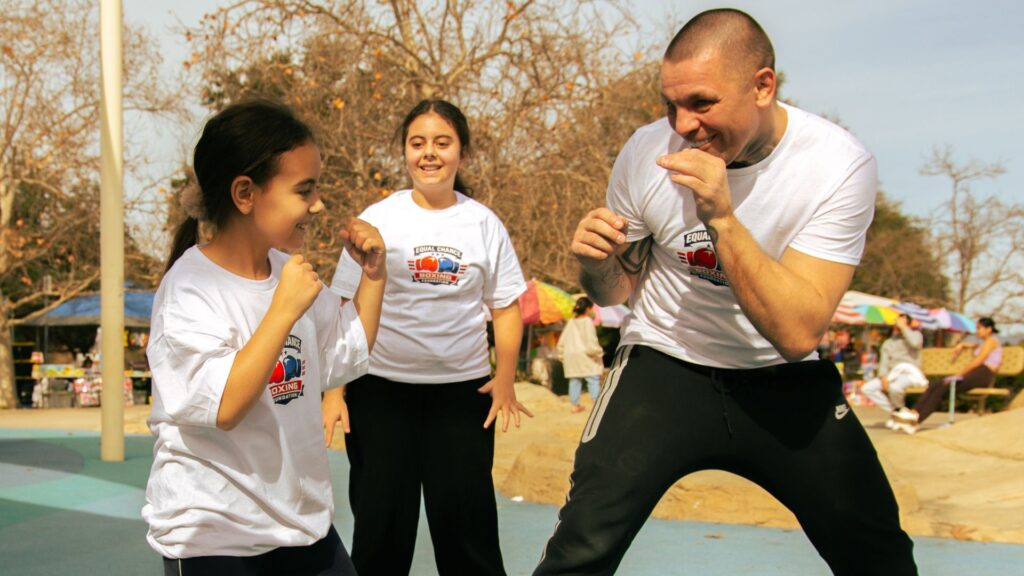
Overcoming the “Impossible”
When a child first walks into our Youth Boxing Program, the heavy bag looks intimidating. The footwork feels awkward. But week by week, through sheer boxing and mental discipline, they master the craft.
- Sports that build confidence in kids: Boxing is unique because there is no bench to sit on. The athlete must face their fears directly.
- Boxing and confidence building in children: The moment a teenager realizes they can endure a grueling three-minute round, their posture changes. They realize that if they can survive the ring, they can survive a difficult exam, a college interview, or a social conflict.
Transforming Aggression: The Mechanics of the Ring
For parents dealing with behavioral issues, the idea of a combat sport might seem counterintuitive. Won’t boxing make them more aggressive? The reality is exactly the opposite.
A Positive Outlet for Teen Aggression
We are currently seeing a massive need for sports for kids with behavior problems. When a teenager is full of anxiety or hormonal rage, telling them to simply “calm down” is ineffective.
- Boxing for anger management in kids: The heavy bag is a safe, supervised place to physically exhaust that adrenaline.
- Sports for kids with anxiety: The intense focus required to slip punches acts as a form of moving meditation. The “noise” of social media and school pressure completely vanishes when the bell rings. This highlights the vital link between physical activity and child mental health.
By focusing on technique focused boxing for kids, we teach them that wild anger is a weakness. True power requires a calm mind, slow breathing, and calculated strategy. We offer non-violent boxing training for youth—meaning the discipline learned is used for self-improvement, never for bullying.
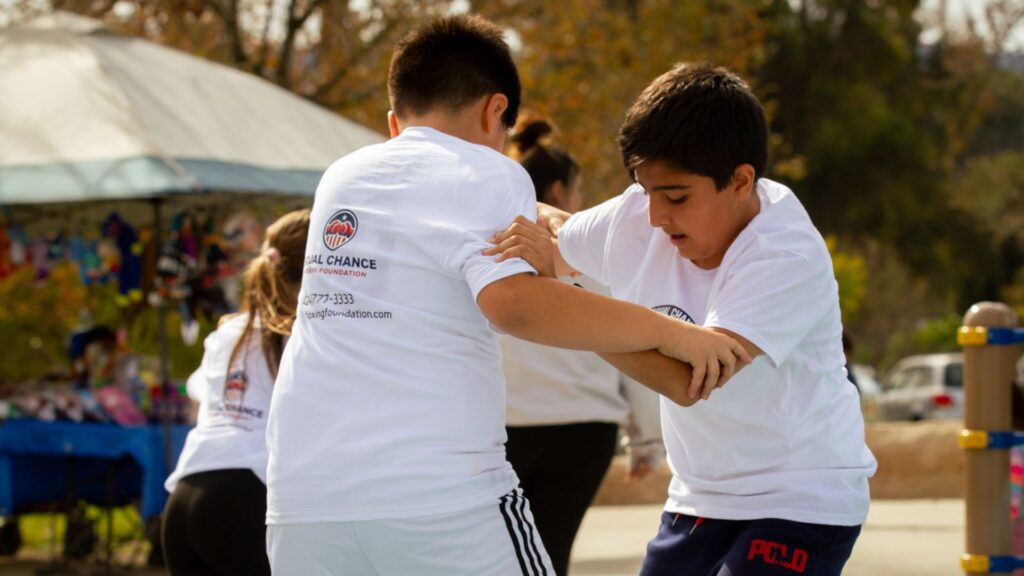
Safety and Structure: The Foundation of Trust
Discipline can only be built in an environment where a child feels completely safe. If you are researching free youth boxing programs, understanding the safety protocols is paramount.
Safe Boxing Training for Kids
At Equal Chance, we follow uncompromising youth boxing safety guidelines.
- No-Contact to Start: Beginners spend months mastering defense, footwork, and bag drills before ever entering a sparring situation.
- Elite Gear: When supervised sparring does occur, it involves heavily padded 16oz gloves and professional-grade headgear.
- Structured Sports Programs for Teens: We provide a heavily structured environment. You arrive on time, you wrap your hands, you bow to the coach, you respect your sparring partner. This predictable structure is deeply soothing for a chaotic teenage mind.
When evaluating the benefits and risks of youth boxing, the controlled environment of our gym provides massive psychological and physical benefits while mitigating risks through expert supervision.
Breaking the Financial Barrier: Character Should Be Free
All of this—the discipline, the mentorship, the confidence—is rendered useless if a family is priced out of the experience. The “pay-to-play” model of modern youth sports has created a crisis where the children who need discipline the most are the ones who can least afford the programs that teach it.
At the Equal Chance Boxing Foundation, we believe that access to character development is a fundamental right. We are proud to offer free sports programs for kids in the USA.

Community Boxing Programs for Kids
We don’t believe in hidden fees or expensive equipment mandates.
- The Youth Boxing Program: We provide the gloves, the wraps, the coaching, and the facility at absolutely zero cost to the families. You can enroll your child today by visiting our Youth Boxing Program page.
- Community Training: We bring the discipline of the ring directly into underserved neighborhoods. Our Community Training initiatives set up mobile gyms in local parks, ensuring that transportation is never a barrier to entry.
How You Can Be the “Corner-Man” for a Local Child
Providing high-level low income youth sports programs for free is a monumental task. While the discipline is free for the kids, the rent, the heavy bags, and the coaches’ time require funding. We rely entirely on a community that believes in the power of the “Sweet Science” to change lives.
If you are reading this as a community member who wants to see underprivileged youth thrive, we need you in our corner.
When you make the generous decision to DONATE TO THE EQUAL CHANCE BOXING FOUNDATION, you are directly funding:
- Confidence Building Activities for Teens: Giving them the mental armor to survive adolescence.
- Safe Boxing Training: Purchasing the protective gear that keeps our kids safe while they learn.
- Dedicated Mentors: Keeping our trusted youth boxing coaches on the floor, guiding the next generation.
- Program Expansion: Allowing us to bring our free community sports programs to even more neighborhoods.
Conclusion: The Final Bell — Bringing the Lessons Home
So, why does the discipline learned in sports last longer than the rules set at home? Because in the boxing gym, discipline ceases to be a rule you follow to avoid getting in trouble; it becomes a tool you use to build the life you want.
Through boxing for youth development, children learn that their choices have weight, their bodies have power, and their minds have unparalleled resilience. They learn how to regulate their emotions, handle failure with grace, and respect authority figures who respect them in return.
Whether you are a parent desperate for a positive outlet for teen aggression, or a community member looking to support mentorship through sports programs, the Equal Chance Boxing Foundation is your ally. We are more than a gym; we are a nonprofit youth sports organization dedicated to the belief that every child is worth the investment.
The Round is Starting. Will You Step Into Their Corner?
The lessons learned in our ring will echo in their homes, their classrooms, and their futures. Let’s build that future together.
For Parents: Stop fighting the battle alone. Let the natural discipline of the sport take over.
For Supporters: Help us ensure that no child is ever turned away due to financial barriers. Be their Corner-Man.
EXPLORE COMMUNITY TRAINING | GET INVOLVED & VOLUNTEER
Questions?
We’ve got answers.
The dynamic is different: a coach is a chosen mentor, not a primary caregiver. At home, rules can feel like a limit on freedom. В спортзале правила воспринимаются как “условия сделки” для достижения успеха. Ребенок добровольно соглашается на дисциплину, потому что он хочет научиться боксировать. Это превращает внешнее давление во внутреннюю мотивацию, которая сохраняется гораздо дольше.
In sports, the consequences are instant and logical. If a student forgets to keep their hands up in boxing, the consequence (a light tap or a missed opportunity) happens in a split second. At home, consequences for chores or homework are often delayed by hours or days. The brain learns discipline much faster when the connection between action and result is immediate and physical.
Yes. Social accountability is a powerful tool. When a child is at home, the rules apply only to them. In the gym, they see their peers following the same rigorous standards. Discipline becomes a shared culture rather than an isolated demand. This creates a sense of “This is how people like us act,” which forms a lasting part of their identity as they grow into adulthood.
Absolutely. This is called “Generalization.” Once a child experiences the pride of being a disciplined athlete, they start to value themselves more. They begin to realize that the same focus that helped them master a punch can help them finish a project or manage their time. The goal of our foundation is to use the gym as a laboratory where they build a “discipline muscle” that they can then use in every other area of their lives.