

As a modern parent, you are navigating an environment that no previous generation has ever faced. You are raising children in a world engineered to be completely frictionless. From the moment they wake up to the moment they go to sleep, your child is surrounded by devices, algorithms, and platforms specifically designed to eliminate boredom, eradicate physical effort, and provide a constant, unrelenting stream of passive entertainment.
When your teenager complains of being bored, the solution is in their pocket. If they want to see their friends, they do not have to ride a bike across town; they simply open a screen. If they want the thrill of a victory, they can achieve it in a video game without ever breaking a sweat or risking a physical loss.
While this constant entertainment feels safe and convenient, parents are slowly witnessing the devastating side effects. You see it in the way your teenager gives up the moment a math problem gets difficult. You see it in their severe anxiety when faced with minor social conflicts. You see it in their profound apathy, their lack of physical energy, and the defensive anger they display when you try to take their screens away.
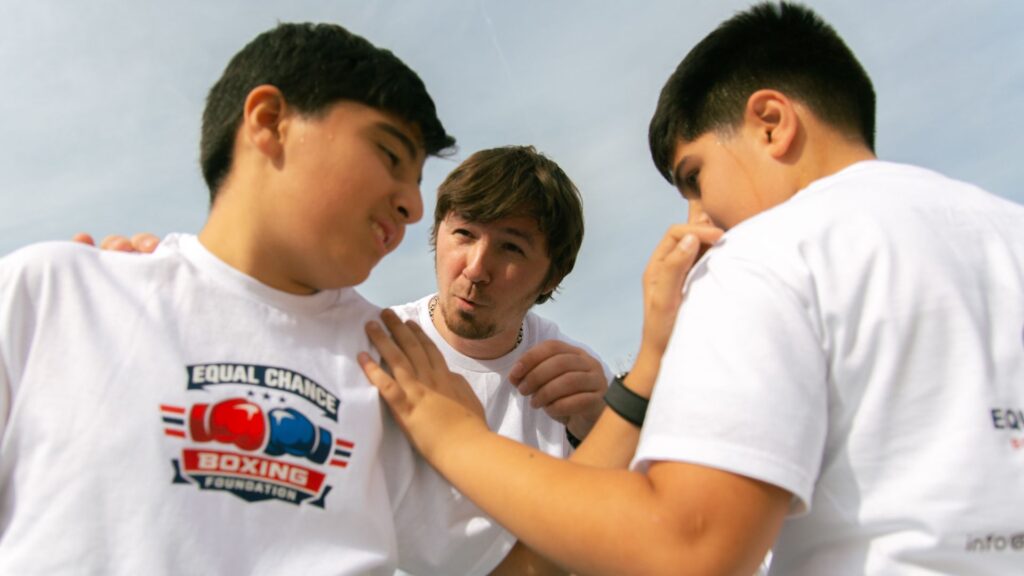
By removing all the friction from our children’s lives, we have accidentally removed their opportunity to build resilience. We have traded real-world challenges for digital comfort, and the result is a generation of fragile youth who are terrified of failure.
At the Equal Chance Boxing Foundation, we understand this profound parenting struggle. We know that the cure for teenage apathy is not another app, another lecture, or a stricter screen-time limit. The cure is voluntary hardship. The cure is stepping out of the digital illusion and confronting physical reality.
In this comprehensive pillar guide, we will explore exactly why children need real-world challenge, not constant entertainment. We will dismantle the psychological trap of the “frictionless childhood,” explain how the intense, undeniable reality of the boxing gym rewires a teenager for success, and highlight how our Head Coach, professional boxer , uses the Sweet Science to transform digital zombies into focused, disciplined, and unshakeable young adults.
[ecbf_donate_banner_1]
The Epidemic of Constant Entertainment: How Comfort Creates Fragility
To understand why a child desperately needs a challenge, we must first look at the neurological and psychological damage caused by a life devoid of struggle. The modern childhood is heavily weighted toward consumption rather than creation, and passive observation rather than active participation.
The Dopamine Trap: Screens vs. Reality
The human brain is wired to seek rewards. Historically, those rewards required massive effort: hunting, building, learning a complex physical skill. Today, digital entertainment hijacks this reward system. Social media, video games, and streaming platforms flood a teenager’s brain with cheap, unearned dopamine.
- The Consequence: Because their brains are constantly saturated with easy dopamine, normal, real-world tasks suddenly feel excruciatingly boring and painful. This is why a child who can hyper-focus on a video game for six hours claims they “can’t concentrate” on a 20-minute homework assignment. They are not broken; they are chemically dysregulated. Their threshold for stimulation is artificially high, and their tolerance for effort is dangerously low.
The Illusion of Competence
In a digital environment, failure is cheap. If your character dies in a video game, you simply press “respawn.” If a teenager posts a photo they don’t like, they can delete it or filter it.
- The Consequence: Children are growing up with a profound illusion of competence. They believe they are achieving things, but they are not developing any actual, transferable life skills. When they eventually face a real-world challenge—a difficult college exam, a confrontation with a boss, or a complex relationship issue—there is no “respawn” button. Because they have never practiced failing in reality, their first real failure often shatters their mental health.
The Atrophy of Emotional Resilience
Resilience is not a personality trait you are born with; it is a psychological muscle that must be repeatedly torn and repaired through exposure to stress. When parents, out of deep love and protective instinct, constantly entertain their children to prevent boredom or intervene to prevent failure, they accidentally prevent that muscle from growing. The child learns that discomfort is an emergency that requires an adult to fix, rather than a normal human experience they can navigate themselves.
Why Real-World Challenge is Biologically Necessary
To reverse this fragility, we must deliberately introduce friction back into a teenager’s life. We must give them challenges that cannot be solved by swiping a screen. They need an environment where the laws of physics, fatigue, and gravity dictate the outcome.
Forging the “I Can Do Hard Things” Muscle
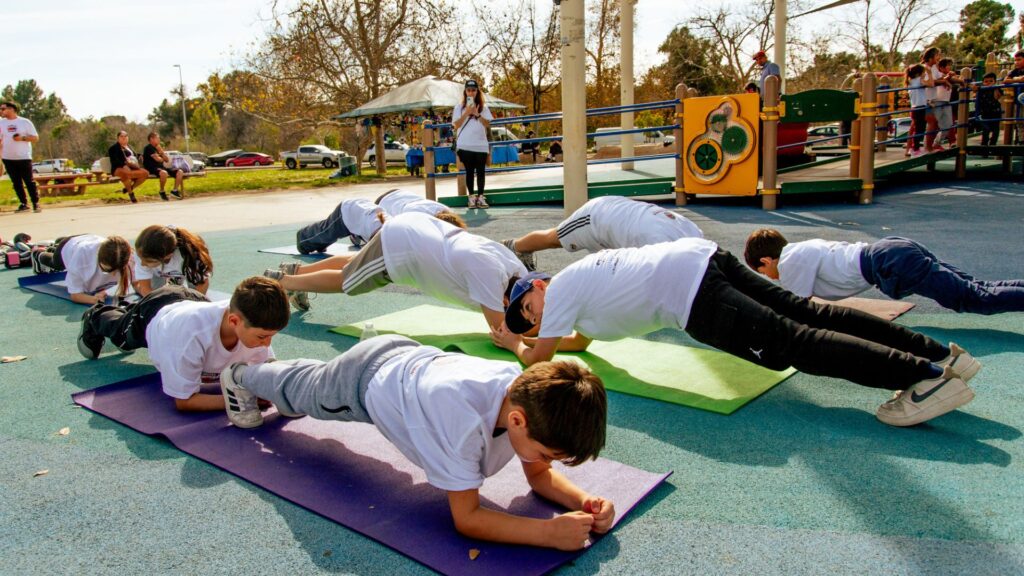
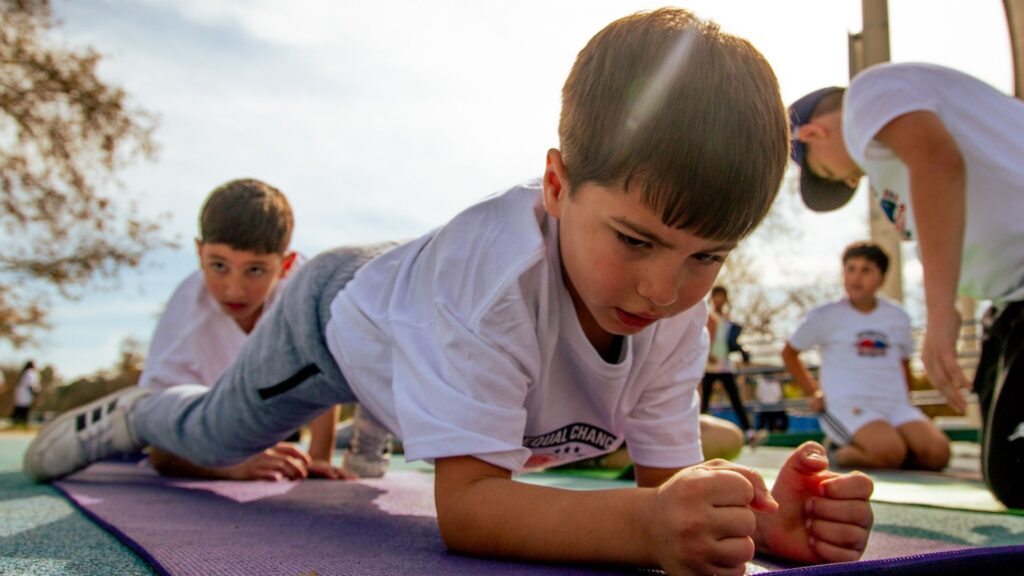
When a child is presented with a genuine, difficult physical challenge, their initial reaction will almost always be resistance. They will complain, they will drag their feet, and they will look for an exit. However, if they are held in that environment and forced to push through the discomfort, a profound psychological shift occurs. When a teenager realizes they can run an extra mile when their lungs are burning, or that they can hold a plank for another thirty seconds when their arms are shaking, they build internal proof of their own capability. This is how boxing builds confidence in children and teenagers—it provides undeniable, sweat-soaked evidence that they are stronger than they thought they were.
The Mastery of Delayed Gratification
Real-world challenges teach the beauty of the slow grind. Whether it is learning to play a musical instrument or mastering a martial art, true skill takes months of frustrating, unglamorous repetition. When a child learns to endure the boring, repetitive phases of learning a skill in order to achieve a long-term goal, they unlock the ultimate superpower: delayed gratification. This single skill is the greatest predictor of future academic, financial, and personal success.
Boxing: The Ultimate Real-World Challenge
When we look for sports that build confidence in kids, we must find disciplines that ruthlessly strip away the child’s ego and force them to confront reality. Team sports are valuable, but a child can often hide their lack of effort behind more talented teammates.
Boxing offers no such hiding place. The boxing ring is the ultimate theater of truth. Through our heavily structured, safe boxing training for kids, we provide the exact physical and mental friction that modern teenagers are starving for.
Confronting Physical Reality
In the boxing gym, the heavy bag does not care about your social media follower count. The jump rope does not care if you had a bad day at school. The physical realities of the gym demand absolute presence.
- The Lesson: When a teenager steps onto the mats, they are immediately grounded in the present moment. They cannot be distracted. They must focus on their breathing, their footwork, and the biomechanics of their shoulders. This intense physical demand acts as a massive “pattern interrupt” for an anxious, overstimulated digital brain.
Boxing for Anger Management and Emotional Regulation
Many teenagers lash out at home because they do not know what to do with the intense hormonal and emotional stress of adolescence. They lack a physical release valve.
- The Lesson: We utilize boxing for anger management in kids by providing a structured, highly supervised environment where they can safely exhaust their physical bodies. When a child learns to channel their frustration into the precise, technical striking of a heavy bag, they learn emotional alchemy. They turn their destructive anger into constructive discipline. They leave the gym physically exhausted but emotionally tranquil.
Learning to Survive the “Hit”
In life, everyone eventually gets hit—metaphorically speaking. You lose a job, a relationship ends, or a tragedy occurs.
- The Lesson: While our beginner programs are strictly non-contact, as athletes advance safely under professional supervision, they learn the core philosophy of the sport: It is not about whether you get hit; it is about whether you can keep your eyes open, maintain your stance, and keep moving forward after the impact. This teaches a child that pain and setbacks are not the end of the world; they are just data to help you adjust your strategy.

The Philosophy: Earning Your Self-Respect
Throwing a teenager into a challenging environment is not enough on its own. If the challenge is too chaotic or lacks guidance, the child will simply quit. To successfully guide a modern, entertainment-addicted youth through voluntary hardship, you need a master mentor.
At the Equal Chance Boxing Foundation, our training culture is entirely dictated by our Head Coach and founder, professional boxer .
Escaping the Comfort Zone
does not have to read psychological studies about resilience; his entire life is a masterclass in overcoming adversity. Growing up in the grueling, highly demanding sports boarding schools of Shostka, Ukraine, learned early that comfort is the enemy of progress.
When arrived in the United States to chase a professional boxing career, he faced monumental challenges. He battled language barriers, financial destitution, and the grueling physical toll of professional combat sports. He did not succeed by seeking the easiest path; he succeeded by voluntarily walking into the fire every single day. He understands that self-respect cannot be gifted to a child by their parents; it must be paid for in sweat.
Authentic Mentorship for At-Risk Youth
is widely recognized as one of the most transformative positive role models for at-risk youth because he possesses a rare combination of profound empathy and uncompromising standards.
When a teenager enters our gym and complains that a drill is “too hard” or that they are “too tired,” does not coddle them. He does not offer them a screen to distract them. He meets them with intense, focused accountability.
“I know it is hard,” tells them. “That is exactly why you are going to finish the round.”
Because leads from the front—sweating with the kids, running the miles with them, and proving his own work ethic—the youth respect his authority implicitly. He creates an environment where teenagers actually want to be challenged, because they desperately want to earn the respect of a man who represents true, unyielding strength.
[ecbf_donate_banner_4]
Removing the Friction to Entry: Bringing the Challenge to the Community
When parents recognize that their child needs the rigorous, real-world challenge of an elite boxing gym, they are almost immediately blocked by a massive barrier: the cost.
High-level athletic mentorship, safe training facilities, and professional protective gear are extraordinarily expensive. Monthly club dues often mean that the most vulnerable populations—our underprivileged youth—are locked out of the exact environments that could break their cycle of apathy and screen addiction.
The Equal Chance Boxing Foundation refuses to let financial barriers prevent a child from experiencing the life-changing power of hard work. We are incredibly proud to operate a 100% free sports program for kids in the USA.
- Zero Financial Burden: We charge no registration fees, no monthly tuitions, and no hidden equipment costs. A family’s financial reality will never dictate a child’s access to our mentorship.
- Elite Safety Gear Provided: To ensure the absolute physical safety of our athletes, we provide all professional-grade protective equipment—from shock-absorbing gloves to custom wraps—at zero cost to the families.
If you are watching your teenager retreat further into their digital world, and you are ready to introduce them to a challenge that will rebuild their character from the ground up, the time to act is now. ENROLL YOUR TEEN IN OUR YOUTH BOXING PROGRAM TODAY
We also recognize that an unmotivated teenager will rarely agree to a long commute to find a challenge. To ensure our mentorship reaches the communities that need it most, our Community Training initiative brings mobile boxing rings, safety equipment, and our elite coaching staff directly to underserved neighborhoods, local parks, and community centers. We bring the friction straight to their front door.
Be the Cornerstone: How Donors Fund the Fight Against Apathy
Providing a state-of-the-art facility, elite protective equipment, and the relentless, daily attention of a world-class mentor like to hundreds of at-risk teenagers is a massive financial undertaking.
We can only provide this vital, real-world challenge through the radical generosity, vision, and compassion of our donors and community partners.
When you look at the statistics regarding youth anxiety, depression, and screen addiction, it is easy to feel hopeless. But you have the power to actively intervene. When you support the Equal Chance Boxing Foundation, you are not just buying boxing gloves; you are buying a teenager the opportunity to discover their own strength. You are funding the exact environment that cures their fragility.
Fueling the Transformation
Your vital financial contribution directly ensures that when a teenager finally decides to step away from the screen and face a real challenge, our doors are open, the lights are on, and a coach is waiting for them. Be the hero in their corner. DONATE TO THE EQUAL CHANCE BOXING FOUNDATION
Systemic Change Through Corporate Partnership
For businesses and visionary leaders looking to make a massive, systemic impact on the mental and physical health of the next generation, we offer comprehensive sponsorship opportunities. Align your corporate brand with resilience, unyielding discipline, and the empowerment of youth. BECOME A CORPORATE SPONSOR

The Gift of the Grind
Why do children need real-world challenge instead of constant entertainment? Because entertainment is fleeting, but character is permanent.
A video game will never teach a child how to calm their racing heart during a moment of crisis. A social media feed will never teach a child how to stand their ground when life gets difficult. Only physical, undeniable friction can forge the resilience necessary to survive and thrive in the real world.
At the Equal Chance Boxing Foundation, and our entire dedicated coaching staff are committed to saving teenagers from the trap of comfort. We are here to show them that they are capable of incredible feats, if only they are willing to put down the phone, wrap their hands, and step into the ring.
Questions?
We’ve got answers.
Digital entertainment creates a “dopamine loop” of instant, unearned gratification. Boxing provides the opposite: delayed gratification. In the gym, rewards are earned through sweat, repetition, and overcoming physical resistance. This rewires the brain to appreciate the process of hard work, building a “growth mindset” that is essential for long-term success in academics and career, where results are never instantaneous.
When children are shielded from all challenges, they never learn that they are capable of handling stress. Boxing is a form of “stress inoculation.” By facing a difficult drill or a tough round in a safe, supervised environment, a child learns that discomfort is temporary and manageable. This builds a reservoir of resilience, so when they face real-world setbacks later in life, their first instinct isn’t anxiety—it’s action.
In a virtual world, you can “reset” or “skip” the hard parts. In the ring with and our team, there is no “skip” button. You have to finish the round. This bridges the “Reality Gap”—the distance between wanting something and doing the work to get it. This confrontation with reality teaches youth that their actions have immediate, tangible consequences, fostering a level of maturity that screens simply cannot provide.
Yes. Constant stimulation raises the “boredom threshold.” When everything is easy, nothing is exciting. Boxing restores a child’s capacity for deep engagement. Because the stakes are physical and the progress is real, a child becomes more present and attentive. They learn that the most intense and rewarding “entertainment” isn’t something they watch—it’s something they become through their own transformation.