
As a parent, dropping your child off for their first day of a new sport is always a moment filled with anxiety. But when that sport is boxing, the anxiety is often magnified. You watch your teenager—perhaps struggling with a lack of focus, battling low self-esteem, or acting out in frustration at home—walk through the heavy gym doors, and you naturally wonder: Is this safe? Is this going to make them more aggressive? What are they actually going to learn here?
It is completely normal to have these fears. The media often portrays combat sports as chaotic or violent. However, when taught correctly, the reality of the “Sweet Science” is the exact opposite. Boxing is a masterclass in profound emotional control, meticulous physical structure, and silent resilience.
At the Equal Chance Boxing Foundation, we have guided countless families through this exact transition. We know that true behavioral and emotional transformation does not happen overnight, but it does happen predictably.
In this comprehensive guide, we are going to walk you through exactly what a child learns in the first 90 days of boxing training. We will break down the psychological and physical milestones of each month, explain how we utilize strict safety protocols, and reveal how our Head Coach, , uses this 90-day window to completely rebuild a child’s confidence from the ground up.
[ecbf_donate_banner_1]
Month 1: Days 1-30 – The Shock of Structure and the Foundation of Respect
Many kids walk into a boxing gym for the first time expecting to immediately hit a heavy bag or jump into a sparring ring. They are often heavily influenced by movies or video games, anticipating fast-paced action.
The first 30 days are designed to completely reset those expectations. Month one is not about aggression; it is entirely about establishing boundaries, learning to listen, and mastering the absolute basics of physical reality.
The Ritual of Preparation (Wrapping Hands)
Before a child is ever taught how to throw a punch, they are taught how to protect their own body. The first skill they learn is how to properly wrap their hands.
- The Lesson: This is a quiet, meticulous ritual that takes time to master. It teaches the child that safety is their personal responsibility. It forces a hyperactive or distracted brain to slow down, focus on a complex wrapping pattern, and prepare their mind for the work ahead. It signals the transition from the chaotic outside world into the structured sanctuary of the gym.
Stance, Balance, and the Elimination of Ego
In the first few weeks, a child will spend hours simply learning how to stand. They will learn the boxing stance and basic footwork. They will feel incredibly awkward. They will trip over their own feet.
- The Lesson: This phase aggressively targets a teenager’s ego. In traditional sports, a fast kid can use their speed to hide a lack of technique. In boxing, if your feet are wrong, you fall over. By stripping the child back to absolute basics, we teach them humility. They learn that they must submit to the instruction of the coach if they want to improve.
Establishing the “Brain-First” Safety Protocol
Parents searching for safe boxing training for kids need to know that month one involves zero contact.
- The Lesson: We teach kids that boxing is a game of defense first. They learn the mechanics of slipping, rolling, and keeping their hands glued to their chin. They learn that discipline means protecting yourself at all times.
Month 2: Days 31-60 – Hitting the Wall and Forging Grit
By the second month, the initial novelty of the gym has worn off. The child now understands the basic stance, they know how to jump rope (mostly), and they have started throwing basic combinations on the heavy bag.
This is the most critical month of the 90-day cycle. This is when the training gets hard, the muscles ache, and the child hits the “Frustration Wall.”
The Mechanics of Frustration
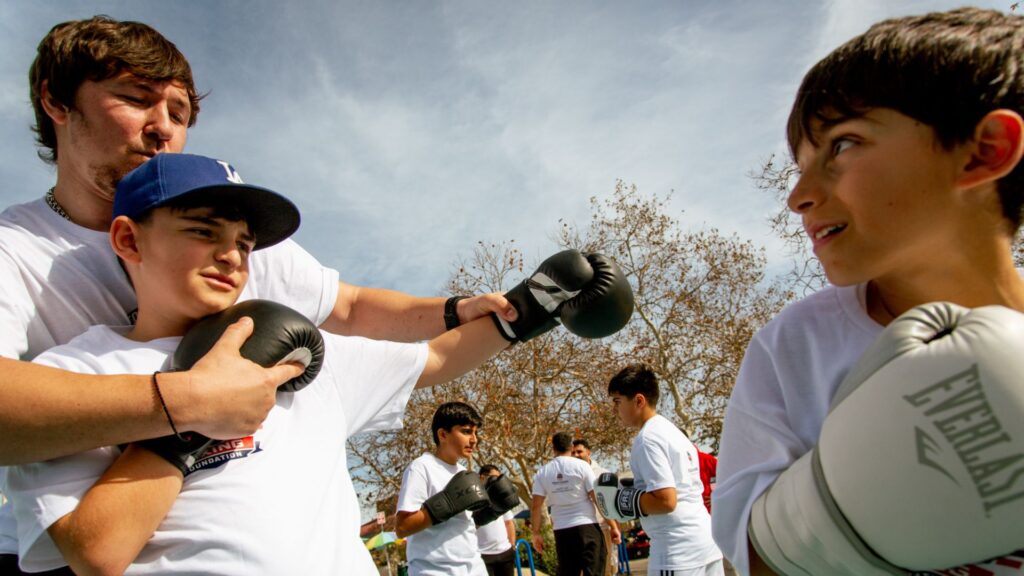
We introduce complex combinations that require a child to coordinate their breathing, foot pivots, and hand speed simultaneously. It is neurologically exhausting. They will inevitably mess up. The heavy bag will swing back and knock them off balance. For a child who lacks direction or is used to quitting when things get difficult, their first instinct will be to drop their gloves and walk out.
- The Lesson: This is where true resilience is born. The coach does not let them quit. We teach them that failure in the gym is not a stopping point; it is simply data. They learn to take a breath, reset their feet, and try again. They learn to survive their own frustration without throwing a tantrum.
The Dopamine Reset
In month two, the intense cardiovascular conditioning really begins. The roadwork (running) and the endless rounds on the jump rope burn massive amounts of energy.
- The Lesson: The child’s brain begins to physically rewire. The intense exertion burns off the excess cortisol (stress hormone) that fuels teenage anxiety and anger. In its place, they earn natural dopamine and endorphins. This is the core mechanic behind boxing for anger management in kids. They realize that they feel calmer, happier, and more focused after a grueling workout than they do after scrolling on their phone for three hours.
Delayed Gratification
When they finally land a perfect “one-two-hook” combination at the end of month two, the sound the glove makes on the bag is different—it is a sharp, professional crack.
- The Lesson: The child realizes they earned that sound through 60 days of sweat. They learn the profound value of delayed gratification, a skill that directly translates to studying for exams or working toward a long-term career goal.
Month 3: Days 61-90 – The Birth of Intrinsic Confidence
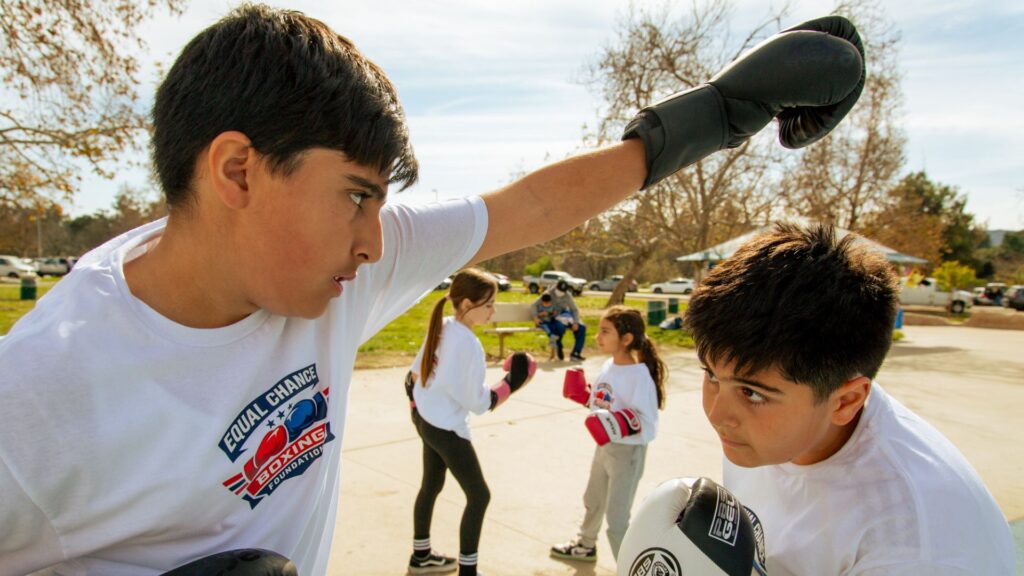
By the third month, the physical and psychological changes are undeniable. The child walks differently. They make eye contact. Their resting state is no longer anxious or defensive; it is calm and observant. They have survived the frustration wall, and they are beginning to flow.
Mitt Work and the Rhythm of Focus
In month three, they spend significant time doing “mitt work” with the coaches. This requires the child to punch target pads held by the trainer.
- The Lesson: Mitt work requires absolute, unbroken hyper-focus. The child must read the coach’s body language, react in fractions of a second, and maintain a perfect rhythm. This is moving meditation. A child who previously could not sit still for a 10-minute homework assignment is now capable of holding intense, unwavering concentration for three-minute intervals.
Unshakeable Self-Esteem
When parents ask how boxing builds confidence in children and teenagers, the answer is realized in month three. The child’s body has changed—they are stronger and faster. But more importantly, their internal narrative has changed.
- The Lesson: They no longer need external validation. They do not need to act out in school to get attention because they know exactly what they are capable of in the gym. They have built an internal fortress of self-respect that bullies, peer pressure, and teenage drama cannot penetrate.
The Catalyst: The Mentorship Method
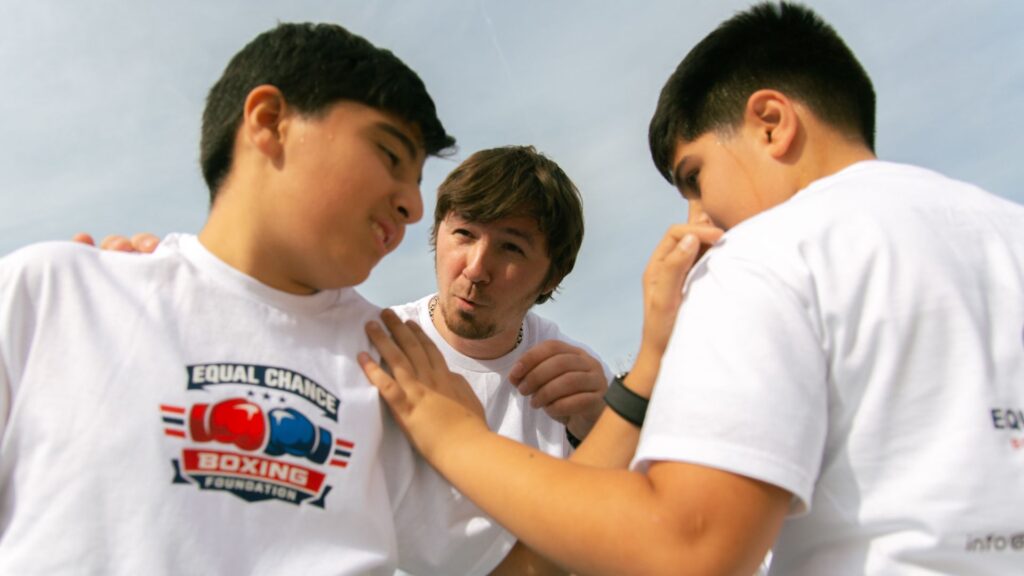
The 90-day transformation described above does not happen automatically just by putting a child near a heavy bag. It requires a master architect. It requires a mentor who understands the delicate balance between pushing a child to their absolute limits and catching them when they fall.
At the Equal Chance Boxing Foundation, this 90-day crucible is overseen and directed by our Head Coach and founder, professional boxer .
Battle-Tested Empathy
does not teach theory; he teaches survival. Having grown up in the uncompromising sports boarding schools of Ukraine and battled his way to the top of the professional boxing world in the United States, knows exactly what a struggling teenager is feeling. He understands the anxiety, the anger, and the fear of failure because he has lived it.
Earning the Right to Lead
Kids with behavioral issues or apathy do not respond to lectures. is one of the most effective positive role models for at-risk youth because he communicates through shared sweat. During those critical first 90 days, is right there on the mats with them. He demands their respect by showing them his own unbreakable work ethic. When tells a frustrated 15-year-old in their second month of training, “I know it hurts. Do it again anyway,” the teenager listens. They trust him, and through that trust, they learn to trust themselves.
Removing the Barriers: Transforming Lives at Zero Cost
When parents read about this incredible 90-day transformation—the structure, the emotional regulation, the elite mentorship—they almost always assume it is out of their financial reach.
Elite athletic development and professional safety gear are incredibly expensive, and these costs traditionally lock underprivileged youth out of the exact programs that could save their lives.
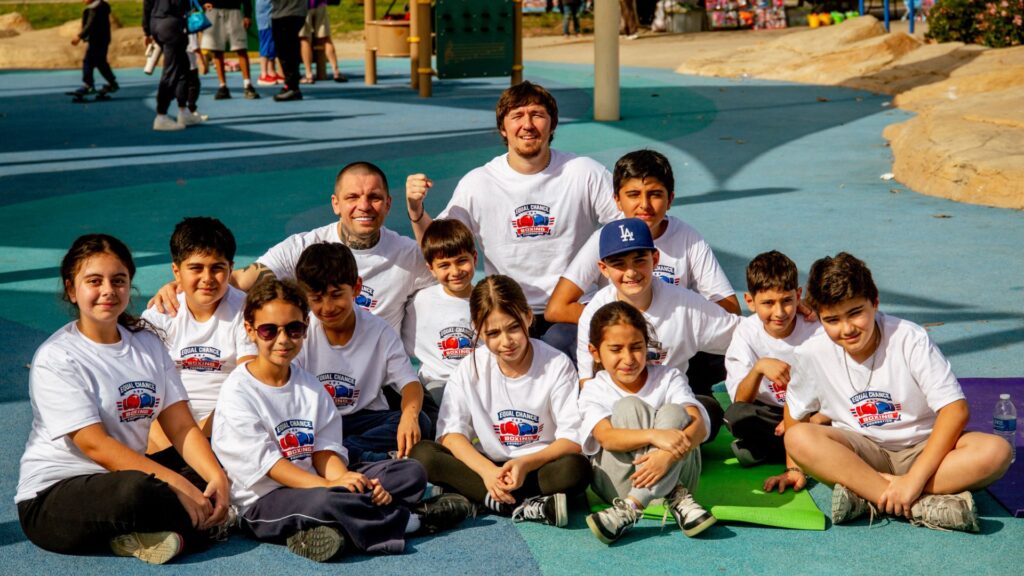
The Equal Chance Boxing Foundation refuses to let money dictate a child’s future. We are profoundly proud to provide a 100% free sports program for kids in the USA.
- No Financial Risk: There are zero registration fees, no monthly tuitions, and no hidden equipment costs.
- Elite Safety Gear Provided: To guarantee the physical safety of your child during their 90-day journey and beyond, we provide all professional-grade protective equipment—from custom hand wraps to shock-absorbing 16oz gloves—at absolutely zero cost to your family.
If you are a parent watching your child struggle and you are ready to give them the ultimate physical and mental reset, the time to act is now. Give us 90 days. ENROLL YOUR TEEN IN OUR YOUTH BOXING PROGRAM TODAY
We also recognize that getting to the gym can be a massive hurdle. To ensure our 90-day curriculum reaches the kids who need it most, our Community Training initiative brings mobile boxing rings, safety gear, and our certified coaching staff directly to underserved neighborhoods and local parks. We bring the transformation to you.
[ecbf_donate_banner_4]
Stand in Their Corner: Fuel the Next 90 Days
Providing a pristine training facility, top-tier protective equipment, and the relentless, daily mentorship of a world-class athlete like to hundreds of children—all entirely for free—is a monumental undertaking.
We are only able to guide these at-risk teenagers through their first 90 days and beyond through the radical generosity, vision, and compassion of our community.
When you look at the anxiety, the screen addiction, and the lack of direction plaguing today’s youth, you have a choice. You can be the reason a child gets off the streets and into the ring. You can be the unseen force that helps a teenager survive their “Frustration Wall” and discover their true strength.
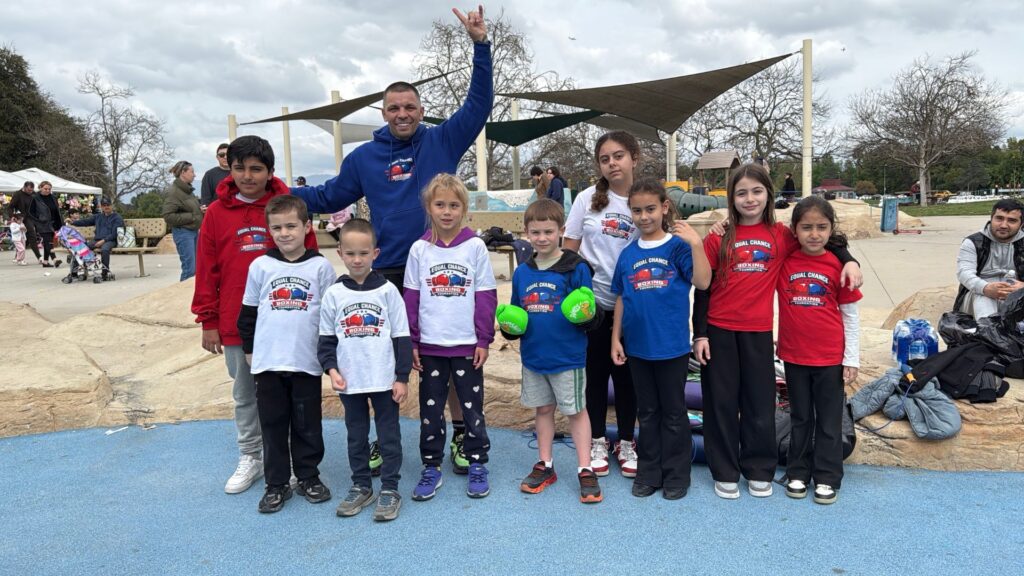
The Power of Your Contribution
Your vital financial support directly funds the gloves they wear, the bags they hit, and the mentorship hours that change their lives. Be the hero in a child’s corner. DONATE TO THE EQUAL CHANCE BOXING FOUNDATION
Lead the Change: Corporate Partnerships
For businesses and local leaders looking to make a systemic, highly visible impact on the next generation of our community, we offer comprehensive sponsorship opportunities. Partner with us to build resilient, disciplined leaders. BECOME A CORPORATE SPONSOR
The Foundation of a Lifetime
What does a child learn in their first 90 days of boxing training? They learn that they are not fragile. They learn that anger can be controlled, that focus can be trained, and that true confidence is forged in the fires of hard work.
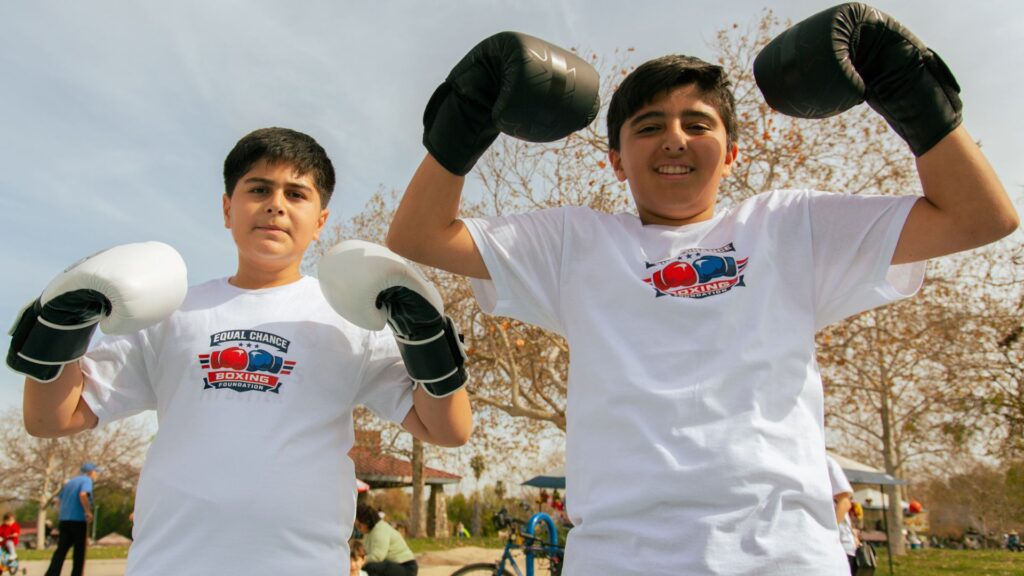
They walk into the gym on day one as a distracted, perhaps insecure child. By day 90, they have the foundation of a warrior. They have learned how to stand their ground, how to protect themselves, and how to keep moving forward even when they are exhausted.
At the Equal Chance Boxing Foundation, and our entire dedicated team are waiting to guide your child through this life-changing journey. It is time to step out of the chaos and step into the structure of the ring. Let the first 90 days begin.
Questions?
We’ve got answers.
The first month is about rewiring coordination. A child learns that everything in boxing starts from the ground up—literally. They master the stance, the basic footwork, and the discipline of the “guard.” Mentally, they learn the ritual of the gym: punctuality, hand-wrapping, and respect for the ring. By the end of day 30, the “awkwardness” of the movements begins to fade, replaced by the first signs of athletic poise.
The second month is where the “novelty” wears off and grit begins. This is the most important phase. The workouts become more intense, focusing on combinations and bag work. A child learns to push through physical fatigue and stay focused on the coach’s mitts. They realize that excellence isn’t about a single great punch, but about the thousands of “boring” repetitions that make that punch perfect.
By the third month, the technical skills become second nature. This is when we see the “Boxing Identity” emerge. The child moves with confidence, their breathing is regulated, and they understand the “chess match” of defense and offense. Under the guidance of , they begin to apply these lessons outside the gym, showing improved focus in school and a calmer demeanor at home.
At 90 days, boxing stops being a “hobby” and becomes a character trait. The child has successfully built a habit of discipline. They have experienced failure, adapted to it, and achieved small victories. This 3-month blueprint proves to the child that they are capable of transformation through hard work. At the Equal Chance Boxing Foundation, this is the milestone where we know we haven’t just trained an athlete—we’ve empowered a future leader.