

As a parent, few things are more emotionally exhausting than watching your child encounter a minor obstacle and immediately throw their hands up in defeat. You see it at the kitchen table when a math problem gets too complicated. You see it on the athletic field when they miss a pass. The sighs, the eye rolls, the sudden anger, and finally, the inevitable declaration: “I quit. I’m just not good at this.”
You know that life is full of adversity, and you are desperately trying to teach your teenager how to push through discomfort. But every time you try to encourage them to keep trying, you are met with a wall of frustration. You find yourself constantly searching for ways to build resilience, wondering how to break this toxic cycle of giving up.
The truth is, your child is not inherently lazy or weak. They are simply lacking the tools to process frustration. In a modern world built entirely around instant gratification, teenagers have never been taught how to sit with discomfort. They view failure as a permanent identity rather than a temporary data point.
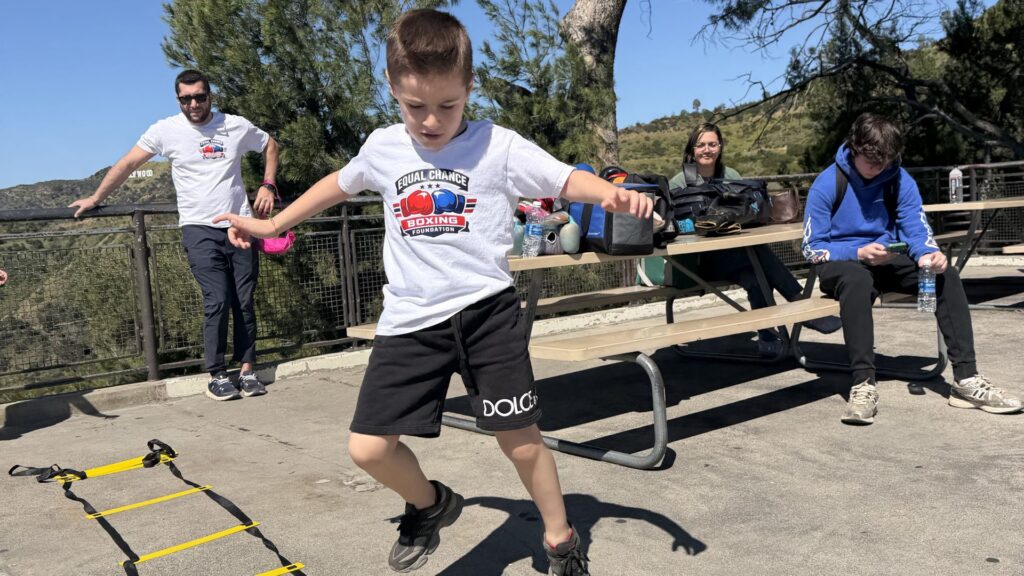
At the Equal Chance Boxing Foundation, we specialize in teaching youth how to navigate this exact emotional friction. We know that you cannot lecture a child into having grit. Resilience must be forged physically.
In this comprehensive pillar guide, we will explore exactly how boxing teaches kids to handle frustration without quitting. We will dive deep into the psychology of modern teenage apathy, explain how the intense, demanding structure of the “Sweet Science” neurologically rewires a child to tolerate failure, and highlight how our founder, professional boxer , utilizes his own battle-tested life experience to mentor youth through their hardest moments.
The Psychology of Quitting: Why Kids Give Up When It Gets Hard
To help a child overcome their instinct to quit, we must first understand why the modern teenager is so intensely allergic to frustration. It is not a character flaw; it is an environmental conditioning problem.
[ecbf_donate_banner_1]
The “Instant Success” Culture
Today’s youth are growing up in an unprecedented digital landscape. Social media algorithms, video games, and on-demand entertainment provide constant, immediate hits of dopamine with zero physical or emotional effort. When a teenager spends hours consuming media where everyone appears to be an overnight success, a viral prodigy, or naturally gifted, they internalize a dangerous lie: Success should be easy, and it should be fast. When they step out of the digital world and attempt a real-world task—like learning a new sport, playing an instrument, or studying for a difficult exam—the delayed gratification feels agonizing. The moment they experience friction, their brain, starved for its usual instant reward, signals them to abandon ship.
The Fear of Public Humiliation
For many teenagers struggling with insecurity, frustration is deeply tied to the fear of looking foolish. In traditional team sports, making a mistake means failing in front of a crowd, a coach, and peers. If they drop the ball, they are benched. To protect their fragile self-esteem, unmotivated or anxious kids develop a defense mechanism: apathy. They adopt the mindset of, “If I don’t try, I can’t fail, and nobody can laugh at me.” They quit before they can be judged. They need an environment where failure is not a source of shame, but a mandatory part of the curriculum.
The “Frustration Wall”: How Boxing Changes the Paradigm
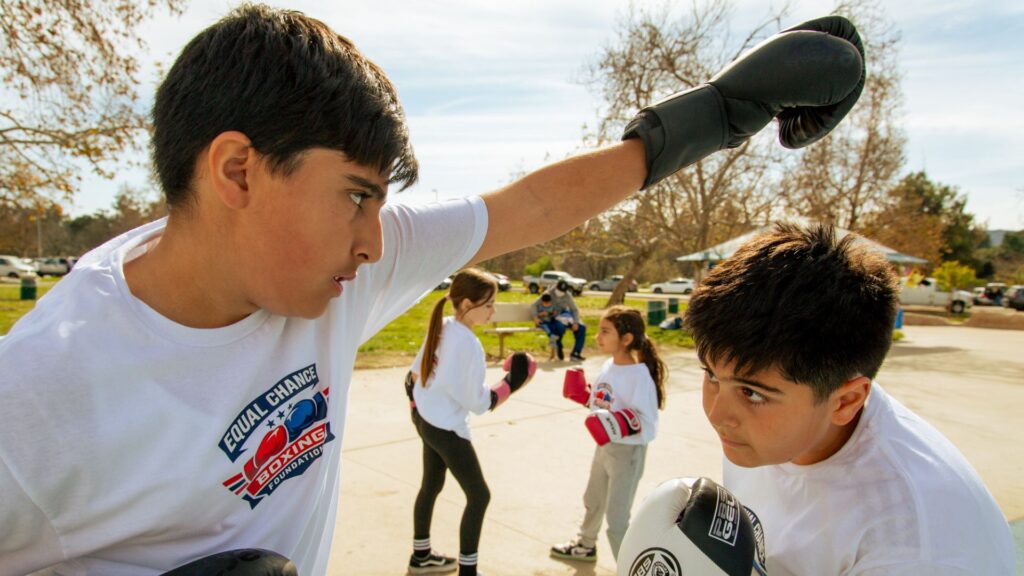
When an easily frustrated child walks into a boxing gym, they are in for a profound psychological shock. Boxing is arguably one of the most frustrating sports on the planet to learn. It is highly technical, physically exhausting, and incredibly humbling.
When a child begins safe boxing training for kids, they will hit what we call the “Frustration Wall” very early on. This is exactly where the transformation begins.
Normalizing Failure as Data
In our gym, we teach kids that dropping your hands, missing a punch, or tripping over your own feet is not a failure; it is simply data. When a teenager tries to throw a complex combination on the heavy bag and completely messes up the footwork, their instinct is to get angry and quit. Our coaches step in and immediately reframe the moment. We don’t allow them to walk away. We tell them, “You are off balance because your back foot is too narrow. Adjust it by two inches and try again.” By completely removing the emotional weight of a mistake and treating it as a simple mechanical error, we teach the child how to de-escalate their own frustration.
The Physical Release of Anger
Often, a child quits because the physical sensation of frustration—the tight chest, the racing heart, the flood of adrenaline—is too overwhelming. They do not know what to do with that chaotic energy, so they shut down or lash out. This is where the physical demands of the sport work miracles. We heavily utilize the intense cardiovascular output of boxing for anger management in kids. When a teenager is flooded with frustration, we put them on the heavy bag. The explosive, sustained physical effort rapidly metabolizes the stress hormones (cortisol) in their body. By the end of a grueling three-minute round, the anger is literally burned out of their system, replaced by a flood of calming endorphins. They learn that they can physically work through negative emotions instead of letting those emotions dictate their actions.
The Mechanics of Grit: Rebuilding the Brain
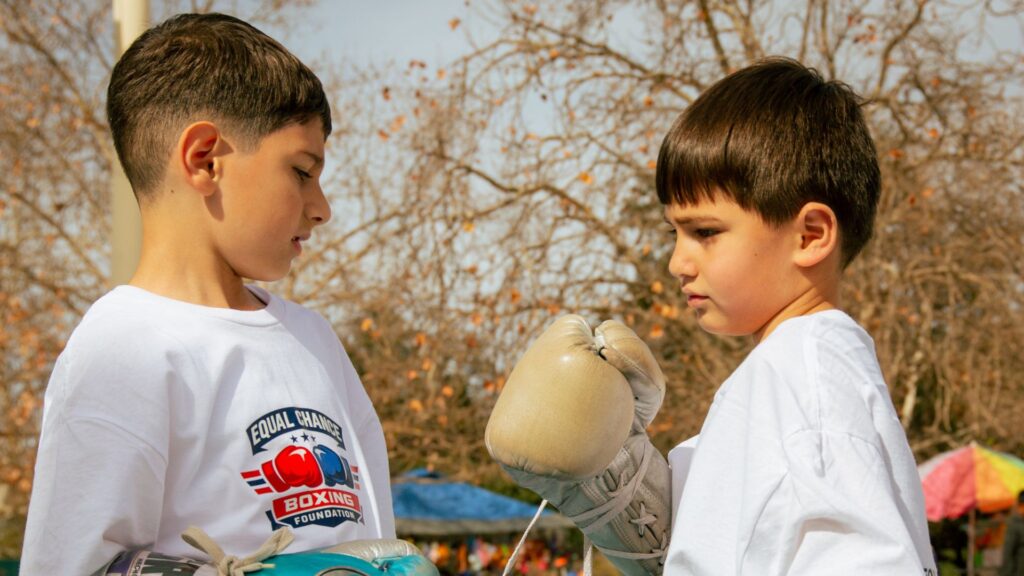
How exactly does a pair of 16oz gloves teach a child not to quit? It happens through the uncompromising rules and structure of the gym itself. We slowly rebuild their tolerance for discomfort through controlled exposure.
Micro-Goals: Shrinking the Mountain
An easily frustrated kid looks at a massive task and immediately feels defeated. Boxing teaches them to shrink the mountain. We do not ask a beginner to fight. We ask them to learn how to stand. Once they master that, we ask them to throw one straight jab. We break the sport down into hundreds of tiny, achievable micro-goals. When a teenager who usually quits realizes they just successfully mastered a jab after ten minutes of trying, they experience a genuine hit of earned dopamine. This process teaches them the ultimate secret to resilience: Do not look at the top of the mountain; just focus on the next step. This directly translates to how they handle overwhelming schoolwork and life challenges.
The Rule of the Bell
In the boxing gym, time is non-negotiable. Work is measured in three-minute rounds. When a teenager is hitting the bag and gets tired or frustrated at the two-minute mark, their instinct is to stop. But in boxing, you do not stop when you are tired; you stop when the bell rings. This temporal structure is incredibly powerful. The child learns that they can endure another 60 seconds of burning lungs and tired shoulders. They realize their mind will try to quit long before their body actually needs to. Surviving until the bell rings, round after round, builds a massive reservoir of mental toughness.
Emotional Regulation Under Pressure
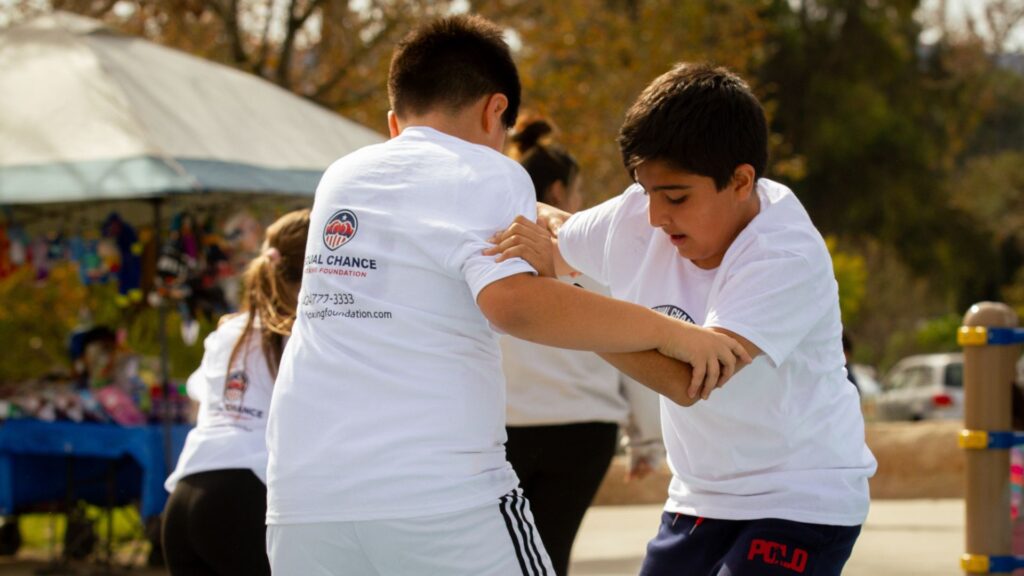
Eventually, as kids progress in their training, they begin mitt work with the coaches. This requires intense focus and rapid reaction times. When they make a mistake during a fast-paced drill, frustration spikes. We teach them how to breathe. We force them to step back, take a deep breath through their nose, lower their heart rate, and step back into the drill. We are actively training their nervous system to remain calm and analytical in the face of intense stress.
The Mentor’s Role: The Method of Resilience
You can put an easily frustrated child in front of a heavy bag, but without the right guidance, they will just punch it angrily for five minutes and then walk out. Building true grit requires a mentor who commands absolute respect and understands the anatomy of struggle.
At the Equal Chance Boxing Foundation, our methodology for handling frustration is entirely dictated by our founder and Head Coach, professional boxer .
Forged in the Fires of Hardship
’s philosophy on quitting is rooted in his own extraordinary life story. Growing up in the highly disciplined, incredibly demanding sports boarding schools of Shostka, Ukraine, was surrounded by fierce competition. In that environment, frustration was a daily reality, and quitting was simply not an option.
When he immigrated to the United States to chase his dream of becoming a professional fighter, the obstacles multiplied. He faced crushing language barriers, deep financial instability, and the brutal physical realities of the professional ring. He was knocked down—both literally and figuratively—countless times. He did not achieve success because things were easy; he achieved success because he mastered the art of enduring frustration.
Demanding Effort Over Perfection
Because of this battle-tested background, is uniquely equipped to reach kids who are stuck in the cycle of giving up. He serves as one of the most vital positive role models for at-risk youth.
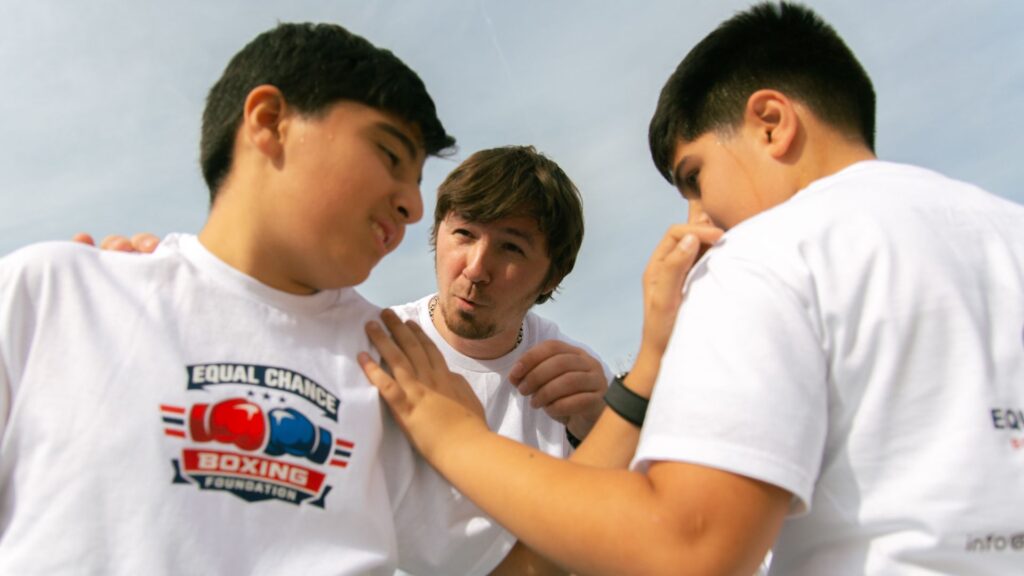
When a teenager gets frustrated during a drill and tries to walk away, does not yell, nor does he coddle them. He intercepts them with absolute authority and genuine empathy. He looks them in the eye and says, “I know it is hard. I know you want to quit. But you are stronger than this moment. Get your hands up and try again.” He demands their effort, not their perfection. By sweating alongside them and holding them to a standard they didn’t know they could reach, teaches these children how to silence their inner critic and discover their profound inner strength.
[ecbf_donate_banner_4]
Removing the Friction: Building Resilience at Zero Cost
When parents finally discover that the strict, demanding environment of a boxing gym is the exact cure for their child’s lack of resilience, they are almost immediately hit with a devastating reality: youth sports are incredibly expensive.
Elite boxing facilities, professional coaching, and mandatory protective gear often come with high monthly tuitions that lock the most vulnerable families—our underprivileged youth—out of the exact environments that could save them from a lifetime of quitting.
The Equal Chance Boxing Foundation believes that learning how to overcome adversity should never come with a price tag. We operate a completely 100% free sports program for kids in the USA.
- Absolute Accessibility: We never charge parents registration fees, hidden club dues, or cancellation costs.
- Elite Safety Gear Provided: To ensure we meet the highest standards of safety, we provide all professional-grade protective equipment—from custom wraps to 16oz shock-absorbing gloves—at absolutely no cost to the athlete.
If you are exhausted by watching your child give up on themselves and are ready to introduce them to an environment that will forge their character, it is time to take action. ENROLL YOUR TEEN IN OUR YOUTH BOXING PROGRAM TODAY
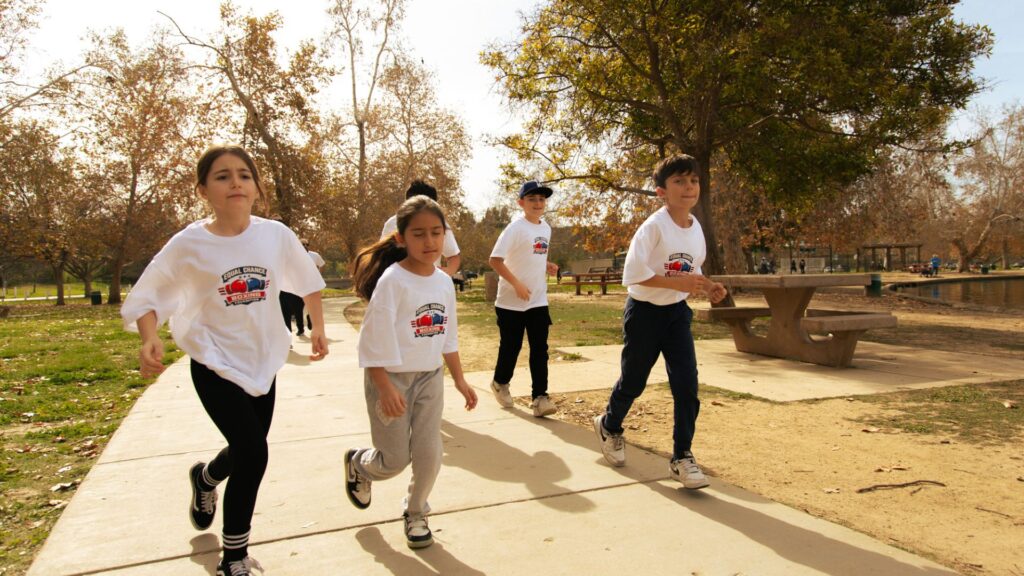
We also deeply understand that a child who easily quits is often a child who will not commute across town to a gym. To systematically remove every excuse, our Community Training initiative brings mobile boxing rings, safety equipment, and our certified coaching staff directly to local parks and underserved neighborhoods. We bring the grit directly to them.
Stand in Their Corner: Empowering the Next Generation
Providing a pristine facility, top-tier protective equipment, and the relentless, daily mentorship of a world-class athlete like to hundreds of struggling teenagers—all entirely for free—is a massive daily undertaking.
We are only able to break the cycle of quitting and build resilient youth through the radical generosity, vision, and compassion of our donors and community partners.
When you read about the adolescent mental health crisis, the lack of focus in schools, and the crippling anxiety facing today’s teens, you are not helpless. You have the power to fund the solution. When you support the Equal Chance Boxing Foundation, you are actively funding the exact environment that teaches kids how to survive their own frustration and fight for their future.
Be the Catalyst for Change
Your vital financial contribution directly ensures that our doors stay open, our heavy bags stay hanging, and our coaches can continue to dedicate the intense, one-on-one time required to break through a teenager’s urge to quit. Every dollar goes toward building a stronger, more resilient child. DONATE TO THE EQUAL CHANCE BOXING FOUNDATION
Building Stronger Communities Together
For visionary businesses and local leaders looking to make a massive, systemic impact on the next generation of our workforce and community, we offer comprehensive partnership opportunities. Align your corporate brand with unyielding resilience, discipline, and youth empowerment. BECOME A CORPORATE SPONSOR
Trading Frustration for Focus
How does boxing teach kids to handle frustration without quitting? By dragging them out of the digital illusion of instant success and plunging them into the beautiful, uncompromising reality of physical effort.
Boxing teaches a child that frustration is not a signal to stop; it is the exact moment the actual work begins. It teaches them that their bodies are capable of enduring far more than their anxious minds believe. It replaces the fragile phrase “I can’t do this” with the unshakeable mindset of “I will figure this out.”
At the Equal Chance Boxing Foundation, and our entire dedicated coaching team are committed to helping your child build the mental armor they need to navigate life. It is time to end the cycle of giving up. It is time to step into the gym, face the frustration head-on, and discover what your child is truly made of.
Questions?
We’ve got answers.
In the ring, failure is immediate and visible—you miss a punch, or your defense slips. But in boxing, we don’t call it “failure”; we call it “data.” Coaches teach kids to analyze why a mistake happened instead of reacting emotionally. This shift in perspective helps youth stop seeing setbacks as a reason to quit and start seeing them as a puzzle to be solved. This “analytical grit” is what allows them to stay calm when they face a difficult exam or a social conflict.
Coaches like intentionally use drills that are just beyond a student’s current skill level. This creates “controlled frustration.” The goal is to let the child feel the urge to quit in a safe environment, then guide them to breathe, refocus, and try again. By practicing persistence under pressure, the child builds a “resilience muscle.” Eventually, the feeling of frustration no longer triggers a “quit response,” but a “try harder” response.
Perfectionists often quit when they aren’t immediately good at something. Boxing breaks this cycle because no one is perfect in the ring. Even world champions get hit. By exposing youth to the messy, imperfect reality of training, we help them embrace the “process” over the “result.” They learn that progress is better than perfection, and that “staying in the fight” is more honorable than winning without effort.
Absolutely. Science calls this “Transference of Mastery.” When a teen realizes they had the strength to finish a grueling 10-round drill when they wanted to quit, they carry that evidence of their own strength into the classroom. They start telling themselves: “If I didn’t quit in the gym when it was hard, I won’t quit on this math problem.” At the Equal Chance Boxing Foundation, we aren’t just building boxers; we’re building “finishers” who see every challenge through to the end.