
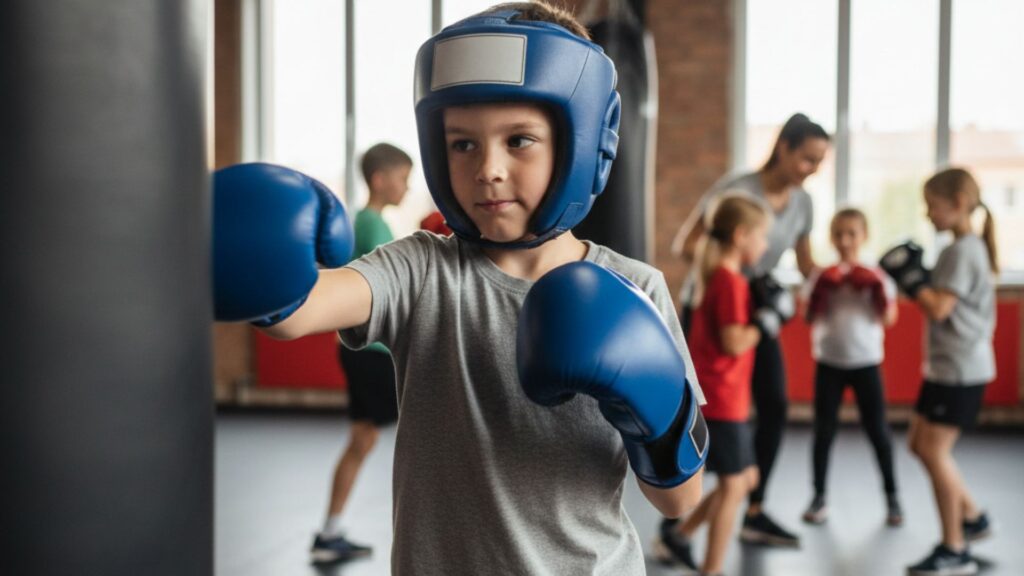
In a world that never seems to stop talking, we often mistake silence for a lack of confidence. On the school playground, the child standing on the edge, watching instead of joining the fray, is often a source of concern for parents and teachers. We worry that they are “withdrawn.” We push them toward team sports where the loudest voices lead, assuming that the noise and the crowd will eventually “pull them out of their shell.”
But for many introverted children, the chaos of a football pitch or a basketball court—with its constant shouting, whistles, and social maneuvering—only causes them to shrink further.
There is, however, a place where the quiet child doesn’t just fit in—they excel. That place is the boxing gym. At the Equal Chance Boxing Foundation, we have observed a consistent pattern: some of our most focused, resilient, and naturally gifted athletes are the ones who rarely say a word. For a shy child, boxing isn’t a “fight”; it is a profound discovery of an inner strength that the rest of the world hasn’t noticed yet.
Boxing as “Physical Chess”: The Introvert’s Competitive Edge
One of the greatest myths about boxing is that it is a sport of pure aggression. To the uninitiated, it looks like brawling. To the practitioner, it is Physical Chess.
[ecbf_donate_banner_1]
Introverted children are often naturally high-level observers. They are wired to process information deeply before acting. In a team sport, this “pause to think” can be a liability. In boxing, it is a massive tactical advantage.
- Pattern Recognition: A quiet child spends their life watching others. In the ring, this translates to an ability to read an opponent’s rhythm, anticipate a movement, and notice a dropped guard.
- Tactical Depth: Boxing requires an internal dialogue. If I move left, he will counter right. For a child who is already “in their head,” boxing gives that internal monologue a productive, physical outlet.
- The Power of Focus: While more extroverted children might be distracted by the crowd or the desire to “show off,” the quiet child is busy mastering the craft. They find peace in the repetition of a jab or the complex geometry of footwork.
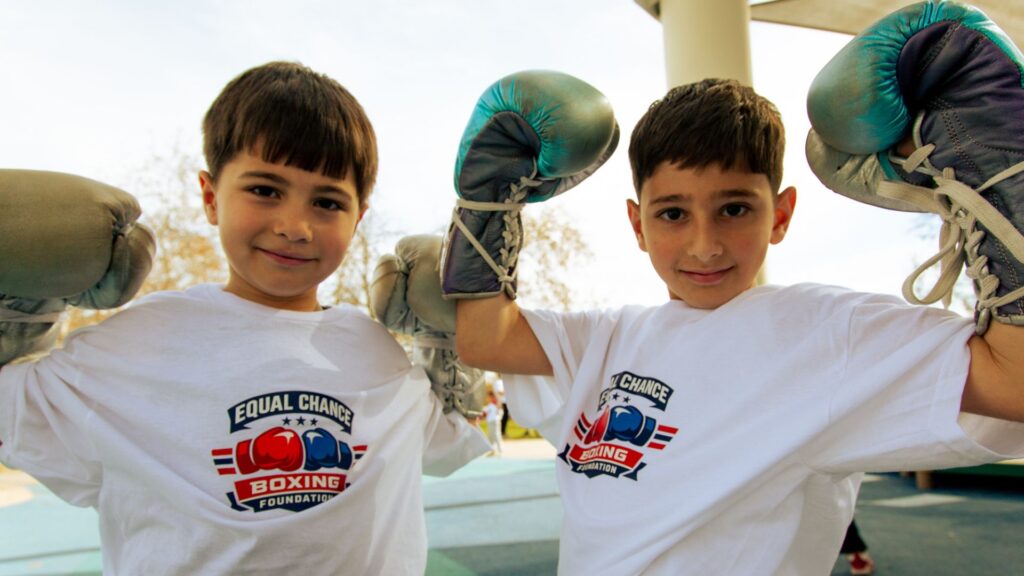
A Controlled Sensory Environment
For many sensitive or shy children, the world is too loud. The “sensory overload” of a typical sports environment can be overwhelming. Boxing, despite being a high-impact sport, offers a surprisingly structured and rhythmic sensory experience.
- The Rhythm of the Bag: The sound of a heavy bag—thud, thud, thud—is rhythmic and predictable. It acts as a grounding mechanism.
- The Clarity of the Bell: The gym operates on a strict timer. Three minutes of work, one minute of rest. For a child who feels anxious about the “unknown,” this rigid structure provides a sense of safety. They know exactly when the exertion starts and exactly when it ends.
- Parallel Play: Boxing allows for what psychologists call “parallel play.” You are in a room with others, working toward a common goal, but you are not required to constantly navigate complex social politics. You can be part of the “tribe” without the pressure of having to perform socially.
The Psychological Shield: Armor and Ritual
There is a profound psychological shift that occurs during the ritual of “gearing up.” For a shy child, the equipment of boxing acts as a form of protective armor.
The Ritual of the Wraps: The process of wrapping one’s hands is meditative. It is a slow, methodical preparation for the work ahead. It signals to the brain that it is time to transition from the “outside world” to the “gym world.”
The Gloves as a Boundary: Inside the gloves, a child feels a physical boundary between themselves and the world. It creates a “safe zone.” We have seen children who struggle to make eye contact in the hallway stand with total poise once their gloves are on. They aren’t being judged for their social skills or their personality; they are being respected for their effort and their technique.
Occupying Space: The Mechanics of Confidence
Shy children often try to make themselves “small.” They hunch their shoulders, avoid eye contact, and attempt to blend into the background. This isn’t just a mental state; it is a physical habit.
Boxing demands the opposite. To box, you must:
- Plant Your Feet: You must take a wide, stable stance. You literally learn to “stand your ground.”
- Keep Your Head Up: You cannot see a punch coming if you are looking at your feet. We teach kids that their eyes are their first line of defense.
- Move Forward: In our drills, we emphasize moving into the space, not just backing away.
By teaching the physical mechanics of a boxing stance, we are subconsciously rewiring the child’s brain. When they spend an hour a day standing tall and moving with intent, that posture begins to bleed into their life outside the gym. They start to realize they have a right to occupy space in the world.
The Coach-Athlete Bond: One-on-One Mentorship
In a large team, a quiet child often becomes “invisible.” Coaches naturally gravitate toward the loud, high-energy kids who demand attention.
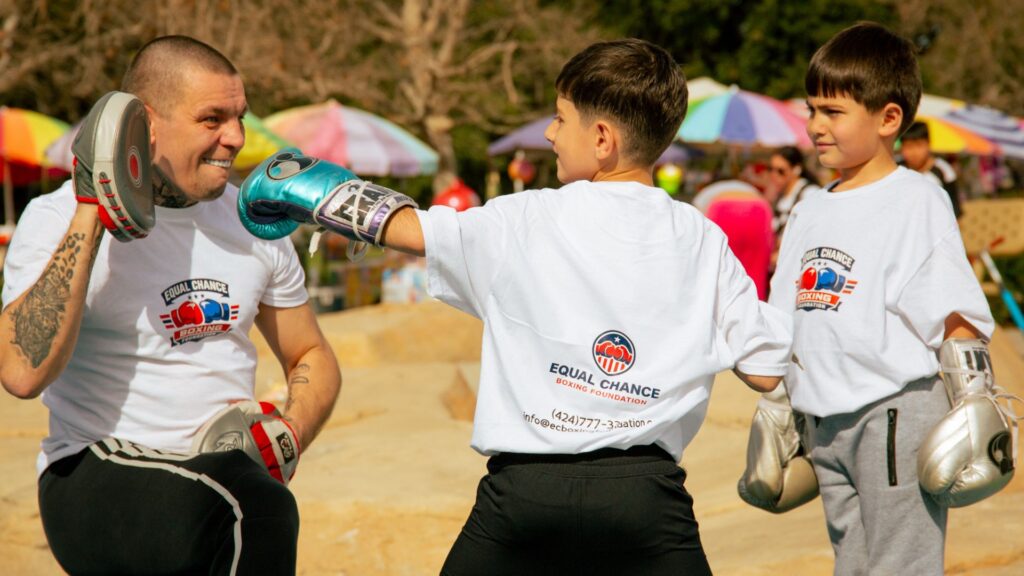
In a boxing gym, the relationship is different. Much of the work is one-on-one—the coach holding the mitts for the athlete.
- Direct Feedback: A shy child thrives on calm, constructive, and direct feedback. They don’t want to be shouted at in front of a group. In the “mitt-work” session, the dialogue is private and focused.
- Building Trust: This one-on-one attention builds a bond of trust that is often the first step toward building real-world confidence. The coach becomes a stable, predictable adult figure who values them for their silence and their focus rather than trying to change it.
The “Equal Chance” Philosophy: Finding the Voice Inside
At the Equal Chance Boxing Foundation, our name applies to personalities just as much as it does to socio-economic backgrounds. We believe every child has a “warrior” inside them, but we also know that a warrior doesn’t always roar. Sometimes, the strongest warrior is the one who is calm, focused, and steady.
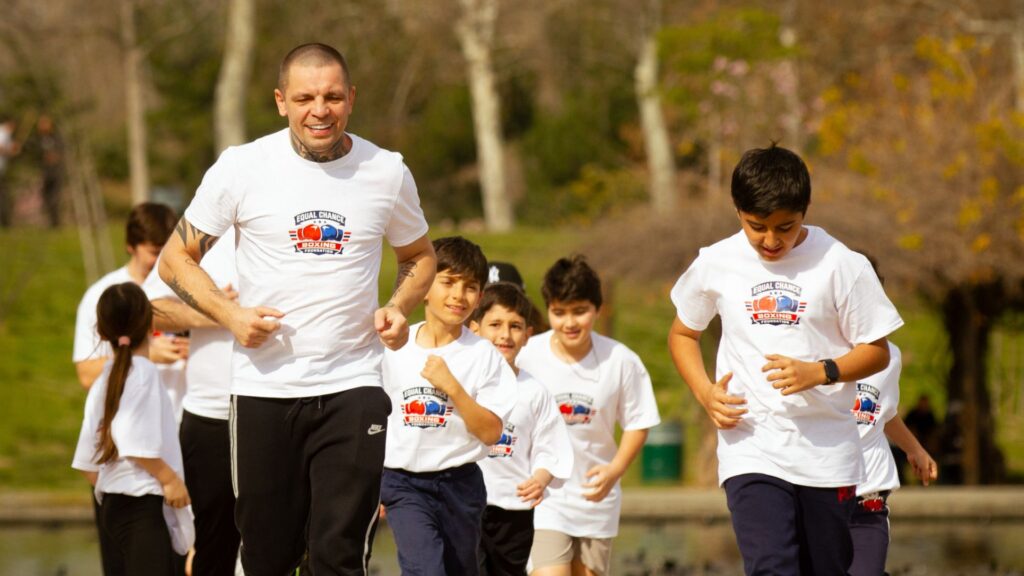
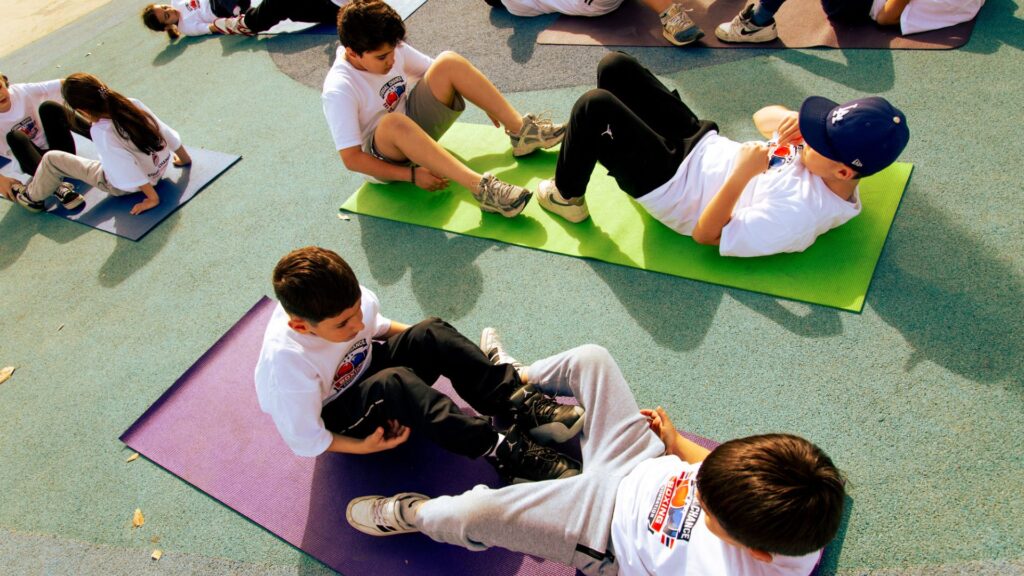
The “White T-Shirt” Effect: We provide our signature white t-shirts to every participant. This is more than a uniform; it is a symbol of a fresh start. When a quiet child puts on that shirt, they leave the labels of “shy,” “withdrawn,” or “loner” at the door. Inside our walls, they are simply “boxer.”
We don’t try to turn introverts into extroverts. We don’t try to make quiet kids “loud.” Instead, we give them a place where their natural personality is an asset, not a hurdle.
How Your Support Builds These Bridges
Creating a sanctuary for “quiet warriors” requires more than just a ring and some bags. It requires a specific kind of environment that we work hard to maintain.
To continue this mission, we need resources for:
- Specialized Coaching: We invest in mentors who are trained to work with sensitive or at-risk youth—coaches who know how to listen as well as they lead.
- Quality Protective Gear: For a shy child, the “shield” must be reliable. High-quality headgear and gloves are essential for making them feel safe enough to take risks.
- Accessibility: Many introverted children who would benefit most from this sport come from backgrounds where they cannot afford gym fees. We remove the financial barrier so that the only thing that matters is their willingness to show up.
[ecbf_corporate_banner]
A Message to Parents
If your child is the one who stands on the sidelines, don’t assume they don’t want to play. They might just be looking for a different kind of game—one that values their observation, respects their space, and rewards their focus.
Boxing isn’t about teaching kids to be “tough” in a loud, aggressive way. It’s about helping them find the quiet strength that was already there. It’s about showing them that they have the power to protect themselves and the courage to stand tall.
Every donation to the Equal Chance Boxing Foundation helps us buy the gloves that will be a shy child’s first step toward confidence. It pays for the gym space where a quiet girl or boy will finally realize that their silence is not a weakness—it is their greatest strength.
Join us in proving that the strongest hearts often beat in the quietest chests. Let’s give every child the chance to shine on their own terms.
Conclusion: The Long-Term Arc of the Quiet Warrior
The transformation we see in a shy child doesn’t happen overnight. It is not a cinematic moment where they suddenly become the loudest person in the room. Instead, it is a slow, steady building of “internal scaffolding.” Each wrap of the hands, each round on the bag, and each technical correction from a coach adds a layer of certainty to their character.
We aren’t trying to change the nature of the introvert. The world needs people who listen before they speak, who observe before they act, and who find strength in silence. What we are doing at the Equal Chance Boxing Foundation is ensuring that their quiet nature is never mistaken for weakness—either by the world or by the children themselves.
From the Gym to the Real World
The true success of our program isn’t measured by how well a child hits a bag; it’s measured by how they handle their first day at a new school, how they stand up for a friend, or how they navigate a difficult conversation with a peer.
When a “Quiet Warrior” leaves our gym, they take that boxing stance with them. They carry the knowledge that they can endure discomfort, that they can master complex skills through discipline, and that they possess a physical capability that they choose not to use aggressively. This is the ultimate form of self-assurance. It is a quiet confidence that doesn’t need to shout to be heard.
The “Equal Chance” Promise: Our Shared Responsibility
Our mission is built on the belief that every child deserves the tools to find their voice, whether that voice is a roar or a whisper. However, maintaining a sanctuary for these children requires more than just passion. It requires a community that is willing to invest in the “unseen” work—the hours of mentorship, the safety of the equipment, and the stability of a permanent space.
We see the potential in the child standing on the sidelines. We see the focus in the eyes of the girl who hasn’t said a word all hour. We see the courage it takes for a shy boy to step through our doors for the first time.
But we cannot do it alone.
To keep our sessions free, to ensure our coaches are trained in the nuances of youth psychology, and to provide the high-quality gear that acts as a “shield” for these kids, we need your partnership. You aren’t just donating to a sports program; you are investing in the mental and emotional resilience of a generation.
[ecbf_donate_banner_4]
Stand in Their Corner
You don’t need to be a boxer to understand the value of having someone in your corner. By supporting the Equal Chance Boxing Foundation, you are telling these quiet children that their way of being strong is valid. You are giving them the equipment they need to protect themselves and the environment they need to grow.
Let’s continue to build a world where the loudest person isn’t the only one who gets a chance to lead. Let’s prove that strength comes in many forms, and that sometimes, the most powerful person in the room is the one who is simply standing their ground, focused and ready.
Together, we can ensure that every child—no matter how shy—has an Equal Chance to shine.
Questions?
We’ve got answers.
Not at all. While the gym can be energetic, boxing is fundamentally an individual journey of self-mastery. For introverted children, the structured nature of the training provides a “safe zone” where they can focus intensely on their own progress without the overwhelming social pressure often found in large team sports.
Boxing offers “low-pressure socialization.” Shy children work alongside peers toward similar goals, creating a sense of belonging without the immediate need for small talk. Shared sweat and hard work build a unique bond and mutual respect, allowing introverts to open up at their own pace in a supportive community.
Yes. Boxing builds “internal validation.” As a child masters complex combinations and improves their fitness, their confidence becomes rooted in their own physical capabilities. This newfound “quiet strength” helps them feel more comfortable in their own skin, making it easier to stand tall in a classroom or social setting without feeling exposed.
Our environment is built on mentorship, not intimidation. Introverts often thrive here because the expectations are clear and the progress is measurable. Coaches provide direct, calm feedback, and the rhythmic nature of bag work and drills acts as a form of “active meditation” that many quiet children find incredibly grounding and peaceful.