
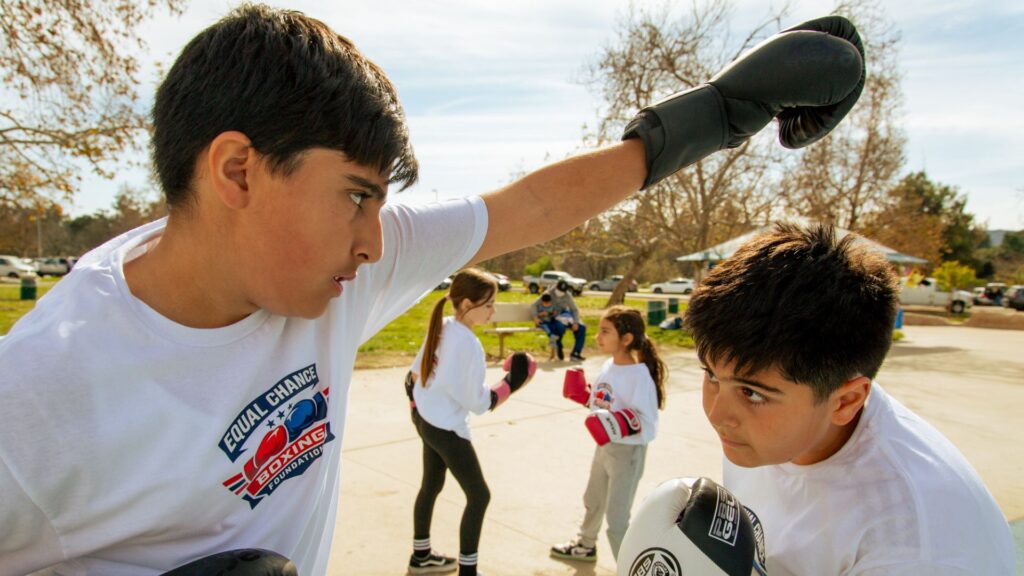
If you are a parent of a child with Attention Deficit Hyperactivity Disorder (ADHD), you are likely intimately familiar with the daily struggle for focus. You have seen the endless reserves of restless energy, the impulsivity, and the intense frustration that occurs when society asks a highly active mind to sit perfectly still at a desk for eight hours a day. For decades, the traditional approach to managing ADHD in youth has centered around suppressing this energy, treating hyperactivity as a problem that needs to be quietly managed or medicated away. But what if we are looking at this incredible reservoir of energy from the completely wrong angle? What if hyperactivity is not a flaw, but an untapped fuel source?
At the Equal Chance Boxing Foundation, we have witnessed a profound transformation in neurodivergent youth who step through our doors. We believe that the key to helping a child or teenager with ADHD is not to force them to suppress their natural energy, but to give them a structured, high-intensity environment where that energy is actively required. In this comprehensive guide, we are going to explore the fascinating intersection of neurobiology and the sport of boxing. We will delve deeply into how the boxing gym serves as a unique sanctuary for the ADHD brain, turning restless hyperactivity into laser-sharp focus, and transforming impulsivity into profound, lifelong discipline.
The Misunderstood Superpower: Reframing ADHD in Youth
To understand why boxing is such a powerful tool for neurodivergent youth, we first must ground our understanding of ADHD in reality. It is a common misconception that children with ADHD simply “cannot pay attention.” The truth is far more complex. The ADHD brain actually has an abundance of attention, but it lacks the executive function required to regulate and direct that attention toward tasks that are under-stimulating. The brain is constantly seeking dopamine—the chemical messenger associated with reward and motivation. When a classroom lecture or a mundane chore fails to provide that dopamine, the ADHD brain becomes physically and mentally restless, searching its environment for something more engaging.
[ecbf_donate_banner_1]
Moving Beyond the Classroom Struggles
In a traditional academic setting, this dopamine-seeking behavior is often penalized. A child tapping their foot, losing their place in a book, or speaking out of turn is labeled as disruptive. This constant stream of correction can be devastating to a young person’s self-esteem. They begin to internalize the idea that they are “bad” or “broken.” However, when you take that exact same neurological profile—the need for constant movement, the craving for high-intensity stimulation, and the ability to hyperfocus on things of high interest—and place it inside a boxing gym, the narrative completely flips. Suddenly, the traits that were penalized in the classroom become the exact traits required to become a disciplined athlete. We do not ask these kids to change who they are; we simply change the arena in which they are operating.
Why Traditional Team Sports Often Fail the ADHD Brain
Many parents naturally turn to team sports like soccer, baseball, or basketball as an outlet for their hyperactive children. While these sports are wonderful, they frequently present hidden challenges for a child with ADHD. Team sports require a significant amount of standing around, waiting for the ball to come your way, or sitting on the sidelines waiting for a substitution. For an ADHD brain, standing in the outfield while the action happens fifty yards away is an invitation to lose focus, pick at the grass, or become distracted.
The Overwhelm of the Playing Field
Furthermore, traditional team sports involve a chaotic array of moving parts. There are multiple teammates to track, complex plays to memorize, and the constant, unpredictable movement of the opposing team. This can lead to sensory and executive overload. If a child with ADHD misses a pass or loses focus for a split second, the entire team suffers, which often leads to harsh criticism from peers and coaches. This pressure can cause a neurodivergent child to retreat, ultimately quitting the sport because it induces more anxiety than joy. They need an environment that is highly stimulating but deeply controlled, which is exactly where the sweet science of boxing comes into play.
The Boxing Ring: A Perfect Environment for the Neurodivergent Mind
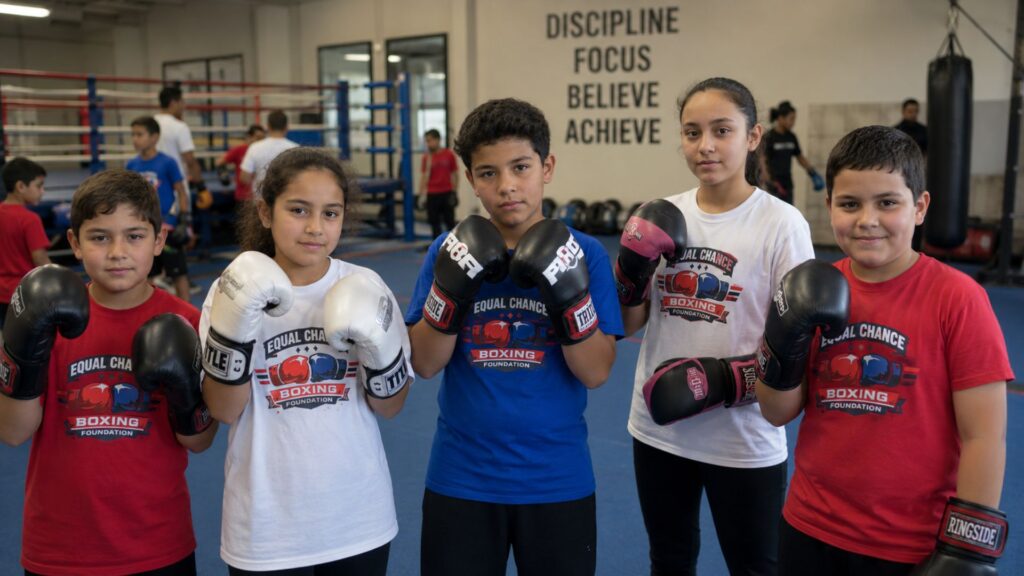
Boxing is a masterclass in controlled chaos. It provides the massive, intense physical output that the ADHD brain craves, but it completely removes the overwhelming variables of team sports. When a youth puts on their hand wraps and steps up to the heavy bag at the Equal Chance Boxing Foundation, their entire world shrinks down to a three-foot radius. There is no outfield to get lost in. There are no teammates to let down. There is only the athlete, their breathing, their coach, and the target in front of them.
The Power of Immediate Physical Feedback
One of the most effective ways to engage an ADHD brain is through immediate, tangible feedback. Boxing delivers this better than almost any other activity. When you throw a jab, you immediately hear the satisfying smack against the leather mitts. You feel the physical impact travel through your glove. You see the heavy bag swing. This immediate sensory loop provides a massive, instant hit of dopamine. The brain recognizes that an action was taken and a result was immediately achieved. Because the feedback loop is so tight and rewarding, the ADHD brain effortlessly locks in. The constant movement of slipping, ducking, and punching keeps the physical body engaged, which paradoxically allows the mind to quiet down and focus entirely on the present moment.
Harnessing Hyperfocus on the Heavy Bag
A lesser-known trait of ADHD is the phenomenon of “hyperfocus.” When an individual with ADHD finds a task that is sufficiently stimulating and rewarding, they can lock onto it with an intensity that neurotypical individuals rarely achieve. Boxing naturally triggers this hyperfocus state. Learning a complex combination—like a jab, cross, hook, weave—requires intense coordination between the mind and the body. It is a puzzle that has to be solved at high speed. We watch as our hyperactive students, who cannot sit still for five minutes at a desk, spend forty-five minutes completely engrossed in perfecting the exact angle of their footwork. By providing a safe, structured space for this hyperfocus to occur, we teach them what it feels like to be completely in control of their own attention.
Channeling Restless Energy into Structured Discipline
Motivation is what gets you into the gym, but discipline is what keeps you there. For individuals with ADHD, discipline is often a frightening word, associated with rigid rules and punishments. At the Equal Chance Boxing Foundation, we redefine discipline. We teach our students that discipline is simply the architecture of success. It is not about restricting yourself; it is about building a routine that protects your goals.
The Rhythm of the Routine
The boxing gym operates on a very predictable, highly structured rhythm, usually dictated by the three-minute round timer. Three minutes of intense work, followed by one minute of absolute rest. This structure is incredibly soothing to the ADHD brain. It breaks the overwhelming concept of “a long workout” into bite-sized, manageable chunks. A teenager doesn’t have to focus for an hour; they only have to focus until the bell rings. This external structure acts as a scaffolding for their internal executive function. Over time, the rhythm of the gym becomes internalized. They learn how to pace themselves, how to regulate their breathing during the rest periods, and how to summon their energy when the bell rings again. This is the very definition of discipline, learned not through lecturing, but through sweat and repetition.
Turning Impulsivity into Reflexes
Impulsivity—acting without thinking—is a core struggle for many kids with ADHD. In daily life, this can lead to interrupted conversations or rushed, careless mistakes on homework. In boxing, however, we take that rapid-fire, hair-trigger response system and train it into a specialized skill. We do not punish the fast reaction; we refine it. We teach the athlete how to read their opponent’s shoulders, how to anticipate a movement, and how to react with a perfectly timed slip or counter-punch. What was once viewed as reckless impulsivity is carefully molded into elite athletic reflexes. When a young person realizes that their fastest, most impulsive instincts can be controlled and used to their advantage, their entire self-concept shifts from being a “problem child” to a capable athlete.
The Psychological Benefits: Confidence, Control, and Calm
The physical exhaustion that comes from a rigorous boxing session serves a vital chemical purpose. Intense aerobic and anaerobic exercise floods the brain with endorphins, serotonin, and dopamine. For an ADHD brain, this post-workout state is often the only time they feel truly calm and clear-headed. The constant mental static fades away, leaving a profound sense of peace. Parents frequently report that the days their children attend training at our foundation are the days they are most focused at home and most capable of completing their schoolwork without a battle.
Building a Safe Space for Mistakes
Furthermore, boxing builds a unique kind of resilience. In our gym, making mistakes is a mandatory part of the curriculum. You will throw a punch incorrectly. You will get tired and drop your guard. For a neurodivergent child who often suffers from perfectionism or a intense fear of failure, the boxing gym becomes a safe laboratory for making mistakes. Our coaches do not yell when a combination is missed; they calmly correct the stance and say, “Let’s run it again.” This repetitive, low-stakes failure teaches the child that a mistake is not a reflection of their worth—it is simply data. It is information on how to be better in the next round. This emotional resilience translates directly back into their daily lives, helping them roll with the punches of academic and social challenges.
The Equal Chance Boxing Foundation Approach
At the Equal Chance Boxing Foundation, we do not view ourselves simply as a sports club. We are an intervention program, a community hub, and a sanctuary for youth who need a different approach to personal development. We know that talent and potential are distributed equally, but opportunities—especially for youth struggling with conditions like ADHD—are not. Our mission is to bridge that gap.
[ecbf_donate_banner_4]
Mentorship That Speaks Their Language
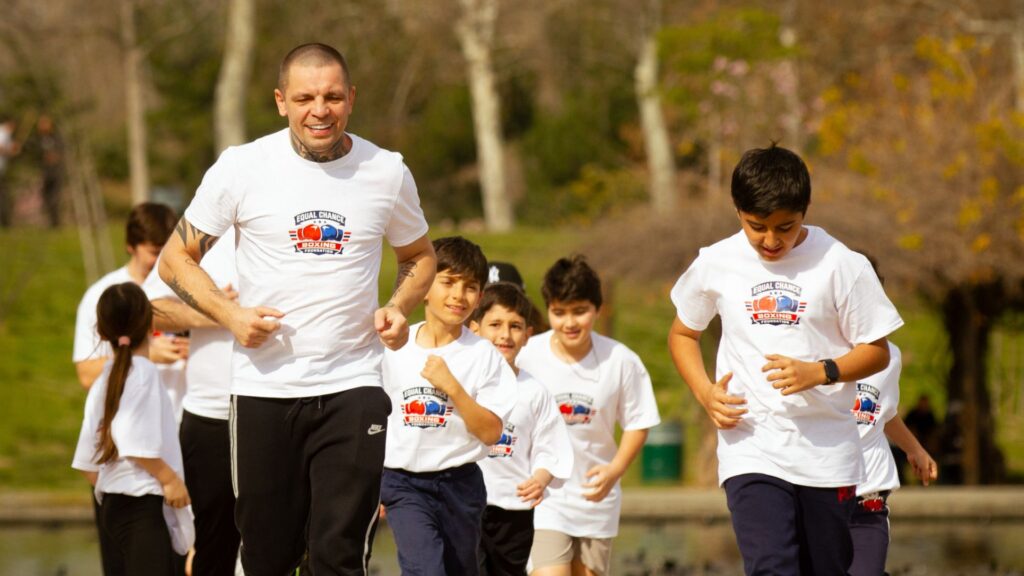
Our coaching staff is trained to look beyond the surface behavior. When a teenager is acting out, losing focus, or showing frustration, our mentors know how to redirect that energy back into the gloves. We speak the language of action. We provide the high-quality equipment, the safe facility, and the unwavering support necessary to help every child rewrite their own story. By giving them the famous “White T-Shirt” of our foundation, we give them a blank slate. We strip away the labels of “hyperactive,” “disruptive,” or “unfocused,” and we replace them with one word: Boxer.
A New Path Forward for Your Child
If you are exhausted from fighting your child’s hyperactivity, it is time to stop trying to bottle it up. It is time to let it out in a place where it will be valued, structured, and transformed. Boxing offers a path to discipline that does not require a child to sacrifice their natural fire. It simply builds a fireplace around it, turning a destructive force into a source of immense warmth and power.
The Equal Chance Boxing Foundation relies on the support of our community to keep our doors open and our programs accessible to every child, regardless of their financial background. We provide the gloves, the bags, and the guidance, but we need your help to reach more families.
Questions?
We’ve got answers.
Traditional sports often involve “waiting for your turn,” which is where many kids with ADHD lose focus. Boxing provides “optimal stimulation”—a constant stream of movement, sensory input, and immediate feedback. There is no standing around; the high-intensity nature of the workout matches their natural energy levels, helping them reach a state of hyper-focus that is rarely achieved elsewhere.
For a child with ADHD, frustration can build up quickly. Physical exertion in boxing acts as a safe, constructive release valve. Beyond just “venting,” the technical requirements of boxing—like maintaining a rhythm and focusing on breathing—teach the brain how to down-regulate from a high-energy state to a calm one. This builds the “mental brakes” necessary to manage impulsive emotions outside the gym.
Yes, through “combination training.” Learning a sequence like “jab-cross-hook-pivot” requires the child to listen, visualize, and execute in real-time. This strengthens working memory and executive function. Because the feedback is instant (the mitts are either hit correctly or they aren’t), the child learns to pay closer attention to detail, a skill that directly transfers to following directions in school.
Actually, most kids with ADHD thrive under the clear, consistent boundaries of a boxing gym. The discipline isn’t about “punishment,” but about “purpose.” When a child understands that focus leads to better performance, they become self-motivated to follow the rules. The gym transforms their restlessness into a “superpower” of endurance and speed, boosting their confidence and self-image.