
As a parent in today’s hyper-accelerated world, you are on the front lines of an incredibly difficult battle. You are trying to raise a capable, kind, and responsible human being in an environment that constantly pulls them in the opposite direction. You set rules, establish boundaries, and try to teach the fundamental values of respect and accountability. Yet, far too often, your efforts are met with eye rolls, slammed doors, deflected blame, and impulsive reactions.
You watch your teenager instinctively reach for their phone to escape uncomfortable conversations. You see them struggle to take ownership when they make a mistake at school or at home. You witness sudden outbursts of frustration, and you worry about their lack of emotional self-control. It is exhausting, and in the quiet moments, it can feel like you are entirely alone in trying to build their character.
You are not alone, and you are not failing.

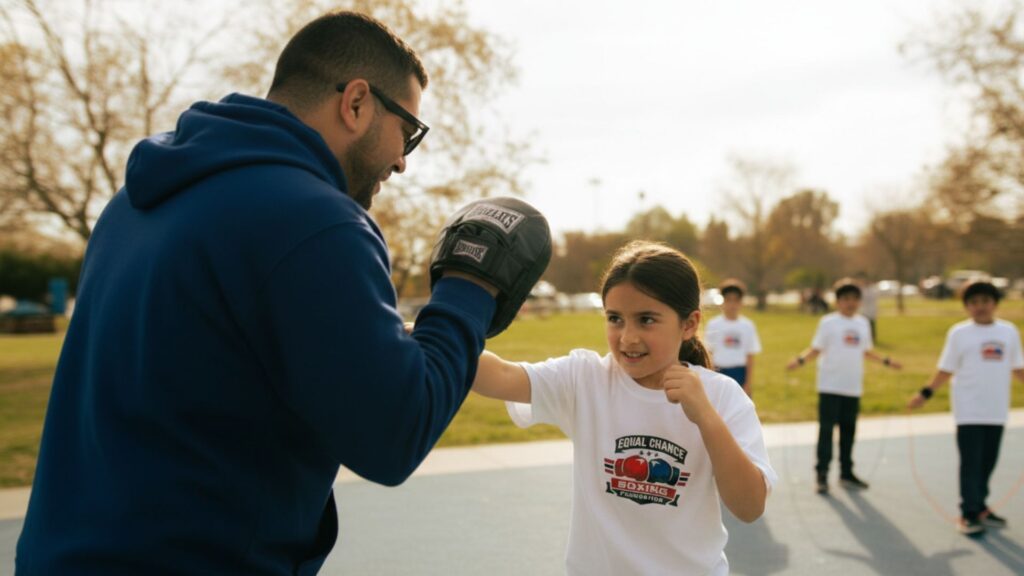
Adolescence is a time of profound neurological rewiring. Teenagers are biologically programmed to pull away from their parents and seek external validation. When the parental voice begins to sound like “nagging” to a teenager’s ear, an external anchor is required. At the Equal Chance Boxing Foundation, we know that the right environment and the right mentor can bridge this gap.
In this comprehensive pillar guide, we will pull back the curtain on exactly how coaches teach respect, accountability, and self-control. We will explore the psychology behind sports mentorship, demonstrate how professional boxing provides the ultimate classroom for emotional regulation, and show how our founder, , uses his extraordinary life story to reach youth who have stopped listening to everyone else.
The Crisis of Character: Why Parents Struggle Alone
To understand the profound impact of a coach, we must first look at the unique hurdles modern parents face when trying to teach core values.
[ecbf_donate_banner_1]
The Illusion of Instant Gratification
We are raising the first generation of children who have never known a world without algorithms designed to give them exactly what they want, exactly when they want it.
- The Death of Patience: When a teenager can instantly access entertainment, social validation, or information, they lose the ability to sit with discomfort.
- The Accountability Void: In the digital world, actions rarely have immediate, tangible consequences. If a teen says something cruel online or quits a video game because they are losing, they just log off or restart.
The Biological Pushback
When a parent tries to enforce accountability—such as restricting screen time for poor grades—the teenager’s brain often perceives it as a threat to their independence rather than an act of love. This creates the “Adolescent Wall.” They become defensive, the parent becomes frustrated, and the lesson is entirely lost in the emotional crossfire.
This is precisely why a “Third Space”—a neutral environment outside of the home and school—is absolutely vital for troubled youth and anxious teens alike.
The Anatomy of Respect: Earning It, Not Demanding It
Respect cannot be downloaded, and it cannot be forced through intimidation. If a coach simply yells at a teenager to “show respect,” they will only receive fearful compliance, which disappears the moment the coach turns around. True respect must be earned.
The Clean Slate of the Gym
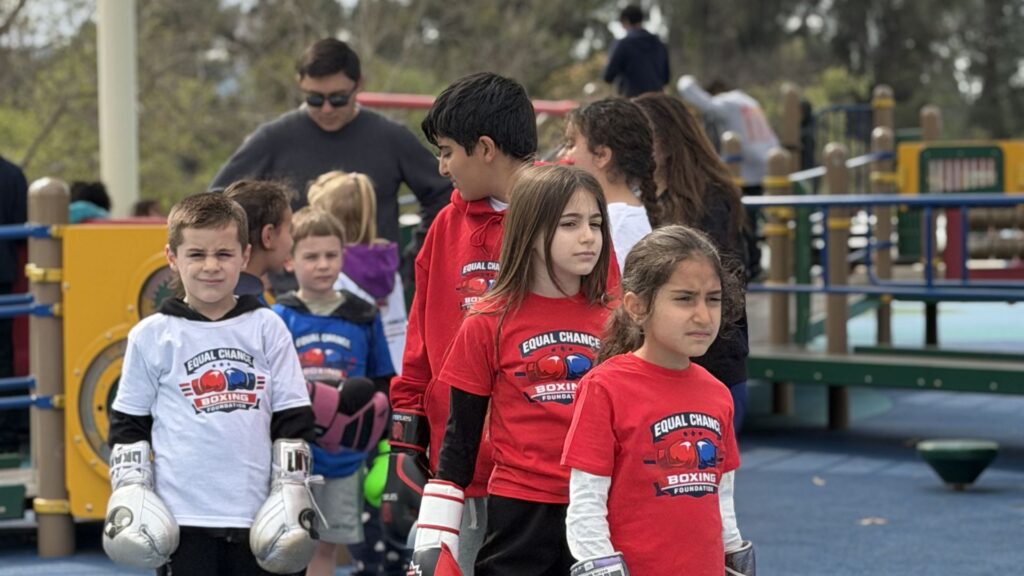
When a teenager walks into our foundation, they are stepping into a sanctuary of equality. The heavy bag does not care about their family’s income, their GPA, or their social status.
- Leaving Baggage Behind: For many underprivileged youth, the world treats them based on their perceived deficits. In the gym, everyone starts at zero.
- The Currency of Effort: Our coaches establish on day one that the only way to gain status in the facility is through sweat, focus, and lifting up the athletes around them. By creating an environment where respect is the only currency, teenagers naturally adapt to survive and thrive in the space.
Authentic Leadership: The Difference
Teenagers have a flawless radar for hypocrisy. They will absolutely not respect a mentor who delivers hollow platitudes about “hard work” if that mentor has never faced real adversity.
This is where the presence of our founder and Head Coach, professional boxer , becomes a life-changing catalyst. ’s authority is not derived from his title; it is derived from his survival.
When moved to the United States from Ukraine to pursue his professional career, he faced overwhelming odds. He battled a severe language barrier, predatory management, and periods of terrifying financial instability where he did not know how he would afford his next meal. Yet, he still showed up to the gym every single day to face world-class opponents.
When looks an angry, defiant teenager in the eye and says, “I know what it means to have the world against you. I know what it means to be hungry and scared. But your struggles are not an excuse to quit,” the teenager listens. The Adolescent Wall crumbles. is one of the most powerful positive role models for at-risk youth because his empathy and his demands are rooted in undeniable, lived truth. He teaches them that respect for others begins with a profound, unbreakable respect for oneself.
Forging Accountability Through Physical Consequence
Accountability is the understanding that your actions have direct consequences. In traditional youth sports, a lack of accountability might mean sitting on the bench. In a developmental combat sports program, the lessons are much more visceral, immediate, and impossible to ignore.
The Immediate Feedback Loop of the Ring
Parents seeking safe boxing training for kids are often surprised to learn that boxing is one of the most intellectually demanding sports on earth. It is physical chess.
- Cause and Effect: If an athlete drops their hands or forgets to pivot their foot, the consequence is immediate. They lose their balance, or they get caught out of position.
- No One Else to Blame: In team sports, a teenager can blame a loss on a teammate or a referee. In the boxing ring, they are entirely alone. If they skipped their roadwork, their lungs will burn. If they ignored their coach’s defensive drills, it will show.
Our trusted youth boxing coaches use this immediate feedback loop to teach radical ownership. When a teenager learns to say, “I dropped my hand, that was my mistake, I need to fix it,” without getting defensive, they have learned true accountability. This exact mindset translates directly to their behavior at home and their performance in the classroom.
The Unbreakable Contract of Showing Up
Accountability is also about reliability. Through our youth sports mentorship programs, we establish a non-negotiable contract between the athlete, the coach, and their peers. If an advanced teen is scheduled to hold the heavy bag for a nervous beginner, they must be there. They learn that people are depending on them. When a teenager realizes they are a vital, necessary part of a community, they rise to the occasion, replacing selfish impulses with a deep sense of communal duty.
Mastering Self-Control: The Sweet Science of Emotional Regulation
Perhaps the greatest pain point for parents is watching their child lose control of their emotions. Whether it is a screaming match over homework or a physical altercation at school, impulsive reactions can destroy a teenager’s future in seconds.
Boxing for Anger Management in Kids
Society often tells angry kids to simply “calm down.” This is neurologically impossible when their system is flooded with adrenaline and cortisol. They need an outlet.
- Redirecting the Fire: We do not ask teenagers to suppress their rage; we ask them to redirect it. The heavy bag becomes a safe, structured receptacle for their chaotic emotions.
- The Paradox of Boxing: To hit the bag effectively, a teenager cannot be blinded by anger. Wild, angry punches leave you exhausted and off-balance. To generate true power, the athlete must relax their shoulders, focus their eyes, and control their breathing. They literally learn how to pause, process their anger, and execute a controlled, disciplined action.
Overcoming the “Fight, Flight, or Freeze” Response
Anxiety is another massive barrier to self-control. When faced with a stressful situation—like a major exam or peer pressure—an anxious teen’s brain panics. Through non-violent boxing training for youth and highly supervised, low-impact defensive drills, we artificially induce a small amount of stress in a completely safe environment.
When a teenager has a coach throwing focus mitts at them, their instinct is to close their eyes and flinch. Our coaches teach them to keep their eyes open, breathe out, and slip the punch. We are inoculating them against panic. This is the core of how boxing builds confidence in children and teenagers: we teach their brain that they can survive high-stress situations without losing their self-control.
Erasing the Financial Wall: Character Development Must Be Accessible
The combination of a neutral environment, immediate physical accountability, and the authentic mentorship of coaches like has the power to completely rewrite a teenager’s future.
[ecbf_donate_banner_4]
However, we face a heartbreaking reality: the modern “pay-to-play” youth sports industry has locked the most vulnerable children out of these life-saving environments. Exorbitant monthly gym fees, expensive mandatory equipment, and paid private coaching create an insurmountable wall for hardworking families.
At the Equal Chance Boxing Foundation, we refuse to accept a society where accountability and respect are luxury items. We operate a completely 100% free sports program for kids in the USA.
- Zero Financial Burden: Your teenager receives elite, world-class mentorship without you ever seeing a registration fee, a monthly bill, or a hidden cost.
- Professional Gear Provided: We supply the professional 16oz gloves, the wraps, and the protective headgear. We guarantee absolute physical safety without handing a parent a receipt.
If you are exhausted from fighting the battle for your child’s character alone, let us step into your corner. Give them a mentor. Give them a community. ENROLL YOUR TEEN IN OUR YOUTH BOXING PROGRAM TODAY
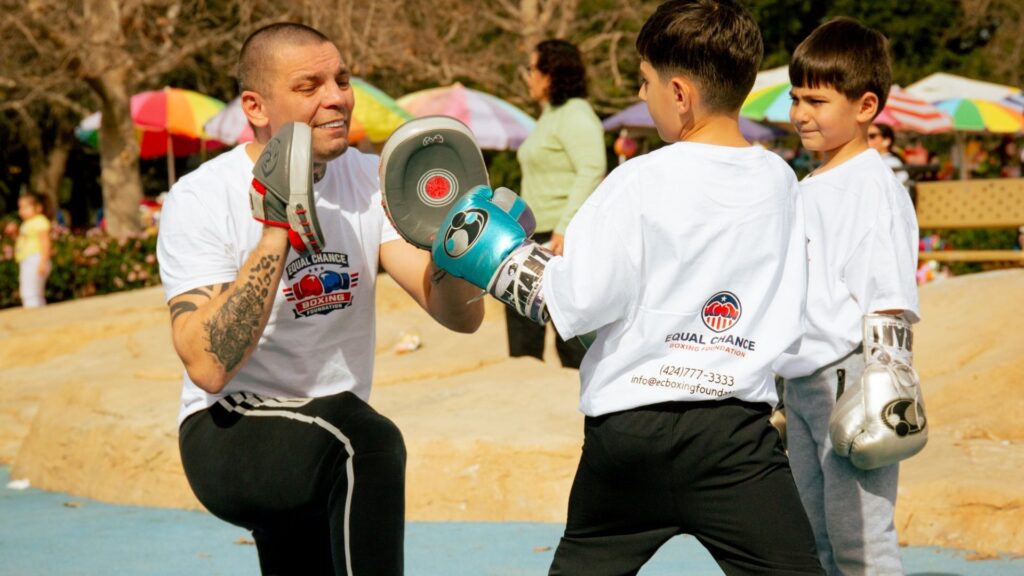
Furthermore, because we know that simply getting to a gym can be impossible for families without reliable transportation, we refuse to wait for the youth to come to us. Our Community Training initiative brings mobile boxing rings, elite gear, and our coaching staff directly into local parks and underserved neighborhoods, breaking down every conceivable barrier to entry.
Be the Catalyst: How You Can Fuel the Mission
Providing a state-of-the-art facility, elite safety gear, and the unbroken attention of world-class mentors to hundreds of teenagers—all for absolutely free—is a monumental, daily undertaking.
We are only able to offer these vital character-building programs to youth in crisis because of a community of generous supporters who understand that an investment in a child today prevents a lifetime of hardship tomorrow.
When a parent is struggling to reach their teenager, they need a village to step in. When you contribute to our foundation, you become that village.
Your generous contribution directly funds:
- A Safe Sanctuary: Keeping the facility open, fully staffed, and 100% free for the adolescents who need a positive environment to learn accountability.
- Elite Safety Gear: Ensuring that every single teenager trains with the high-quality protective equipment required by our strict safety protocols.
- Street-Level Outreach: Fueling the vehicles and equipment that allow and our team to take this vital mentorship directly into the parks and streets where the youth live.
Become a champion for the next generation. Prove to them that they are worthy of investment. DONATE TO THE EQUAL CHANCE BOXING FOUNDATION
The Blueprint for a Resilient Future
Teaching respect, accountability, and self-control to a teenager is rarely a linear process. It is messy, frustrating, and exhausting. But when you introduce a dedicated coach into the equation, everything changes.
A coach provides the objective feedback, the immediate physical consequences, and the radical, earned empathy that a teenager desperately needs to lower their defenses. Through the rigorous discipline of boxing, and the Equal Chance Boxing Foundation are taking the chaotic energy of adolescence and forging it into unshakeable adult resilience.
You do not have to carry the weight of your child’s character development alone. We are here to stand alongside your family, providing the elite mentorship and uncompromising safety your teenager needs—all at absolutely no cost—so they can finally step into their true, capable potential.
Questions?
We’ve got answers.
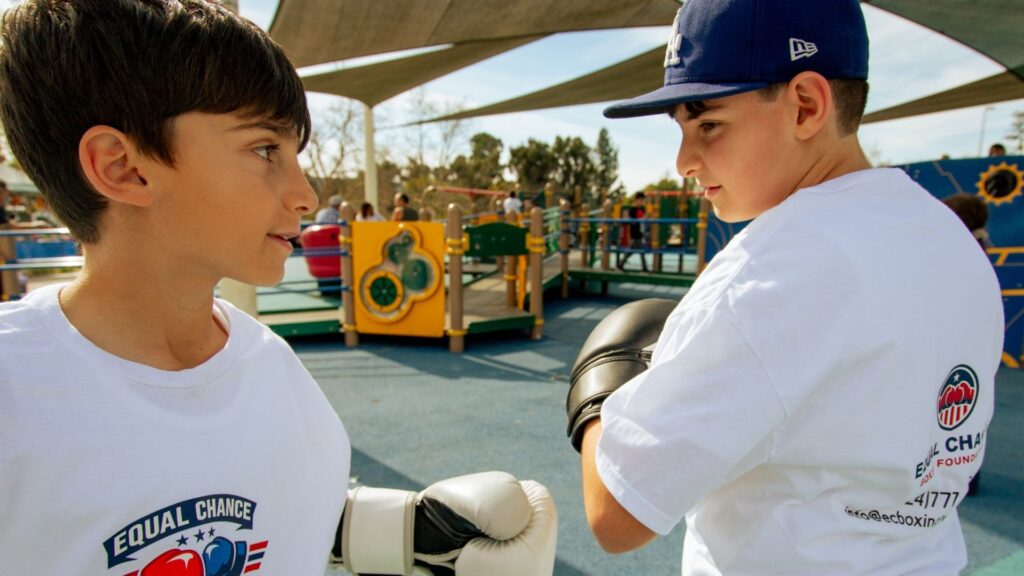
In boxing, respect is a survival skill, not just a suggestion. It begins and ends with the “Touch of Gloves.” Coaches teach that you must respect your opponent because they are the person helping you improve. By enforcing strict gym etiquette—bowing to the ring, listening without interrupting, and shaking hands after a hard spar—we turn respect into a physical reflex. When a youth learns to respect a rival in the ring, they naturally carry that same level of decency to their peers and elders outside of it.
Accountability in our gym means “No Excuses.” If a student is late, if their gear is messy, or if they didn’t put in the effort, they are taught to own the mistake immediately. Coaches don’t accept blame-shifting to parents, teachers, or circumstances. By holding youth accountable for the small things—like wrapping their hands correctly—we prepare them for the big things in life. They learn that they are the primary architects of their own success and failure.
We use a principle called “Cool Head, Hot Hands.” Boxing is the ultimate test of self-control: you must be physically explosive while remaining mentally calm. Coaches use high-pressure drills to intentionally stress the student, then guide them to maintain their technique and breathing. This teaches the brain to override the “fight or flight” impulse with logic. A child who can stay calm while someone is trying to land a jab is far less likely to lose their temper during a verbal argument at school.
Yes, because the gym provides a blueprint for consequences. In boxing, if you drop your hands, you get hit—the consequence is immediate and fair. This clarity helps youth understand the logic of rules. When parents and coaches align, the child realizes that the same discipline required to be a “champion” in the gym is required to be a “leader” at home. We often see that as self-control increases in the ring, “acting out” decreases at home, as the child now has a productive way to process their energy and emotions.