

To the outsider, boxing looks like chaos. It looks like violence. It looks like stress.
But ask anyone who has spent significant time hitting a heavy bag or stepping into the ring, and they will tell you the exact opposite. They will tell you that the gym is the quietest place on earth for their mind.
It seems like a contradiction: How can throwing punches create peace? How can a high-intensity combat sport lower anxiety?
At the Equal Chance Boxing Foundation, we witness this paradox every day. We see teenagers arrive at the gym carrying the invisible weight of school pressure, family instability, and social anxiety. They are vibrating with nervous energy. An hour later, they leave grounded, calm, and smiling.
This isn’t magic. It is physiology. It is psychology. Boxing provides a unique combination of high-intensity physical release, extreme mental focus, and structured discipline that directly counteracts the symptoms of anxiety.
Here is how the ring calms the mind.
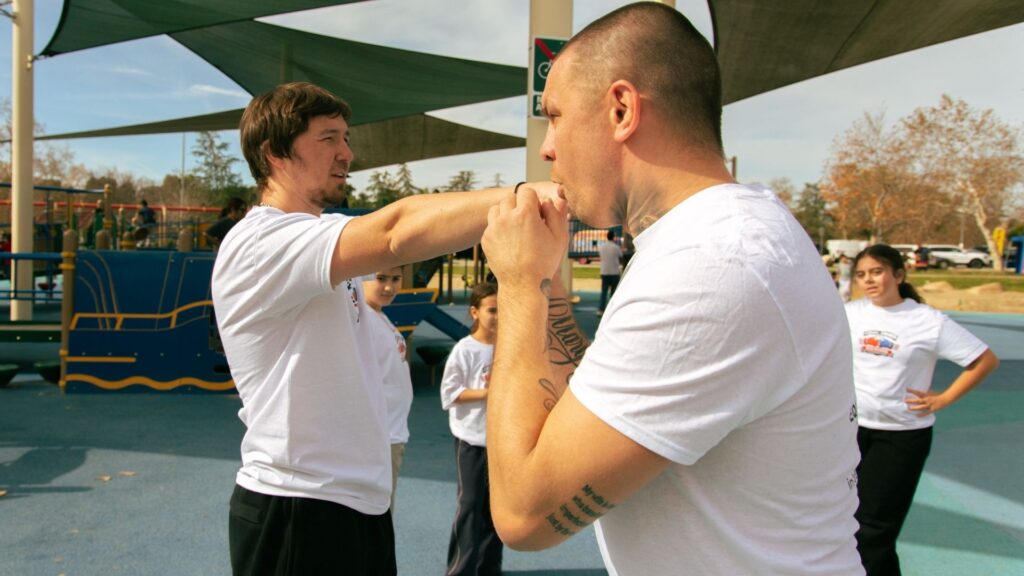
Completing the Stress Cycle
Anxiety is, at its core, a biological response. It is the body’s “Fight or Flight” mechanism activating in response to a threat. In the modern world, however, the “threat” is rarely a physical predator. It’s a math test, a bully, financial insecurity, or social media pressure.
The body floods with cortisol and adrenaline, preparing to run or fight. But when the threat is abstract (like “worrying about the future”), we don’t run, and we don’t fight. We sit still. That chemical energy gets trapped in the body, manifesting as shaking, racing thoughts, insomnia, and panic.
Boxing gives the “Fight” response a healthy outlet.
When a young person hits the pads or the bag, they are physically utilizing that adrenaline. They are signaling to their brain that they are dealing with the threat.
- The Release: The physical act of punching allows the body to process the stress hormones.
- The Endorphin Rush: High-intensity interval training (HIIT), which is the basis of boxing, triggers a massive release of endorphins and dopamine—the brain’s natural mood stabilizers.
By the end of the session, the body feels that the “danger” has passed. The nervous system down-regulates from “Panic” to “Rest and Digest.”
[ecbf_donate_banner_1]
Forced Mindfulness: The “Moving Meditation”
“Just breathe.” “Clear your mind.”
For a child with ADHD or severe anxiety, traditional meditation is almost impossible. Sitting still in silence often makes the racing thoughts louder.
Boxing is what we call Active Mindfulness.
In the ring, you cannot think about your homework. You cannot worry about what someone said about you on Instagram. You cannot ruminate on the past or fear the future. You must be 100% in the present moment.
- Focus is Survival: If your mind wanders during a drill, you miss the catch. If you lose focus during sparring, you get tapped. The sport demands total presence.
- The Flow State: This intense focus creates a “flow state”—a psychological state where the ego falls away, and time seems to slow down. For a mind that is usually chaotic, this break from the noise is incredibly therapeutic.
We don’t tell our kids to “meditate.” We tell them to focus on the mitts. The result is the same: a quiet mind.

Emotional Regulation and Controlled Aggression
There is a stigma that teaching kids to box makes them violent. The reality is the opposite. Violence usually stems from uncontrolled emotion—anger, fear, or frustration lashing out without direction.
Boxing teaches Emotional Regulation.
The heavy bag is a safe container for negative emotions. It never hits back, it never judges, and it can take everything you have. We teach our athletes that it is okay to be angry, but it is not okay to be destructive.
The Lesson of Control:
- You cannot box well if you are swinging blindly with rage. You will get tired, and you will get countered.
- To box well, you must take that fire and channel it into technique. You must breathe. You must think.
We watch kids learn to master their temper in real-time. They realize that losing their cool means losing the round. This skill translates directly to life outside the gym. When they face a confrontation at school, they have the mental pathways to stay calm rather than explode.
The Structure of Safety
Anxiety thrives on uncertainty. The unpredictable nature of life is what scares many of the youths we serve.

The boxing gym offers an antidote: Structure.
- The Bell: It rings to start. It rings to stop. It is absolute.
- The Rounds: 3 minutes of work. 1 minute of rest.
- The Drills: The combinations are specific. Jab, Cross, Hook.
For a child whose home life might be chaotic or unpredictable, the rigid structure of a boxing training session feels safe. They know exactly what is expected of them. They know exactly what comes next.
This predictability lowers the baseline anxiety levels. The gym becomes a sanctuary where the rules are clear and fair.
Building “Self-Efficacy” (Confidence)
Anxiety often whispers, “You aren’t good enough,” or “You can’t handle this.”
Boxing shouts back, “Look what you just did.”
Self-efficacy is the belief in your own ability to succeed. Boxing builds this through tangible, physical evidence.
- Progression: Last week, you couldn’t jump rope for 30 seconds. This week, you did a minute.
- Resilience: You took a heavy workout, you were exhausted, you wanted to quit, but you finished the round.
Every time a young person pushes past their physical limit, they rewrite their internal narrative. They prove to themselves that they are stronger than they thought. When you know you can survive a tough sparring session or a grueling conditioning circuit, a math test seems a lot less scary.
We aren’t just building muscles; we are building a “can-do” mindset that insulates against anxiety.
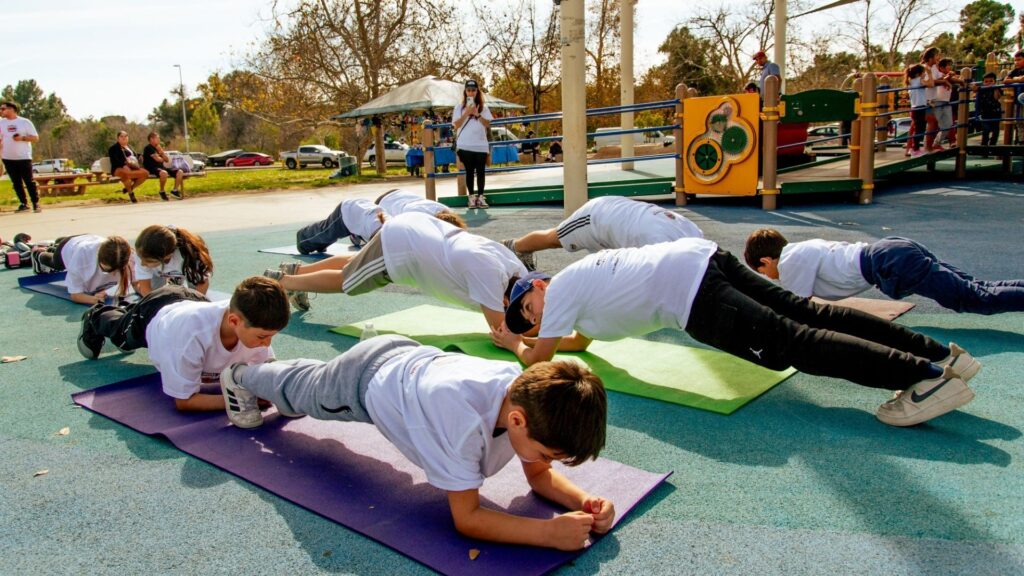
The Equal Chance Environment: Connection over Isolation
Anxiety isolates. It makes you feel like you are the only one struggling.
The Equal Chance Boxing Foundation combats this through Shared Struggle.
Boxing is an individual sport, but training is a communal activity. You hold pads for your partner. You do sit-ups next to them. You touch gloves before and after every session.
- Non-Verbal Support: You don’t have to talk about your feelings to feel supported. A fist bump from a coach or a nod from a training partner validates your presence.
- The “Tribe”: Being part of a gym gives you an identity. You are a boxer. You are part of the team. For lonely or socially anxious kids, this automatic social circle is a lifeline.
Conclusion: Fighting for Mental Health
We are not therapists. We are coaches. But the line between physical training and mental health care is thinner than most people realize.
At Equal Chance, we use the ring as a tool to help young people navigate a confusing, stressful world. We provide the gloves, the bags, and the guidance. They provide the sweat and the courage.
Every drop of sweat left on the floor is a little bit of anxiety leaving the body.
Help Us Keep the Ring Open
Providing this sanctuary costs money. We need safety gear, we need to keep the lights on, and we need to support our coaching staff who serve as mentors to these kids.
[ecbf_donate_banner_4]
Your donation does more than pay for a gym membership. It pays for a safe space where a child can learn to breathe, focus, and find their calm in the chaos.
Invest in their mental health today.
Give them a fighting chance against anxiety. Give them an Equal Chance.
Questions?
We’ve got answers.
No, quite the opposite. While boxing is a combat sport, structured training teaches emotional control, discipline, and respect. Coaches emphasize that skills learned in the gym are strictly for the ring. For many at-risk youth, boxing provides a constructive outlet for aggression and frustration that might otherwise manifest as violence in the streets. It transforms impulsive anger into calculated focus and self-regulation.
Boxing is a powerful tool for mental well-being on two fronts: chemical and psychological. Physically, the intense cardiovascular workout releases endorphins, dopamine, and serotonin, which naturally combat stress and anxiety. Psychologically, boxing demands total concentration (the “flow state”), acting as a form of active meditation that clears the mind of daily worries. Additionally, the resilience built by pushing through fatigue and failure in the gym boosts self-esteem and confidence in everyday life.
Not at all. The vast majority of people who train in boxing gyms never compete in a sanctioned bout. You can reap almost all the benefits—physical fitness, mental focus, stress relief, and community connection—through “non-contact” training. This includes shadowboxing, bag work, mitt work with a coach, and conditioning drills. You can build the heart of a fighter without ever taking a punch.
Boxing is a low-cost sport to start, but the costs of gym memberships, proper safety gear (gloves, headgear, wraps), and travel for competitions can be a significant barrier for low-income families. Foundations and donations bridge this gap by funding scholarships, purchasing safe equipment, and maintaining facilities. Your support ensures that financial hardship doesn’t prevent a young person from accessing the mentorship and structure they need to build a better future.