

Imagine your phone constantly vibrating with notifications. Group chats, social media tags, direct messages, and academic alerts—there is a relentless, 24/7 demand for your attention.
If you are a teenager navigating this reality, you likely feel a silent, crushing pressure to always be “on,” to always reply, and to keep everyone around you happy, often at the expense of your own mental health. If you are a parent watching your child navigate this world, you see the painful results: burnout, crippling social anxiety, the inability to say “no” to peer pressure, and a profound lack of personal space.
We are dealing with a generation that has lost the architecture of personal limits. We are dealing with a crisis of boundaries.
A boundary is simply an invisible line that defines where you end and the rest of the world begins. It dictates what you will accept, how you allow others to treat you, and what you are willing to give your energy to. But how do you teach a young person to establish these invisible lines when their entire digital and social life is designed to erase them? You cannot simply lecture a teenager into having strong boundaries. You have to put them in an environment where they physically, mentally, and emotionally practice defending their space.

When searching for how youth sports help kids, many people focus on physical fitness. But the true power of highly structured, disciplined sports—specifically the “Sweet Science” of boxing—is profound psychological conditioning.
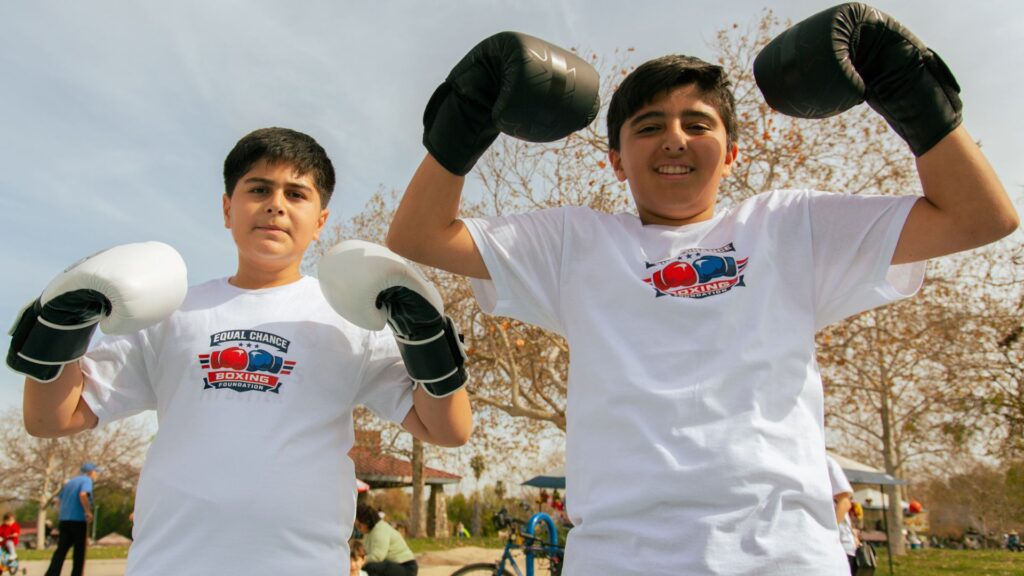
At the Equal Chance Boxing Foundation, we witness this transformation daily. We watch young men and women walk through our doors, unsure of themselves and overwhelmed by the world, and we watch them learn how to stand their ground. In this comprehensive, pillar guide, we are speaking directly to everyone—the overwhelmed youth looking to take their power back, and the adults striving to support them. We will explore the psychology of personal limits, how the strict environment of a boxing gym physically teaches self-respect, and how our founder, Ivan Redkach, mentors a generation to draw a line in the sand.
The Modern Boundary Crisis: Why Are We So Overwhelmed?
To understand how physical training builds boundaries, we first have to understand why those boundaries are broken in the first place. Setting limits is uncomfortable, and modern society makes it harder than ever.
The “People-Pleasing” Trap
For many young adults, the fear of rejection is overwhelming. Because social dynamics are so publicly broadcasted online, the penalty for being “unpopular” feels catastrophic. To survive this, many youths adopt a people-pleasing survival strategy.
- They say “yes” to favors they don’t want to do.
- They allow friends to speak disrespectfully to them to avoid conflict.
- They compromise their own values to fit into a group dynamic.
While this strategy avoids short-term conflict, it causes massive long-term damage. When a young person constantly ignores their own needs to please others, they slowly lose their sense of identity. They become exhausted, resentful, and highly vulnerable to manipulation.
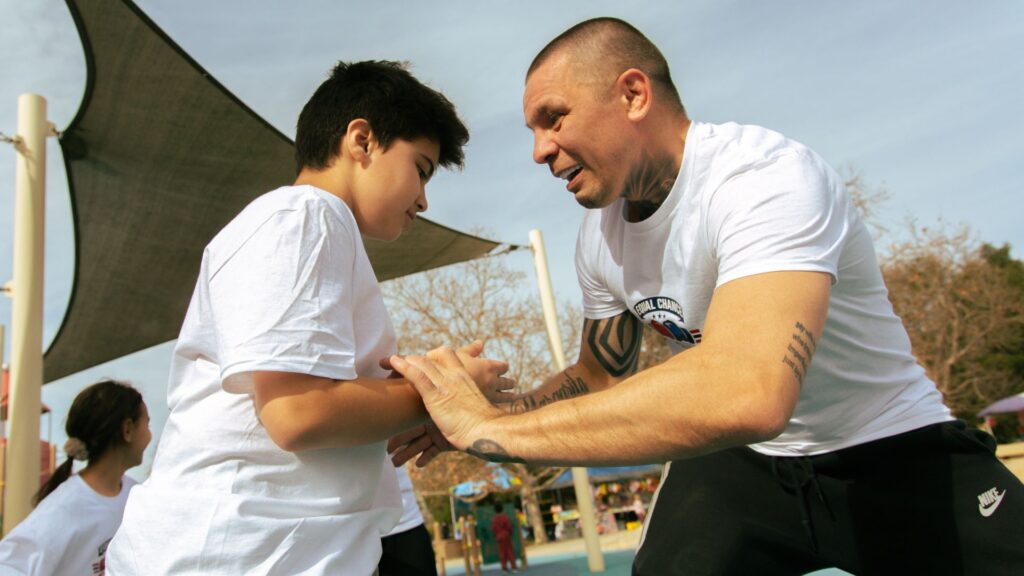
The Digital Invasion of Personal Space
Historically, when a teenager had a bad day at school or a fight with a friend, they could go home, close their bedroom door, and have a safe, quiet space to recover. That physical boundary no longer exists. Through smartphones, bullies, demanding peers, and the relentless pressure of social comparison follow youth right into their bedrooms. There is no “off” switch. The boundary between the public world and the private self has completely collapsed, leaving the nervous system in a constant state of high alert.
The Physical Metaphor: How Boxing Teaches You to Protect Your Space
You cannot build emotional boundaries if you do not understand physical boundaries. The boxing gym is the ultimate environment for learning how to manage personal space, distance, and respect.
The Stance: Your Personal Fortress
When you start technique-focused boxing, the very first thing you learn is your stance and your guard. You are taught to keep your chin tucked, your elbows tight to your ribs, and your hands up to protect your face. This is not just a physical posture; it is a profound psychological metaphor. When a young athlete learns to hold their guard, they are physically learning what it feels like to protect themselves. They are building a literal wall between themselves and a potential threat. For a teenager who is used to shrinking themselves or letting people walk all over them, standing in a grounded, balanced, and highly defensive posture changes their brain chemistry. It sends a signal to their nervous system that says: “I am safe. I am protected. I control what gets past this guard.”

Distance Management and Footwork
In boxing, controlling the distance between you and your opponent is the most critical skill. If you are too close, you get smothered. If you are too far, you cannot engage. Through relentless footwork drills, a young athlete learns how to dictate the space around them. They learn how to step back when they need room to breathe. They learn how to step forward to claim their space. This physical practice translates directly to the real world. A youth who knows how to control physical distance in the ring naturally learns how to create emotional distance from toxic friendships or stressful situations at school.
Emotional Boundaries: The Power of Saying “No”
A healthy boundary is ultimately the ability to say “no” without feeling crushing guilt. Sports that demand extreme discipline naturally build this “no” muscle.
Respecting Your Own Limits (and Pushing Them Safely)
When an athlete is hitting the heavy bag or doing cardiovascular conditioning, they hit physical walls. Their lungs burn, and their arms feel like lead. They have to learn the subtle but vital boundary between productive pain (pushing themselves to grow) and destructive pain (risking injury). Listening to your body is the first step in setting a healthy boundary. When a coach asks an athlete if they can go one more round, the athlete must honestly assess their limits. Learning to communicate “I need a minute to recover” in a high-intensity environment teaches a young person that advocating for their own well-being is not a weakness; it is a vital part of long-term success.
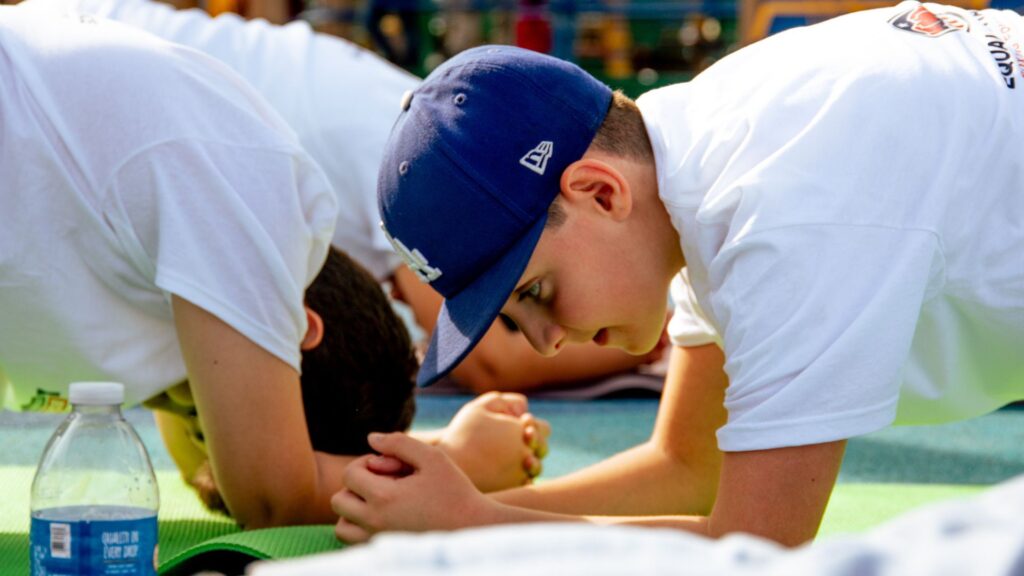
The Boundary of Discipline
To become proficient in the “Sweet Science,” an athlete must say “no” to a hundred other things.
- They have to say “no” to staying up until 3:00 AM on a screen because they have morning training.
- They have to say “no” to junk food that will ruin their stamina.
- They have to say “no” to peers who want to drag them into trouble.
Every time a teenager chooses the gym over a destructive habit, they are enforcing a boundary around their own future. They are declaring that their goals are more important than momentary distractions. This self-enforced discipline is the absolute core of how boxing builds confidence in children and teenagers.
The Ivan Redkach Standard: Boundaries Built on Mutual Respect
Rules are just words on a wall until a mentor enforces them. To learn boundaries, youth need to interact with adults who embody them firmly, fairly, and consistently.
At the Equal Chance Boxing Foundation, our culture of discipline is forged by our founder and Head Coach, professional boxer Ivan Redkach.
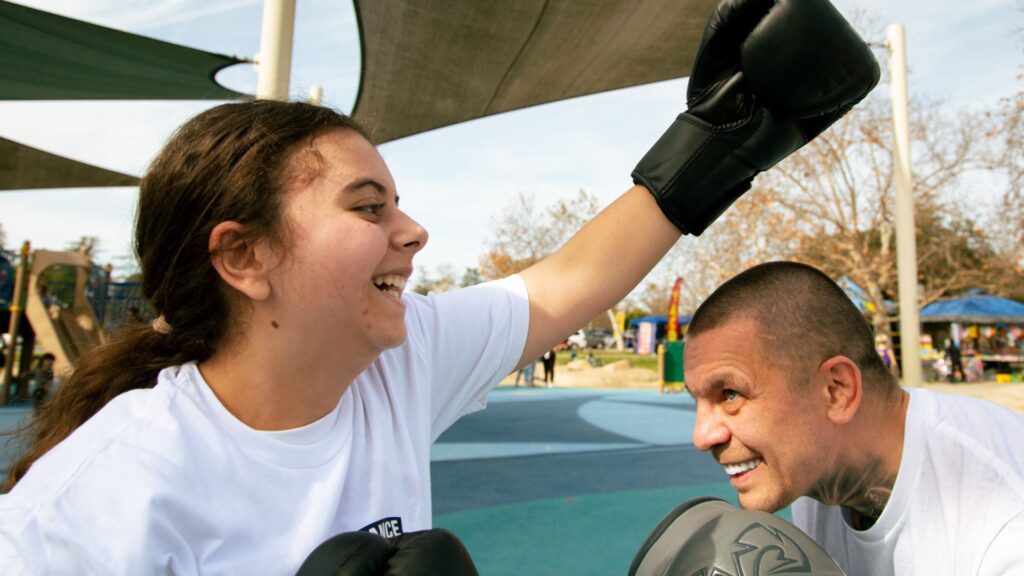
The Uncompromising Space of the Gym
Ivan operates the gym with profound empathy, but he does not compromise on the boundaries of respect. When a young person walks onto the mat, there are absolute rules.
- You respect the equipment.
- You respect your sparring partners.
- You listen when a coach is speaking.
If a teenager attempts to cross these boundaries—perhaps by acting out, showing up late, or disrespecting a peer—they are met with immediate, calm correction. Ivan does not yell, but he holds the line. By enforcing these rules, Ivan provides a highly predictable, safe environment. Youth secretly crave this structure. It gives them a safe framework to operate within, reducing their anxiety and allowing them to focus entirely on their growth.
Modeling Self-Respect
Ivan is recognized as an elite positive role model for at-risk youth because he models the exact boundaries he demands. He shows up on time. He trains alongside the youth. He respects his own body and his craft. When a teenager who struggles with people-pleasing watches a world-class athlete demand respect and set firm limits in the gym, it rewires their perception of what it means to be strong. They learn that true strength isn’t about being aggressive; it is about having a quiet, unshakeable standard for how you will allow the world to interact with you.
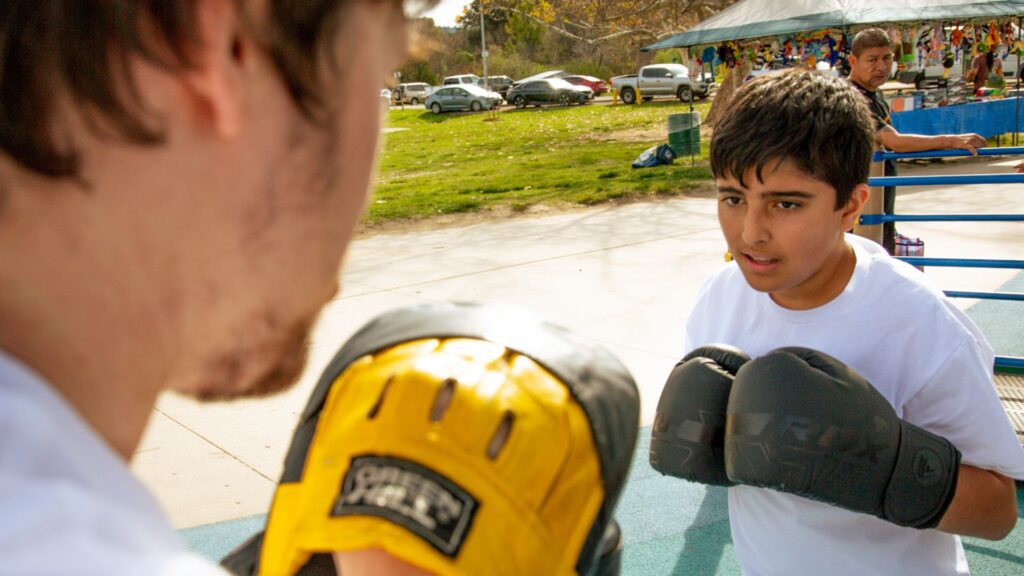
Claim Your Space: Free Access to Elite Training
If you are a young adult reading this, and you are tired of feeling like you have no control over your space, your time, or your emotional energy, the solution is waiting for you. If you are a parent or community member searching for an environment that will teach your youth how to stand tall and set limits, the doors are open.
However, the reality is that high-level athletic programs often come with exorbitant price tags. Expensive monthly dues and the cost of mandatory gear create an artificial boundary that locks out the very underprivileged youth who need this psychological development the most.
The Equal Chance Boxing Foundation believes that learning self-respect and establishing healthy boundaries should never depend on a family’s financial situation. We are immensely proud to operate a 100% free athletic and mentorship sanctuary.
The Youth Boxing Program
We remove all barriers so you can focus entirely on building your physical and mental fortitude.
- Zero Financial Burden: We charge no registration fees, no monthly dues, and no hidden costs.
- Professional Equipment Provided: We strictly follow all youth boxing safety guidelines, providing high-quality gloves, headgear, and wraps entirely free of charge to ensure a safe, professional training environment. If you are ready to draw a line in the sand, take control of your environment, and build unbreakable self-respect, it is time to step up. START YOUR JOURNEY: ENROLL IN OUR FREE YOUTH BOXING PROGRAM
Expanding the Perimeter with Community Training
We understand that geographical and transportation boundaries can prevent a young person from accessing our main facility. To solve this, our mobile outreach programs bring our elite coaching staff, safety gear, and structured discipline directly into local parks, schools, and underserved neighborhoods. DISCOVER OUR MOBILE COMMUNITY TRAINING INITIATIVE
Defend the Next Generation: How Your Support Builds Unbreakable Youth
Operating a massive daily operation that provides a state-of-the-art facility, elite protective equipment, and thousands of hours of high-level mentorship to youth—all entirely for free—is an immense undertaking.
We are only able to maintain these life-saving youth sports mentorship programs through the incredible vision, compassion, and generosity of our donors and community partners.
When you see a generation struggling with anxiety, peer pressure, and a lack of self-respect, you have the power to intervene. When you support the Equal Chance Boxing Foundation, you are actively funding an environment where a child learns to say “no” to bad influences and “yes” to their own potential. You are funding the physical and mental architecture of healthy boundaries.
For Individual Donors
Be the support system in a young athlete’s corner. Every dollar you contribute directly funds the gloves they wear and the facility that keeps them safe. You ensure that when a kid decides they are ready to learn self-respect, our doors remain wide open. EMPOWER THE YOUTH: DONATE TO THE FOUNDATION TODAY

For Corporate Sponsors
Businesses have a unique opportunity to shape the resilience and character of their local communities. By partnering with ECBF, your brand aligns itself with the core values of self-respect, mental health advocacy, and profound youth development. Show your community that your company invests in building strong, capable future leaders. LEAD BY EXAMPLE: BECOME A CORPORATE SPONSOR
Disconnect to Reconnect and Stand Your Ground
How do youth sports help kids become more comfortable with healthy boundaries? By providing a physical space where limits are respected, earned, and defended.
The modern world will constantly try to blur your boundaries. It will demand your attention, pressure you into uncomfortable situations, and try to convince you that your worth is tied to how well you please others. But when you wrap your hands, step onto the mat, and establish your stance, all of that noise stops. You learn the profound difference between being aggressive and being assertive.
Whether you are a young person looking to forge an unshakeable sense of self-worth, or an adult looking to support the next generation of resilient youth, the ring is waiting.
At the Equal Chance Boxing Foundation, Ivan Redkach and our entire dedicated coaching staff are here to help you draw your line. It is time to disconnect from the endless demands of the screen, step into a structured environment, and discover the lasting pride that comes from fiercely protecting your own space.
Questions?
We’ve got answers.
Boxing is a sport of distance and measurement. A student learns exactly where their reach ends and their opponent’s begins. This “physical literacy” translates directly into life: children become more aware of their personal bubble. By mastering the ability to maintain a safe distance in the ring, they develop the instinctual confidence to manage their physical boundaries in social situations, knowing they have the right to claim and protect their own space.
In our gym, no interaction begins without the Touch of Gloves. This is more than a tradition; it is a ritual of mutual consent and respect. It signals that both parties are ready, willing, and agree to the rules of the engagement. This teaches youth that healthy boundaries are built on clear communication. They learn that they have the power to “opt-in” or “opt-out” of a situation, fostering a deep sense of self-respect and agency over their own bodies.
Under the guidance of Ivan Redkach and our coaching staff, students are encouraged to speak up. Whether it’s expressing that a drill is too intense or asking for clarification, we create a safe environment where assertive communication is rewarded, not punished. When a child learns to say “I need a break” or “That was too hard” to an authority figure in the gym, they are practicing the exact same skills needed to stand up to a bully or resist negative peer pressure at school.
Absolutely. True strength is the ability to control yourself, while dominance is the desire to control others. The Equal Chance Boxing Foundation emphasizes that a person’s skill level should never be used to violate another person’s boundaries. By learning to respect their sparring partner’s safety and limits, youth develop empathy. They realize that respect is not something you take by force, but something you build by being a reliable and disciplined member of the community.