

We live in a culture obsessed with winning. From the moment a child enters school, they are graded, ranked, and compared. On social media, they are bombarded with an endless, curated highlight reel of their peers’ successes—perfect test scores, athletic highlights, and flawless social lives.
Because of this intense pressure, many modern teenagers have developed a paralyzing fear of failure. When they face a setback—whether it is a bad grade, a rejection from a sports team, or a painful social conflict—they do not know how to process it. Instead of seeing failure as a stepping stone, they internalize it as a permanent reflection of their self-worth. You see it when a teenager completely shuts down after making a mistake, lashes out in defensive anger, or simply refuses to try anything new because they are terrified of looking foolish.
We have tried to protect this generation by removing the sting of defeat. We hand out participation trophies and eliminate keeping score in youth leagues. But the real world does keep score. The real world features job rejections, heartbreaks, and unexpected crises. If we do not teach our youth how to lose gracefully, we leave them completely defenseless against the inevitable challenges of adult life.

When searching for sports that build confidence in kids, it is essential to find an environment that doesn’t just celebrate winning, but actively, structurally teaches the art of losing.
At the Equal Chance Boxing Foundation, we know that true character is not built when your hand is raised in victory; it is forged in the moments after you have been knocked down.
In this comprehensive guide, we will explore exactly how learning to lose gracefully builds stronger teen character. We will break down the psychology of resilience, explain how the uncompromising reality of the boxing ring strips away excuses, and show how our founder, professional boxer , uses his own hard-fought setbacks to mentor a generation of unbreakable youth.
[ecbf_donate_banner_1]
The Anatomy of Defeat: Why Teens Are Terrified of Losing
To help a teenager embrace failure, we first have to understand why they are running from it. The modern adolescent crisis of fragile self-esteem is directly linked to an environment that punishes mistakes.
The Perfectionism Trap
Today’s teenagers are growing up under a microscope. A mistake that would have been forgotten in a day a generation ago is now often captured, shared, and immortalized online. Because of this, teenagers develop severe perfectionism. They believe that if they are not instantly excellent at something, they are a failure. This mindset breeds profound anxiety. It kills ambition because a teen will simply choose not to participate rather than risk the public humiliation of not being the best.
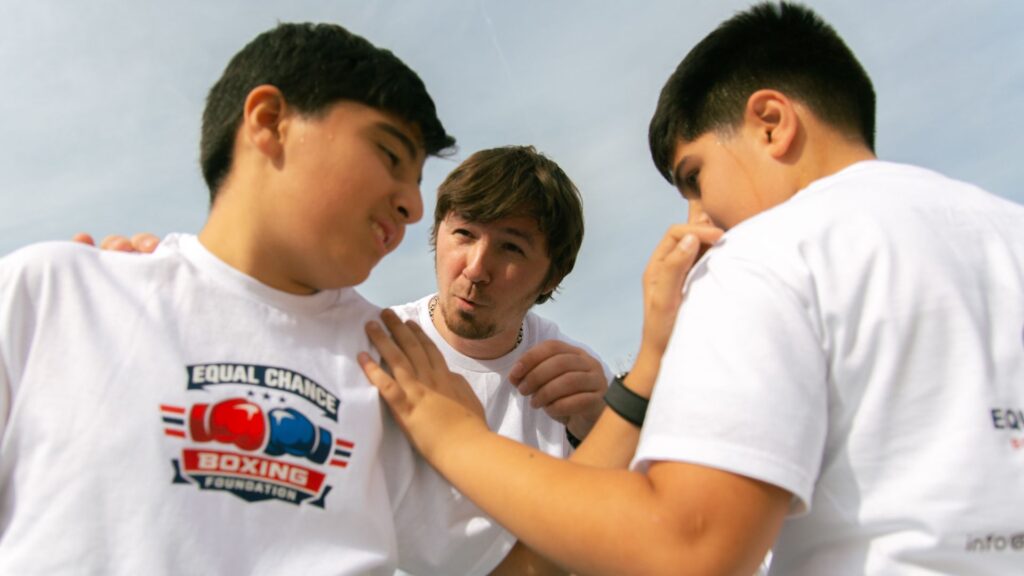
The Reaction to Failure: Defiance or Defeat
When a teenager who has never been taught how to lose faces a real-world setback, they typically react in one of two destructive ways:
- The Ego Defense (Anger and Excuses): They blame the teacher for the bad grade, the referee for the lost game, or their peers for the social drama. They refuse to take accountability because accepting the loss would shatter their fragile ego.
- The Complete Withdrawal (Depression): They internalize the failure, believing “I am not smart enough,” or “I am not strong enough.” They quit the team, drop the class, and retreat into the safety of their digital screens.
Neither response builds character. To build a strong, capable adult, we must change the definition of what a “loss” actually means.
The Unforgiving Mirror: How Boxing Changes the Meaning of Losing
You cannot fake your way through a boxing match. You cannot blame your teammates, and you cannot talk your way out of a corner. The boxing gym is the ultimate laboratory for learning personal accountability.
Here is how the “Sweet Science” systematically dismantles a teenager’s fear of failure.
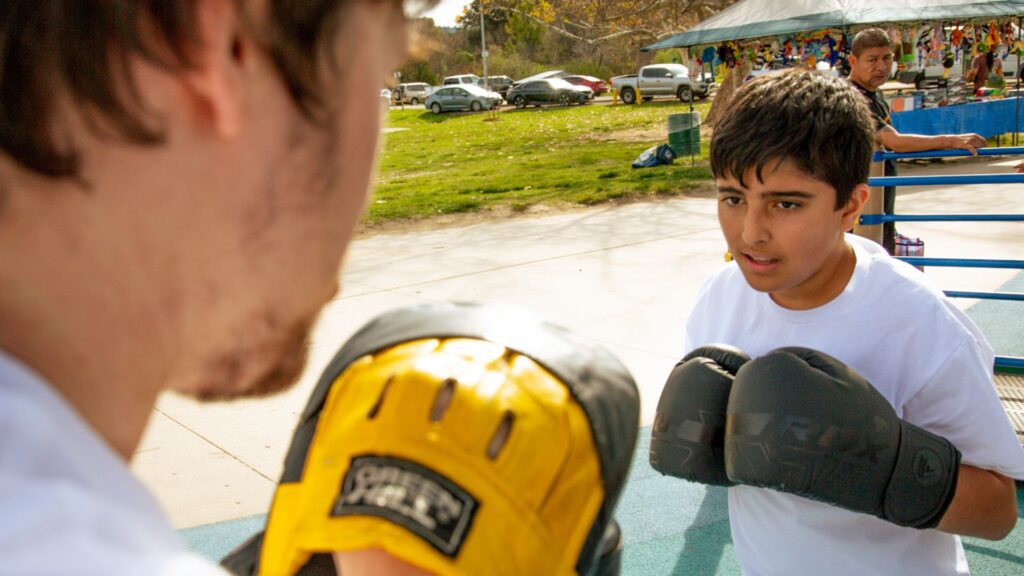
Normalizing the Struggle
In traditional sports, losing happens at the end of the game, making it a final, devastating event. In technique-focused boxing, “losing” happens a hundred times an hour. When a teenager learns a new defensive drill, they are going to get it wrong. They will drop their hands, they will trip over their own feet, and they will get tapped by a sparring partner’s jab. This happens to everyone, from absolute beginners to world champions. The gym normalizes the struggle. The youth quickly learn that making a mistake does not mean the world is ending; it just means they need to adjust their footing. They learn to detach their self-worth from the immediate outcome of the drill.
Stripping Away the Excuses
One of the most vital lessons of adolescence is personal accountability. When an athlete loses a sparring round, there is nowhere to hide. They cannot say the heavy bag was biased. They cannot blame the jump rope for tangling. The immediate, unbiased physical feedback of the ring forces a young person to look in the mirror and say, “I dropped my guard. That was my fault. I need to fix it.” Once a teenager learns to accept absolute responsibility for their mistakes in the gym, they begin taking responsibility for their mistakes in the classroom and at home.
The Data of Defeat
We teach our athletes that a loss is not an insult; it is data. When you get hit, your opponent is simply giving you valuable information about a hole in your defense. By analyzing a loss dispassionately—Why did I run out of breath? Why did that hook land?—a teenager learns to view setbacks as an intellectual puzzle rather than an emotional tragedy. This critical shift in perspective is the absolute bedrock of how boxing builds confidence in children and teenagers. They stop fearing failure because they know they have the tools to analyze it and overcome it.
Building the “Bounce-Back” Muscle: Emotional Regulation Under Pressure
Learning to lose gracefully is not about suppressing emotion. It is natural to feel angry, sad, or frustrated when you fall short of a goal. Graceful defeat is about emotional regulation—feeling the sting of the loss, but refusing to let it control your actions.
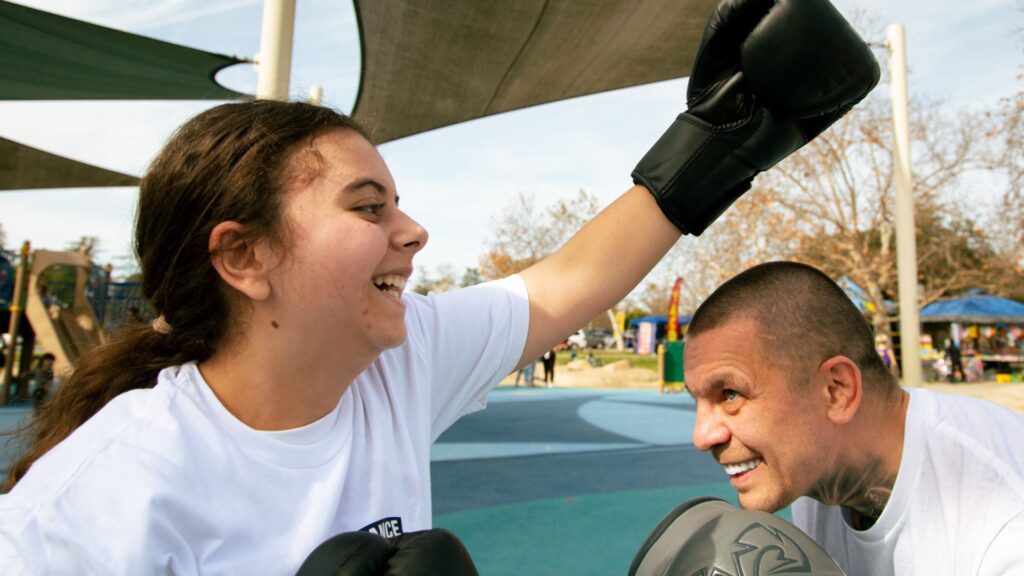
Utilizing Boxing for Anger Management in Kids
Many teens struggle with explosive anger when they lose. We utilize boxing for anger management in kids by placing them in an environment where losing your temper actively works against you. If an athlete gets angry because they missed a punch, their muscles tense up, they stop breathing, and they exhaust themselves in seconds. The sport strictly demands that they stay calm under fire. They learn to take a deep breath, reset their stance, and try again. This biological conditioning teaches a teenager how to process the sharp adrenaline of a failure without resorting to destructive behavior.
Respect for the Opponent (and the Process)
One of the most beautiful traditions in combat sports is the embrace at the end of a hard-fought bout. After pushing each other to the absolute limit, fighters touch gloves and show deep mutual respect. This ritual teaches youth a profound lesson: the person who beat you is not your enemy; they are your greatest teacher. By acknowledging the skill and hard work of someone who bested them, teenagers let go of their toxic ego. They learn humility, which is the cornerstone of a strong, healthy character.
The Masterclass: Mentorship Forged in the Fire
You cannot teach a young person how to survive a storm if you have never been in one yourself. The most impactful mentors are not those who have lived perfect, undefeated lives; they are the ones who have been knocked down on the world stage and found the strength to stand back up.
At the Equal Chance Boxing Foundation, our approach to character development is entirely shaped by our founder and Head Coach, professional boxer .
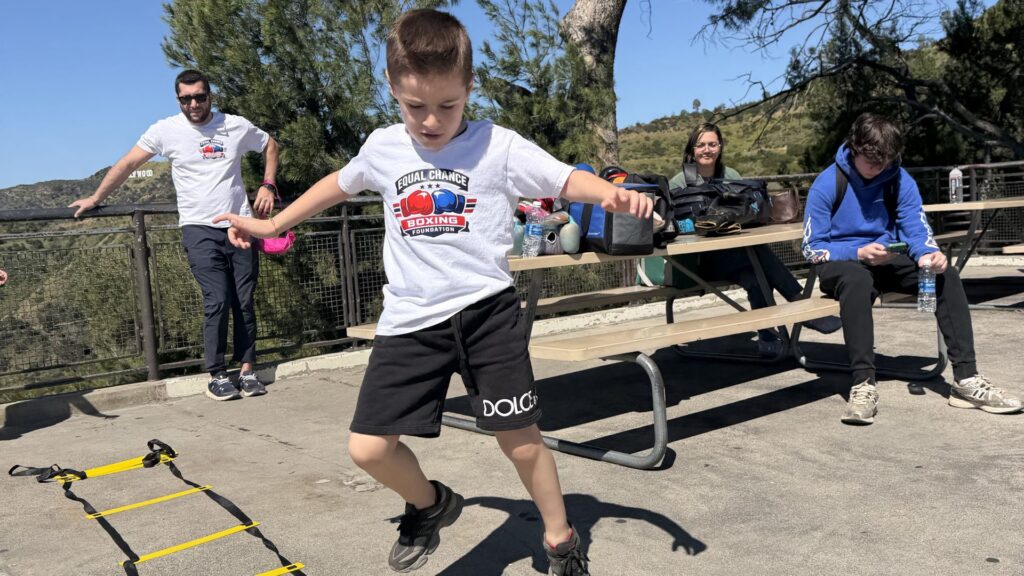
A Career Defined by Resilience
understands the bitter taste of defeat better than anyone. Fighting at the absolute highest levels of professional boxing, he has stepped into the ring with some of the most dangerous men on the planet. He has experienced incredible, crowd-roaring victories, and he has also suffered public, agonizing losses.
But ’s legacy is not defined by an unblemished record; it is defined by his unyielding refusal to quit. Growing up in the harsh sports boarding schools of Ukraine, and navigating the brutal business of professional combat in the United States, learned that a loss only becomes permanent if you refuse to return to the gym the next day.
Positive Role Models for At-Risk Youth
When an anxious teenager steps into our gym, terrified of making a mistake, is the ultimate positive role model for at-risk youth. He doesn’t project a fake image of perfection. He is radically honest with the youth about his own struggles, his own failures, and his own doubts.
When a kid loses a sparring round and walks to the corner with tears of frustration in their eyes, meets them with profound empathy. He looks them in the eye and tells them, “I have been exactly where you are. Now breathe. Let it go. Put your hands back up.” He teaches them that true champions are not the ones who never fall; they are the ones who learn how to fall, process the pain, and step back onto the mat with a smarter strategy.
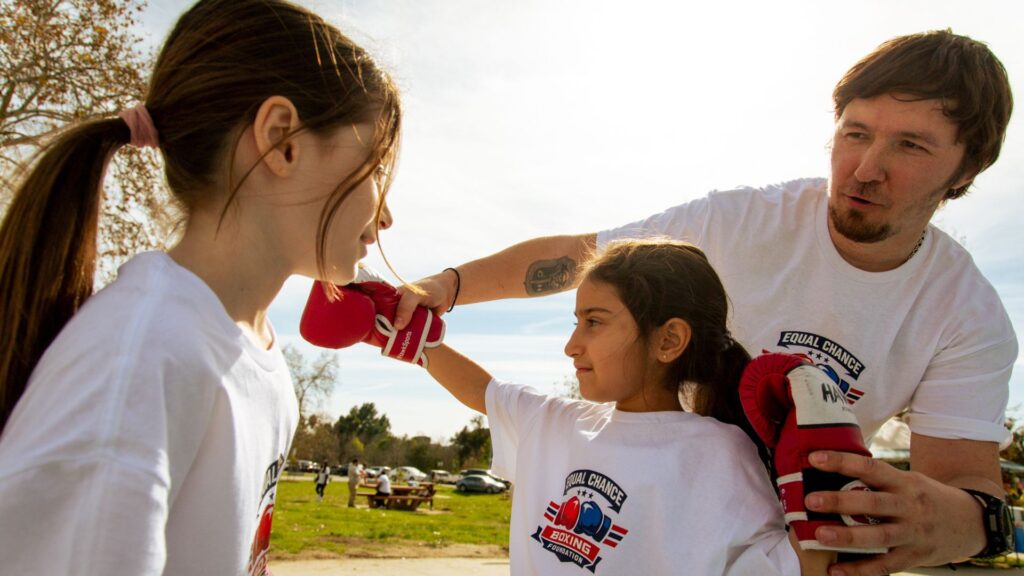
Removing the Fear: Free Character Building for Every Teen
Learning to fail safely requires a highly controlled, supportive environment. Elite athletic sanctuaries with professional coaching and rigorous safety protocols are the best places on earth to build resilience. However, the commercial sports industry often locks these life-changing environments behind a massive paywall.
High registration fees, mandatory gym dues, and the steep cost of safety gear make these programs completely inaccessible for the families who need them the most.
The Equal Chance Boxing Foundation believes that learning resilience, grit, and emotional control should never be restricted by financial status. We are deeply proud to operate as a completely 100% free youth development program.
[ecbf_donate_banner_4]
The Youth Boxing Program
We absorb the financial friction so the youth can focus entirely on their physical and mental development.
- Zero Cost Access: We never charge monthly fees or hidden dues.
- Elite Protective Gear Provided: To ensure strict adherence to our youth boxing safety guidelines, we supply all professional safety equipment, from headgear to heavy bags, entirely for free. If you are ready to trade the fear of failure for the unshakeable confidence of resilience, the gym is open. ENROLL IN OUR 100% FREE YOUTH BOXING PROGRAM TODAY
Community Training
We also recognize that logistical hurdles can prevent a teen from maintaining a consistent routine. Our mobile outreach initiatives dismantle these barriers by bringing our professional coaching staff, safety gear, and mentorship directly to underserved neighborhoods and local parks. LEARN MORE ABOUT OUR MOBILE COMMUNITY TRAINING INITIATIVE

Disconnect to Reconnect and Step Into the Ring
How does learning to lose gracefully build stronger teen character? By destroying the illusion of perfection.
When you give a young person the opportunity to test their physical limits, surround them with an authentic community that sweats together, and provide them with elite mentorship, the artificial fear of failure begins to fade. They realize that losing is not a permanent identity; it is simply a temporary event on the road to mastery.
The digital world will always be there, offering cheap dopamine, instant gratification, and a false sense of perfection. But true confidence, unshakeable mental health, and the grit required to survive the real world cannot be downloaded—they must be built, drop by sweat drop.
At the Equal Chance Boxing Foundation, and our entire team are dedicated to helping this generation reclaim their time, their focus, and their raw power. It is time to turn off the screen, accept the challenge, and discover what you are truly made of when things get hard.
Ready to trade the fear of failure for real-world strength? Choose your path:
- For the Youth: Take control of your reality and learn to fight through the setbacks. Join our 100% Free Youth Boxing Program
- For the Community: See how we are bringing the gym directly to the streets to build resilient neighborhoods. Learn about Mobile Community Training
- For Our Supporters: Stand in their corner and ensure these life-saving character development programs remain completely free. Donate Today or Become a Corporate Sponsor
Questions?
We’ve got answers.
In the ring, a loss is a clear, objective signal that something needs to change. Unlike in school, where a bad grade might feel abstract, a loss in boxing is a visceral experience that forces a teen to move from a “fixed mindset” (I’m just not good) to a “growth mindset” (I need to work on my defense). By facing defeat early and often in a controlled environment, youth learn that failure is not a reflection of their worth, but a roadmap for their next training camp.
Processing a loss requires a balance of empathy and accountability. A mentor doesn’t offer empty platitudes; instead, they conduct a “Technical Debrief.” By analyzing what went wrong—perhaps a dropped hand or a missed opening—the coach shifts the teen’s focus from “how I feel” to “what I can do.” This transition from emotion to action is vital. Under ’s guidance, students learn that a champion is defined not by their record, but by how they carry themselves after the final bell.
Absolutely. Shaking the hand of the person who just defeated you is one of the most powerful exercises in emotional regulation. It requires the student to suppress their ego and show respect in a moment of vulnerability. This practice builds “Sportsmanship Mastery,” helping teens navigate real-world conflicts, professional rejections, or social disappointments with a level of maturity and grace that sets them apart from their peers.
Life will inevitably throw “punches” that aren’t fair. The Equal Chance Boxing Foundation uses the ring as a laboratory for life. We teach that a loss is only “final” if you stop training. By developing the resilience to return to the gym the day after a defeat, youth build a “bounce-back reflex.” Whether it’s a failed exam or a job rejection, our graduates approach setbacks with the same mindset: analyze the error, adjust the strategy, and get back in the fight.