
As a parent raising a teenager in the digital age, you are fighting a daily, invisible battle against a culture of instant gratification. You watch your child navigate a world where everything they want is delivered with a single click, swipe, or tap. If they want entertainment, they have an endless stream of algorithm-driven videos. If they have a question, a search engine provides the answer in milliseconds. If they want social validation, a notification provides an immediate, fleeting rush of dopamine.
While this technology is incredibly convenient, it is fundamentally rewiring the teenage brain. When a child is conditioned to expect immediate results without any sustained effort, they lose the ability to tolerate the discomfort of the learning process. You see the painful symptoms of this every day: they quit a new hobby the moment it gets difficult, they become deeply frustrated when a homework assignment requires actual critical thinking, and their overall emotional resilience shatters at the first sign of adversity.
You know that the real world does not operate on instant gratification. True success, profound relationships, and genuine self-worth require immense patience, delayed gratification, and the willingness to endure failure. But how do you teach patience to a teenager whose brain has been hijacked by a screen?
When searching for effective interventions and sports that build confidence in kids, many parents overlook the one environment explicitly designed to strip away shortcuts and demand absolute, unwavering patience: the boxing gym.
At the Equal Chance Boxing Foundation, we specialize in helping teenagers disconnect from the digital noise and reconnect with their own intrinsic strength. In this comprehensive, pillar guide, we will explore exactly how the strict discipline of the “Sweet Science” rewires the adolescent brain, why our founder, Ivan Redkach, uses technique-focused mentorship to build patience, and how your child can learn to trade the cheap dopamine of a screen for the lasting pride of true mastery.
The Instant-Gratification Epidemic: Why Teens Are Losing Patience
To understand the profound healing power of boxing, we must first deeply understand what we are up against. The modern adolescent crisis of impatience is not a character flaw; it is a neurological conditioning problem.
The Dopamine Loop of the Digital Age
Dopamine is the neurotransmitter responsible for motivation, reward, and pleasure. In a healthy, natural environment, dopamine is released after we achieve something difficult—like finishing a long hike, mastering a difficult math concept, or winning a hard-fought game. It is the brain’s way of rewarding delayed gratification.
However, social media, video games, and infinite-scrolling apps have hacked this system. They provide massive, continuous hits of dopamine for doing absolutely nothing. The teenage brain quickly adapts to this hyper-stimulation, developing a tolerance. As a result, activities that require slow, sustained effort—like reading a book, practicing an instrument, or developing a physical skill—feel agonizingly slow, boring, and physically uncomfortable to them.
The Consequences: Anxiety, Quitting, and Frustration
When a teenager’s brain expects instant mastery, the inevitable failures of the real world hit them like a freight train.
- The “I Can’t Do It” Reflex: Because they are not used to delayed success, they interpret the normal struggle of learning a new skill as a permanent personal failure. They quit before they even truly begin.
- Emotional Volatility: A lack of patience directly fuels behavioral problems. When a teenager cannot get what they want immediately, their unmanaged frustration often manifests as explosive anger, defiance, or deep depressive withdrawal.
- Social Isolation: Building meaningful, authentic human relationships takes time, awkwardness, and conflict resolution. Teens who lack patience often retreat into the frictionless, isolated world of online interactions.
Traditional punishments or simply taking away their phone rarely solve the root issue. You cannot lecture a child into having patience. You have to place them in an environment that physically and psychologically forces them to practice it.
The Sweet Science: The Ultimate Classroom for Delayed Gratification
There is no “hack,” no shortcut, and no cheat code in the sport of boxing. It is a slow, grueling, and beautifully methodical discipline. When parents bring their teens to our foundation, they are often surprised by the profound lack of immediate action. We do not throw beginners into a ring. We introduce them to the art of the slow grind.
Redefining Progress: Breaking Down the Ego
When a teenager fueled by instant gratification walks into a boxing gym, they usually want to hit the heavy bag immediately. They want the loud noise, the sweat, and the instant feeling of being “tough.”
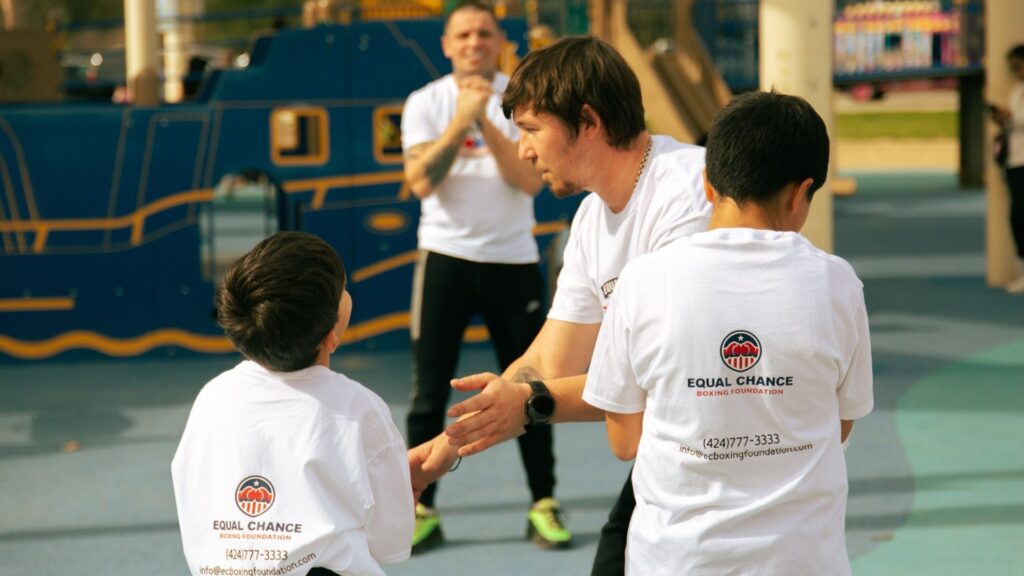
Our safe boxing training for kids directly challenges this desire. For the first several weeks, a young athlete is rarely allowed to throw a punch. Instead, they are forced to stand in front of a mirror and study their feet.
- They learn the precise alignment of the boxing stance.
- They learn to step forward, backward, left, and right, moving only inches at a time, ensuring they never cross their feet or lose their balance.
- They practice keeping their hands glued to their cheekbones until their shoulders burn.
This process is incredibly frustrating for a modern teenager. It forces them to confront their own impatience. But as they submit to the process, a miraculous psychological shift happens. They realize that true power cannot be rushed. They learn that the foundation must be perfectly stable before the house can be built.
The Agony and the Ecstasy of Repetition
In a world that constantly demands novelty and new content, boxing demands relentless, monotonous repetition. Bruce Lee famously said, “I fear not the man who has practiced 10,000 kicks once, but I fear the man who has practiced one kick 10,000 times.” This is the absolute law of the boxing gym.
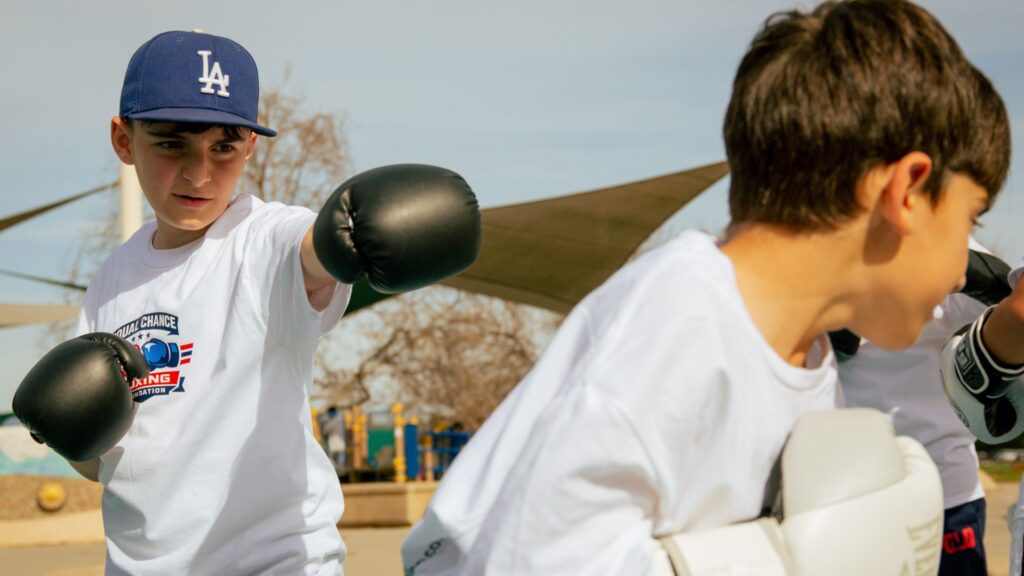
A teenager might spend an entire one-hour session doing nothing but throwing a basic left jab. They throw it, correct their elbow placement, and throw it again. They adjust their breathing, and throw it again. Through this grueling repetition, the teenager learns to find value in the microscopic details. They learn that mastery is not a sudden, magical event; it is the accumulation of thousands of tiny, invisible corrections over time. This is the exact mechanism of how boxing builds confidence in children and teenagers—it proves to them that if they are simply willing to be patient and do the work, they can achieve a level of greatness they once thought was impossible.
How Technique-Focused Boxing Rewires the Anxious Brain
Patience is intimately connected to focus and emotional regulation. A teenager who cannot control their racing thoughts cannot possibly be patient.
Mindfulness Through Complex Biomechanics
We often tell our athletes that boxing is essentially high-speed physical chess. We preach technique-focused boxing, which acts as a profound, moving meditation. When a coach commands a teenager to execute a specific defensive drill—slip right, roll left, pivot out, double jab—it requires absolute, undivided neurological presence. The teen must coordinate their hips, their footwork, their hand speed, and their spatial awareness all at the exact same moment.
They simply do not have the cognitive bandwidth left over to worry about social media drama, peer pressure, or an upcoming exam. The sheer difficulty of the technique anchors them firmly in the present moment. By practicing this intense, sustained focus for an hour a day, they strengthen the “focus muscles” in their brain, gradually expanding their capacity for patience in all other areas of their life.
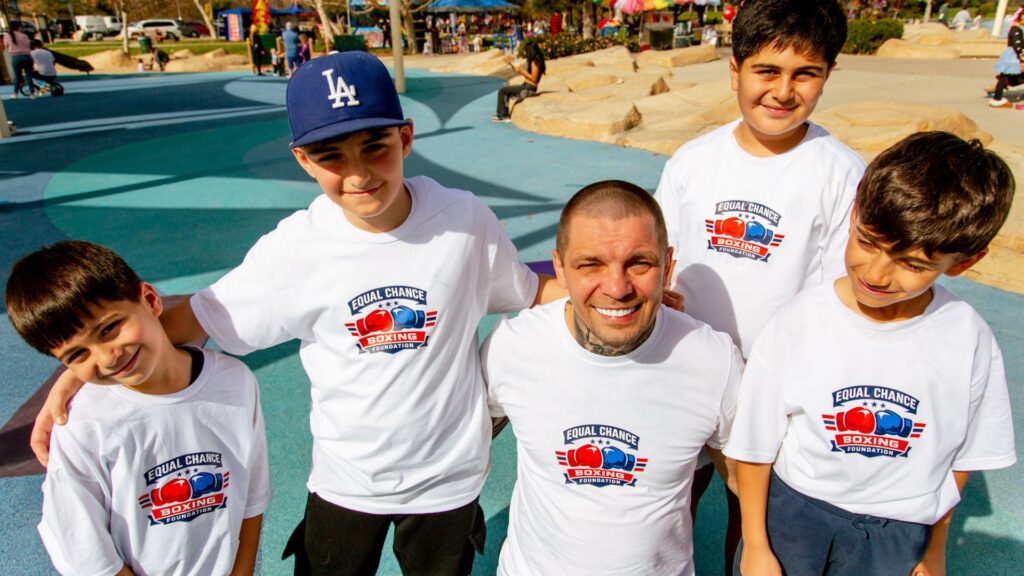
Utilizing Boxing for Anger Management in Kids
Impatience frequently breeds destructive anger. When teens feel overwhelmed by the slow pace of the real world, they act out. The boxing gym provides the perfect, highly structured environment to process this frustration. We utilize boxing for anger management in kids by teaching them that uncontrolled emotion makes them sloppy, slow, and exhausted. If a teen approaches the heavy bag with wild, impatient anger, they will gas out in 30 seconds and risk injuring their wrists. To hit the bag correctly, they must calm their heart rate, relax their shoulders, and rely on technique. They physically learn that patience and emotional control make them significantly stronger than raw, impatient rage.
Authentic Mentorship: The Ivan Redkach Standard of Discipline
A heavy bag cannot teach a teenager patience. The profound character development that occurs inside a boxing gym is entirely dependent on the quality, authenticity, and authority of the mentorship provided. Teenagers have an incredibly highly tuned radar for authenticity; they will not accept lessons on patience from someone who has not walked the hardest roads themselves.
At the Equal Chance Boxing Foundation, our uncompromising culture of patience, discipline, and emotional control is driven by our founder and Head Coach, professional boxer Ivan Redkach.
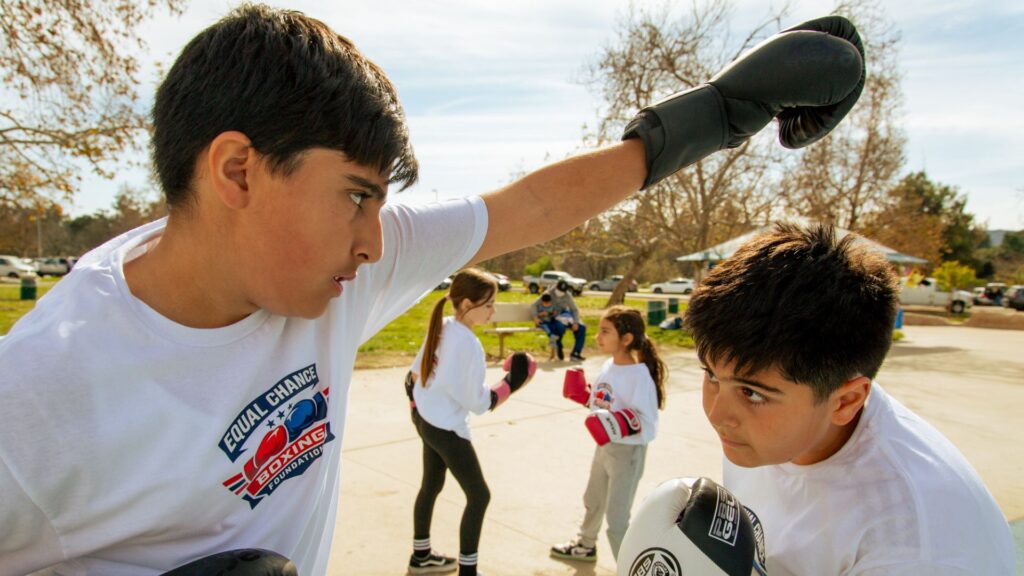
A Journey Forged in the Slow Grind
Ivan did not become an elite professional athlete through instant gratification. His foundation was built in the famously strict, highly regimented sports boarding schools of Shostka, Ukraine. In the Eastern European boxing system, patience is not a suggestion; it is the absolute law. An athlete is not allowed to advance to the next level of training until their fundamental technique is deemed flawless by their coaches.
Ivan endured this grueling, highly disciplined environment for years, fighting over 350 amateur bouts before ever turning professional. When he arrived in the United States, he faced entirely new mountains to climb: severe language barriers, intense financial hardship, and the brutal business realities of professional combat sports. He survived and conquered these obstacles using the exact same tool he teaches today: unrelenting, methodical patience.
Earning Respect and Delivering True Mentorship
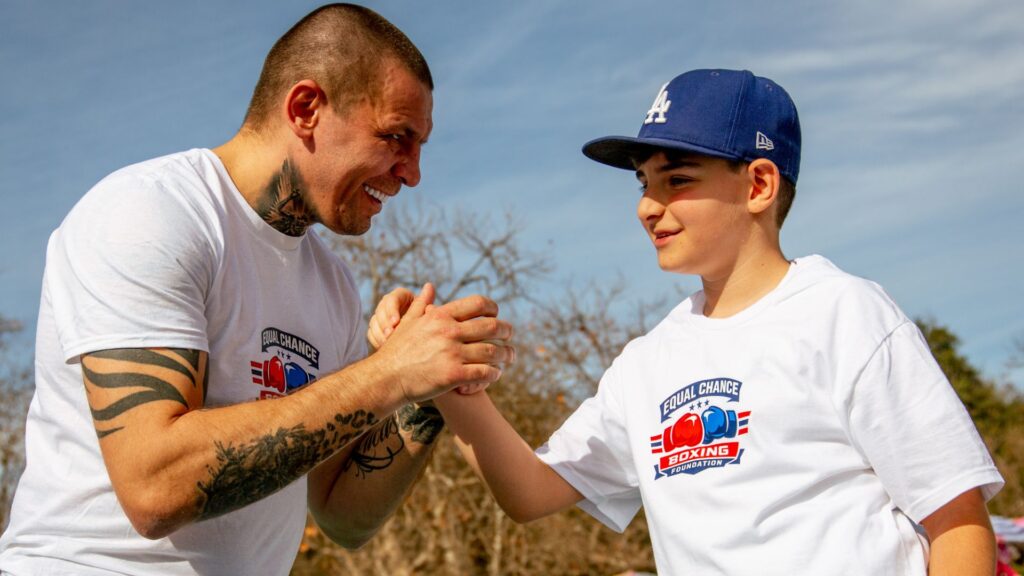
Ivan is recognized as one of the most effective and authentic positive role models for at-risk youth because he does not demand respect; he earns it on the mats every single day.
When a frustrated, instant-gratification-addicted teenager walks into the gym and complains that the drills are “too hard” or “taking too long,” Ivan meets them with profound, earned empathy, but zero compromise. He doesn’t yell. He doesn’t lecture. He simply points back to the mirror. He uses his own cinematic, battle-tested life experience to show them that anything worth having in life takes time. By holding them to an uncompromising standard, he slowly breaks down their digital impatience and rebuilds them with the unshakeable resilience of a fighter.
Removing the Barriers: Elite Training for Every Teen
We have established that highly structured, non-violent boxing training for youth is one of the most effective ways to cure the modern epidemic of impatience. However, delivering this level of elite mentorship requires significant resources.
Prinstine facilities, high-level professional coaching, and the strict safety protocols required to protect young athletes naturally come with a massive price tag in the commercial sports industry. Exorbitant monthly tuition, mandatory gear packages, and predatory contracts create a massive financial wall. This effectively locks the most vulnerable populations—our underprivileged youth—out of the exact environments that could teach them the patience and discipline they need to survive.
The Equal Chance Boxing Foundation firmly believes that elite character development and high-level mentorship should never be a luxury reserved for the wealthy. We are deeply proud to operate a completely 100% free athletic sanctuary.
The Youth Boxing Program
Our flagship program completely removes the financial burden from the shoulders of exhausted parents.
- Zero Cost: We charge absolutely no registration fees, no monthly dues, and no hidden club costs.
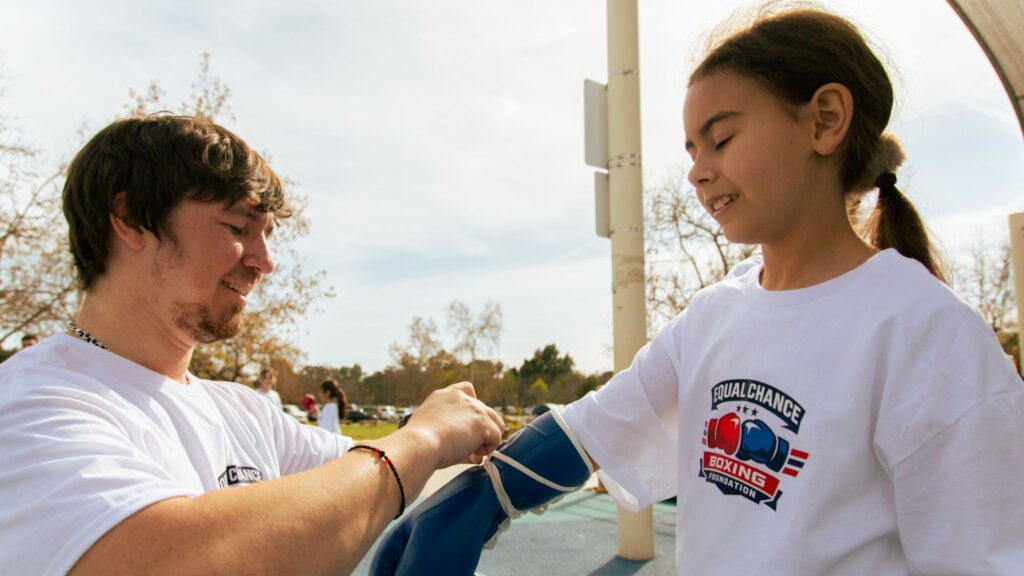
- Professional Equipment Provided: To maintain our uncompromising safety standards, we supply all necessary professional-grade protective gear—from custom hand wraps to 16oz shock-absorbing gloves—at zero cost to your family.
If you are tired of watching your child struggle with the anxiety of instant gratification, and you want to place them in an environment that will demand their best and teach them the profound value of patience, we are ready to help. ENROLL YOUR TEEN IN OUR 100% FREE YOUTH BOXING PROGRAM TODAY
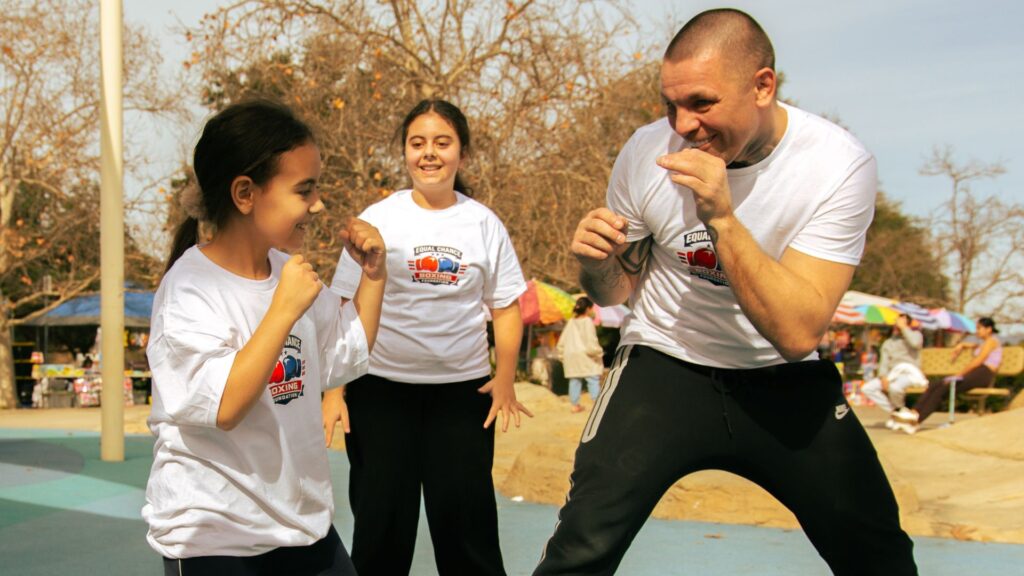
Breaking Geographical Barriers with Community Training
We also understand that time, logistics, and transportation are massive barriers for modern, hardworking families. A program cannot help a child if the child cannot get to the building. To solve this, our innovative mobile outreach initiatives bring our professional coaches, safety equipment, and structured discipline directly into local parks and underserved neighborhoods. LEARN MORE ABOUT OUR MOBILE COMMUNITY TRAINING INITIATIVE
Stand in Their Corner: How You Can Empower the Next Generation
Providing an elite facility, state-of-the-art protective equipment, and the unbroken, daily attention of a world-class mentor like Ivan Redkach to hundreds of teenagers—all for absolutely free—is a monumental undertaking.
We can only maintain these life-saving youth sports mentorship programs through the radical vision, compassion, and generosity of our community partners and donors.
When you look at the statistics regarding youth anxiety, digital addiction, and behavioral crises, it is easy to feel overwhelmed. But you are not helpless. You have the direct power to intervene. When you support the Equal Chance Boxing Foundation, you are actively funding the antidote to the instant-gratification epidemic. You are giving a child the gift of time, structure, and patient mentorship.
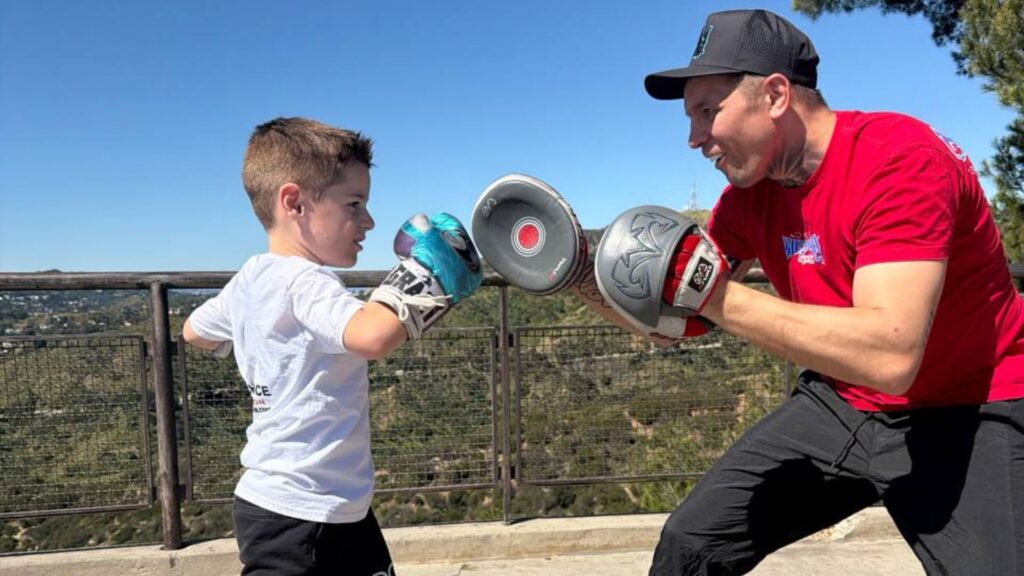
For Individual Donors
Be the hero in a struggling family’s corner. Your financial contribution directly funds the gloves, the facility upkeep, and the mentorship hours required to teach a distracted teenager the life-long value of delayed gratification. Every single dollar is an investment in a child’s character. DONATE TO THE EQUAL CHANCE BOXING FOUNDATION
For Corporate Sponsors
Businesses have a unique opportunity to create massive, systemic change within their communities. By partnering with our foundation, your company aligns its brand with profound resilience, community empowerment, and the essential development of the next generation of patient, focused leaders. We offer comprehensive, high-visibility sponsorship packages that showcase your commitment to true corporate social responsibility. BECOME A CORPORATE SPONSOR TODAY
The Ultimate Reward of the Slow Grind
How does boxing help teens build patience in an instant-gratification world? By relentlessly proving to them that the most valuable things in life cannot be downloaded, swiped, or rushed.
When a teenager steps into the Equal Chance Boxing Foundation, they leave the frantic, high-anxiety digital world at the door. They enter a sanctuary where time slows down. They learn that missing a punch is not a failure, but a data point for improvement. They learn that physical exhaustion is not a reason to quit, but a signal that they are growing stronger.
Above all, they learn to fall in love with the slow grind. They discover the deep, unshakeable pride that only comes from staring at a difficult challenge, accepting that it will take time, and patiently putting in the work, day after day.
At the Equal Chance Boxing Foundation, Ivan Redkach and our entire dedicated coaching staff are committed to walking this slow, demanding road alongside your child. We are here to help you trade the fleeting dopamine of the digital world for the permanent, patient strength of the sweet science. We are ready to help them build a foundation that will last a lifetime.
Questions?
We’ve got answers.
In a digital world, success feels instant. In boxing, success is measured in months and years. A teen might practice a simple jab ten thousand times before it becomes “perfect.” This process teaches them that real value takes time. At the Equal Chance Boxing Foundation, we emphasize that the “win” isn’t the trophy at the end; it’s the hundreds of hours of disciplined training that led to it. This realization helps teens stay patient and persistent in their academic and personal lives.
Short-form content rewards the brain with quick dopamine hits, shortening a teen’s ability to focus. Boxing requires sustained engagement. Whether it’s a long session on the heavy bag or a complex defensive drill, there are no shortcuts. Under the guidance of Ivan Redkach, students learn to appreciate the “monotony” of the grind. They discover that the deepest satisfaction comes from mastering a difficult skill through repetition, not from a notification on a screen.
Absolutely. Boxing is a series of “plateaus.” You work hard for weeks with no visible change, and then suddenly, everything clicks. This is exactly how complex academic subjects work. By experiencing this growth cycle in the gym, teens develop the “stomach” for frustration. They learn that “not getting it right away” isn’t a failure—it’s just a necessary stage of the process.
A boxing round is 3 minutes of high-intensity decision-making. If a teen gets impatient and rushes in without a plan, they leave themselves open. Boxing teaches them to wait for the opening. This tactical patience—the ability to keep a cool head and wait for the right moment to act—is a life skill. Whether they are waiting for a job opportunity or navigating a difficult conversation, they carry the discipline of the 3-minute round with them.