

As a parent, there are few things more exhausting and heartbreaking than watching your child struggle with behavioral problems. You endure the endless cycle of calls from the principal’s office, the tense parent-teacher conferences, and the explosive arguments at home. Whether your child is dealing with anger management issues, defiance, intense hyperactivity, or the crushing weight of adolescent anxiety, you know that underneath the difficult behavior is a kid who is simply overwhelmed and crying out for help.
You have likely tried traditional interventions—grounding, taking away screen time, counseling, or changing schools. Yet, when a child is physically bursting with unchanneled energy and deep-seated frustration, sitting on a therapist’s couch or sitting in a timeout often feels like putting a band-aid on a volcano.
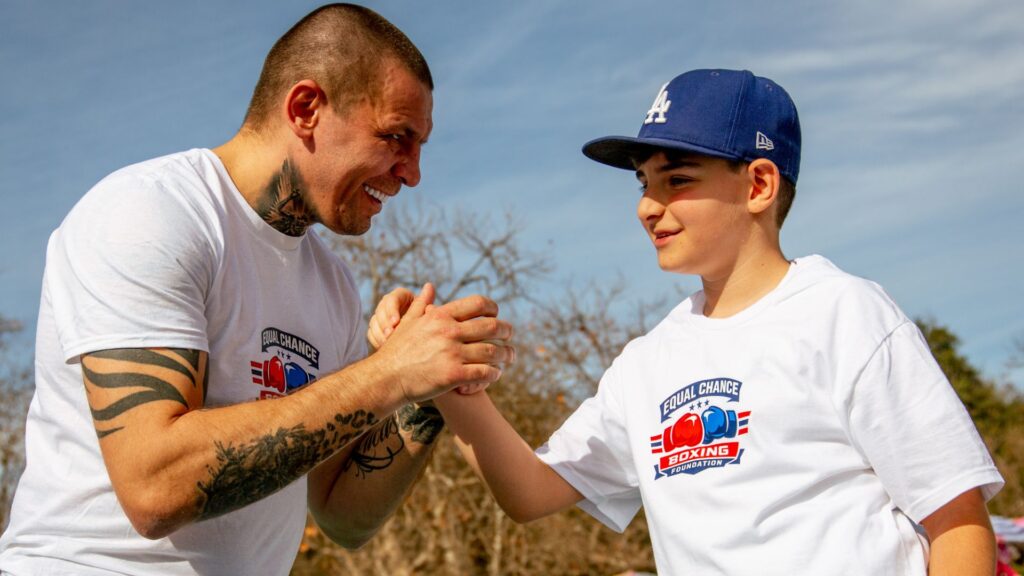
When searching for effective interventions for troubled youth, many parents overlook one of the most powerful, historically proven solutions available: the boxing gym.
At the Equal Chance Boxing Foundation, we engage with deeply frustrated parents and defiant youth every single day. We understand the pain of watching a child spiral, and we know exactly how to stop it.
In this comprehensive guide, we will explore exactly how boxing helps kids with behavior problems. We will break down the neurological and psychological shifts that happen on the mat, explain why traditional punishments often fail, and highlight how our founder, professional boxer , uses authentic, battle-tested mentorship to permanently rewire the minds of at-risk youth.
[ecbf_donate_banner_1]
The Science of Sweat: Why Traditional Discipline Fails
To understand why boxing works, we must first understand why standard discipline often fails a child with behavioral issues.
When a teenager acts out, their nervous system is usually in a state of extreme dysregulation. They are flooded with cortisol (the stress hormone) and adrenaline. When parents or teachers respond to a child’s outburst with anger, yelling, or strict confinement, it only escalates the child’s internal “fight or flight” response. They feel cornered, which leads to more defiance and deeper resentment.
The Neurological Reset of Combat Sports
Boxing provides an immediate, highly structured physical release valve for that toxic energy.
- Endorphin Replacement: Hitting a heavy bag requires explosive cardiovascular effort. This extreme physical exertion rapidly burns off cortisol and replaces it with a massive flood of endorphins and dopamine.
- Forced Mindfulness: A child cannot dwell on their anger or plot their next defiant act when they have a coach instructing them to perform a complex, six-punch combination. The sport demands 100% of their cognitive bandwidth, forcing their brain to hit the “reset” button.
By the end of a grueling training session, the child is simply too physically exhausted to be angry. They leave the gym calm, grounded, and chemically balanced.
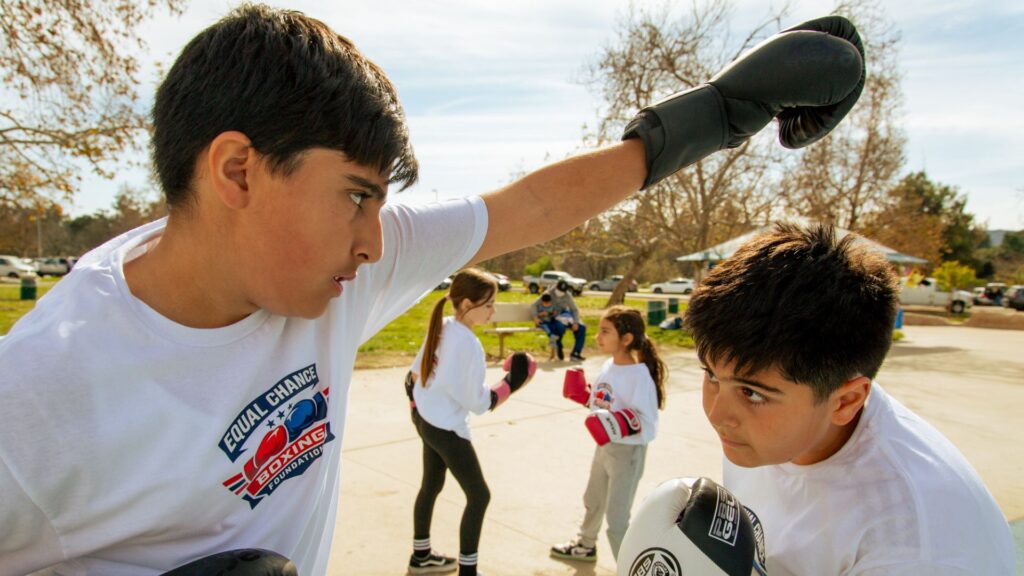
Five Ways Boxing Rewires Behavioral Problems
Boxing is not about teaching a troubled kid how to fight; it is about teaching a chaotic mind how to find order. Here is how the “Sweet Science” systematically dismantles behavioral problems.
Channeling Destructive Aggression into Constructive Focus
Kids with anger management problems often feel like they are at the mercy of their own emotions. The boxing gym does not tell them that their anger is “bad” or invalid; instead, it gives them a safe, hyper-structured environment to process it. We utilize boxing for anger management in kids by teaching them that raw, uncontrolled aggression is actually a weakness in the ring. To throw a powerful, effective punch, they must relax their shoulders, control their breathing, and focus their eyes. They literally learn to weaponize their calm, turning destructive rage into highly tuned, constructive focus.
The Power of Immediate, Unbiased Accountability
Defiant children are often master manipulators. They know how to argue with parents, talk back to teachers, and bend the rules. The heavy bag does not argue. The jump rope does not negotiate. Boxing offers immediate, unbiased physical feedback. If a child drops their hands, they lose their balance. If they refuse to run, they lack the stamina to finish the drill. The sport forces children to take absolute ownership of their actions, completely stripping away their ability to make excuses.
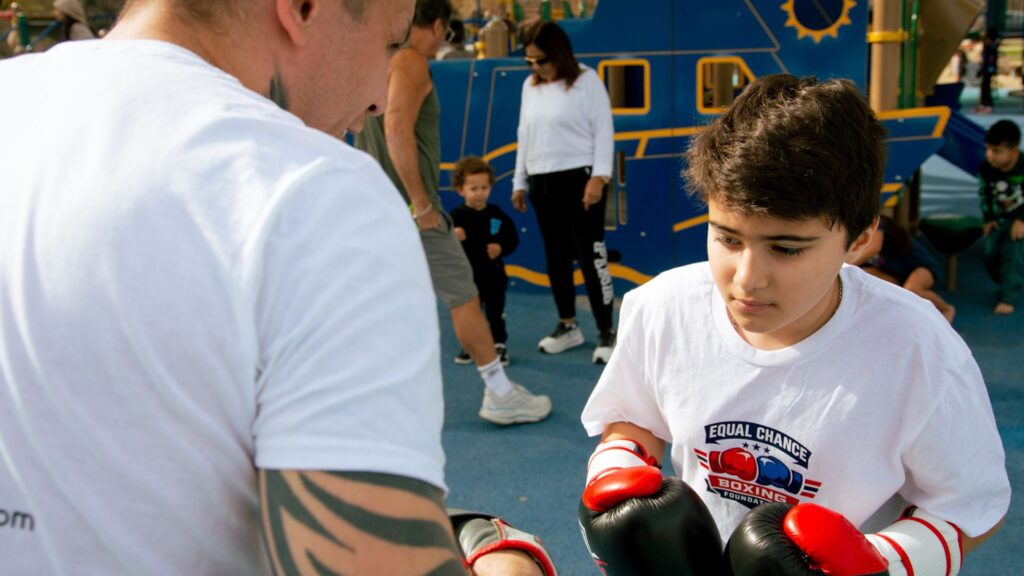
Rebuilding Shattered Self-Esteem
Behavioral issues are almost always a mask for profound insecurity. Kids who feel like they are constantly failing in the classroom or struggling socially will often act out to reclaim a false sense of power. Boxing replaces that false bravado with genuine, intrinsic self-worth. When a child finally masters a complex slip-and-roll defensive technique after weeks of failing, they build a catalog of undeniable proof that they are capable of overcoming hard things. This is the core of how boxing builds confidence in children and teenagers—by proving they are strong enough to endure the struggle.
A Sanctuary from Negative Peer Pressure
For many at-risk youth, behavioral problems stem directly from the company they keep. The boxing gym acts as an impenetrable sanctuary from street politics and toxic peer groups. Inside the gym, social status, wealth, and street reputation mean absolutely nothing. The only currency is sweat, discipline, and respect for the coach.
Boxing as Therapy for ADHD and Anxiety
For children with Attention-Deficit/Hyperactivity Disorder (ADHD), traditional sports with lots of standing around (like baseball or soccer) can be agonizing. Boxing is constant, rhythmic, and high-intensity. The repetitive nature of hitting the mitts or bouncing on the toes perfectly satisfies a hyperactive brain’s need for stimulation, while the strict discipline of the coach satisfies the brain’s need for boundary and structure.
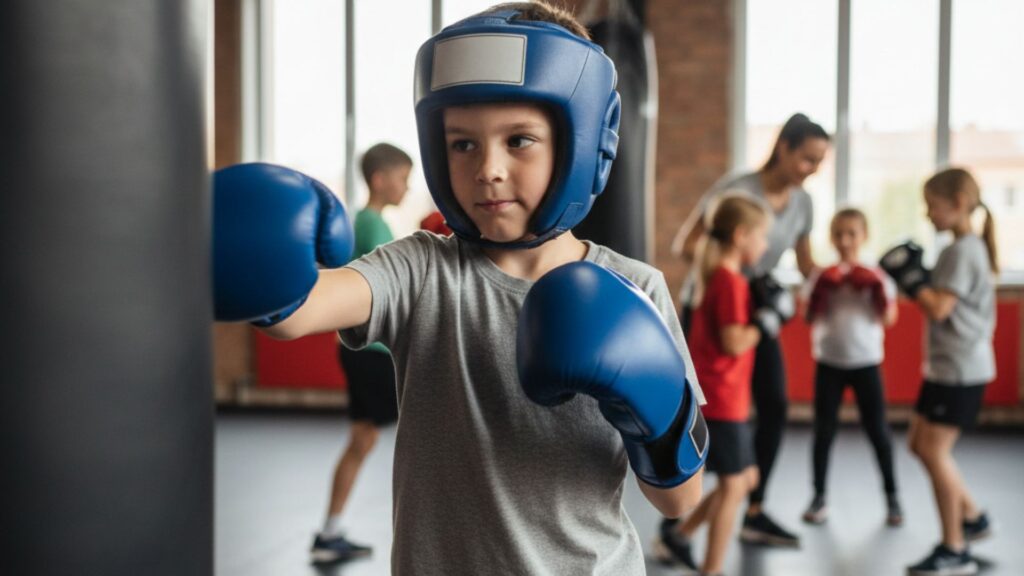
Authentic Mentorship: The Approach
The physical benefits of boxing are incredible, but the true catalyst for behavioral change is the person holding the stopwatch. A heavy bag cannot mentor a child. Real transformation requires a coach who commands absolute respect and possesses deep, authentic empathy.
At the Equal Chance Boxing Foundation, our intervention strategies are spearheaded by our founder and Head Coach, professional boxer .
Meeting Kids Where They Are, Not Where We Want Them to Be
did not grow up with a silver spoon. He was forged in the grueling sports boarding schools of Ukraine, and he understands the harsh realities of fighting for survival. When he arrived in the United States, he faced severe financial instability, predatory management, and deep isolation.
Because of his cinematic, battle-tested life experience, is one of the most uniquely qualified positive role models for at-risk youth. When a defiant, angry teenager walks through our doors with a chip on their shoulder, does not yell at them. He does not try to intimidate them. He looks them in the eye and meets them with radical, earned empathy. He knows their anger is a shield, and he knows exactly how to help them lower it.
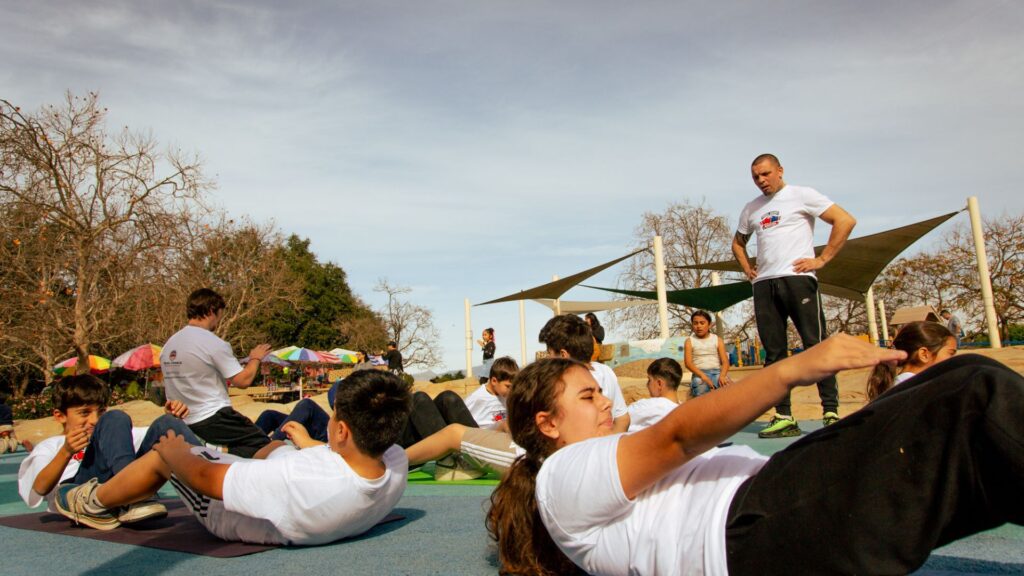
Leading by Example, Not by Fear
Children with behavioral problems have an incredibly highly tuned radar for hypocrisy. They will not respect a mentor who tells them to work hard but does not work hard themselves. commands respect because he sweats alongside them. He demonstrates the exact discipline, emotional control, and relentless work ethic he demands from his athletes. Under his guidance, defiant youth naturally drop their defensive walls and begin to listen—a habit that directly translates to better behavior at home and improved grades in school.
Breaking the Barrier: A Safe, Free Environment for Every Child
When exhausted parents finally realize that a high-level sports mentorship program is the answer to their child’s behavioral problems, they are almost immediately hit with a secondary crisis: the cost.
Elite gyms with professional coaches and strict safety protocols are notoriously expensive. High monthly tuition and mandatory gear costs effectively lock the most vulnerable underprivileged youth out of the exact environments that could save their lives and restore peace to their families.
The Equal Chance Boxing Foundation refuses to let financial hardship stand in the way of a child’s character development. We operate a completely 100% free sports program for kids in the USA.
- Zero Financial Burden: We never charge families registration fees, monthly dues, or hidden club costs.
- Professional Gear Provided: We supply all the necessary professional-grade safety equipment—from 16oz gloves to elite headgear—ensuring no child trains in substandard gear.
If you are tired of the phone calls from the principal and exhausted by the daily fights at home, it is time to change the environment. Give your child the structured physical outlet and authentic mentorship they desperately need. ENROLL YOUR TEEN IN OUR YOUTH BOXING PROGRAM TODAY
We also know that behavioral problems don’t just happen near a gym; they happen in our local neighborhoods. If transportation is a barrier for your family, our Community Training initiative brings mobile boxing rings and our elite coaching staff directly to local parks and underserved streets, ensuring our discipline reaches the youth exactly where they live.
[ecbf_donate_banner_4]
Be the Change: How Donors Save Families in Crisis
Providing a state-of-the-art facility, elite protective equipment, and the unbroken, daily attention of a world-class mentor like to hundreds of at-risk teenagers is a monumental financial undertaking.
We can only provide these life-saving interventions for free through the radical generosity of our donors.
When you read the statistics regarding youth incarceration, high school dropout rates, and adolescent mental health crises, it is easy to feel completely helpless. But you are not helpless. When you support our foundation, you are directly funding the intervention that stops a troubled child from becoming a troubled adult.
Your vital financial support directly ensures:
- Unrestricted Access: Keeping our developmental programs 100% free for families facing financial hardship and behavioral crises.
- Continuous Mentorship: Allowing our coaching staff to dedicate the intense, one-on-one time required to break through a defiant teenager’s defensive walls.
- Street-Level Intervention: Fueling the vans and mobile equipment necessary to take our community training directly into the neighborhoods that need it the absolute most.
Be the hero in a struggling family’s corner. Help us prove to these kids that they are worthy of investment, structure, and love. DONATE TO THE EQUAL CHANCE BOXING FOUNDATION
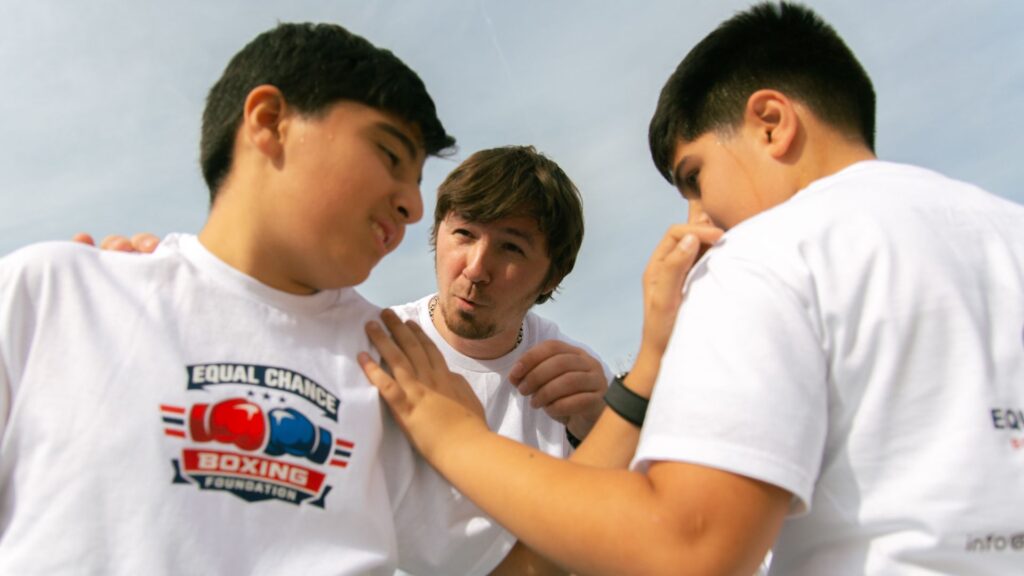
Trading Defiance for Discipline
Behavioral problems are rarely a permanent personality trait; they are almost always a temporary cry for structure, physical release, and understanding.
Boxing does not teach a troubled child how to be violent. It teaches them how to be peaceful. It takes their chaotic, natural energy and channels it through a rigorous, highly intellectual filter. It teaches them that true power does not come from screaming, rebelling, or fighting in the streets. True power comes from absolute physical and emotional control.
At the Equal Chance Boxing Foundation, and our entire coaching staff are dedicated to providing the safest, most structurally sound athletic environment possible. It is time to stop the cycle of ineffective punishments and start witnessing the incredible transformation of your child.
Questions?
We’ve got answers.
Boxing is a “focus-intensive” sport. For a child with ADHD, the gym provides a structured environment where they must pay attention to every movement—their own and their coach’s. The constant feedback loop of hitting mitts or moving in rhythm forces the brain to stay in the “now.” This practice of sustained attention strengthens the neural pathways responsible for executive function, helping them manage impulsivity both in the ring and in the classroom.
Yes, it is one of the most effective tools for emotional catharsis. Behavior problems often stem from a child not knowing how to process “heavy” emotions. In boxing, they learn to channel that energy into a heavy bag or a drill. By the end of a session, the physical exhaustion leads to a chemical release of endorphins that calms the nervous system. A “tired” child is a regulated child, making them far less likely to act out at home.
Often, children who are “defiant” are simply looking for authority they can respect. In the gym, respect is mutual and earned. A coach like doesn’t demand respect; he models it. When a child sees a world-class athlete treating them with dignity while maintaining high standards, they naturally want to meet those standards. This shifts their view of “rules” from something that restricts them to something that helps them become stronger.
Many behavior problems are a “mask” for low self-esteem. A child who feels they aren’t “good” at anything may act out to get attention. Boxing provides tangible wins: mastering a new combination, lasting a full round, or improving footwork. These small victories build a genuine sense of competence. As a child starts to see themselves as a “boxer” and a “hard worker,” they no longer feel the need to gain attention through negative behaviors.