
Rejection is universal, but that does not make it hurt any less.
If you are a young person reading this, you probably know the exact feeling. It is the sinking sensation in your stomach when you don’t make the varsity team. It is the sting of a college rejection letter, the humiliation of being turned down by a peer, or the isolation of being left out of a social group. In that exact moment, the world feels incredibly heavy. Your brain tells you that you are not good enough, and the easiest option is to simply stop trying so you never have to feel that way again.
If you are a parent watching your child go through this, you feel their pain just as sharply. You know their potential, their worth, and their talent. You want to shield them from the word “no.” But you also know that you cannot protect them from rejection forever.
The truth is, modern youth are facing a crisis of resilience. In a digital world where “success” is heavily filtered and constantly broadcasted, failure and rejection feel like permanent, public tattoos. We are seeing a generation that is increasingly terrified of trying new things because the fear of rejection is paralyzing.
But what if rejection was not a final verdict? What if it was just data?
When we ask, “What sports teach children about handling rejection,” we are not just talking about physical games. At the Equal Chance Boxing Foundation, we view combat sports as the ultimate laboratory for the human mind. Boxing teaches a profound, life-altering truth: getting knocked down is inevitable, but staying on the mat is a choice.
In this comprehensive pillar guide, we are speaking directly to the youth trying to find their footing, and the adults striving to support them. We will explore the psychology of rejection, how the structured environment of a boxing gym redefines failure, and how our founder, professional boxer , mentors the next generation to take the word “no” and turn it into unshakeable fuel.
[ecbf_donate_banner_1]
The Anatomy of a “No”: Why Rejection Hurts So Much
Before you can learn to handle rejection, you have to understand why it feels so devastating. It is not a sign of weakness; it is actually a matter of biology.
The Biological Sting of Exclusion
Human beings are wired for connection. Thousands of years ago, if you were rejected by your tribe, your chances of physical survival dropped to zero. Because of this, the human brain evolved to treat social rejection just like physical pain. When a teenager is cut from a team or rejected by a friend group, neurological scans show that the same areas of the brain light up as if they had just sustained a physical injury. For a young adult, whose brain is still developing and heavily focused on peer approval, a rejection is not just a minor setback—it is a full-blown biological alarm.
The Illusion of Perfection
In the past, failure was private. Today, a young person’s mistakes, rejections, and social missteps can be witnessed by hundreds of people online instantly. Furthermore, teenagers are constantly bombarded with highlight reels of their peers’ successes. This creates a toxic illusion: everyone else is succeeding effortlessly, so my rejection must mean there is something fundamentally wrong with me. This is the lie that causes young people to shut down. They believe rejection is an identity, rather than an event.

The Gym as a Laboratory: Redefining Failure
To break the fear of rejection, a young person must be placed in an environment where failure is not only normalized but required. This is the profound psychological benefit of youth sports, particularly boxing.
Normalizing the Loss
In the real world, a teenager might experience a major rejection once or twice a year. In a boxing gym, you experience micro-rejections every single day. When you try a new combination and your footwork falls apart, the bag “rejects” your power. When you spar and your opponent slips your jab and counters, your strategy is “rejected.” Boxing quickly teaches a young athlete that failure is not a catastrophic event; it is the daily currency of improvement. You learn to expect resistance. By encountering small, manageable failures every day, the neurological sting of the word “no” begins to fade. Rejection loses its power to paralyze.
Feedback vs. Personal Attack
When an anxious mind gets rejected, it takes it personally. “I didn’t make the team because I am a failure.” Sports teach youth to separate their self-worth from their performance. When a boxing coach corrects a teenager’s stance, they are not criticizing the teenager’s character; they are diagnosing a mechanical flaw. A young athlete learns to hear, “Your hands were too low,” instead of “You are not good enough.” This translates directly to real life. When that same teenager faces a college rejection or a failed job interview, they are equipped to look at the situation objectively. They ask, “What was missing from my application?” instead of “What is wrong with me?”
What Boxing Actually Teaches You About Bouncing Back
Combat sports distill the concept of handling rejection down to its purest physical form. You cannot hide, you cannot blame someone else, and you cannot give up without consequence. You must adapt.
The “Next Play” Mentality
In boxing, if you throw a punch and miss, or if you take a hard hit, you cannot stop the timer to feel sorry for yourself. If you dwell on the mistake, you will immediately get hit again. This forces the development of the “Next Play” mentality. The sport demands short-term amnesia for failure. You acknowledge the mistake, adjust your guard, and immediately focus on the next combination. For a young person, mastering this mindset is life-changing. It teaches them that while they cannot control the rejection they just experienced, they have absolute control over their immediate next step. They learn to drop the baggage of the past and execute in the present.
Taking Control of the Controllables
Rejection often feels completely out of our control. A coach picks someone else, a teacher grades a paper harshly, or a friend walks away. Sports teach youth the critical difference between outcomes and effort. You cannot always control if you win the fight. You cannot control how fast or strong the opponent is. But you can control your conditioning, your diet, your attendance at practice, and the intensity of your focus. Boxing shifts a teenager’s focus away from seeking validation and toward seeking self-mastery. When a young adult realizes that their true power lies in their own work ethic—something no one can reject or take away from them—they become unbreakable.
The Perspective: Turning “No” Into Fuel
Learning to handle rejection requires more than just hitting a heavy bag. It requires a mentor who has faced devastating setbacks on a public stage and knows exactly how to build a comeback.
At the Equal Chance Boxing Foundation, our approach to building mental toughness is driven by our founder and Head Coach, professional boxer .
The Professional Reality of Rejection
If there is anyone who understands the brutal reality of rejection, it is a professional fighter. In professional boxing, a loss is not just a bad day at the office; it is a highly publicized, physical defeat. has navigated the highest peaks and the toughest valleys of the sport. From his early days in the rigorous sports schools of Ukraine to headlining major fights in the United States, has heard the word “no” more times than most people can count.
But teaches our youth a vital secret: Rejection is the universe’s filter for those who don’t want it badly enough. He shows them that every “no” is an opportunity to gather data, refine your strategy, and come back sharper. He did not build his career on a flawless record; he built it on an absolute refusal to stay down.
[ecbf_donate_banner_4]
Mentorship That Rebuilds Confidence
When a teenager walks into our facility after facing a major rejection at school or in their personal life, their confidence is shattered. They expect pity, or worse, they expect to be ignored.
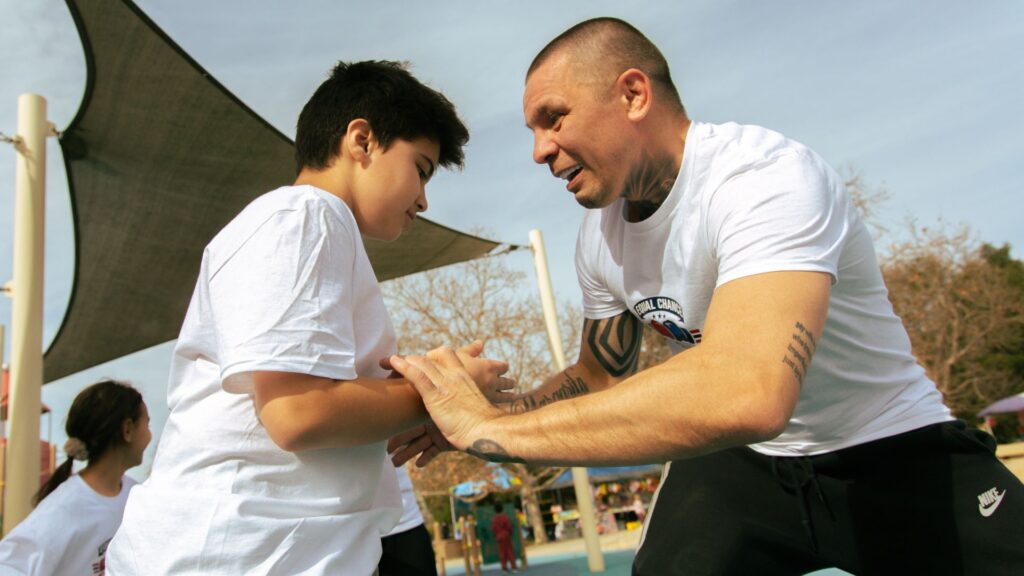
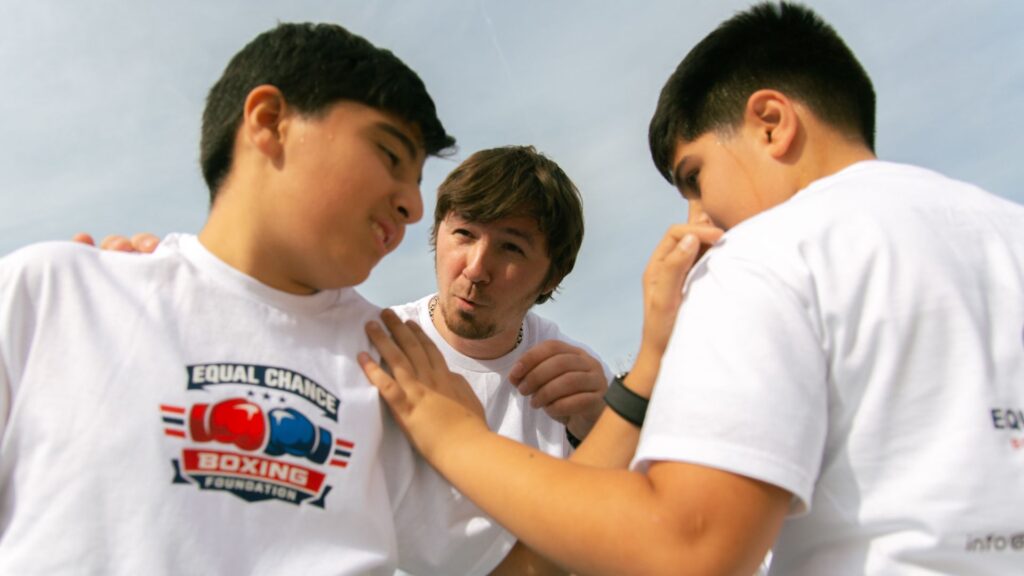
provides neither. He acts as an elite positive role model for youth by offering immediate, structured discipline. He puts them to work. He demands their focus on the speed bag, the mitts, or the jump rope. By forcing them to achieve small, tangible physical victories in the gym, he slowly pieces their shattered confidence back together. He proves to them that even on their worst days, their bodies and minds are still capable of incredible work.
Step Into the Ring: Free Solutions for Real Resilience
If you are a young adult reading this, and you are tired of letting the fear of rejection dictate your choices—if you are tired of playing it safe and ready to see what happens when you truly challenge yourself—the ring is waiting. It is time to stop letting “no” be the end of your story.
If you are a parent, educator, or community leader searching for a way to help a youth build the thick skin and mental resilience required for the modern world, traditional advice is not enough. They need a training ground.
We know that elite athletic programs often come with high price tags, which can be a form of rejection in itself for underprivileged youth. The Equal Chance Boxing Foundation believes that mental toughness should never be a luxury. We operate a world-class, 100% free athletic sanctuary to ensure every young person has the chance to build their resilience.
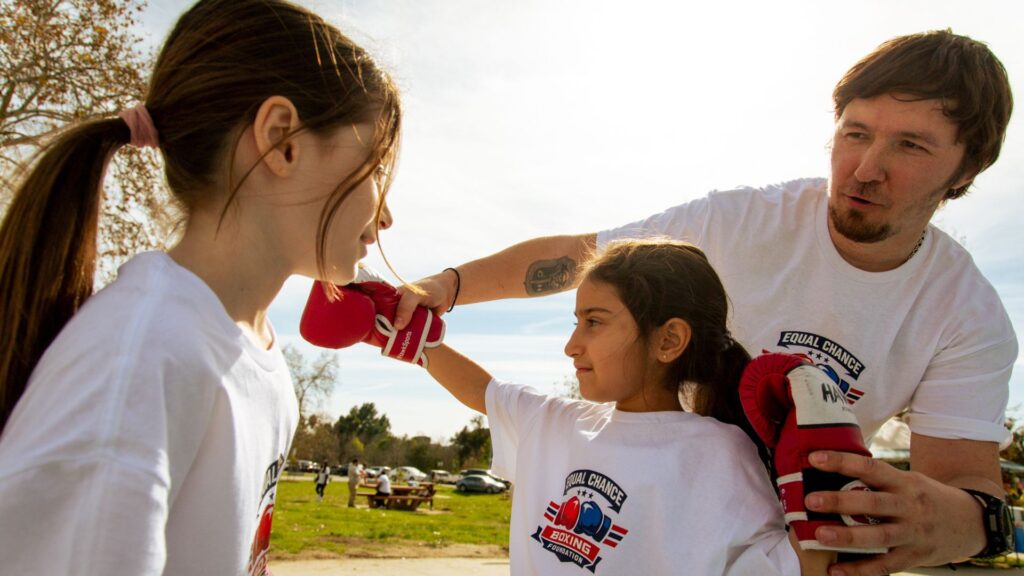
The Youth Boxing Program
We eliminate the financial friction so you can focus entirely on your growth.
- Zero Cost to Train: There are absolutely no registration fees or monthly dues.
- Professional Gear Provided: We supply high-quality, professional-grade safety equipment entirely for free, ensuring you have the exact same tools as the elites. If you are ready to learn how to take a hit and keep moving forward, step through our doors. START YOUR JOURNEY: ENROLL IN OUR FREE YOUTH BOXING PROGRAM TODAY
Breaking Logistical Boundaries: Community Training
Sometimes the hardest part is just getting to the gym. To ensure accessibility, our mobile outreach programs bring the heavy bags, the safety gear, and our elite coaching staff directly to your neighborhood, local parks, and schools. We bring the tools of resilience directly to you. DISCOVER OUR MOBILE COMMUNITY TRAINING INITIATIVE
Stand in Their Corner: How You Can Build Unbreakable Youth
Operating a massive daily program that provides a state-of-the-art facility, elite protective equipment, and thousands of hours of intense, life-changing mentorship to youth—all entirely for free—is an immense financial undertaking.
We are only able to maintain these critical youth sports mentorship programs through the incredible generosity, vision, and dedication of our donors and corporate partners.
When you see a generation paralyzed by the fear of failure, you have the power to fund the cure. When you support the Equal Chance Boxing Foundation, you are not just funding a gym. You are paying for the exact environment where a teenager learns to wipe away the sting of rejection, stand back up, and try again.
For Individual Donors
Be the support system a young athlete needs when the world tells them “no.” Your financial contribution directly funds the gloves they wear and the facility that keeps them safe. You ensure that when a teenager is finally ready to face their fears, our doors remain open to guide them. EMPOWER THE NEXT GENERATION: DONATE TO THE FOUNDATION TODAY
For Corporate Sponsors
Local businesses have a unique opportunity to shape the mental fortitude of their communities. By partnering with ECBF, your brand aligns itself directly with the core values of grit, mental health advocacy, and profound youth development. Show your community that you invest in building strong, unbreakable future leaders. LEAD BY EXAMPLE: BECOME A CORPORATE SPONSOR
Don’t Let the “No” Define You
What do sports teach children about handling rejection? They teach them that rejection is an event, not an identity.
The world is always going to be full of obstacles. Teams will make cuts, colleges will send denial letters, and people will say no. You cannot control the rejections you face, but when you wrap your hands, establish your stance, and learn to breathe under fire, you absolutely control your response.
You learn that every failure is just a lesson in disguise. You learn that your worth is not determined by the opinions of others, but by your willingness to get up when you have been knocked down.
Whether you are a young person looking to forge an iron mind and turn your rejections into stepping stones, or an adult looking to support the resilience of the next generation, it is time to take action.
At the Equal Chance Boxing Foundation, and our entire coaching staff are ready to help you trade the fear of failure for unshakeable confidence. It is time to step into the ring, face the resistance, and learn how to fight back.
Questions?
We’ve got answers.
In sports, losing a match or struggling with a technique isn’t a permanent defeat; it’s a regular part of the process. At the Equal Chance Boxing Foundation, we teach youth that every setback is simply data for the next round. By normalizing “failure” in the ring, children learn to view rejection in life not as a personal flaw, but as an opportunity to adjust their strategy and try again.
You can’t just lecture a child into being resilient. In boxing, if you drop your guard or miss a step, you face immediate, tangible feedback. Experiencing this physical reality—and realizing you can recover from it—builds a visceral kind of toughness. They learn to absorb a “no” (whether it’s a lost spar or a missed opportunity), breathe through the frustration, and reset their stance.
A good coach frames rejection correctly. Mentors like don’t let youth dwell on a loss or a bad day at the gym. Instead, they immediately pivot the focus to what needs to be improved. This shifts the child’s mindset from self-pity to active problem-solving. They learn that a setback today just means they need to train smarter for a victory tomorrow.
Even in an individual sport like boxing, you train within a community. When a child faces a tough loss or feels rejected, seeing their gym mates go through the exact same struggles normalizes the experience. They realize that everyone gets knocked down, from beginners to pros. This shared vulnerability removes the shame from rejection and builds a supportive environment that helps them bounce back faster.