

Picture the classic, uncomfortable scene at the family dinner table. A parent looks across the table and asks, “How was your day?” The teenager, eyes fixed on their plate or their phone, delivers the standard, one-syllable response: “Fine.” The conversation dies instantly.
If you are a parent or mentor, this dynamic is incredibly frustrating. You want to connect, you want to help, but every attempt to start a deep conversation feels like hitting a brick wall.
But then, something strange happens. That same teenager goes to a brutal, hour-long boxing session. They are pushed to their physical limit. They are sweating, exhausted, and their muscles are aching. On the car ride home, or while taking off their hand wraps in the locker room, the floodgates open. Without being prompted, they start talking about their stress, their friends, their fears, and their goals.
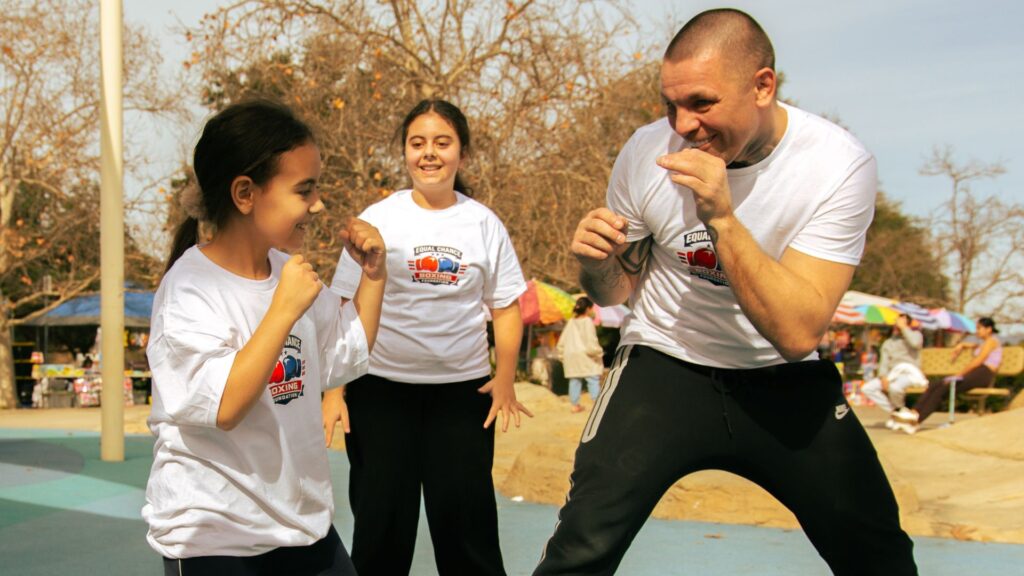
If you are a teenager reading this, you know exactly what this feels like. When someone sits you down and demands that you “open up,” your brain immediately perceives it as an interrogation. Your walls go up. But after a heavy workout, those walls mysteriously vanish. You suddenly feel a profound sense of mental clarity, and the words just come out effortlessly.
Why does this happen? What is the secret connection between extreme physical exertion and emotional vulnerability?
At the Equal Chance Boxing Foundation, we witness this phenomenon every single day. We watch guarded, silent youth walk into our gym, and we watch them transform into open, communicative young adults after twelve rounds on the heavy bag. In this deep-dive pillar guide, we will explore the fascinating psychology behind this shift. Whether you are a young person trying to understand your own mind, or an adult desperately trying to build a bridge, we will break down the neurobiology of trust, the magic of “parallel communication,” and how our founder, , uses the grueling sport of boxing to unlock the authentic voices of the next generation.
[ecbf_donate_banner_1]
The Interrogation Trap: Why Direct Conversations Often Fail
To understand why a boxing gym creates great communicators, we first have to understand why traditional, face-to-face conversations often fail—especially for modern youth.
The Pressure of Eye Contact
In the animal kingdom, and deep within human biology, direct, sustained eye contact is a sign of either deep intimacy or intense aggression. When an adult sits a teenager down, looks them directly in the eyes, and says, “We need to talk about your future,” the teenager’s nervous system does not register this as a caring gesture. It registers it as a threat. The brain’s amygdala flares up. The teenager feels trapped under a spotlight. In this state of high alert, the brain restricts access to complex emotional vocabulary, defaulting instead to short, defensive survival answers: “I don’t know,” or “Leave me alone.”
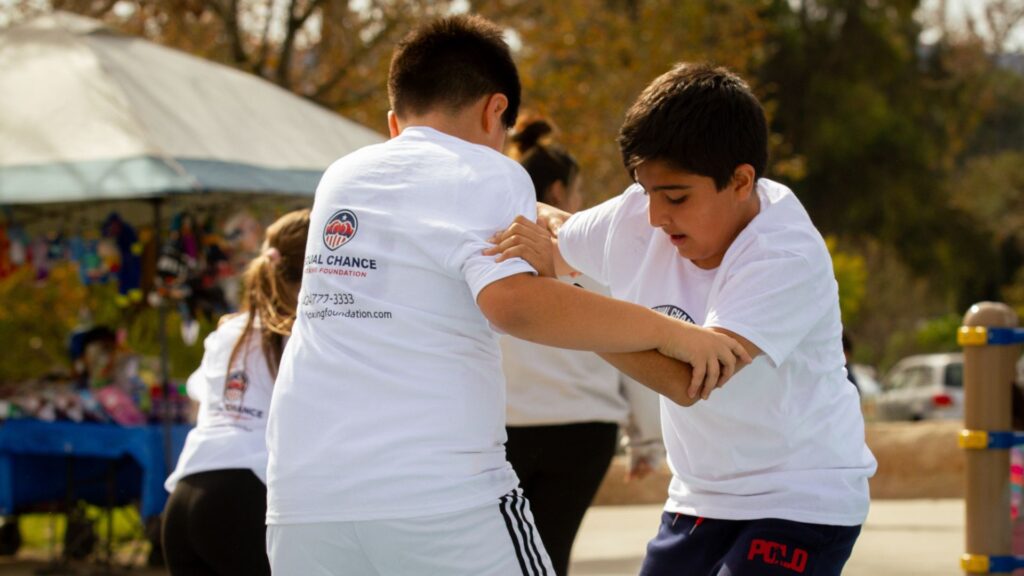
The Defensive Armor of the Digital Age
Today’s youth are navigating an incredibly complex social landscape. Online, everything they say can be screenshotted, judged, and used against them. As a result, many teenagers have developed thick psychological armor. They are constantly filtering themselves to ensure they don’t look vulnerable, weak, or “cringe.” When you ask a teenager to simply sit in a quiet room and strip away that armor using only words, you are asking them to do something that feels incredibly dangerous.
The Biochemistry of Vulnerability: Why Sweat Acts Like a Truth Serum
You cannot negotiate with a stressed nervous system; you have to physically change its state. This is where the absolute magic of high-intensity structured training comes into play.
Burning Off the “Cortisol Shield”
When a teenager is stressed, their body is flooded with cortisol. This hormone keeps them guarded and hyper-vigilant. When that teenager steps onto the mat and begins a grueling cardiovascular conditioning circuit—throwing punches, slipping jabs, and pushing their cardiovascular limits—their body goes to work. The intense physical demand acts as an incinerator for cortisol. As the body metabolizes these stress hormones, the physical sensation of anxiety literally drains out of the muscles. The biological “shield” is dropped because the body no longer has the chemical fuel to maintain it.
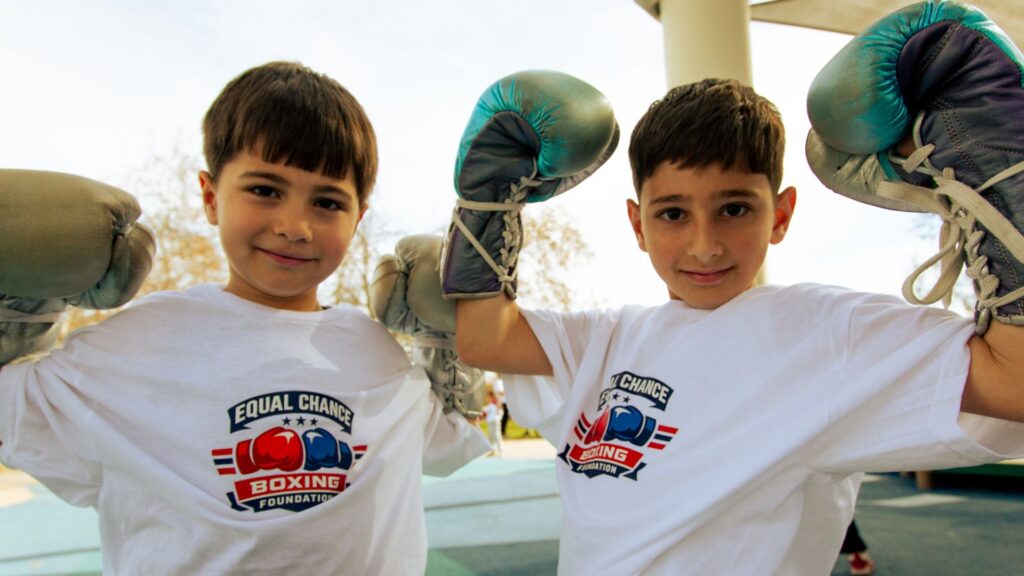
The Endorphin Trust Fall
As the cortisol drops, the brain rewards the body’s hard work with a massive surge of endorphins and dopamine. This creates the famous “fighter’s high.” Endorphins are natural mood elevators, but they also promote feelings of profound safety and social bonding. When a young adult finishes a tough training session, their brain chemistry is temporarily altered. They are operating in a state of deep biological calm. The fear of judgment evaporates. In this relaxed state, the thoughts and worries that were buried under layers of anxiety suddenly float to the surface, and the teenager finally feels safe enough to vocalize them.
The Magic of “Parallel Communication”
If you want a teenager to talk, stop looking at them. Look at the same thing they are looking at. Psychologists call this “parallel communication,” and it is the absolute foundation of gym culture.
Side-by-Side vs. Face-to-Face
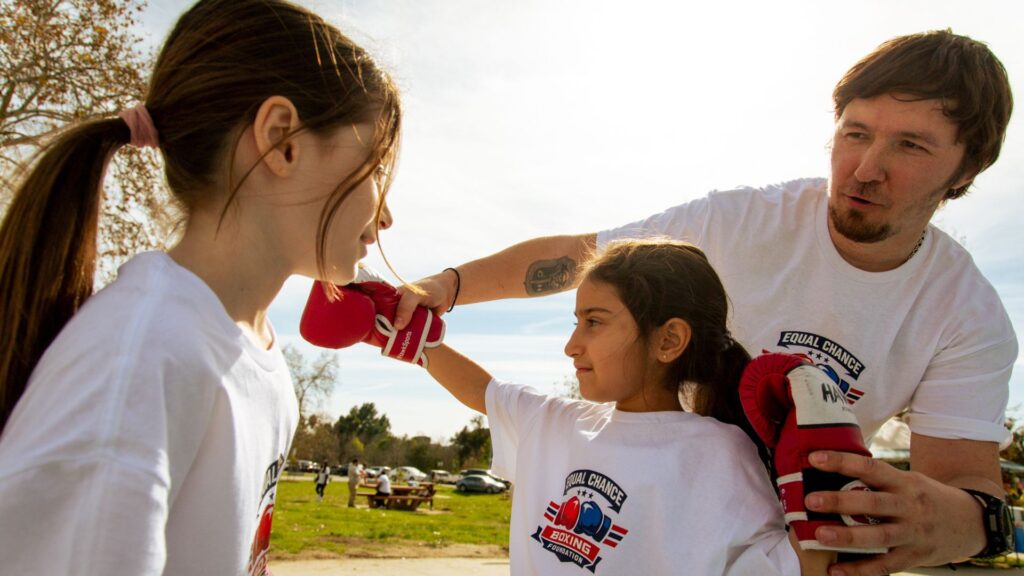
Think about the times a teenager is most likely to open up. It is rarely across a table. It happens while driving in a car, while playing a video game together, or while doing the dishes. Why? Because the pressure of eye contact is removed. Both parties are focused on a third object. In a boxing gym, parallel communication is the default state of existence. You are standing side-by-side in front of a mirror shadowboxing. You are wrapping your hands next to each other on a bench. You are staring at the heavy bag while the coach stands next to you. Because the teenager’s eyes and body are occupied with a physical task, their brain feels safe enough to let their guard down verbally.
A Shared Struggle Builds Instant Trust
Trust is not built through lectures; it is built through shared adversity. When a young person is in a gym, struggling through the final thirty seconds of a painful conditioning drill, and they look over and see their peers and their coach struggling right alongside them, an unspoken bond is formed. The gym strips away all societal labels. You are not a “straight-A student” or an “at-risk youth” on the mat; you are just a fighter trying to catch your breath. This shared vulnerability is incredibly powerful. A teenager opens up to their coach or their gym mates because the environment has already proven that it is a safe place to struggle.
The Method: Earning the Right to Speak
At the Equal Chance Boxing Foundation, our approach to youth mentorship is not based on sitting kids down and forcing them to talk. Our philosophy is driven by our founder and Head Coach, professional boxer .
Work First, Talk Later
understands the teenage mind because he lived through the grueling, hyper-disciplined sports boarding schools of his youth in Ukraine. He knows that respect and trust cannot be demanded; they must be earned through sweat. When a new, highly guarded teenager joins our program, does not barrage them with personal questions. He gives them a jump rope. He teaches them their stance. He demands absolute physical focus. By focusing entirely on the physical mechanics of the sport, removes all emotional pressure. He proves to the teenager that he is there to make them stronger, not to psychoanalyze them. This creates a foundation of profound trust.

Mentorship in the Moments Between Rounds
Because does not force the conversation, the youth eventually initiate it themselves. The real mentorship at ECBF happens in the quiet moments. It happens while is taping a young fighter’s hands before sparring. It happens while leaning against the ropes after a grueling 10-round circuit. Because has sweat with them, bled with them, and held them to an uncompromising standard of excellence, he has earned the ultimate privilege: their authentic voice. When a teenager asks for advice—whether it is about a bully at school, anxiety about the future, or a lack of confidence— answers not just as a coach, but as a mentor who has survived the highest pressures of professional sports. He speaks their language.
Find Your Voice: Free Programs for Authentic Growth
If you are a teenager reading this, and you are tired of carrying the weight of your thoughts in silence—if you feel misunderstood, overwhelmed, and unable to articulate your stress—the heavy bag is waiting to listen. You do not need to have the perfect words; you just need to show up and put in the work. The clarity will follow.
If you are a parent, educator, or community member searching for a way to break through the walls of a silent youth, traditional methods will only get you so far. You need to provide them with an environment that chemically and psychologically breaks down their barriers.
However, we know that commercial gym memberships, coaching fees, and expensive gear create an artificial boundary. For many underprivileged youth, these financial barriers keep them locked out of the exact environments they need to heal.
The Equal Chance Boxing Foundation refuses to let money dictate a young person’s access to mental clarity and physical strength. We are fiercely proud to operate a 100% free athletic and mentorship sanctuary.
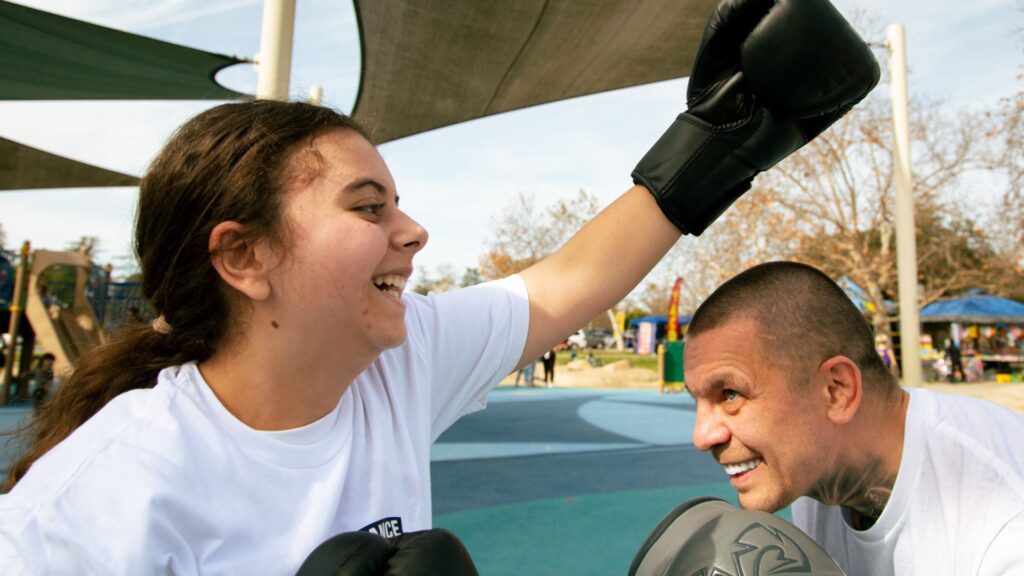
The Youth Boxing Program
We completely remove the financial friction so that the only thing you have to focus on is the training.
- Absolutely Free: No registration fees, no monthly dues, and no hidden costs. Ever.
- Professional Equipment Provided: We strictly adhere to youth safety protocols, supplying high-quality gloves, headgear, and wraps entirely free of charge to ensure you train safely and effectively. If you are ready to drop the armor, find your voice, and build unshakeable confidence, it is time to step up. START YOUR JOURNEY: ENROLL IN OUR FREE YOUTH BOXING PROGRAM TODAY
Breaking Logistical Boundaries: Community Training
We understand that geographic boundaries can be just as restrictive as financial ones. To combat this, our mobile outreach programs bring the physical and mental sanctuary directly to you. We transport our elite coaching staff, safety gear, and structured discipline into underserved neighborhoods, local parks, and community centers. DISCOVER OUR MOBILE COMMUNITY TRAINING INITIATIVE
[ecbf_donate_banner_4]
Support the Unspoken Connection: How You Empower the Next Generation
Maintaining a massive daily operation that provides a state-of-the-art facility, elite protective equipment, and thousands of hours of life-changing mentorship to youth—all entirely for free—is an immense undertaking.
We are only able to maintain these vital youth sports mentorship programs through the radical generosity, vision, and commitment of our donors and corporate partners.
When you look at a generation of youth who are isolated by screens, crippled by social anxiety, and unable to communicate their internal struggles, you have the power to fund the intervention. When you support the Equal Chance Boxing Foundation, you are actively paying for the space where a teenager finally feels safe enough to let their guard down. You are funding the physical exhaustion that leads to emotional breakthroughs.
For Individual Donors
Be the silent strength in a young athlete’s corner. Every dollar you contribute directly funds the facility that keeps them safe and the programs that build their minds. You ensure that when a teenager is finally ready to drop their shield and speak, our doors are open to hear them. EMPOWER THE NEXT GENERATION: DONATE TO THE FOUNDATION TODAY

For Corporate Sponsors
Local businesses hold a unique and powerful opportunity to shape the mental health and communication skills of their communities. By partnering with ECBF, your brand aligns itself directly with the core values of authentic connection, mental health advocacy, and profound youth development. Invest in the future workforce by helping us build a generation capable of genuine, honest communication. LEAD BY EXAMPLE: BECOME A CORPORATE SPONSOR
Stop Forcing the Talk. Start the Work.
Why do teens open up more after training than during a conversation? Because conversation demands that they expose their minds while their physical bodies are on high alert. Training exhausts the body so completely that the mind is finally allowed to relax.
The digital world will continue to push youth toward isolation. The pressure to maintain a perfect, guarded image will always be there. But when you wrap your hands, step onto the mat, and lose yourself in the absolute physical reality of the sport, the masks come off.
You learn that you do not have to carry your anxiety alone. You learn that vulnerability is not a weakness; it is the natural byproduct of doing hard work alongside people who respect you.
Whether you are a young person looking to forge an iron mind and find a safe place to be yourself, or an adult looking to support the mental fortitude and communication of the next generation, it is time to take action.
At the Equal Chance Boxing Foundation, and our entire dedicated coaching staff are ready to help you trade the silence for strength. It is time to stop waiting for the perfect conversation, step into the ring, and let the work do the talking.
Questions?
We’ve got answers.
Face-to-face, sit-down conversations often feel like interrogations to teenagers, causing them to immediately put their guard up. However, after a grueling session at the Equal Chance Boxing Foundation, physical exhaustion breaks down those emotional walls. The body releases endorphins while burning off cortisol, putting teens in a relaxed, vulnerable state where talking feels like a natural release rather than a forced obligation.
The gym removes the pressure of intense eye contact. Communication happens side-by-side—while wrapping hands, stretching, or hitting the bag. Mentors like understand that the most profound conversations often happen casually between rounds. Because the focus is shared on the physical task rather than solely on the teenager, they feel less scrutinized and more willing to share what’s on their mind.
Trust with a teenager isn’t demanded; it is earned through shared struggle. When a teen sees that a coach will push them safely, catch them when they stumble, and hold them to a high standard without judgment, a deep bond is formed. This physical trust established during training naturally translates into emotional trust. They open up because they know they are in a safe environment with someone who genuinely has their back.
Absolutely. Many teens stay quiet because they lack the self-assurance to articulate their struggles or fear they will be misunderstood. As they build physical strength, master complex techniques, and survive tough rounds, their overall self-esteem skyrockets. They find their voice in the ring, which directly empowers them to speak their truth outside of it, knowing that their thoughts and feelings have value.