
As a parent or guardian, you have likely experienced this deeply frustrating cycle: You watch your teenager struggle with low self-esteem, academic apathy, or a rising tide of unchanneled anger. In response, you try everything to “motivate” them. You have late-night heart-to-heart conversations, you buy them the gear for a new hobby, or you show them inspiring stories of successful people. For a few days, it works. They seem energized and ready to change. But by the next week, the spark has vanished. The gear sits in the closet, the defensive walls go back up, and they retreat into their screens or negative peer groups.
You ask yourself: Why won’t they just stay motivated?
The harsh reality of adolescent psychology is this: Motivation is a feeling, and feelings are fleeting. For a teenager navigating the chaotic, high-stress waters of modern life—especially underprivileged youth dealing with systemic adversity or family trauma—relying on “feeling good” to get things done is a recipe for failure. They do not need another motivational speech. They need structure. They need accountability. They need a mentor.
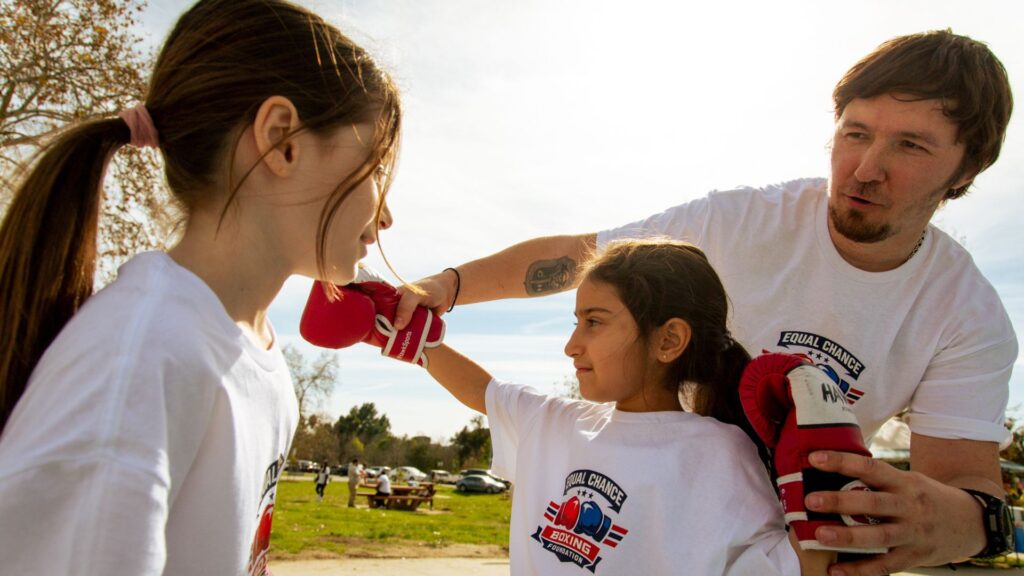
At the Equal Chance Boxing Foundation, we have witnessed thousands of hours of adolescent transformation. We have learned that when inspiration fails, a dedicated coach is the ultimate safety net. In this comprehensive guide, we will explore the profound psychological differences between motivation and mentorship, examine how trusted youth boxing coaches forge unbreakable resilience in teenagers, and demonstrate why our nonprofit youth sports organization provides this life-saving guidance absolutely 100% free of charge.

The Motivation Myth: Why Inspiration Fails Our Teenagers
To understand the critical importance of a coach, we must first dismantle the “motivation myth” that dominates modern self-help and parenting advice.
The Dopamine Spike
Motivation is fundamentally a biological response—a spike in dopamine that occurs when we imagine a positive outcome.
- The Illusion of Progress: When a teenager watches a highly edited, two-minute viral video of an athlete training, their brain receives a rush of feel-good chemicals. They feel like they have accomplished something just by being inspired.
- The Crash: However, the moment that teenager actually steps onto a track or into a gym and experiences the burning in their lungs or the frustration of failing a technique, the dopamine vanishes. Motivation evaporates the second the work becomes uncomfortable.
[ecbf_donate_banner_1]
The Reality of “At-Risk” Environments
For troubled youth, relying on motivation is particularly dangerous. If a teenager is surrounded by negative influences, financial stress at home, or severe academic anxiety, they are existing in a constant state of “fight or flight.” It is neurologically impossible for them to magically summon the internal motivation to study or train hard when their baseline emotional state is exhaustion or fear.
They do not lack potential; they lack the architectural structure to build upon it.
The Anatomy of a Mentor: What Sets a True Coach Apart
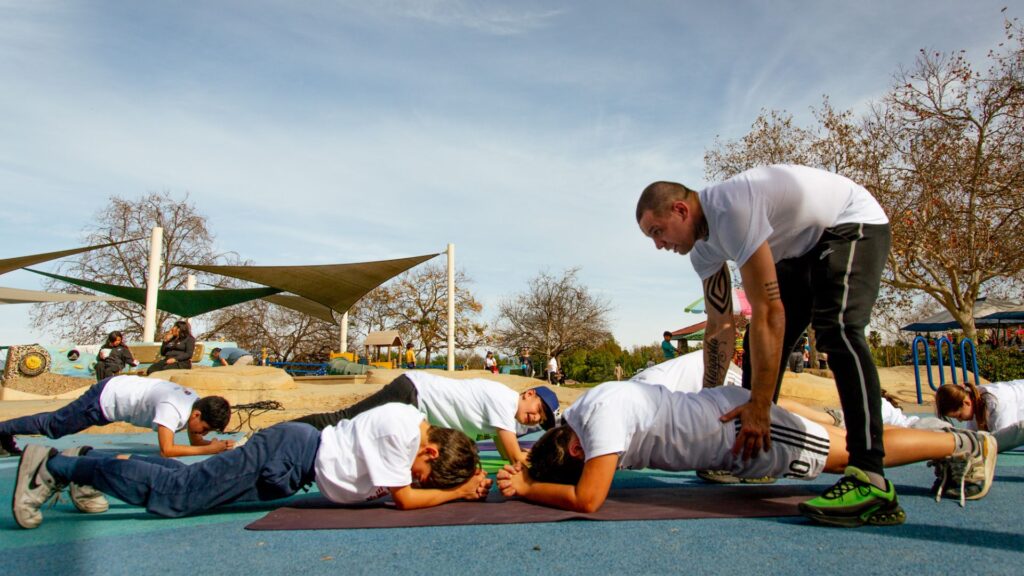
When internal motivation completely fails, external discipline must take over. This is where a coach becomes the most important figure in a vulnerable teenager’s life outside of their immediate family. A coach provides the scaffolding that holds a teenager up until they are strong enough to stand on their own.

Uncompromising Accountability
A motivational speaker tells a crowd what they want to hear. A true coach tells an athlete what they need to hear.
- Demanding Greatness: At our foundation, our coaches do not accept the phrase “I can’t.” When a teenager tries to quit during the final minute of jumping rope, a coach stands beside them and demands they finish.
- Earning Respect: Positive role models for at-risk youth know that coddling breeds weakness. By holding teenagers to a rigorously high standard, coaches send a powerful psychological message: I expect a lot from you because I know exactly what you are capable of.
Radical Authenticity and Lived Experience
Teenagers have an incredibly sharp radar for inauthenticity. If a coach tries to lecture them about hard work but has never faced real adversity, the teens will immediately tune them out.
This is why having figures like professional boxer leading our programs is entirely transformative. did not have an easy path to elite athletic success. When he arrived in the United States, he faced a brutal reality: no money, a language barrier, predatory management, and times when he literally could not afford food, yet still had to step into the ring against world-class opponents.
When a coach with that level of lived trauma and ultimate triumph looks a struggling teenager in the eye and says, “I know exactly how hard it is when you have nothing, but you still have to fight for your future,” the teenager listens. The defensive walls shatter because the empathy is earned, real, and undeniable.
Discipline as a Lifeline: The Psychology of the Boxing Gym
Parents searching for sports that build confidence in kids often overlook boxing due to a misunderstanding of the sport. They view it as a game of aggression. In reality, a professionally managed boxing gym is a classroom for elite emotional regulation.
A Safe Outlet for Chaos
Adolescence is defined by hormonal storms and emotional chaos. When an at-risk youth feels completely powerless in their home life or at school, that powerlessness often manifests as destructive anger or severe anxiety.
- Boxing for Anger Management in Kids: We do not suppress a teenager’s frustration; we redirect it. The heavy bag becomes a highly structured, safe receptacle for their stress. They learn to take the raw, chaotic energy of anger and distill it into cold, focused, and precise physical execution.
- Non-Violent Boxing Training for Youth: Our coaches strictly enforce the rule that the skills learned in the gym are for athletic excellence and self-mastery, never for street violence or ego.
[ecbf_corporate_banner]
Rewiring the Brain Through Micro-Victories
A coach understands how boxing builds confidence in children and teenagers at a neurological level. They break massive, intimidating goals down into tiny, manageable micro-victories.
- A teen who believes they are a failure cannot be motivated by someone saying “you are a winner.”
- Instead, a coach teaches them how to pivot their back foot correctly. Then, how to slip a jab. Then, how to put those two moves together. With each successful repetition, the teenager’s brain registers a concrete, undeniable victory.
The coach literally forces the teenager to build a catalog of undeniable proof that they are competent, capable, and physically strong.
The “Third Space”: Why At-Risk Youth Need a Neutral Corner
Sociologists frequently discuss the vital necessity of a “Third Space”—an environment separate from the pressures of home and the social hierarchies of school. For underprivileged youth, home can sometimes be a place of financial stress, and school can be a place of academic failure or bullying.
The Sanctuary of the Gym
A boxing gym run by dedicated mentors becomes the ultimate Third Space.
- Leaving Baggage at the Door: When a teenager wraps their hands and steps onto the mat, it does not matter what their grades are, how much money their parents make, or what clothes they are wearing. The only currency in the gym is sweat and respect.
- A Community of Support: Through our youth sports mentorship programs, teens realize they are not fighting alone. They train alongside peers facing similar struggles, all guided by coaches who act as surrogate older brothers, fathers, and protectors. This community safety net catches them long before they can fall into the juvenile justice system or succumb to severe depression.
Erasing the Financial Wall: Mentorship Must Be Accessible
We have established that the presence of a dedicated, uncompromising coach is the single greatest determining factor in an at-risk youth’s ability to overcome their circumstances.
However, we face a devastating systemic failure in modern youth sports: The “pay-to-play” model. Traditional club sports, private coaching, and elite athletic facilities charge exorbitant fees. This means the children who most desperately need the discipline, the safety, and the mentorship of a coach are exactly the ones who are financially locked out.
At the Equal Chance Boxing Foundation, we refuse to accept a society where character development is a luxury item. We operate a completely free sports program for kids in the USA.
- Zero Cost to Your Family: We have entirely eliminated registration fees, monthly dues, and equipment costs.
- Elite Gear Provided: We supply the professional 16oz gloves, the protective wraps, and the world-class facility, ensuring safe boxing training for kids regardless of their family’s economic status.
If you are a parent watching your child struggle, do not wait for them to “find their motivation.” Give them a coach. Give them a community. ENROLL IN OUR YOUTH BOXING PROGRAM TODAY
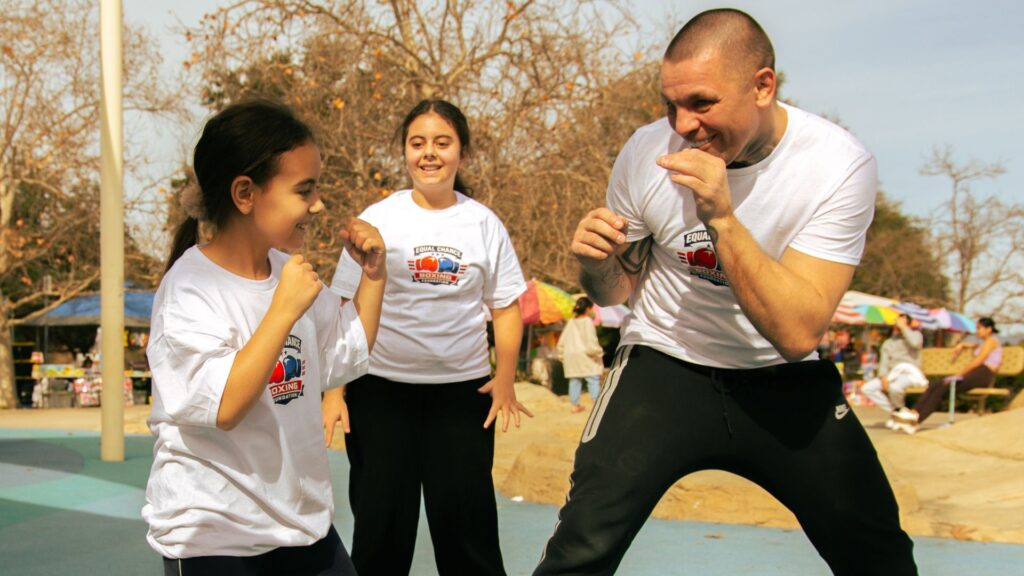
Furthermore, because we know that simply getting to a gym can be impossible for some families, we refuse to wait for the youth to come to us. Our Community Training initiative brings mobile boxing rings, professional gear, and our elite coaching staff directly to local parks and underserved neighborhoods, breaking down every conceivable barrier to entry.
Be the Hero in Their Corner
Motivation is a spark that easily blows out in the wind of adversity. A coach is the one who helps a teenager build a lantern around that spark, feeding it with discipline, accountability, and unwavering support until it becomes a roaring fire.
By prioritizing professional mentorship over cheap inspiration, the Equal Chance Boxing Foundation is actively changing the trajectory of hundreds of young lives. We are taking the anger, the anxiety, and the isolation of modern adolescence and forging it into unshakeable adult resilience. We are proving that when a teenager is given a safe space, elite gear, and a coach who truly believes in them, there is absolutely no limit to what they can achieve.
[ecbf_donate_banner_4]
Step Into the Ring. Let’s Build Our Community Together.
For Parents: Reclaim Your Teenager’s Future Stop relying on fleeting motivation and give your teenager the gift of true discipline. Leave the financial stress behind—we provide the state-of-the-art facility, the protective gear, and the elite coaching at absolutely no cost.
- Take the first step toward their mental and physical transformation.
- ENROLL IN OUR YOUTH BOXING PROGRAM TODAY
For Supporters: Fund a Life-Saving Mentor We can only provide these world-class, 100% free mentorship programs because of the radical generosity of our donors. When you support our low income youth sports programs, you are not just funding a pair of boxing gloves; you are funding the coach who will use those gloves to teach a teenager how to survive and thrive.
- Be the hero in their corner.
- DONATE TO THE EQUAL CHANCE BOXING FOUNDATION
Take the Mentorship to the Streets Discover how our outreach teams are breaking down geographical and financial barriers to bring true coaching directly to the youth who need it most.
Questions?
We’ve got answers.
Motivation is a feeling, and feelings are unreliable, especially for a youth facing external instability. A coach is a physical presence—a constant in an inconstant world. While motivation tells a kid to “feel like working,” a coach teaches them to “work regardless of how they feel.” This shift from relying on emotion to relying on routine is what builds the resilience necessary to navigate life’s hardest rounds.
In the gym, the hierarchy is built on earned respect, not just age or position. A coach isn’t a judge or a teacher giving grades; they are a partner in the struggle. For at-risk youth who may have a distrust of authority, the coach becomes a “safe” authority figure. This unique bond allows the coach to deliver hard truths and demand high standards that the youth might reject coming from anyone else.
Absolutely. A real mentor sees the athlete, not just the boxer. Because coaches spend hours watching a child’s body language and reactions to stress, they often spot problems—like academic struggles or social withdrawal—before anyone else. At the Equal Chance Boxing Foundation, our coaches act as advocates, helping parents navigate school issues and providing a stable moral compass that guides the youth long after they leave the ring.
A real mentor prioritizes the long-term person over the short-term win. Look for a coach who asks about report cards, who enforces gym etiquette even for their “star” athletes, and who models the same discipline they demand. A mentor like doesn’t just show a teen how to throw a punch; he shows them how to stand tall with integrity. If the coach is more interested in the child’s character than their trophy cabinet, you’ve found a real mentor.