
As a parent navigating today’s hyper-connected, fast-paced world, you are likely carrying a heavy burden of worry about your teenager’s future. You watch them grow up in an era defined by instant gratification, algorithmic social media feeds, and unprecedented levels of adolescent anxiety. You see the intense pressure they face academically and socially, and you wonder: How can I equip my child with the mental toughness they need to survive and thrive as an adult?
You already know that the answer isn’t simply getting better grades or buying the latest technology. The secret to long-term success lies in character, grit, and the ability to handle adversity. You are searching for an environment where they can build these traits—a place where they can find positive mentors and a constructive physical outlet. However, modern “pay-to-play” youth sports often fail to provide this, focusing more on immediate athletic dominance and exorbitant fees rather than holistic character development.
At the Equal Chance Boxing Foundation, we understand your fears and your aspirations for your child. We know that the habits formed during adolescence dictate the trajectory of an adult’s life. In this comprehensive pillar article, we will dive deep into the psychology of how early sports discipline shapes adult success, explore why combat sports provide the ultimate blueprint for real-world resilience, and demonstrate why our nonprofit youth sports organization provides this elite mentorship absolutely free of charge.

The Modern Parenting Dilemma: The Crisis of Instant Gratification
To understand why sports discipline is so critical today, we must first look at the environment our children are trying to survive in. We are raising a generation heavily conditioned by instant rewards.
The Dopamine Trap
Whether it is scrolling through short-form videos, earning achievements in video games, or receiving immediate validation via “likes,” the teenage brain is constantly bombarded with cheap, unearned dopamine.
- The Problem: When a teenager’s brain becomes wired to expect an immediate reward for zero effort, they lose the capacity for delayed gratification.
- The Consequence: In the real world—whether in a university classroom, a trade apprenticeship, or starting a new career—success takes months or years of unseen, unrewarded effort. Teens without discipline quickly hit a wall, leading to severe burnout, depression, and a tendency to quit when things get hard.
[ecbf_donate_banner_1]
The Failure of Traditional Youth Sports
Parents naturally turn to youth athletics to teach hard work. Unfortunately, the current club sports model often exacerbates the problem. High financial costs put immense pressure on kids to perform perfectly right away, and coaches often bench developing athletes in favor of immediate wins. Parents seeking sports that build confidence in kids are left frustrated, dealing with burned-out teenagers and empty wallets.
Rewiring the Teenage Brain: The Science of Discipline
Discipline is not a trait you are born with; it is a muscle that must be methodically trained. Early sports discipline—specifically in highly structured, individual-focused environments like a professional boxing gym—acts as a powerful neurological intervention.
The Power of Delayed Gratification
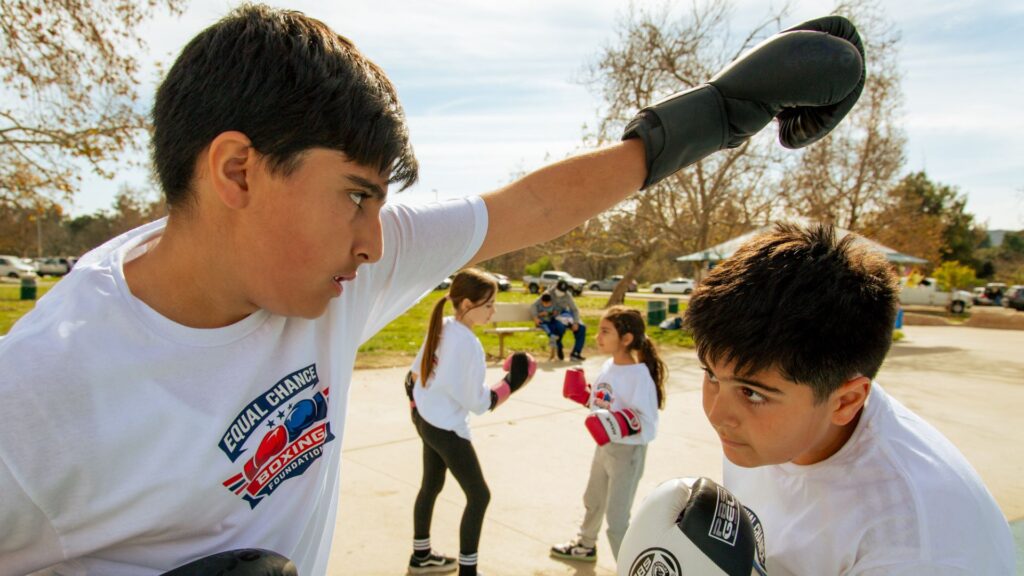
In a developmental boxing program, there are no shortcuts. A teenager cannot “hack” their way to better cardiovascular endurance or fake a perfectly timed defensive slip.
- The Process: They must spend weeks jumping rope, shadowboxing, and hitting the heavy bag before they ever see tangible results.
- The Transformation: This slow, grueling process literally rewires their neural pathways. They learn that the most valuable rewards (respect, physical capability, unshakeable confidence) only come after prolonged, repetitive hard work.
Overcoming the “Quit” Reflex
Every teenager has a voice in their head that tells them to stop when they are tired or uncomfortable. Early sports discipline forces them to confront and conquer that voice. When a teen pushes through the final thirty seconds of a grueling heavy bag drill despite their lungs burning, they are practicing how boxing builds confidence in children and teenagers. They are proving to themselves that their perceived limits are an illusion.
Translating Ring Skills to Real-World Success
The ultimate value of youth sports is not found in the trophies won, but in the adult that emerges. The skills forged in the boxing gym under the guidance of positive role models for at-risk youth translate directly into professional and personal success in adulthood.
Emotional Regulation Under Pressure
Imagine a 24-year-old walking into a high-stakes job interview or a difficult negotiation. Their heart rate spikes, their palms sweat, and panic threatens to set in.
- The Untrained Adult: May freeze, stumble over their words, or let anxiety dictate their actions.
- The Disciplined Athlete: Recognizes this physiological response. Years ago, their trusted youth boxing coaches taught them how to breathe, maintain eye contact, and stay relaxed while facing a sparring partner. They use boxing for anger management in kids and anxiety control, translating that exact same emotional regulation to the boardroom. They know how to find calm in the chaos.
[ecbf_corporate_banner]
Resilience: The Ability to “Take a Hit”
Life is guaranteed to throw devastating punches. An adult will face job losses, financial hardships, relationship failures, and grief.
- The Blueprint: Boxing is the ultimate metaphor for life. It is not about never getting hit; it is about how you respond after you take a shot. Early sports discipline teaches a teenager that failing, getting knocked down, or making a mistake is not the end of the story—it is merely data. It is feedback. You adjust your stance, keep your hands up, and move forward.
Unshakeable Work Ethic and Accountability
In combat sports, there is no one else to blame. If you skip training, if you don’t do your roadwork, it will show under the lights. This breeds extreme personal accountability. Adults who grew up with this level of sports discipline do not make excuses, they do not blame their coworkers, and they do not wait for motivation to strike. They simply show up and do the work.
Why Elite Mentorship is the Catalyst
Discipline cannot be learned in a vacuum. It requires a mentor who commands respect and embodies the principles they teach. This is where the profound impact of figures like and our dedicated coaching staff comes into play.
Authentic Leadership
For troubled youth or teens deeply skeptical of authority figures, a professional fighter who has survived the brutal realities of life and the sport offers unquestionable authenticity. Through our youth sports mentorship programs, coaches do not just demand push-ups; they demand character. They check in on grades, they teach respect, and they provide a safe, structured “Third Space” away from the pressures of home and school. They teach teens that discipline is the highest form of self-love.
Breaking the Financial Barrier: Our Uncompromising Commitment
We have established that early, rigorous sports discipline is a mandatory prerequisite for resilient adult success. However, we face a heartbreaking reality in our society: the children who most desperately need this structured discipline and elite mentorship are almost always priced out of the opportunity.
At the Equal Chance Boxing Foundation, we fundamentally refuse to accept this. We believe that character development is a right, not a luxury.
To ensure that every single child in our community has the opportunity to build a successful future, we operate a 100% free sports program for kids in the USA.
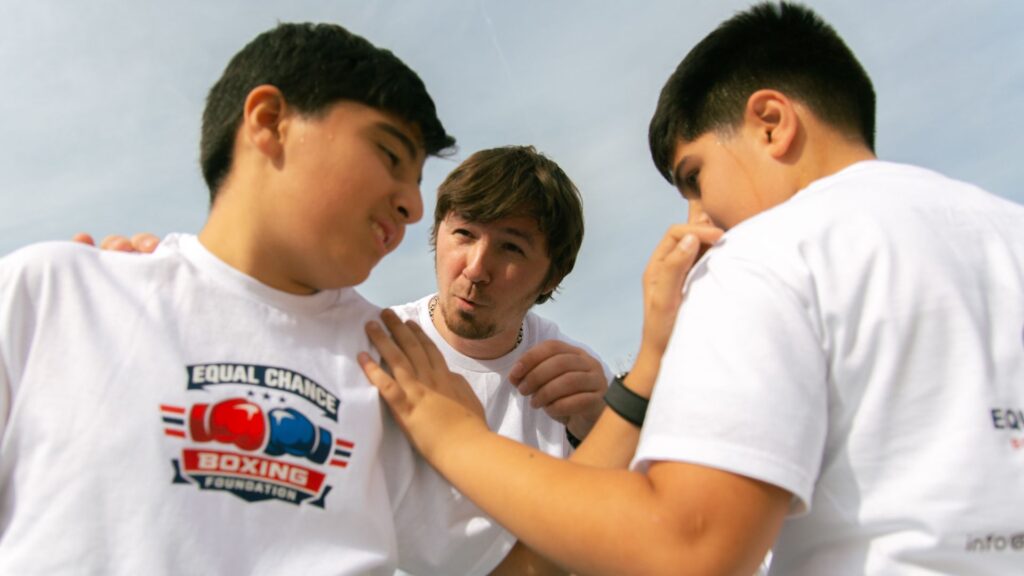
- Absolutely No Cost to Families: We have completely eliminated registration fees, monthly dues, and hidden costs. Your teenager’s development is entirely free.
- Professional Gear Provided: We supply all the necessary, elite safety equipment, including 16oz gloves, wraps, and headgear. We guarantee safe boxing training for kids without ever handing a parent a bill.
You can set your teenager on the path to adult success today by securing their spot in our facility. ENROLL IN OUR YOUTH BOXING PROGRAM TODAY
Furthermore, to eliminate transportation barriers, our Community Training initiative brings mobile boxing gyms directly to local parks and underserved neighborhoods, providing elite, free instruction right where the youth live.
Investing in Their Future Today
How early sports discipline shapes adult success is not a mystery; it is a proven, psychological fact. By introducing your teenager to a highly structured, mentor-driven environment, you are giving them the tools to conquer the rest of their lives. You are replacing their anxiety with intrinsic confidence, their instant gratification with unshakeable work ethic, and their fear of failure with genuine resilience.
The Equal Chance Boxing Foundation is deeply committed to standing in your corner. We provide the expertise, the uncompromising safety, and the vital community support necessary to build a champion in life—all at absolutely no financial cost to your family.
[ecbf_donate_banner_4]
Step Into the Ring. Let’s Build Their Future Together.
Stop worrying about how your teenager will handle the pressures of adulthood and start giving them the psychological armor they need to thrive.
For Parents: Give the Gift of Discipline Help your child build the emotional regulation and resilience that will guarantee their future success. Leave the financial burden behind—we provide the elite coaching and state-of-the-art facility for free.
For Supporters: Fund a Child’s Future We can only provide this life-changing, 100% free mentorship because of the radical generosity of our community. When you support our foundation, you are not just funding a gym; you are actively funding the next generation of strong, capable, and resilient adults. Be the hero in their corner.
Bring the Discipline to Your Neighborhood Discover how our outreach teams are breaking down geographical barriers to reach the youth who need us most.
Questions?
We’ve got answers.
Absolutely. The core of sports discipline is delayed gratification—the ability to work hard now for a result that comes much later. In the professional world, this is the definition of high-level performance. Whether it’s finishing a complex project or climbing the corporate ladder, the “muscle memory” of consistent effort learned in the gym prevents adult burnout and fosters the patience required for long-term career growth.
Sports act as stress inoculation. A child who has learned to stay composed while facing a tough opponent or a ticking clock develops a regulated nervous system. As adults, they don’t panic when a deadline looms or a business deal gets tense. They’ve already “practiced” being under pressure thousands of times in a safe, athletic environment, giving them a significant advantage in emotional intelligence and crisis management.
Yes, because it builds social capital and grit. For a child from a low-income family, sports provide access to mentors and a network of high-achievers they might not encounter otherwise. The “Equal Chance” philosophy isn’t just about the sport; it’s about proving to a child that their input (hard work) directly affects their output (success). This realization is the most powerful tool for overcoming systemic barriers and building a self-reliant, successful future.
Employers look for “coachability”—the ability to take feedback, adjust, and move forward without ego. Athletes are trained to see critique as fuel for improvement. A former youth boxer understands teamwork, respects hierarchy, and possesses the resilience to handle rejection. These “soft skills” are often more valuable in the modern economy than technical knowledge alone, making sports the ultimate preparation for life.