As a parent, watching your teenager navigate the transition from childhood to young adulthood is often an anxiety-inducing experience. You see them grappling with academic pressures, the relentless comparison trap of social media, and the chaotic emotional highs and lows of adolescence. You desperately want to help them find a positive outlet—a place where they can build real resilience, manage their anxiety, and develop unshakeable self-confidence.
However, when exploring youth sports, parents frequently hit a wall. Traditional “pay-to-play” club sports can be hyper-competitive, deeply political, and outrageously expensive. When you begin searching for alternative sports that build confidence in kids, you might stumble upon boxing. Instantly, a protective instinct kicks in. Is it safe? Will they get hurt? Is my child going to be thrown into a ring on day one?
At the Equal Chance Boxing Foundation, we completely understand these fears. The media often portrays boxing as a chaotic brawl, but the reality of a professionally run, developmental youth boxing program is the exact opposite. It is a highly structured, scientifically methodical journey.
In this comprehensive guide, we will pull back the curtain on exactly how youth boxing progression works. We will walk you through the meticulous, step-by-step pathway from a nervous beginner’s first day to a confident amateur competitor, demonstrating why our nonprofit youth sports organization guarantees this life-changing mentorship is available to your family at absolutely no cost.
The “Brain-First” Philosophy: Redefining Safety
Before a teenager ever wraps their hands or puts on a pair of gloves, we must establish the foundation of our entire progression model: uncompromising safety.
Parents seeking safe boxing training for kids need to know that professional development is not about finding out who is the toughest; it is about building the smartest, most disciplined athlete possible.
- Zero-Tolerance for Bullying: We teach our teens that the skills they learn are strictly for athletic development and self-improvement. Any display of ego or aggression toward a weaker peer results in immediate removal from the gym.
- The Slow Burn: A beginner’s progression is intentionally slow. We do not rush adolescents into contact. We prioritize the slow, methodical acquisition of neural pathways—teaching the brain how to move the body efficiently and safely.
- Trusted Mentorship: Every step of the pathway is guided by our trusted youth boxing coaches, who act as positive role models for at-risk youth and teens struggling with anxiety.
[ecbf_donate_banner_1]
The Foundation (Months 1–3)
The journey begins not with a punch, but with a stance. When a teenager walks into our facility, they are often carrying the weight of the world on their shoulders. Phase 1 is designed to be a complete neurological reset, focusing entirely on the self.
The goal of this phase is not fighting; it is physical conditioning and mental discipline.
Mastering the Basics
During the first few months, the athlete experiences strictly non-violent boxing training for youth. The curriculum includes:
- The Stance and Balance: Learning how to stand properly is the root of the sport. Teens learn how to ground themselves, an exercise that physically translates to feeling more emotionally grounded in daily life.
- Footwork and Agility: Before they can use their hands, they must master their feet. Agility ladder drills and jump rope routines build immense cardiovascular health and coordination.
- Shadowboxing: This is the ultimate moving meditation. A teenager must visualize an opponent and execute perfect technique in the mirror. It requires intense concentration, forcing an anxious brain to stay in the present moment.

The Psychological Benefit: Micro-Victories
For teens struggling with low self-esteem, Phase 1 provides daily “micro-victories.” Mastering the jump rope for three continuous minutes or throwing a technically perfect one-two combination on the heavy bag releases healthy dopamine. They begin to realize that their body is capable of incredible things, laying the groundwork for how boxing and mental discipline intertwine.
Technical Mastery and Emotional Control (Months 3–6)
Once the foundational conditioning is set, the progression shifts to complex technique. The teenager is now comfortable in the gym, the defensive walls have come down, and they have built a rapport with their mentors.
The goal of this phase is extreme focus and the introduction of defensive science.
The Art of Not Getting Hit
Boxing is often called the “Sweet Science” because the primary objective is to hit and not get hit. In Phase 2, the athlete learns advanced defensive maneuvers:
- Slips, Rolls, and Pulls: They learn how to read body language and evade incoming movement by mere fractions of an inch.
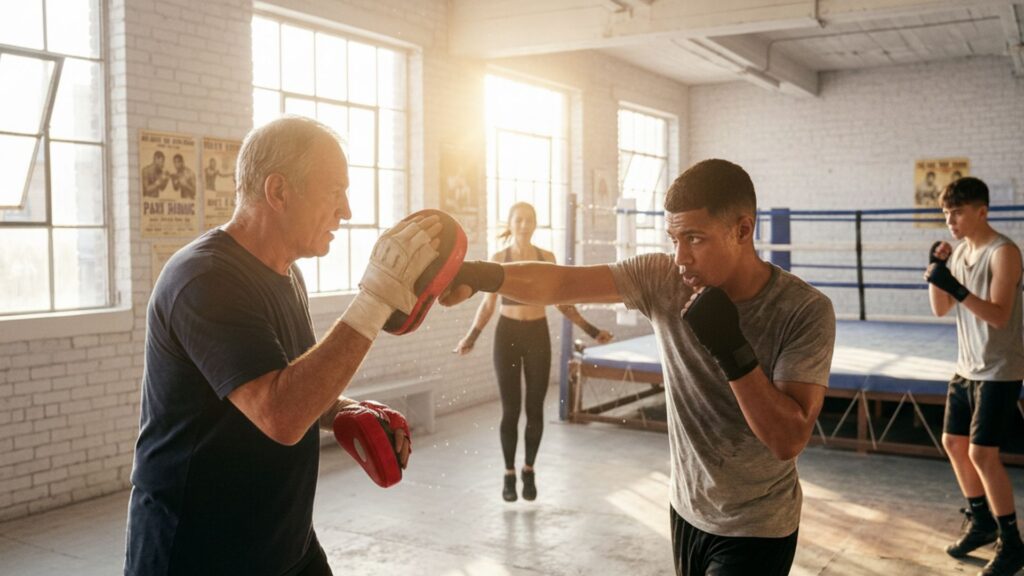
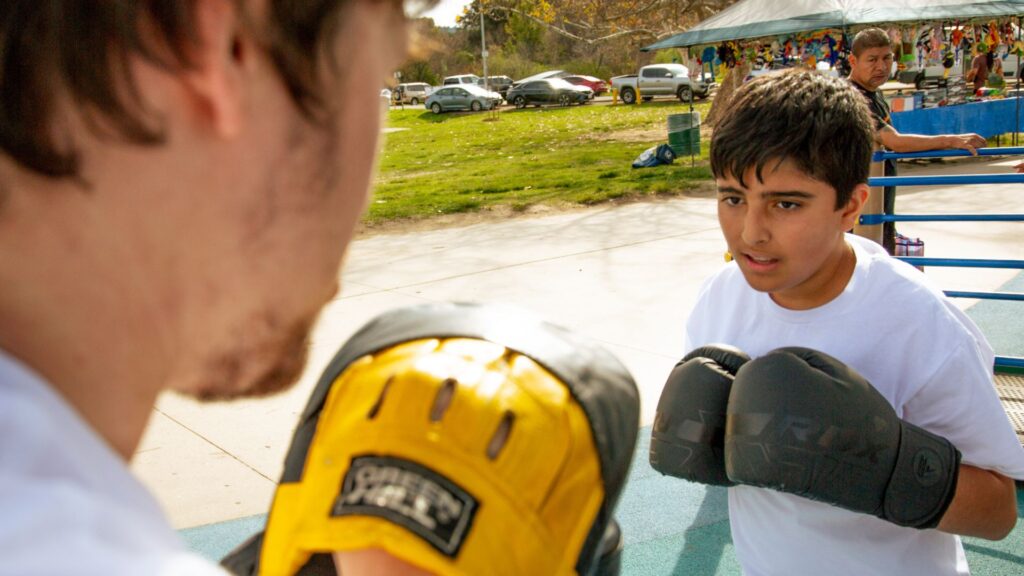
- Pad Work with the Coach: Hitting focus mitts with a professional coach requires immense trust and absolute concentration. A teenager cannot worry about tomorrow’s math test while catching a fast-paced rhythm on the pads.
- Controlled Partner Drills: Athletes begin working with peers in highly structured, entirely non-contact drills (e.g., tapping shoulders to practice distance management).
The Psychological Benefit: Managing Aggression
This phase is critical for parents seeking positive outlets for teen aggression. We teach our youth that throwing a punch in anger makes them sloppy, slow, and exhausted. They learn boxing for anger management in kids, converting raw, chaotic frustration into cold, focused, and precise execution. They learn to breathe through the panic.
Supervised Application (Months 6–12)
If—and only if—a teenager has demonstrated total emotional control, immense respect for their peers, and technical proficiency, they are invited to enter Phase 3. This is where the physical chess match truly begins.
The goal of this phase is applying technique under pressure while managing fear.
Introduction to Controlled Sparring
Stepping into the ring with another person is a monumental psychological hurdle. It is here that true, unshakeable resilience is forged.
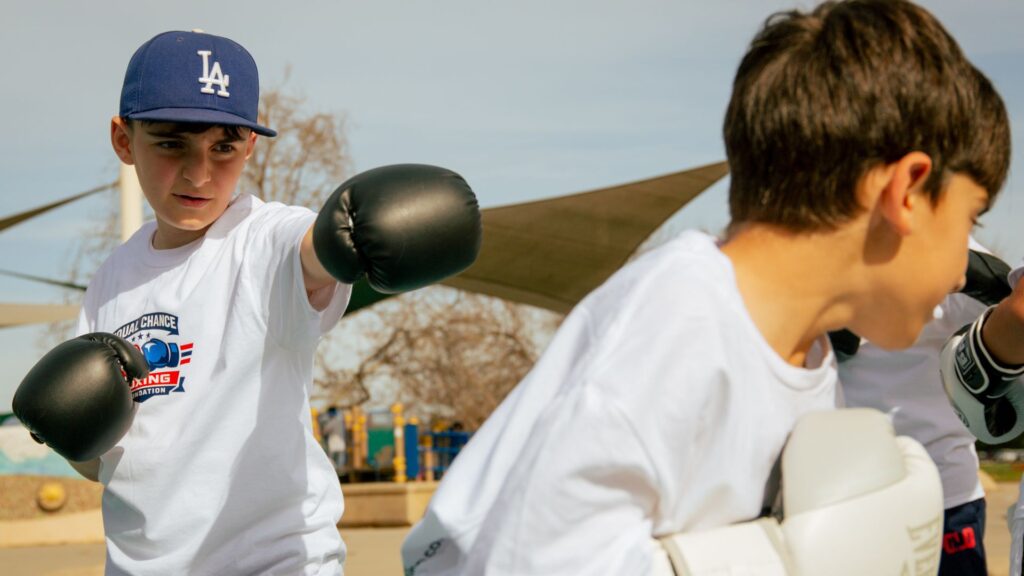
- Elite Protective Gear: Sparring is only conducted using heavily padded, professional-grade 16oz gloves and elite protective headgear.
- The “Flow” Spar: Initial sparring is not about winning; it is about “flowing.” Athletes operate at 20% power, focusing strictly on applying their defensive rolls and footwork while a coach stands literally inches away, managing the action.
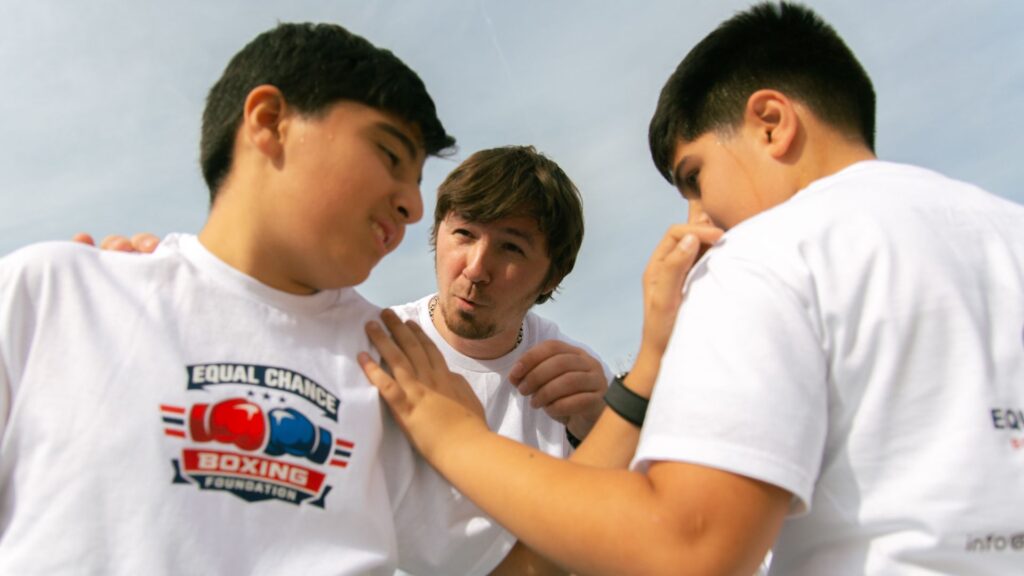
- Overcoming the Freeze Response: The first time a teen faces incoming pressure, their instinct is to freeze or flinch. Under the guidance of our mentors, they learn to keep their eyes open, breathe, and trust their training.
The Psychological Benefit: Fear Inoculation
By facing a controlled, safe level of physical adversity in the ring, the everyday anxieties of high school—a difficult exam, social drama, a job interview—suddenly feel entirely manageable. This is the core of how boxing builds confidence in children and teenagers.
The Amateur Competitor and Team Leader (Year 1 and Beyond)
For the dedicated few who wish to test their skills officially, the pathway opens up to amateur competition. However, at the Equal Chance Boxing Foundation, becoming a “competitor” is about much more than collecting trophies.
The goal of this phase is competitive excellence and community leadership.
The Athlete-Mentor Transition
When a teenager reaches the competitive amateur level, they have undergone a massive transformation. They are physically elite, emotionally regulated, and deeply confident.
- Stepping Under the Lights: They learn how to channel the intense adrenaline of a real bout into laser-focused performance.
- Giving Back: We expect our advanced competitors to become leaders. Through our youth sports mentorship programs, they are tasked with holding the heavy bag for the nervous 13-year-old who just walked through the doors for the first time.
They transition from being the student who needed saving to the mentor who helps save others.
Erasing the Financial Wall: Why Our Pathway is 100% Free
We have established that the highly structured, mentor-driven progression of a boxing program can completely alter the trajectory of a teenager’s life. But there is a massive, systemic problem in modern youth sports: The families who need these pathways the most are usually the ones who are priced out.
Expensive gym memberships, mandatory coaching fees, and the high cost of safety equipment create an unbearable burden for hardworking parents.
At the Equal Chance Boxing Foundation, we refuse to let money dictate a child’s future. Our programs are provided at absolutely no cost to your family.
We believe that access to discipline, mentorship, and physical safety is a fundamental right. We operate a completely free sports program for kids in the USA:
- Zero Registration Fees: Your teenager receives world-class coaching without you ever seeing a monthly bill.
- Elite Gear Provided: We supply the professional gloves, hand wraps, and headgear necessary for the journey.
- Take the First Step: We invite you to enroll your teenager in our primary facility today. Secure their spot by visiting our Youth Boxing Program page.
- Overcoming Transportation Barriers: If getting to a gym is a struggle, our Community Training initiative brings mobile boxing rings and free boxing classes for teens directly into local parks and underserved neighborhoods.
Be the Hero in Their Corner
Providing state-of-the-art facilities, elite safety gear, and dedicated professional mentorship to hundreds of teenagers—without ever charging their families a dime—is a monumental undertaking.
We are only able to offer these free community sports programs to underprivileged youth and anxious teens because of a community of generous supporters who understand that an investment in a child today prevents a lifetime of hardship tomorrow.
When you DONATE TO THE EQUAL CHANCE BOXING FOUNDATION, your contribution directly funds:
- A Safe Haven: Keeping the lights on in a facility that keeps teenagers off the streets during their most vulnerable hours.
- Elite Safety Gear: Ensuring that every single teenager has the high-quality 16oz gloves and headgear required for our strict safety protocols.
- Professional Mentorship: Allowing our dedicated coaches to guide adolescents from nervous beginners to confident community leaders.
[ecbf_donate_banner_4]
The Pathway to a Brilliant Future
The progression from a beginner to a competitor is not measured by the power of a punch; it is measured by the growth of a teenager’s character.
When your child begins this pathway, they are learning how to regulate their breathing when anxiety spikes. They are discovering how to respect themselves, how to process frustration safely, and how to find quiet calm in the midst of chaos. They are learning that they are incredibly strong, highly capable, and entirely worthy of investment.
The Equal Chance Boxing Foundation is deeply committed to walking alongside your family through every phase of this journey. We provide the expertise, the uncompromising safety, and the unwavering emotional support—and we do it all for free, ensuring that every child has an equal chance at a brilliant, resilient future.
Questions?
We’ve got answers.
The “Beginner” phase typically lasts 3 to 6 months, focusing entirely on fundamentals: stance, balance, and basic punches. We don’t rush the process. A student only moves to advanced drills once their footwork is instinctive. This ensures they have a solid “defensive foundation” before they ever face a more complex challenge, making the progression both safe and effective.
Sparring is a privilege, not a requirement. It begins with “Technical Sparring”—controlled, light-contact drills where the focus is on practicing specific moves, not “winning” a fight. Full-contact sparring only happens when a coach deems the student physically and mentally ready, and it is always conducted with full safety gear (headgear, 16oz gloves, and mouthguards) under 100% supervision.
A USA Boxing Passbook is essentially an athlete’s “sporting passport.” It tracks every medical exam, every bout, and every win or loss. This system is crucial for safety, as it ensures that a beginner is never accidentally matched against an elite-level competitor. It guarantees that “competitors” are always matched with someone of similar age, weight, and experience level.
Physical readiness is easy to measure, but emotional readiness is our priority. Before a first bout, we look for “quiet confidence” and emotional regulation. We want to ensure the child sees the competition as a test of skill, not a personal conflict. Through pre-bout mentorship with experienced boxers like , we prepare their minds to handle the adrenaline and the outcome with dignity.