
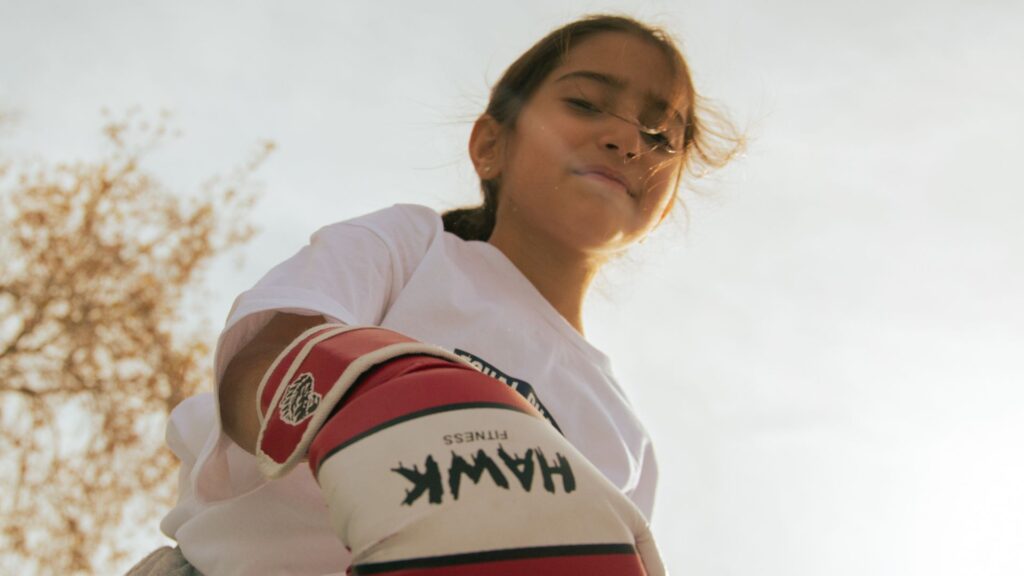
In 2026, raising a teenager feels more complex than ever before. Parents are watching a silent mental health crisis unfold in real-time. Adolescents are increasingly isolated behind screens, overwhelmed by academic pressures, and struggling to navigate a world that feels chronically unpredictable. You see the signs: the withdrawn posture, the sudden spikes in irritability, the paralyzing anxiety over social interactions, and the profound lack of self-esteem.
As a parent, your deepest instinct is to protect them and give them the tools to thrive. You may have tried counseling, school programs, or standard recreational leagues, only to find that these traditional avenues often lack the immediate, tangible impact your teenager desperately needs. You are searching for a true intervention—an environment that doesn’t just “distract” them, but actively rebuilds their mind.
This is where the transformative power of structured athletics comes in. At the Equal Chance Boxing Foundation, we sit at the intersection of youth mentorship and athletic discipline. In this comprehensive pillar guide, we will explore the science behind physical activity and mental wellness, demystify the psychology of the ring, and answer the vital question of how boxing builds confidence in children and teenagers. Most importantly, we will explain why our nonprofit youth sports organization guarantees that this life-saving mental health support remains absolutely 100% free for every family.
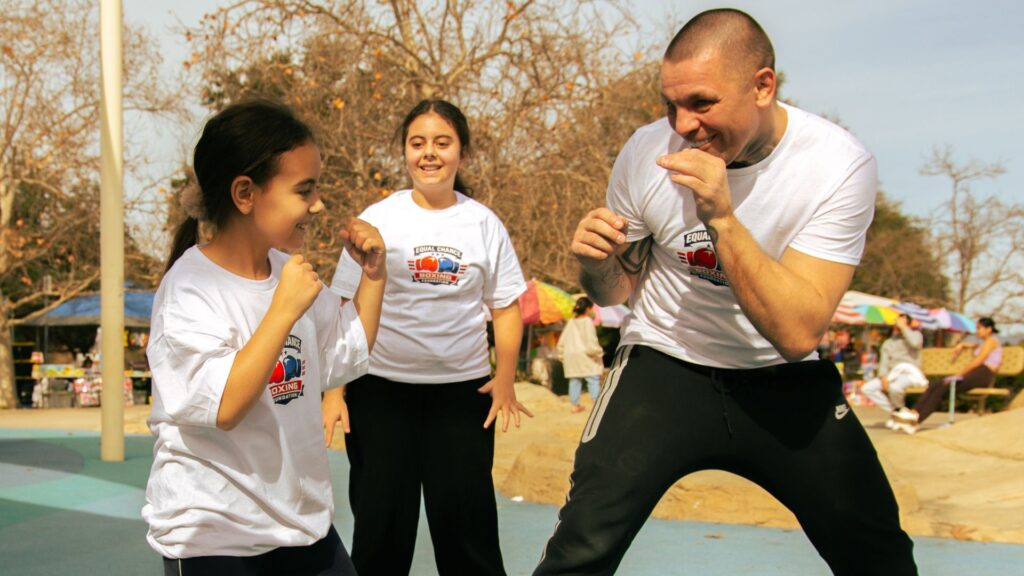
The Chaos of the Teenage Mind: Why “Just Playing” Isn’t Enough
To understand why structured sports are so critical, we must first look at what adolescents are lacking. The modern teenager has an abundance of information but a severe deficit of structure.
The Pitfalls of Unstructured Free Time
For many at-risk youth or teenagers struggling with anxiety, unstructured time after school is the danger zone. It is when rumination happens, when negative peer influences take hold, and when the brain spirals into anxiety.
- The “Pay-to-Play” Problem: Many parents try to fill this time with team sports (like travel soccer or club basketball), but these programs have become fiercely expensive and hyper-competitive. Instead of alleviating anxiety, they often compound it by placing kids under a microscope of peer pressure and parental expectation.
What Defines a “Structured” Sport?
A truly structured sport provides a predictable, safe, and demanding framework. It operates on clear rules, immediate feedback, and progressive mastery. For parents seeking sports for kids with anxiety or sports for kids with behavior problems, the environment must be one where the athlete knows exactly what is expected of them the moment they walk through the door.
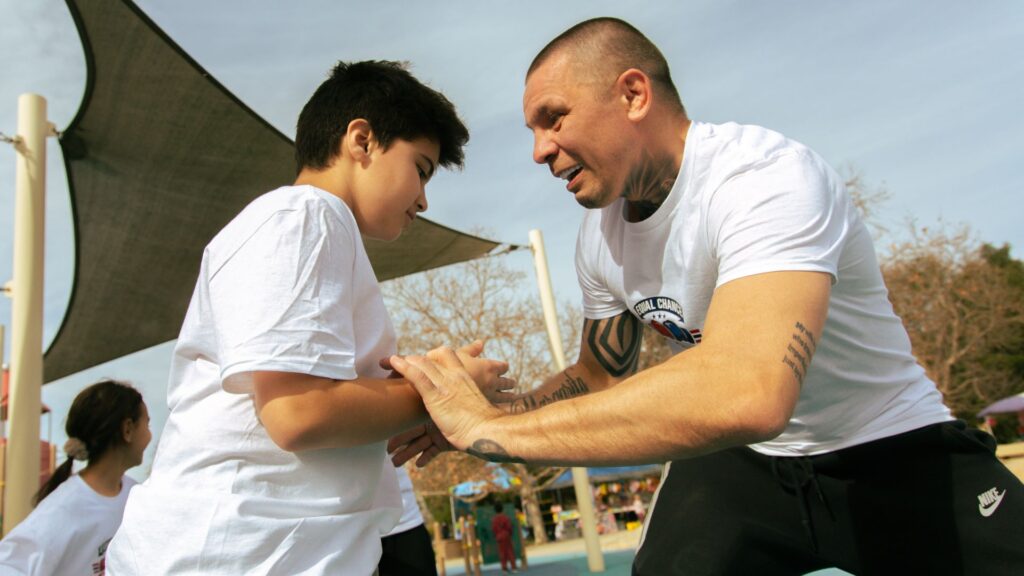
The Neurological Reset: Exercise and the Adolescent Brain
The mental health benefits of structured sports are not just psychological; they are biological. When a teenager is trapped in an anxiety cycle, their brain is constantly flooded with cortisol (the stress hormone).
When a teenager engages in rigorous, structured physical activity—like the heavy bag drills in our gym—their brain undergoes a chemical reset:
- Cortisol Flush: The intense physical exertion metabolizes the built-up stress hormones, quieting the body’s “fight or flight” alarm system.
- Dopamine and Endorphin Release: Mastering a physical combination releases dopamine, creating a natural sense of accomplishment and elevated mood, vividly demonstrating the link between physical activity and child mental health.
- The “Moving Meditation”: In a sport like boxing, you cannot think about tomorrow’s exam while slipping a jab. This forced hyper-focus gives the brain a much-needed vacation from chronic worry.
The Core Focus: How Boxing Builds Confidence in Children and Teenagers
If you are looking for sports that build confidence in kids, you might initially overlook combat sports. However, the “Sweet Science” is uniquely designed to dismantle insecurity and construct unshakeable self-esteem.
Individual Accountability in a Team Environment
In traditional team sports, a child with low self-esteem can hide on the bench. In the boxing ring, there is no bench. The athlete is the sole driver of their success. When they push through the exhaustion of a three-minute round, they cannot credit a teammate—they must acknowledge their own strength. This realization is the bedrock of boxing and confidence building in children.
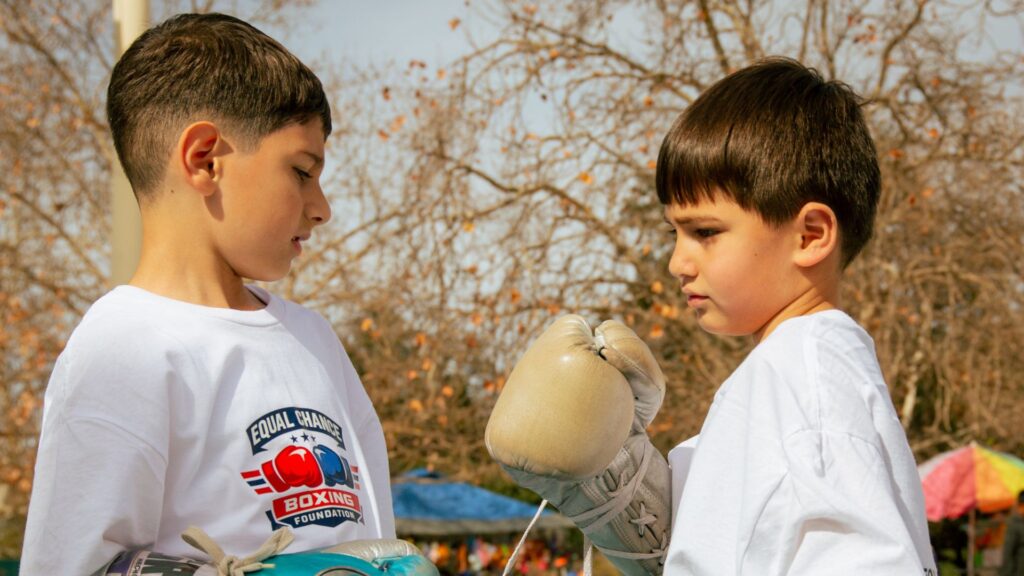
Shifting the Focus from Appearance to Utility
Many adolescents suffer from crippling body image issues. Structured boxing training fundamentally shifts a teenager’s relationship with their own body. Instead of judging their body by how it looks on social media, they begin to judge it by what it can do. They learn that their body is a capable, powerful instrument.
The Mastery of Complex Skills
Confidence is born from competence. Boxing is incredibly difficult. It requires the synchronization of breath, footwork, and striking. When a teenager masters a complex four-punch combination, the psychological reward is immense. They learn the ultimate lesson of boxing for youth development: “I am capable of doing extremely hard things.”
Emotional Regulation: A Safe Container for Big Feelings
Adolescence is defined by emotional volatility. Whether it is sudden rage, profound sadness, or paralyzing fear, teenagers often lack the tools to process these massive feelings safely.
A Positive Outlet for Teen Aggression
For parents navigating the turbulent waters of troubled youth, traditional discipline often fails because it addresses the symptom (the outburst) rather than the cause (the unprocessed emotion).
- Boxing for anger management in kids: The heavy bag provides a vital service. It is a safe, supervised, and physical place to exhaust adrenaline and frustration.
- Transforming Emotion into Focus: We teach boxing for emotional control. A wild, angry fighter is a tired, ineffective fighter. Teenagers learn that to be powerful, they must remain calm, breathe deeply, and focus their minds. They learn to master their anger rather than letting their anger master them.
The Power of the “Third Space” and Elite Mentorship
A structured sport is only as good as the adults who run it. Psychologists refer to the “Third Space”—an environment outside of home and school where a child can forge their own identity. For many, our gym is their sanctuary.
The Role of Coaches in Youth Development
A coach holds a unique place in a teenager’s life. They are not a parent (whose love is unconditional and therefore sometimes taken for granted) and they are not a teacher (who is grading them academically).
- Trusted Youth Boxing Coaches: Our staff serve as positive role models for at-risk youth. They demand respect, punctuality, and maximum effort. But in return, they offer unwavering support.
- Mentorship Through Sports Programs: When a coach looks a struggling teenager in the eye and says, “You have what it takes, do not quit,” the teenager believes them. This is the essence of discipline through sports for youth.
Safety First: The “Brain-First” Philosophy
It is entirely natural for a parent to ask: Is it safe? Will it make my child violent? At the Equal Chance Boxing Foundation, our commitment to safety is absolute.
Safe Boxing Training for Kids
We have engineered our programs to mitigate risk while maximizing psychological reward.
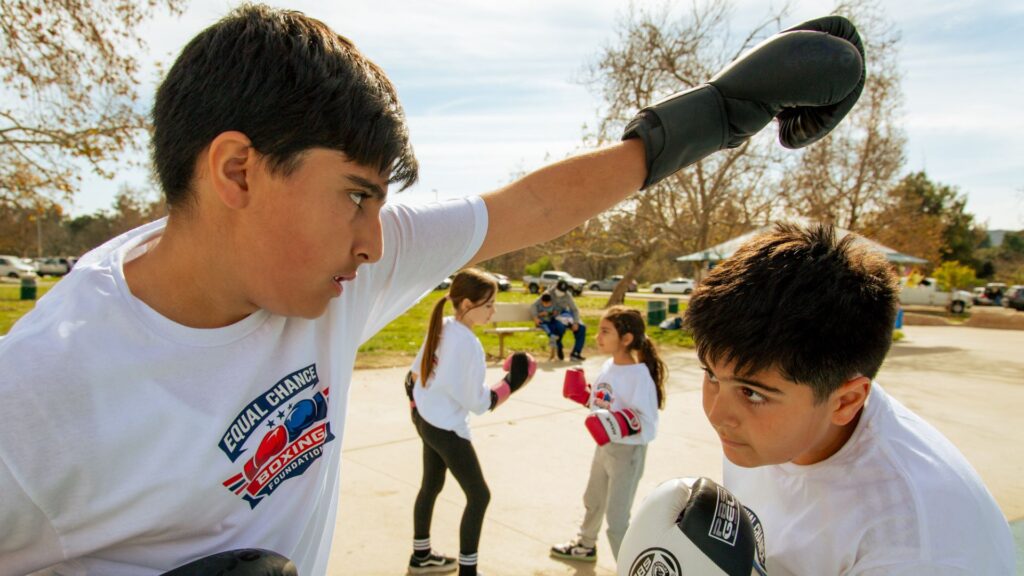
- Technique Focused Boxing for Kids: The vast majority of our program involves zero physical contact with another person. Beginners focus purely on agility, conditioning, and bag work.
- Non-violent Boxing Training for Youth: We emphasize the “science” of the sport. We teach our athletes that the discipline they learn in the gym is a tool for self-protection and self-improvement, never for bullying.
- Supervised Excellence: When athletes are ready for supervised sparring, they are outfitted in professional-grade 16oz gloves and elite headgear, monitored closely by our experts. We manage the benefits and risks of youth boxing meticulously.
Erasing the Financial Wall: Mental Health Support Must Be Free
All the discipline, confidence, and mentorship in the world are meaningless if a family cannot afford to access them. The tragedy of modern youth sports is that the children who need this structured mental health support the most are exactly the ones priced out by expensive league fees and gear requirements.
We refuse to let a child’s mental health be dictated by their zip code. The Equal Chance Boxing Foundation provides free sports programs for kids in the USA.
- Zero Tuition, Zero Fees: We do not offer “low-cost” options; we offer no-cost options. We train children for free.
- Complete Access: We provide the gloves, the hand wraps, and the world-class coaching.
How to Access Our Programs
- The Youth Boxing Program: We invite parents to enroll their teens in our structured, safe, and empowering facility. Learn more and sign up at our Youth Boxing Program page.
- Bringing the Gym to You: We know transportation can be a hurdle. Through our Community Training initiative, we bring mobile boxing units directly into underserved neighborhoods, offering free community sports programs right where families live.
- Be the “Corner-Man”: How You Can Support the Mission
Providing a state-of-the-art facility, elite coaching, and professional gear to hundreds of teenagers for absolutely free requires massive community support. We are able to change lives because of the donors who step into our corner.
If you are reading this as someone who recognizes the urgent need for adolescent mental health interventions and wants to make a tangible impact, your support is our lifeline.
When you DONATE TO THE EQUAL CHANCE BOXING FOUNDATION, you are directly funding:
- Lifesaving Mental Health Outlets: Giving an anxious or depressed teenager a safe place to rebuild their mind.
- Professional Safety Gear: Ensuring every child has access to the highest quality safe boxing training.
- Dedicated Mentorship: Keeping our trusted youth boxing coaches working directly with the underprivileged youth who need them most.
- Expansion of Free Programs: Helping us reach more neighborhoods with our free boxing classes for teens.
Conclusion: The Final Bell is Just the Beginning
Structured sports are not just about keeping kids busy; they are about teaching them how to live. By providing a demanding, safe, and heavily mentored environment, we are giving adolescents the neurological and psychological tools they need to combat anxiety, process anger, and build an unshakable sense of self.
Understanding how boxing builds confidence in children and teenagers is understanding that when a child learns how to fight through exhaustion in the ring, they are learning how to fight for their own mental health in the real world.
Whether your child is struggling with isolation, navigating complex behavior problems, or simply needs a community that will demand their best while supporting their worst days, the Equal Chance Boxing Foundation is their sanctuary. We believe that every child has a right to this transformation, and we will continue to provide it for free.
Step Into the Ring. Join the Fight for Our Youth.
The time to intervene is now. Give your teenager the structure, the community, and the confidence they deserve.
For Parents: Don’t let financial worries stop you from getting your child the help they need. Our elite training and mentorship are 100% free.
For Supporters: Help us ensure the doors stay open and the training stays free for every child who needs a safe haven. Be a hero to a local kid.
EXPLORE COMMUNITY TRAINING | GET INVOLVED & VOLUNTEER
Questions?
We’ve got answers.
Adolescence is often a time of internal chaos. A structured sports routine provides predictability and a sense of order that many teens lack. By having a set time and place where they belong and have a specific role, they experience reduced “decision fatigue” and anxiety. This structure creates a safe “rhythm” that helps stabilize moods and provides a reliable escape from the pressures of school and social media.
Absolutely. Physical activity is a natural “mood stabilizer.” Beyond the well-known “endorphin rush,” structured sports help regulate cortisol (the stress hormone) and boost dopamine levels. Furthermore, the physical exhaustion from a good practice leads to better sleep quality, which is one of the most critical—yet often overlooked—factors in managing teen depression and irritability.
Structured sports provide a “third space”—somewhere that isn’t home and isn’t school. It’s a place to find a “tribe.” The shared struggle of a difficult practice builds deeper, more authentic social bonds than digital interactions. This sense of belonging to a team acts as a powerful buffer against the isolation that often leads to mental health struggles in teenagers.
Yes, it is called “safe failure.” In a structured sports environment, a teen can experience loss, rejection, or a bad performance without life-altering consequences. This teaches resilience—the ability to bounce back, analyze mistakes, and try again. Learning that “a bad round doesn’t mean a bad life” is a fundamental mental health tool that helps them navigate the inevitable setbacks of adulthood.