
Every parent, regardless of their background, knows the exact feeling: the exhaustion has set in, the patience is completely worn thin, a boundary has been crossed for the tenth time today, and suddenly, the frustration boils over. You raise your voice, you hand down a harsh, reactionary punishment, and the entire situation immediately spirals into tears, slamming doors, and deep resentment. Later that night, in the quiet of the house, the guilt sets in. You promise yourself you will not yell next time. But without a completely new psychological strategy, the cycle inevitably repeats itself.
Modern society has long conditioned us to believe a dangerous myth: that discipline and punishment are the exact same thing. We have been taught that if a child does not feel bad, they will not learn to do better. We equate fear with respect. But at the Equal Chance Boxing Foundation, where we mentor, train, and guide high-energy, easily frustrated youth every single day, we know that this is a fundamental, biological misconception. You cannot teach emotional regulation to a child while you are actively losing your own. In this massive, comprehensive guide, we are going to completely reframe the concept of discipline. We will look deeply into the neuroscience of why yelling actually prevents cognitive learning, how to shift your mindset from a “punisher” to a “corner coach,” and how to establish unshakeable boundaries that build deep mutual respect, lasting behavioral changes, and incredible emotional resilience.
The Neuroscience of Yelling (Why They Literally Cannot Hear You)
To understand why yelling, threatening, and punitive measures fail so spectacularly, we have to look past the child’s outward behavior and look directly inside their developing brain. When a parent yells, their sheer size, the volume of their voice, and their angry facial expressions are processed by the child’s central nervous system as a direct, physical threat to their survival. This perceived threat instantly bypasses the logical centers of the brain and triggers the amygdala—the brain’s primitive alarm system. Within milliseconds, the amygdala floods the child’s body with stress hormones, specifically cortisol and adrenaline. This throws the child into an involuntary state of “fight, flight, or freeze.”
- Fight: The child’s nervous system gears up for battle. They yell back, they become physically aggressive, they throw things, or they exhibit extreme defiance.
- Flight: The child attempts to escape the threat. They run away, lock themselves in their room, or cover their ears.
- Freeze: The child’s system is so overwhelmed that it shuts down. They stare at you blankly, they dissociate, or they completely ignore what you are saying.
Here is the most critical scientific reality every parent must understand: when the amygdala is fully activated, the prefrontal cortex is literally switched off. The prefrontal cortex is the sophisticated part of the brain responsible for logic, learning, understanding cause and effect, and moral reasoning.
You cannot teach a complex moral lesson to a brain that is locked in survival mode. When you yell, your child is no longer thinking about what they did wrong (e.g., hitting their sibling or failing a test); they are entirely, biologically focused on how scary and unpredictable you are in that exact moment. Yelling does not create a learning environment; it creates a combat zone.
Redefining Discipline (The Root Word is “Disciple”)
To break the cycle of yelling, we must completely redefine our terminology. The word “discipline” does not mean “to punish” or “to inflict pain.” It comes from the Latin word disciplina, which translates simply to teach, to guide, and to instruct. A disciple is a student. Therefore, discipline is the act of teaching.
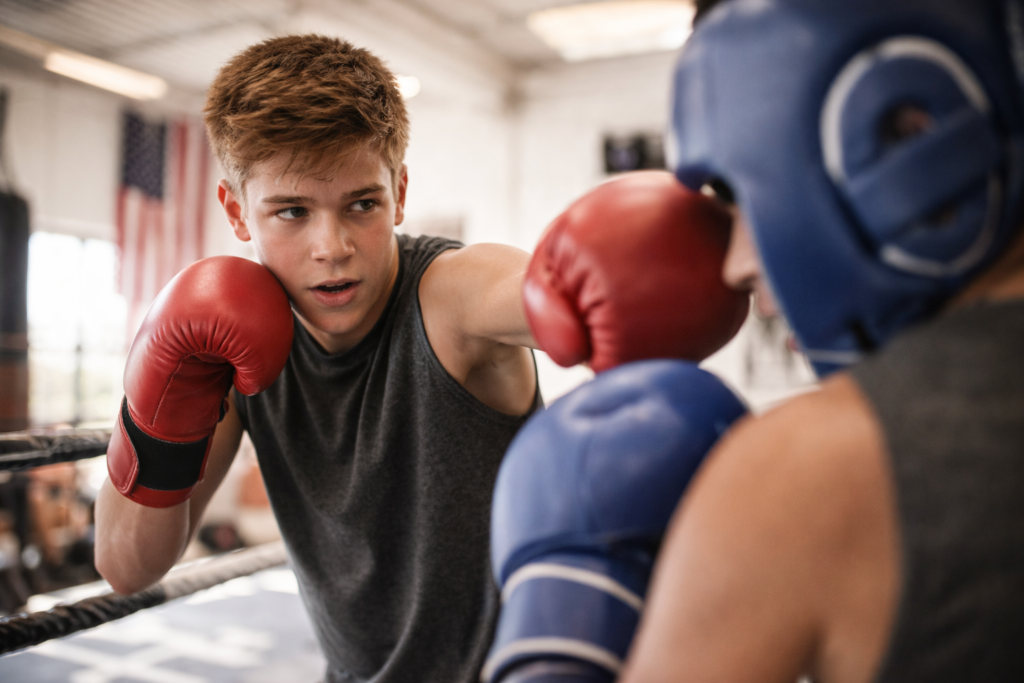
Think about how we handle mistakes in our youth boxing program. If a young, inexperienced athlete repeatedly drops their hands during a sparring session, leaving their face exposed, a good coach does not scream at them, belittle their intelligence, or punish them by taking away their gloves. Doing so would only make the athlete fearful, hesitant, and eventually cause them to quit the sport entirely.
Instead, the coach stops the action. They regulate the athlete’s breathing. They demonstrate the correct stance, physically guide the athlete’s hands back to their cheekbones, and explain why the guard is important. The coach applies connection before correction.
Parents must adopt this exact same “corner coach” philosophy in the living room. When your child misbehaves, they are not acting out of malice; they are simply demonstrating a lack of skill. They are showing you a lack of impulse control, a lack of emotional regulation, or a lack of communication skills. Your job as a parent is not to make them suffer for lacking a skill; your job is to teach them the skill they are missing.
The Five Pillars of Non-Punitive Discipline
Transitioning from a traditional, punishment-based household to a coaching-based household does not happen overnight. It requires consistent practice. Here are the five foundational pillars of parenting without yelling.
Connection Before Correction
Before you can redirect a child’s behavior, you must establish a connection. If a child feels disconnected from you, they will resist your guidance.
- The Old Way: Shouting from across the room, “Stop jumping on the couch right now!”
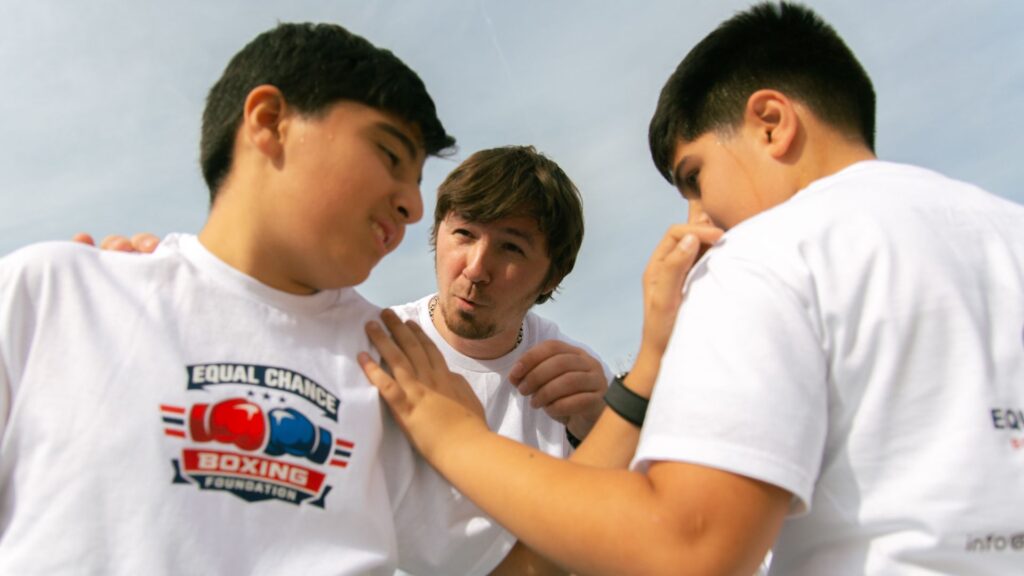
- The Coaching Way: Walk over to the child, get down on their eye level, gently place a hand on their arm to ground them, and say, “You have so much jumping energy right now. I love your energy, but the couch is not for jumping.” By physically and emotionally connecting first, you lower their defenses so they can actually hear the boundary.
Setting Firm, Unshakeable Boundaries
Many parents confuse “gentle parenting” with “permissive parenting.” Permissive parenting is a disaster for a child’s anxiety levels. Children absolutely crave strong, predictable boundaries. They need to know where the walls are in order to feel safe. The secret to positive discipline is holding those boundaries with unwavering firmness while offering deep empathy.
- The Boundary: “We do not throw toys in the house.”
- The Empathy: “I know you are so frustrated that your tower fell down. It is okay to be mad. But I cannot let you throw the blocks.” If the child throws the block again, you enforce the boundary without anger: “You are having a hard time keeping the blocks safe, so I am going to put them on the shelf for now.” You are acknowledging their valid emotion, but completely holding the line on the unacceptable behavior.
Natural and Logical Consequences Over Arbitrary Punishments
Punishments are usually arbitrary and entirely disconnected from the offense. Telling a teenager, “You hit your brother, so no video games for a week,” does not teach them how to resolve conflict. It only teaches them how to be sneakier so they do not get caught next time. Instead, rely on the world’s greatest teachers: natural and logical consequences.
- Natural Consequence: If a teenager refuses to wear a winter coat despite your warnings, the natural consequence is that they feel cold at the bus stop. Let the physical world be the teacher. You do not need to lecture; the cold does the teaching.
- Logical Consequence: If a child makes a massive mess with their food on purpose, the logical consequence is that they must help clean it up with a towel before they can leave the kitchen to go play. In our community training events, if two young athletes cannot safely share a piece of equipment, the equipment is temporarily removed until they are ready to try again. There is no yelling, no shame, and no labeling them as “bad kids.” It is simply cause and effect.
The “Time-In” vs. The “Time-Out”
The traditional “time-out” involves sending an emotionally dysregulated child to sit alone in a room to “think about what they did.” Neurologically, this is impossible. A child in the middle of a tantrum cannot self-soothe or reflect on their morality. They just feel abandoned and angry. Instead, utilize a “Time-In.” When a child is losing control, bring them close. Sit with them in a quiet space. Say, “Your body is having a really hard time right now. I am going to sit right here with you until you are calm.” You lend them your calm nervous system until theirs can regulate. Once they are calm, then you discuss the behavior and the consequence.
Praise the Process, Not the Person
When we constantly tell children, “You are so smart,” or “You are such a good boy,” we attach their worth to their outcomes. When they inevitably fail or make a mistake, they feel like they are inherently “bad.” Instead, praise their effort, their grit, and their process. “I noticed how hard you worked on that math problem even when you were frustrated,” or “I saw that you wanted to hit your sister, but you chose to walk away instead. That took a lot of self-control.” This builds a growth mindset, teaching them that their character is built through their choices, not their innate traits.
Real-World Scenarios (The Corner Coach Playbook)
Theory is wonderful, but parenting happens in the chaotic trenches of daily life. Here is how to apply the coaching methodology to three of the most highly triggering parenting scenarios.
The Public Grocery Store Meltdown
Your toddler wants a candy bar in the checkout line. You say no. They throw themselves on the floor, screaming at the top of their lungs while strangers stare at you.
- The Urge: To aggressively whisper-yell, “Get up right now, you are embarrassing me, wait until we get to the car!”
- The Coach’s Play: Take a deep breath to regulate your own nervous system. Ignore the strangers; your only audience is your child. Get down low. “You really wanted that candy. It is so hard to hear no. You are so mad.” Validate the feeling loudly enough for the child to hear. If they continue to thrash, gently pick them up. “Your body is not safe here right now, I am going to help you move to the car.” You enforce the boundary (no candy, leaving the store) while validating the emotional reality (it is hard to be told no).
Aggressive Behavior (Hitting or Biting)
Your older child gets frustrated and hits their younger sibling over a toy.
- The Urge: To yell, “We do not hit! Go to your room!” (Which is ironic, as we often use verbal aggression to punish physical aggression).
- The Coach’s Play: Immediately physically intervene to ensure safety. Block the hit if possible. Address the victim first to show that aggression does not get the spotlight. “Are you okay? That hurt.” Then turn to the aggressor with a firm, serious, but un-yelling voice. “I will not let you hit. Hitting hurts. You are mad that he took your toy, but you may not use your hands to hurt.” The logical consequence follows: the toy is put away, and the aggressor must help get an ice pack for the sibling.
Teenage Defiance and Disrespect
Your teenager rolls their eyes, slams a door, and says, “I hate you, you don’t understand anything!”
- The Urge: To demand immediate respect. “Do not speak to me that way! I am your parent, you will respect me!”
- The Coach’s Play: Understand that teenage disrespect is almost always a clumsy expression of unmet needs or overwhelming stress. Do not take the bait and engage in a screaming match. Maintain your composure. “You are incredibly angry right now, and I want to hear why. But I cannot listen to you when you speak to me that way. I am going to give you some space, and we will talk about this in twenty minutes when we are both calm.” You model the exact emotional regulation you want them to display.
The “Corner” for Parents (Regulating Yourself)
We cannot talk about disciplining children without talking about the hardest part of the equation: parental self-regulation. Why is it so incredibly hard to stay calm when our children act out? Because our children’s behavior often triggers our own unhealed childhood wounds. If you were raised in a household where you were not allowed to express anger, seeing your child throw a tantrum will trigger a massive alarm bell in your subconscious. If you were heavily punished for making messes, seeing your child spill milk will instantly trigger your own internalized shame and fear.
To be a “corner coach” for your child, you must learn to step into your own corner first.
- Acknowledge the Trigger: When you feel the heat rising in your chest and the urge to yell building in your throat, recognize it. “I am feeling triggered right now. This is my anxiety, not an actual emergency.”
- The Tactical Pause: Between the child’s stimulus (the bad behavior) and your response (the discipline), there is a microscopic gap of time. You must learn to widen that gap. Close your eyes and take one deep, physiological sigh (a double inhale through the nose, followed by a long, slow exhale through the mouth).
- Tag Team: If you are part of a two-parent household, use the “tap out” system. If you feel you are going to lose your temper, look at your partner and say, “I am tapping out. I need a minute.” Walk into another room, wash your face with cold water, and reset. There is no shame in taking a timeout for yourself.
Building the Village: How Athletics Supports Home Discipline
Parenting without yelling requires an immense amount of stamina, patience, and strategic thinking. It is incredibly difficult to maintain this standard of emotional regulation if you are operating in total isolation. You cannot pour from an empty cup, and you cannot coach if you do not have a team supporting you.
To raise highly resilient, emotionally intelligent, and self-disciplined children, parents need a “village” that speaks the exact same psychological language. Children thrive on consistency. When the boundaries they experience at home are identical to the boundaries they experience in their extracurricular activities, the lessons lock into their character permanently.
This is the exact void the Equal Chance Boxing Foundation fills in our community. We do not just teach teenagers how to throw a jab or a cross; we are actively reinforcing the most difficult parenting lessons you are trying to teach at home.
- When you teach your child at home that they must process failure without throwing a fit, our coaches are in the gym teaching them how to take a hit, breathe, and reset their stance without losing their temper.
- When you teach your child at home that actions have logical consequences, our gym reinforces that if they do not do the conditioning work, they do not get to spar.
- When you teach your child respect, our mentors are standing at the edge of the ring demanding that every athlete shake hands and show gratitude after a grueling round.
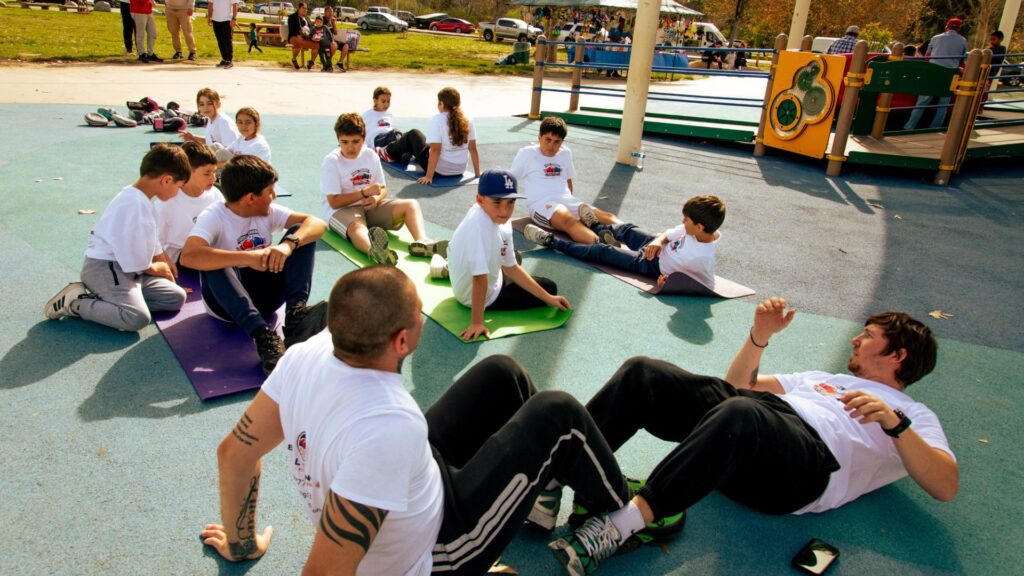
We serve as an extension of your family’s corner. We take the high-energy, frustrated, and sometimes defiant youth and give them a physically safe, highly structured place to expel that adrenaline. We transform their raw aggression into focused, athletic discipline.
How You Can Support the Next Generation of Mentors
We are actively working every single day to provide these free, high-quality, discipline-building environments for the youth in our community who need it the absolute most. We provide the mentorship, the safe spaces, the equipment, and the unwavering belief in their potential.
But maintaining these sanctuaries of discipline, outfitting our gyms, and keeping our park programs running requires serious, ongoing resources. We cannot build this village alone. We need the support of community members who understand that an investment in youth mentorship is an investment in a safer, stronger, and more emotionally intelligent society.
If you believe in the power of coaching over punishment, and you want to ensure that every child has access to a mentor who will teach them how to fight for their future rather than fighting against it, we invite you to get involved with our movement.
When you make the decision to DONATE TO EQUAL CHANCE TODAY, you are doing so much more than funding a sports program. You are funding a vital alternative to the streets. Your contribution buys the heavy bags that absorb a teenager’s anger so their family doesn’t have to. You are paying for the clean white t-shirts that give a struggling kid a fresh identity and a sense of belonging. Most importantly, you are helping us prove to thousands of young people that they can be strong, capable, and deeply respected without ever having to raise their voice or their fists in anger.
Questions?
We’ve got answers.
In boxing, we replace yelling with “structure and rhythm.” Discipline comes from the environment’s clear expectations and consistent routines. A child learns that following the routine leads to tangible progress, such as mastering a new combination. This makes cooperation a personal choice based on their own desire to improve, rather than a fearful reaction to a raised voice.
We use “natural consequences” and corrective feedback. If a child loses focus during a drill, the “consequence” is simply that the rhythm breaks and they must reset. This shifts the internal narrative from “I am in trouble” to “I need to adjust my technique.” By removing shame, we allow the child to take responsibility for their actions without feeling attacked.
We teach “emotional pivoting.” In the gym, when an athlete gets frustrated, we redirect that energy into a specific, high-focus task like heavy bag work or shadowboxing. Parents can use this by staying calm (the “quiet corner” approach) and redirecting the child to a physical or creative task that requires focus, helping them regulate their nervous system without a power struggle.
A coach is a partner in growth, while a disciplinarian is often seen as an adversary. By maintaining a calm, authoritative tone, a coach shows the child that strength is found in composure, not volume. This builds mutual respect; the child follows the rules because they value the relationship and their own progress, which is a much more permanent form of discipline than fear-based obedience.