
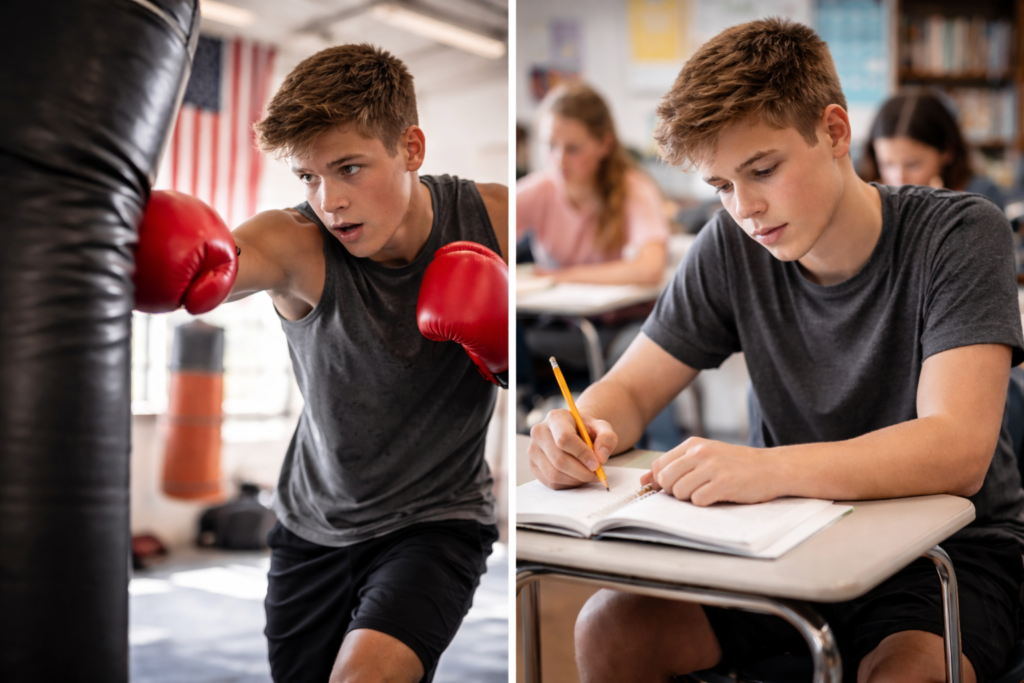
There is a profound misconception in modern education that physical intelligence and academic intelligence exist in two completely separate silos. We often look at a teenager who struggles to sit still in a math class, who gets easily frustrated by a difficult reading assignment, or who acts out during a test, and we label them as “not academically inclined.” We assume they simply lack the capacity for high-level scholastic achievement.
But then, we watch that exact same teenager walk into the Equal Chance Boxing Foundation. We watch them memorize complex, multi-step biomechanical combinations. We watch them exhibit laser-like focus for intense three-minute rounds. We watch them take a physical hit, process the pain, adjust their strategy, and keep moving forward.
The truth is, that teenager does not lack intelligence or focus. What they lack is a bridge. They have not yet been taught how to take the immense grit, discipline, and emotional regulation they display on the canvas and apply it to the paper on their desk. In this comprehensive guide, we are going to explore the psychology of mental toughness, breaking down exactly how the grueling demands of the “sweet science” provide the ultimate blueprint for academic success, and how we are turning our young athletes into unstoppable scholars.
The Illusion of “Not Smart Enough” vs. The Reality of Frustration Tolerance
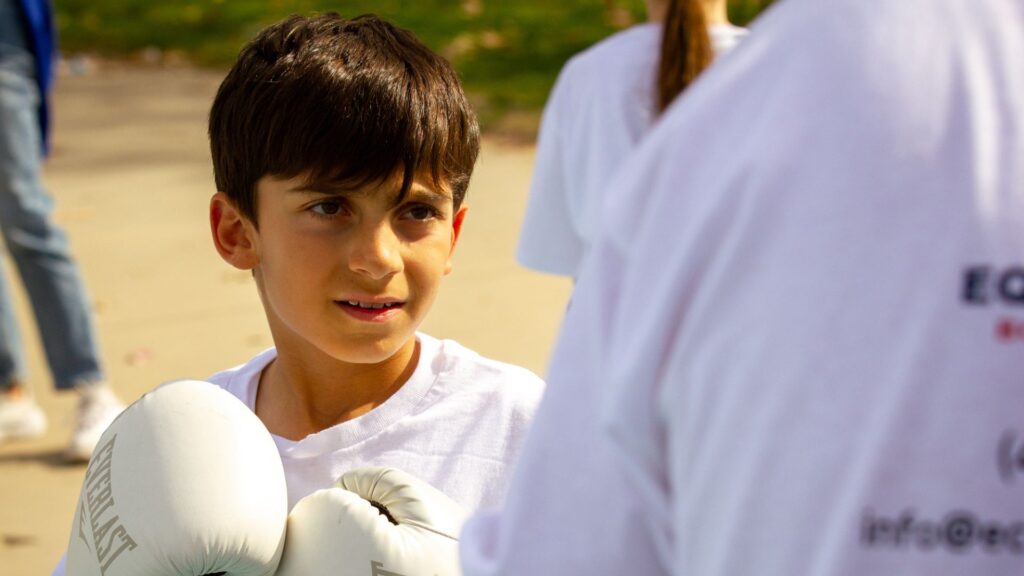
When a student gives up on a difficult homework assignment, the adult in the room often assumes the material is simply too hard for their cognitive level. However, developmental psychologists will tell you that the vast majority of academic failure is not a crisis of intellect; it is a crisis of frustration tolerance. When a teenager looks at a complex algebra equation and does not immediately know the answer, their brain experiences a micro-level of panic. Being wrong feels uncomfortable. Failing feels dangerous to their ego. So, rather than sitting with that deep discomfort and working through the problem, they shut the book. They declare the subject “stupid,” act out to distract from their failure, or simply quit. It is an emotional defense mechanism, not a cognitive deficit.
Learning to Take a “Punch” on Paper
Boxing is the ultimate antidote to low frustration tolerance. You cannot learn how to box without failing constantly. In our youth boxing program, a student learns very quickly that missing a punch, stumbling over their footwork, or getting caught by a jab is simply the cost of doing business.
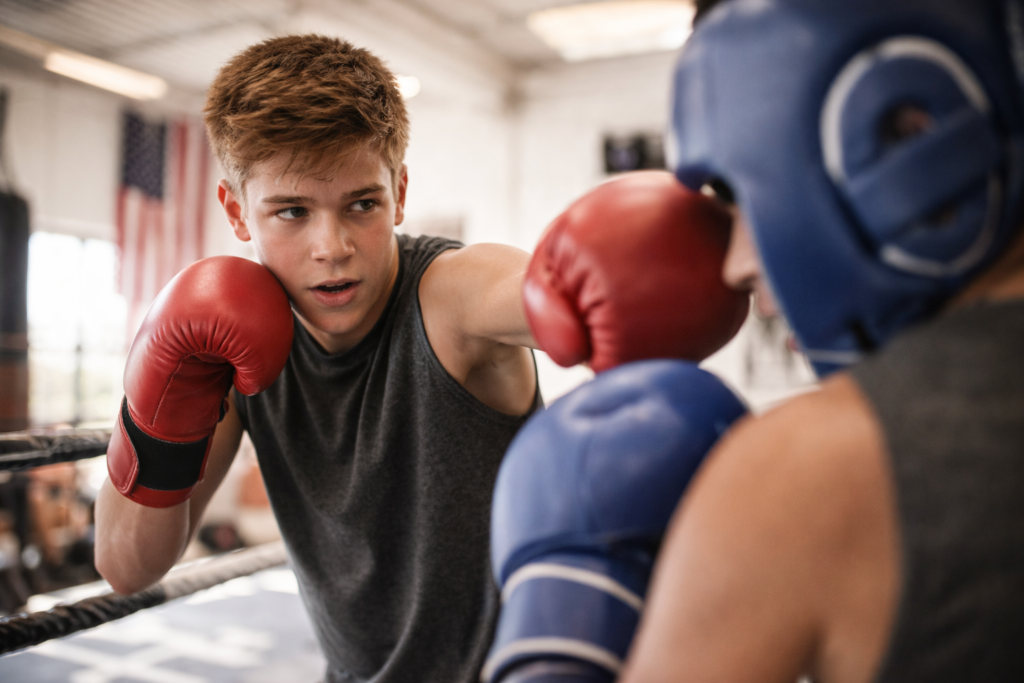
In the ring, failure is not a catastrophic event; it is immediate, physical data. When a young athlete learns to absorb a punch to the headgear, reset their stance, and throw a counter-punch, they are actively rewiring their brain’s response to adversity. They learn to separate their ego from their mistakes. We teach them that frustration is just the feeling of weakness leaving the brain. When that same student sits down to take a history exam a week later and encounters a question they don’t know, they no longer panic. They recognize the familiar sting of frustration, they take a deep breath, they reset their mental stance, and they tackle the problem. They have learned how to take a punch on paper.
Discipline Over Motivation: The Secret to Academic Consistency
If you ask any straight-A student or any world-champion boxer what their secret is, they will never tell you it is “motivation.” Motivation is an incredibly fickle emotion. It is a feeling that comes and goes based on how much sleep you had, what you ate for breakfast, or what the weather looks like outside. Relying on motivation to pass your classes or win a fight is a recipe for guaranteed failure.
What boxing teaches, in its purest and most unforgiving form, is discipline. Discipline is the ability to execute a required action entirely independent of how you feel about it.
The Routine of Resilience
In our open-air community training sessions, we demand consistency. We expect our youth to show up, wrap their hands perfectly, and execute their jump-rope routines whether they are tired, angry, or distracted. This creates a deeply ingrained behavioral groove.
We explicitly teach our kids to map this physical discipline onto their academic lives. You do not have to “feel” like doing your homework. You just have to sit down, open the book, and execute the reps, exactly like you do on the heavy bag. By stripping away the emotional weight of studying and treating it as a simple, non-negotiable athletic routine, we help our teenagers conquer procrastination and build the relentless consistency required to graduate.
The “Corner” in the Classroom: Asking for Help as a Tactical Move
One of the most tragic reasons teenagers fail in school is a deep-seated sense of shame. When a student is falling behind, they often try to hide it. They sit in the back of the classroom, avoid eye contact with the teacher, and refuse to raise their hand because they are terrified of looking “dumb” in front of their peers. They view asking for help as a surrender.
In the boxing ring, refusing to ask for help is dangerous. When the bell rings and a fighter returns to their corner, they do not sit on the stool and pretend everything is fine if they are struggling. They look their coach in the eye and listen to the tactical adjustments being offered. They understand that utilizing the wisdom of their “corner” is a strategic necessity for survival.
At the Equal Chance Boxing Foundation, we actively dismantle the shame associated with needing assistance. We teach our kids that teachers, tutors, and counselors are their academic corner-men. Raising your hand to say, “I don’t understand this equation,” is not an admission of defeat; it is the strategic equivalent of asking your coach how to slip a right hook. It is a powerful, proactive move made by a competitor who fully intends to win.
The White T-Shirt Mentality: Erasing the “Bad Student” Label
Many of the youth we serve have been burdened with terrible labels long before they ever set foot in our gym. They have been told by the educational system that they are “troublemakers,” “slow learners,” or “at-risk.” When a child hears those labels enough times, they internalize them and act accordingly, creating a self-fulfilling prophecy of academic failure.
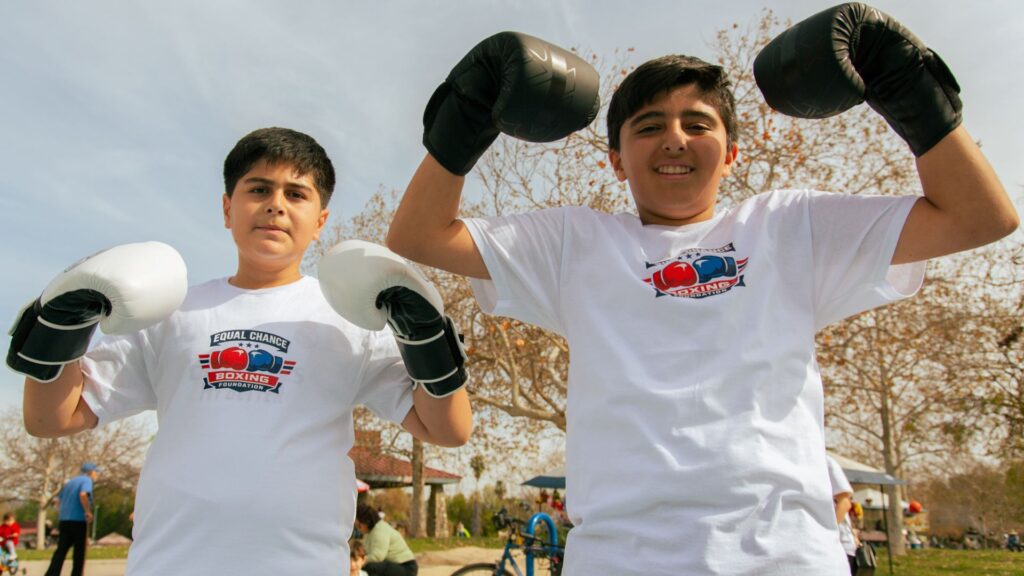
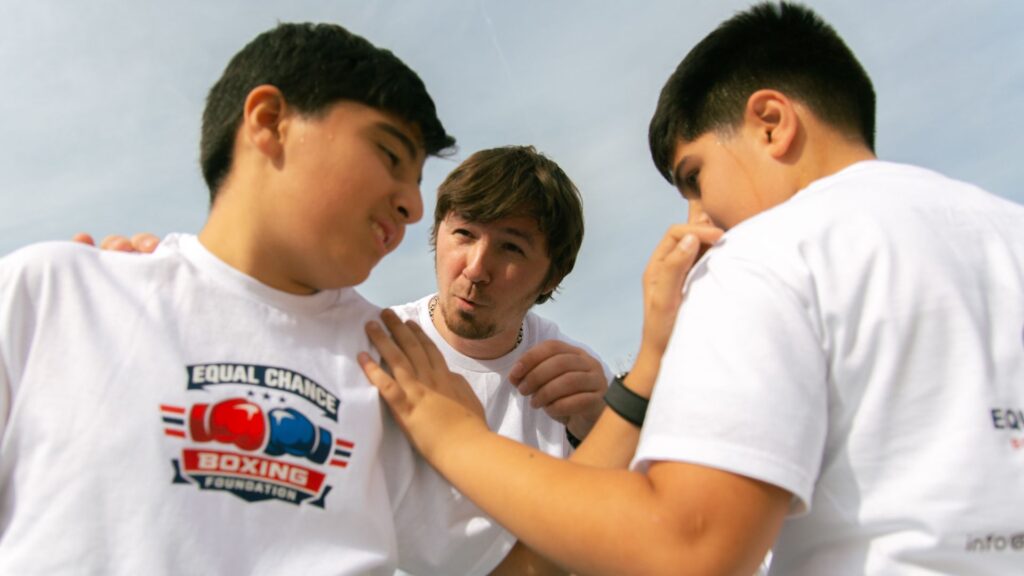
This is the psychological brilliance of the Equal Chance White T-Shirt. When a teenager puts on our uniform, every single academic and social label from the outside world is erased. It is a blank canvas. In the gym, we do not care what their GPA is, how many detentions they have had, or what their reading level is. We only care about their work ethic, their respect for their peers, and their willingness to learn.
When a teenager realizes they can be highly successful, respected, and praised in the gym, a massive cognitive shift occurs. They realize, “If I am capable of greatness here, I am capable of greatness anywhere.” We use their athletic success as a wedge to crack open their self-doubt, allowing them to return to the classroom with a entirely new, empowered identity. They are no longer the “failing kid”; they are a disciplined athlete on a mission.
Investing in the Scholar-Athlete: How You Can Support the Transformation
Translating the raw, physical grit of the boxing gym into the quiet, focused discipline of the classroom is the highest form of youth development. We are not just training fighters to win matches in a ring; we are forging resilient, focused, and highly disciplined young adults who will eventually step into boardrooms, universities, and leadership roles within their communities.
But this level of profound psychological and behavioral transformation requires a robust, well-funded ecosystem. It requires the heavy bags that teach them to push through exhaustion, the clean white t-shirts that give them a fresh identity, and, most importantly, the dedicated mentors who stand beside them to help them connect the dots between a left jab and a high school diploma.
If you believe that our educational system needs more grit, and that our youth deserve a space that teaches them how to conquer their own frustration, we urge you to get involved with our mission today.
When you make the generous decision to DONATE TO EQUAL CHANCE TODAY, you are doing far more than funding a sports program. You are funding an alternative education system. You are purchasing the physical tools that teach a teenager how to focus, how to fail safely, and how to get back up. You are giving a struggling student the ultimate, undeniable proof that they are strong enough to succeed at absolutely anything they set their mind to.
Beyond the Bell: Building the Leaders of Tomorrow
The skills forged on our mats—frustration tolerance, emotional regulation, and relentless discipline—do not stay in the gym. They follow our athletes into their homes, their neighborhoods, and, most importantly, their classrooms. When a student learns to push through the burning exhaustion of a three-minute round, they are building the exact neurological stamina required to sit through a three-hour college entrance exam.
We must understand that academic failure is rarely a lack of potential; it is a lack of process. Boxing provides that process. It is the physical hook that grabs their attention, but education is the ladder that will ultimately set them free. This is the core philosophy that drives every single initiative at the Equal Chance Boxing Foundation. We use the visceral, engaging sport of boxing to intercept these teenagers right before the traditional educational system gives up on them.
Breaking the Generational Cycle of Dropout Rates
When a teenager who was previously labeled a “dropout risk” suddenly finds their footing, graduates high school, and pursues a trade or a college degree, the impact is seismic. They do not just change their own economic reality; they rewrite the future of their entire family. They become the blueprint for their younger siblings. They prove that the barriers of their zip code are meant to be broken.
However, to keep this vital pipeline from the streets to the classroom open, we need visionary partners. We need community members who understand that an investment in our youth boxing program is actually an investment in the future workforce, local leadership, and community safety. By expanding our reach and bringing our mobile setups to more community training events, we are actively searching for the brilliant, undiscovered minds that simply need a different kind of classroom to thrive.
Your Donation is an Investment in Their Intellect
This is your invitation to get involved in a profoundly tangible way. We cannot build scholars without the physical infrastructure that teaches them how to study.
When you make the generous decision to DONATE TO EQUAL CHANCE TODAY, you are doing far more than keeping the lights on in a boxing gym.
- You are funding the mentors who sit down with these kids after practice to help them decipher their math homework.
- You are buying the jump ropes and heavy bags that serve as their daily lessons in frustration tolerance.
- You are sending a resounding message to a teenager who has been told they aren’t smart enough: Your mind is just as powerful, capable, and valuable as your physical strength.
Do not let another brilliant young mind slip through the cracks simply because they haven’t been taught how to fight for their own education. Join our corner. Support the mission. Help us prove that the greatest victories our fighters will ever achieve will be written on a diploma, not just a scorecard.
Questions?
We’ve got answers.
Boxing teaches that the rounds don’t get shorter—you just get stronger. When a student faces a complex math problem or a long essay, they draw on the same mental stamina used to push through the final minute of a heavy bag session. It transforms academic frustration into a challenge that can be conquered through persistence.
Yes. Boxing is often called “human chess” because it requires split-second focus. In the gym, losing focus means missing a target; in the classroom, this translates to improved “active listening.” The discipline required to master complex combinations trains the brain to stay present and engaged, even during repetitive tasks.
In boxing, we say “you win or you learn.” A poor grade is viewed the same way as a missed punch—it is feedback, not a failure. This mindset helps students recover quickly from disappointment, analyze their mistakes objectively, and approach their next exam with a better strategy rather than discouraged anxiety.
Absolutely. Boxing reinforces the concept of “delayed gratification.” Students learn that athletic results only come from consistent, daily effort. This understanding helps them prioritize their homework and manage their time more effectively, as they realize that academic success, like boxing mastery, is earned through steady work, not luck.