
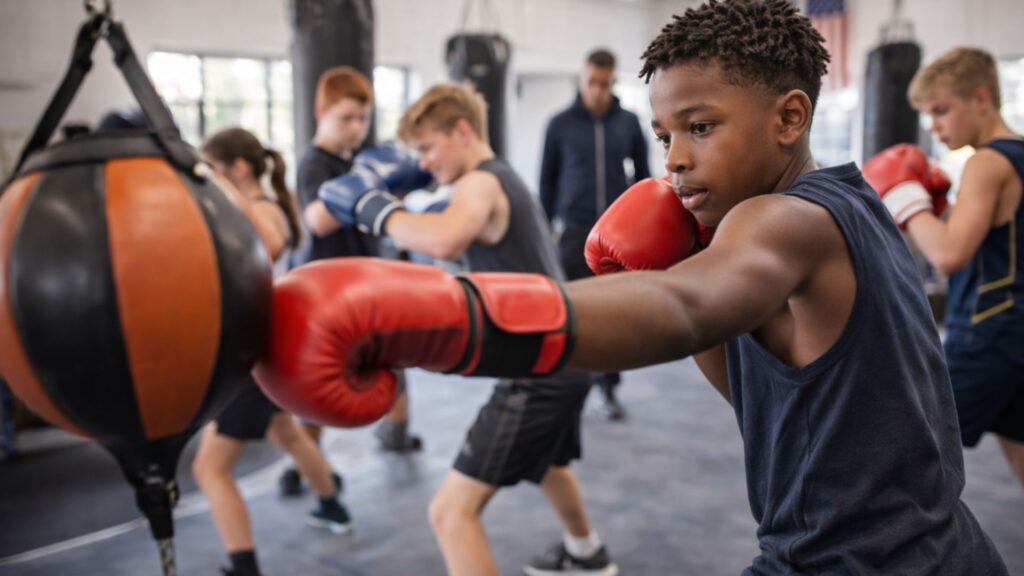
In the high-stakes environment of a boxing match, the “corner” is much more than a physical space marked by a stool and a bucket of ice. It is a psychological sanctuary, a tactical headquarters, and a vital lifeline. When a fighter retreats to their corner between rounds, they are stepping out of the chaos of conflict and into a dedicated space of clarity, support, and guidance. For a few precious seconds, they are not alone in the fight; they have a “corner man” who sees what they cannot see, calms their heart rate, and provides the exact strategy needed to survive the next round.
At the Equal Chance Boxing Foundation, we believe that every teenager—regardless of their background or current circumstances—is in the middle of a massive, high-stakes “fight.” They are fighting for their identity, fighting against social pressures, and often fighting against the internal noise of an developing brain. Without a “corner,” these young people are left to navigate the most turbulent years of their lives in total isolation. In this deep dive into the psychology of mentorship, we will explore why a mentor is the single most important factor in adolescent resilience and how our program uses the “corner” philosophy to build the leaders of tomorrow.
The Biological Necessity of a Mentor: Navigating the Adolescent Brain
To understand why a teenager needs a mentor, we must first look at the unique state of the adolescent brain. During the teenage years, the human brain undergoes a massive “pruning” and remodeling process. The amygdala, which is the emotional and reactive center of the brain, is highly active, while the prefrontal cortex—the area responsible for logic, impulse control, and long-term planning—is still under construction. This creates a biological “mismatch” where a teen has a powerful engine but a very weak set of brakes.
This is where the mentor becomes a biological surrogate for the teen’s underdeveloped executive function. A mentor doesn’t just give advice; they provide a stable external framework for the teenager to lean on while their own internal systems are still maturing. When a teen is overwhelmed by rage or anxiety, the mentor’s calm, regulated presence helps “co-regulate” the teen’s nervous system. In our youth boxing program, we see this every day. A coach doesn’t just tell a student to calm down; they stand in their corner, look them in the eye, and breathe with them. This simple act of human connection tells the adolescent brain that it is safe, allowing the prefrontal cortex to come back online so the student can think strategically again.
The “Power of the Minute”: The Psychology of the 60-Second Reset
In boxing, the time between rounds is exactly 60 seconds. In those 60 seconds, a mentor must perform three critical psychological tasks: de-escalation, diagnostic feedback, and strategic empowerment. This “Corner Philosophy” is a perfect model for how mentors should interact with teens in the real world. Most teenagers are tired of being lectured or “talked at” for hours. They don’t need a sermon; they need a sixty-second reset.
De-escalation: Silencing the Internal Noise
When a teen comes to our community training sessions after a hard day at school, they are often “loud” inside. Their mind is racing with the “punches” they took earlier in the day. The mentor’s first job is to lower the volume. In the corner, the coach uses a low, steady voice and focused eye contact. This psychological grounding is essential. By helping the teen focus on their breathing and the present moment, the mentor clears the “mental fog” of the day’s trauma, making room for growth.
Diagnostic Feedback: Seeing What the Athlete Cannot
A fighter in the middle of a round has “tunnel vision.” They are so focused on the immediate threat that they cannot see the bigger picture. Teenagers are exactly the same; they are often too close to their own problems to see the solutions. A mentor acts as a perceptual bridge. They provide objective, non-judgmental feedback. Instead of saying “You’re failing,” a mentor says, “I see you’re leaning too far to the left; let’s adjust your stance.” By framing feedback as a tactical adjustment rather than a moral failure, the mentor keeps the teen’s self-esteem intact while encouraging improvement.
Strategic Empowerment: Returning to the Fight
The final and most important part of the “Corner Psychology” is the push back into the ring. A mentor never fights the round for the student. If the coach steps into the ring, the student is disqualified. The mentor’s job is to give the teen the tools and the confidence to go back out and handle the situation themselves. This builds self-efficacy—the internal belief that “I can handle what is coming.” When a teen leaves the corner of a mentor at Equal Chance, they don’t leave feeling dependent on the coach; they leave feeling empowered by the coach’s belief in them.
The Language of Action: Mentorship Beyond Words
One of the biggest hurdles in adolescent mentorship is the “communication gap.” Many teens, especially those who have experienced trauma or have ADHD, find traditional, sit-down “talk therapy” to be intimidating or boring. They don’t want to explain their feelings; they want to move. Boxing provides a shared language of action.
In our gym, the mentorship happens during the “work.” It happens while hitting the pads, while skipping rope, and while wrapping hands. This is known as shoulder-to-shoulder mentorship. When a coach and a teen are both focused on a physical task, the pressure of direct eye contact is removed. This allows the teen to open up more naturally. A conversation about a struggle at home might start while practicing a left hook. By the time the gloves come off, a breakthrough has occurred that never would have happened in a principal’s office. We are using the physical intensity of boxing to bypass the ego’s defenses, allowing for deep, authentic character building.
Removing the Barriers: Why the “White T-Shirt” is a Psychological Tool
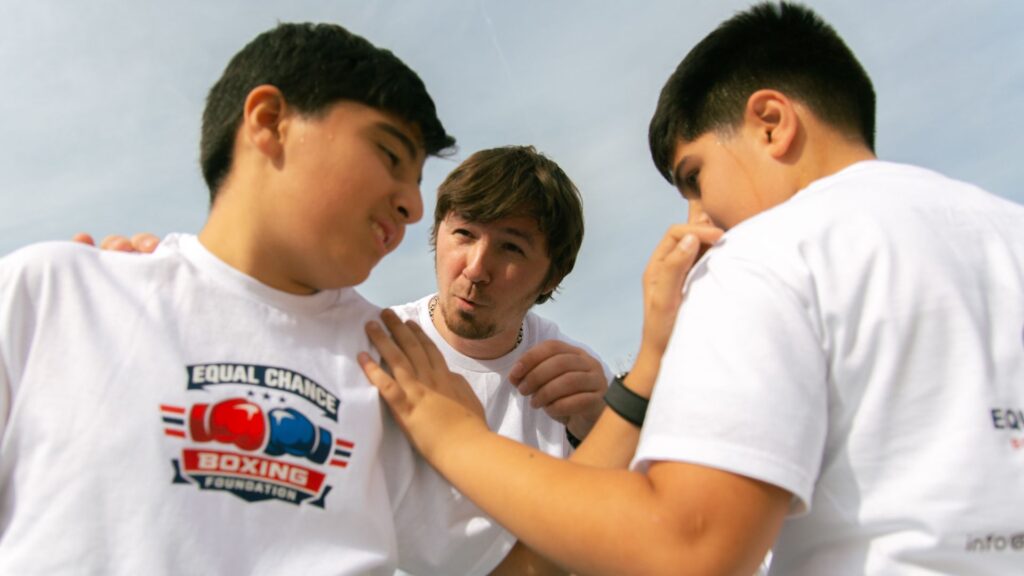
At the Equal Chance Boxing Foundation, we know that many kids feel like they are starting the “fight of life” with one hand tied behind their back. Poverty, lack of equipment, and the stigma of their neighborhood can make a teen feel like they don’t belong in a “professional” environment. This is why we provide every participant with a crisp, clean white t-shirt.
While it may seem like just a piece of clothing, the white t-shirt is a psychological equalizer. When every teen in the park is wearing the same shirt, the visible signs of wealth or poverty disappear. There is no “rich kid” or “poor kid” in the gym; there are only boxers. This sense of belonging is the foundation of mentorship. A teen cannot be mentored if they don’t feel like they belong in the room. By removing the financial barriers to entry, we tell the teenager: “Your potential is not determined by your zip code. You have an equal chance to be great here.”
To keep this “Equal Chance” alive, we rely on the community to get involved and support the infrastructure that makes this mentorship possible. Without the gear, the shirts, and the safe spaces, the “corner” ceases to exist.
The Ripple Effect: From the Ring to the Real World
The goal of the Equal Chance mentorship model is not to create professional prize-fighters. The goal is to create resilient human beings. The “Psychology of the Corner” is a skill that the teen eventually learns to perform for themselves. This is called self-regulation. When a former student of ours is faced with a high-pressure situation in a job interview or a difficult exam, they can mentally “step into their corner.” They can hear their mentor’s voice telling them to breathe, to adjust their stance, and to stay focused. They have learned that they don’t have to react impulsively to every “punch” life throws. They have the discipline to pause, reset, and counter-attack with strategy. This is the long-term ROI of mentorship. We are not just helping them survive a round in the gym; we are giving them a mental toolkit for life.
Why Your Support Creates the “Corner”
Every mentor needs a platform, and every platform needs resources. The Equal Chance Boxing Foundation operates on the front lines of youth development, but we cannot do it without a “corner” of our own. Our donors and supporters are the corner-men for our foundation.
When you DONATE TO EQUAL CHANCE TODAY, you are providing more than just gloves and mouthguards. You are providing the 60 seconds of peace that a teenager needs to keep fighting. You are funding the mentors who stay late to talk to a kid who has nowhere else to go. You are ensuring that when a young person in our community feels like they are on the ropes, they have a place to turn where someone is waiting with a stool, a bottle of water, and an unwavering belief in their potential.
The Bell is About to Ring
Adolescence is a short, intense “round” in the story of a person’s life. It is the time when the most damage can be done, but it is also the time when the most growth can occur. We cannot stop the world from throwing punches at our youth, but we can make sure they don’t have to face them alone.
Every teen needs a mentor. Every teen needs a corner. Join us in making sure that no child in our community has to fight their battles in isolation. Whether you choose to volunteer, spread the word, or provide financial support, you are helping us build a world where every young person has the strength to stand up, the wisdom to stay calm, and a team in their corner cheering them on to victory.
Questions?
We’ve got answers.
In boxing, the corner is the only place of rest and clarity amidst a struggle. For a teen, having a mentor in their “corner” means having a trusted advisor who remains calm while the world feels chaotic. It’s a psychological safety net that allows them to take risks and grow, knowing they have a dedicated support system to help them reset, breathe, and strategize during life’s “rounds.”
The relationship is built on shared effort rather than lectures. A coach is “in the trenches” with the athlete, earning their respect through sweat and consistency. This creates a “side-by-side” mentorship where the teen feels seen as an individual. Guidance is more easily accepted because it comes from someone who has witnessed their hard work and understands their specific struggles first-hand.
A mentor provides a positive “anchor identity.” When a teen identifies as a student of a respected coach, they gain a sense of belonging that isn’t dependent on their peer group. This newfound self-worth gives them the internal strength to say “no” to negative influences, as they are more focused on protecting the progress and respect they’ve built within the gym community.
Yes, that is the ultimate goal. By learning to “listen to their corner” when they are tired or frustrated in the ring, teens are actually practicing executive function and coachability. They learn to pause, take in feedback, and adjust their actions. A mentor helps them realize that seeking advice is a sign of strength, empowering them to apply that same strategic thinking to academic challenges and family relationships.