
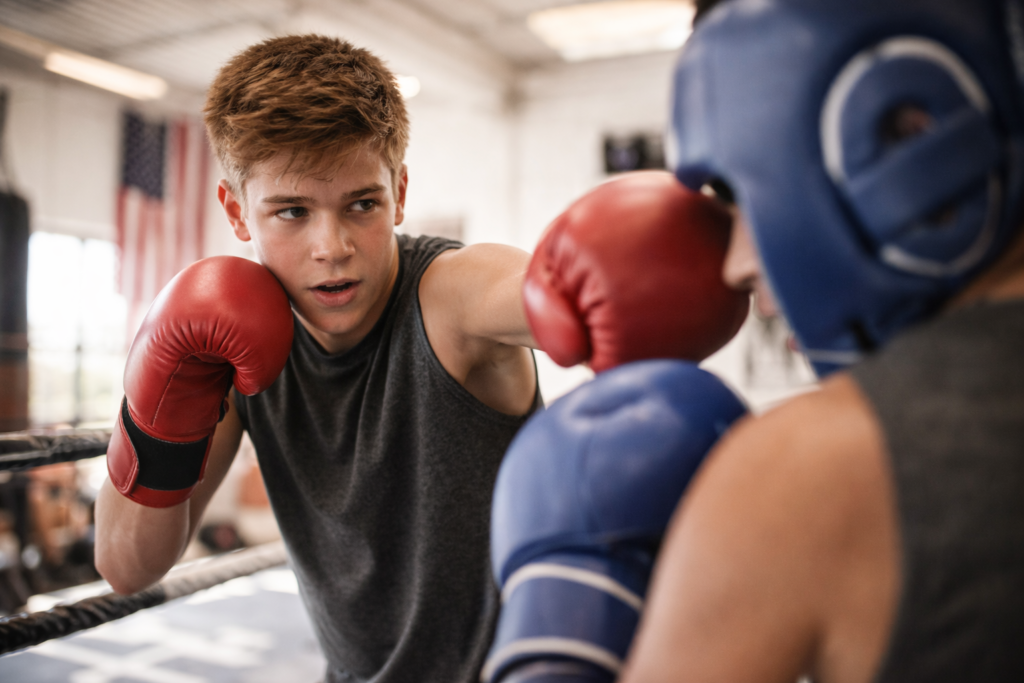
There is a universal, primal sensation that every single fighter experiences when they approach the canvas for the very first time. It does not matter if you are a seasoned athlete crossing over from another sport, or a quiet teenager who has never thrown a punch in their life. As you step up to the apron and grip the thick, taut ropes to pull yourself through, the world suddenly narrows. Your mouth goes dry, your heartbeat thrums in your ears, and a heavy, suffocating blanket of anxiety settles over your chest. It is pure, unadulterated fear.
In a society that constantly tells young people to avoid discomfort, to seek safety, and to run away from confrontation, stepping into a boxing ring is an act of profound, counter-cultural rebellion. At the Equal Chance Boxing Foundation, we do not try to convince our youth that boxing isn’t scary. We tell them the truth: it is terrifying, and that is exactly why they need to do it. In this deep-dive article, we are going to unpack the intense psychology and physiology of overcoming fear. We will explore how the terrifying threshold of the boxing ring serves as the ultimate crucible for adolescent character development, and how teaching a teenager to face another opponent in the ring translates directly into teaching them how to face the daunting challenges of real life.

The Anatomy of the “Adrenaline Dump”: Understanding Fear
To help a teenager conquer their fear, we must first demystify it. Fear is not a character flaw. It is not a sign of weakness, cowardice, or a lack of potential. Fear is a strictly biological mechanism, designed over millions of years of human evolution to keep us alive.
When a young person anticipates stepping into the ring to spar, their brain perceives a physical threat. The amygdala sounds the alarm, triggering the classic “fight-or-flight” response.
This triggers what combat sports athletes call the “adrenaline dump.” The adrenal glands flood the bloodstream with cortisol and epinephrine. The body pulls blood away from the digestive tract (causing that “butterflies in the stomach” feeling) and pumps it rapidly into the major muscle groups. The teenager’s hands might shake, their breathing becomes shallow, and their legs may feel like lead.
Many teenagers, especially those who already struggle with anxiety, interpret these intense physical sensations as a signal to quit. They think, “I am shaking; therefore, I am not cut out for this.” Our mentors step in right at this critical junction to rewrite the narrative. We teach our students that shaking hands and a racing heart are not signs of failure; they are signs of readiness. We explain that their body is simply turning the engine on, priming the muscles with oxygen and energy to perform at their absolute peak. By changing the label from “panic” to “preparation,” we strip the fear of its paralyzing power.
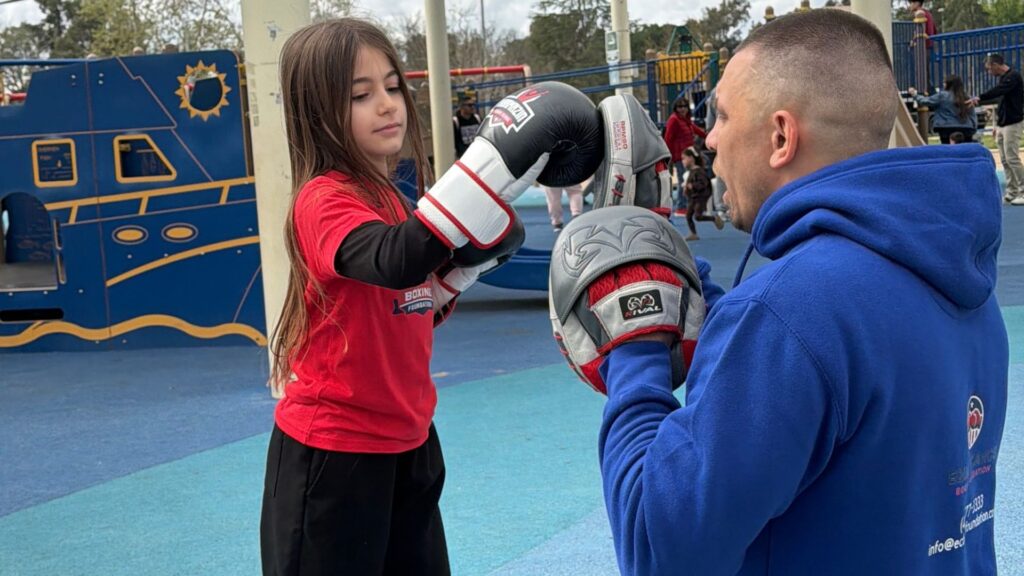
The Sanctuary of Preparation: You Do Not Step In Alone
A common misconception about boxing is that we throw beginners into the fire to see if they can survive. Nothing could be further from the truth. The courage required to step through the ropes is not summoned out of thin air on sparring day; it is painstakingly built, drop by drop, over weeks of rigorous, unglamorous preparation.
Before a student in our youth boxing program is ever allowed to face a live opponent, they spend countless hours perfecting their foundation. They learn the exact biomechanics of a defensive stance. They learn how to keep their chin tucked, their elbows tight to their ribs, and their eyes locked onto their target.
This rigorous repetition serves a vital psychological purpose. When the brain is under the extreme stress of fear, it cannot process complex new information; it defaults to its lowest level of ingrained training. We drill the basic defensive maneuvers so relentlessly that they become muscle memory. When that teenager finally steps into the ring and the adrenaline spikes, they don’t have to think about how to protect themselves—their body simply does it. True confidence in the ring is not the absence of fear; it is the absolute trust in your own preparation. ## The Threshold: Crossing the Ropes and Leaving the World Behind
There is a powerful psychological shift that occurs the moment a teenager actually steps through the ropes. For many of the youth we serve, their daily lives outside the gym are chaotic. They are navigating neighborhood politics, academic pressures, and sometimes unstable home environments. They carry a massive, invisible backpack of stress everywhere they go.
The boxing ring is a bounded, sacred space. It is a 20-by-20-foot square where the rules are absolute, the environment is highly controlled, and the outside world ceases to exist. When a teenager steps through those ropes wearing their white Equal Chance t-shirt, they are forced to drop the heavy backpack of their outside life. You cannot worry about tomorrow’s math test or a social media rumor when someone is standing across from you with a pair of gloves.
The ring forces radical presence. It demands 100% of their cognitive and physical focus. For an anxious or hyperactive teenager, this intense, singular focus is incredibly liberating. The fear of the unknown is suddenly replaced by the hyper-clarity of the present moment. They realize that inside this square, they are in control of their own destiny.

The First Exchange: Shattering the Illusion of Fragility
The most terrifying moment of a fighter’s life is not the fight itself; it is the anticipation in the locker room. The imagination is always far worse than reality. When the bell rings and the teenager steps forward, the fear is at its absolute peak.
And then, the first punch lands.
Whether they throw a jab that connects with their opponent’s guard, or they take a glancing blow to their own headgear, the illusion shatters. The teenager realizes something profound: “I got hit, and I am still standing.” They discover that they are not made of glass. The intense dread leading up to the moment evaporates, instantly replaced by the flow state of the sport.
This is the exact moment where resilience is born. In our open-air community training sessions, we watch this metamorphosis happen in real-time. We see a timid, hesitant kid take a light punch during a controlled sparring drill, blink hard, and then something clicks in their eyes. They bite down on their mouthpiece, plant their feet, and throw a combination back. They have crossed the bridge from prey to predator. They have proven to themselves that they can absorb an impact, process the pain, and continue moving forward. The Ultimate ROI: Translating Ring Courage to Real Life
If overcoming fear only applied to the sport of boxing, our foundation would just be a hobby club. But the neurobiology of courage is universal. The part of the brain that learns how to conquer the fear of physical confrontation is the exact same part of the brain that governs social, academic, and professional courage.
When a teenager learns that they can walk up the steps, climb through the ropes, and face another human being in combat, every other obstacle in their life suddenly shrinks in comparison.
- The fear of raising their hand in a difficult class? It pales in comparison to the fear of a heavy sparring session.
- The anxiety of a high-pressure job interview? They know how to regulate their breathing and control their adrenaline because they’ve done it in the corner.
- The pressure to follow the wrong crowd? They have developed the physical and mental posture to stand their ground and say no.
We are actively rewiring their baseline for what is possible. By helping them conquer the most visceral, primal fear imaginable, we are granting them the psychological armor they need to take bold, ambitious risks in their future careers and relationships.
Be the Catalyst for Courage: We Cannot Do It Alone
It takes an entire ecosystem of support to create the safe, structured environment necessary for a teenager to voluntarily face their fears. This process is not accidental; it is a meticulously planned operation that requires resources at every level. It requires properly fitted, high-quality headgear to ensure they are physically safe when they take that first hit, and it requires expertly trained, deeply empathetic coaches who know how to talk them through the intense physiological adrenaline dump without letting them spiral into panic.
At the Equal Chance Boxing Foundation, we provide the physical space, the professional heavy bags, and the clean white t-shirts that signify to every child that they belong to a team that believes in them. However, we cannot sustain this crucible of character development in isolation. Building a resilient generation requires a community that is willing to invest in the “unseen” costs of transformation—from insurance and equipment maintenance to the permits required for our inclusive community training sessions in the park.
Why Your Support is the Foundation of Their Strength
If you believe that our youth need more emotional resilience, more physical courage, and more guided mentorship, we invite you to get involved with our movement today. We are not just teaching kids how to punch; we are providing a life-saving alternative to the streets and a constructive outlet for the anxieties of modern adolescence.
When you make the decision to DONATE TO EQUAL CHANCE TODAY, you are directly funding a teenager’s breakthrough moment. Your contribution is the reason a shy fourteen-year-old decides to stand tall instead of shrinking back.
- You are buying the gloves that protect their hands when they finally decide to fight back against their own self-doubt.
- You are funding the safe, brightly lit ring where they learn that failure is just a data point, not a destination.
- You are placing a mentor in their corner—someone who will look them in the eye and remind them exactly how strong they truly are when the world tells them otherwise.
Join the Corner of the Next Champion
Every dollar donated is a direct investment in the safety and sanity of our neighborhood. By providing these resources free of charge, we remove the final barrier between a struggling teen and their potential. We ensure that financial hardship never stands in the way of a child learning to conquer their fear.
The bell is about to ring for the next round. Our parks are filling up with kids who are ready to work, but we need the gear and the staff to meet the demand. Be the “corner-man” for a young person who has no one else to turn to. Help us guarantee that every child who walks through our ropes receives an equal chance to fight for a better future.
Questions?
We’ve got answers.
Absolutely. In fact, if you aren’t a little nervous, you aren’t paying attention. Fear is simply the body’s way of preparing for a challenge. We teach our students that courage isn’t the absence of fear, but the decision that something else—like personal growth or self-discovery—is more important than the discomfort of the moment.
Through “stress inoculation.” By repeatedly practicing drills in a controlled environment, we teach the nervous system to remain calm under pressure. You learn to control your breathing and maintain your technique even when your heart rate is high. This process eventually turns that initial “fight or flight” panic into focused, productive energy.
Every great fighter once had their first day. Our gym culture is built on mutual respect, not judgment. We ensure that your first experience in the ring is about acclimation and learning, not competition. We create a “fail-safe” environment where the focus is on effort, allowing you to build confidence at your own pace without the pressure of perfection.
Once you’ve faced a physical challenge as direct as stepping into the ring, other “scary” tasks—like public speaking or difficult conversations—begin to feel much more manageable. You develop a “mental blueprint” for overcoming obstacles, proving to yourself that you can handle discomfort and emerge stronger on the other side.