As a parent, your primary instinct is protection. You want to shield your child from physical harm while simultaneously equipping them with the resilience, discipline, and confidence they need to navigate an increasingly complex world. When you notice your child struggling with focus, dealing with bullying, or showing an excess of unchanneled energy, you naturally look for sports that build confidence in kids.
Often, the search leads to combat sports. The mental and physical benefits of boxing are undeniable—it forges unshakeable self-esteem, elite physical conditioning, and profound emotional control. Yet, the moment the idea surfaces, a paralyzing wave of parental anxiety follows.
You find yourself asking the most critical question: At what age can a child start boxing safely? Is their brain developed enough? Will they get hurt? Am I putting them in a dangerous environment too soon?
These are not just valid questions; they are the exact questions a responsible parent should be asking. At the Equal Chance Boxing Foundation, we engage with these concerns every single day. We understand that before a child can learn how to throw a jab, their parents must feel absolute, unwavering trust in the safety of the program.
In this comprehensive pillar guide, we will decode the physical and psychological readiness of children across different age groups. We will explain our uncompromising, “brain-first” safety protocols, explore how our founder and professional boxer Ivan Redkach tailors his mentorship to different developmental stages, and prove why starting boxing at the right age, in the right environment, is one of the greatest investments you can make in your child’s future.
The Short Answer: Redefining “Boxing” for Youth
When asking at what age can a child start boxing safely, parents often picture a chaotic ring with two kids aggressively swinging at each other. If this is the definition of boxing, the answer is never.
However, professional youth athletic development looks entirely different. Safe boxing training for kids is completely non-contact in the beginning. It is entirely focused on biomechanics, cardiovascular health, and cognitive development.
Generally, children can begin non-contact boxing training as early as 7 to 8 years old. But readiness is not just about a number on a birth certificate; it is about matching the training curriculum to the child’s specific developmental phase.
Age-by-Age Breakdown: When and How to Start
To ensure absolute safety and maximum psychological benefit, a trustworthy gym will divide its training approach into distinct age categories.
Ages 7 to 10: The Foundation Phase
At this age, a child’s brain is highly plastic, and their motor skills are still rapidly developing. The focus is entirely on fun, coordination, and following instructions.
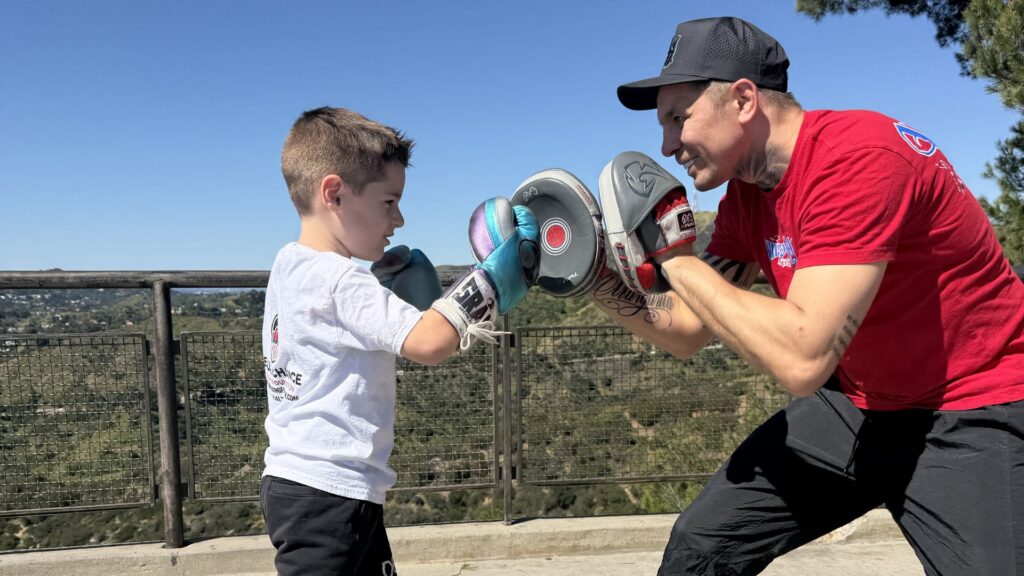
- The Curriculum: Training consists of jumping rope, basic footwork drills, shadowboxing, and hitting a soft heavy bag or focus mitts.
- Zero Contact: There is absolutely no sparring or head contact at this age. The goal is strictly non-violent boxing training for youth.
- The Benefits: Children develop incredible hand-eye coordination, balance, and the ability to focus on a single task for extended periods. They learn the foundational gym etiquette of listening to a coach and respecting their peers.
Ages 11 to 14: The Discipline and Restraint Phase
Adolescence introduces a wave of hormonal changes, academic stress, and social anxiety. This is the age where emotional regulation becomes the primary focus.
- The Curriculum: The technical demands increase significantly. Athletes learn complex defensive maneuvers—slipping, rolling, and parrying. Conditioning becomes more rigorous to help burn off the excess cortisol associated with teenage anxiety.
- Introduction to Defense: This is the ideal age for boxing for anger management in kids. They learn that anger destroys technique, and they must remain calm under physical stress.
- Strictly Supervised Partner Drills: Advanced 13- or 14-year-olds may begin highly controlled, low-impact defensive partner drills (e.g., one partner throws a slow, predetermined jab to the shoulder while the other practices slipping).
Ages 15+: The Advanced Mentorship Phase
By late adolescence, athletes have the physical maturity and cognitive understanding to grasp the real consequences of the sport.
- The Curriculum: High-level cardiovascular conditioning, advanced fight psychology, and intense physical discipline.
- Supervised Sparring: If, and only if, an athlete has demonstrated absolute technical mastery, emotional maturity, and defensive responsibility, they may be invited to spar. This is conducted under rigorous youth boxing safety guidelines, using elite 16oz gloves and professional headgear, with a coach closely monitoring every single interaction.

Psychological Readiness: The Invisible Metric
While physical age is a helpful guideline, true readiness depends heavily on a child’s psychological maturity. A safe coach evaluates an athlete’s mind just as rigorously as their body.
Attention Span and Respect for Authority
Boxing is a sport of extreme focus. If a child cannot listen to instructions or refuses to respect the coach’s boundaries, they are a danger to themselves and others. Before a child is allowed to progress in our facility, they must demonstrate the ability to follow complex directions without distraction. This builds the fundamental discipline required for a resilient life.
Emotional Regulation vs. Aggression
Parents often fear that putting an angry child in a gym will make them violent. The reality is that an unstructured environment breeds violence; a structured boxing ring breeds peace. We look for a child’s ability to process frustration. When they miss a combination on the mitts, do they throw a tantrum, or do they take a deep breath and try again? This is the core of how boxing builds confidence in children and teenagers—we teach them to overcome their own emotional volatility.

Authentic Mentorship: The Ivan Redkach Standard
Determining at what age can a child start boxing safely relies entirely on who is teaching them. A 10-year-old in a toxic gym is in danger; a 10-year-old under the guidance of a true mentor is in a sanctuary.
At the Equal Chance Boxing Foundation, our safety protocols and mentorship philosophies are spearheaded by our founder and Head Coach, professional boxer Ivan Redkach.
Lived Experience as the Ultimate Guide
Ivan’s understanding of youth development is not theoretical. He grew up in the rigorous sports boarding schools of Shostka, Ukraine. He understands exactly how a young body and mind adapt to high-level stress because he lived it. Over the course of 350 amateur fights and a journey to the 2008 Olympic Games, Ivan learned that early athletic development must be methodical, patient, and intensely focused on the fundamentals.
Empathy for the Struggling Teen
When Ivan moved to the United States in 2009, he faced predatory management, a severe language barrier, and terrifying financial instability. This background makes him one of the most uniquely qualified positive role models for at-risk youth.
When an anxious 14-year-old walks into our gym, Ivan does not treat them like a fragile child, nor does he treat them like a professional fighter. He treats them with radical, earned empathy. He knows exactly how to adjust his coaching style to fit the developmental age of the athlete standing in front of him, ensuring that every child is pushed to their potential without ever compromising their neurological or emotional safety.
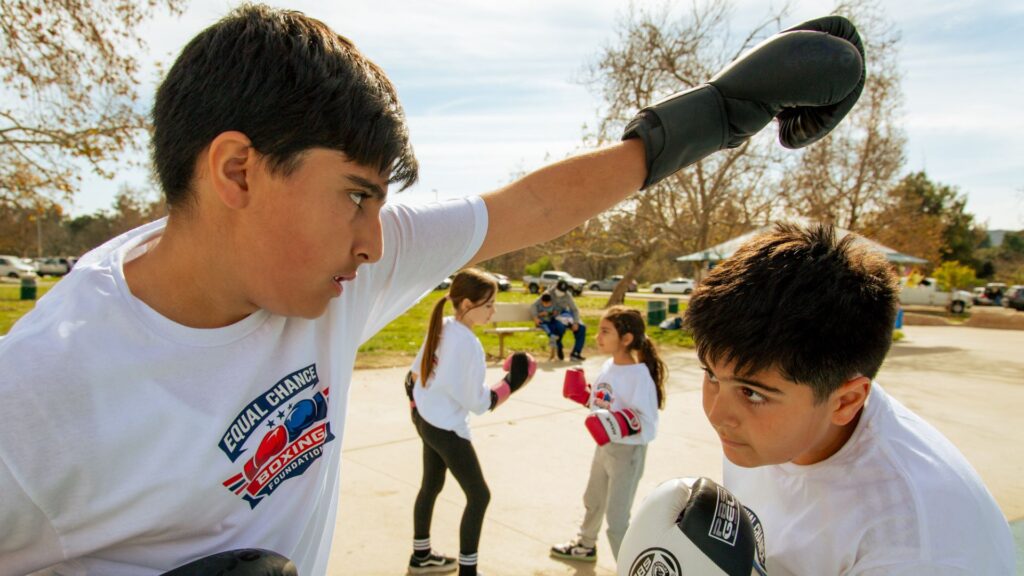
Uncompromising Safety: The “Brain-First” Philosophy
To alleviate the fears of parents asking at what age can a child start boxing safely, we must be completely transparent about our safety protocols.
We operate on a strict “Brain-First” philosophy. Our goal is to build capable, highly educated future adults, not to build youth prize fighters.
- Defense is Mandatory: Our youth athletes spend months—sometimes years—learning how to not get hit before they ever step into a competitive scenario.
- Elite Equipment Only: We do not compromise on gear. Any authorized contact drills are performed with specialized, shock-absorbing equipment designed specifically to protect the developing adolescent brain.
- Zero-Ego Environment: Any athlete who attempts to hurt a peer or act aggressively during a drill is immediately removed. We maintain an ironclad sanctuary of mutual respect.
Breaking the Financial Barrier: Elite Safety Should Be Free
When parents find a program with elite safety standards, professional mentorship, and a pristine facility, they usually encounter a massive financial wall. High-end youth sports programs are notoriously expensive, effectively locking out the underprivileged youth who need this mentorship the most.
The Equal Chance Boxing Foundation refuses to let safety be a luxury. We believe that every parent deserves the peace of mind knowing their child is in a safe, productive environment, regardless of their financial situation.
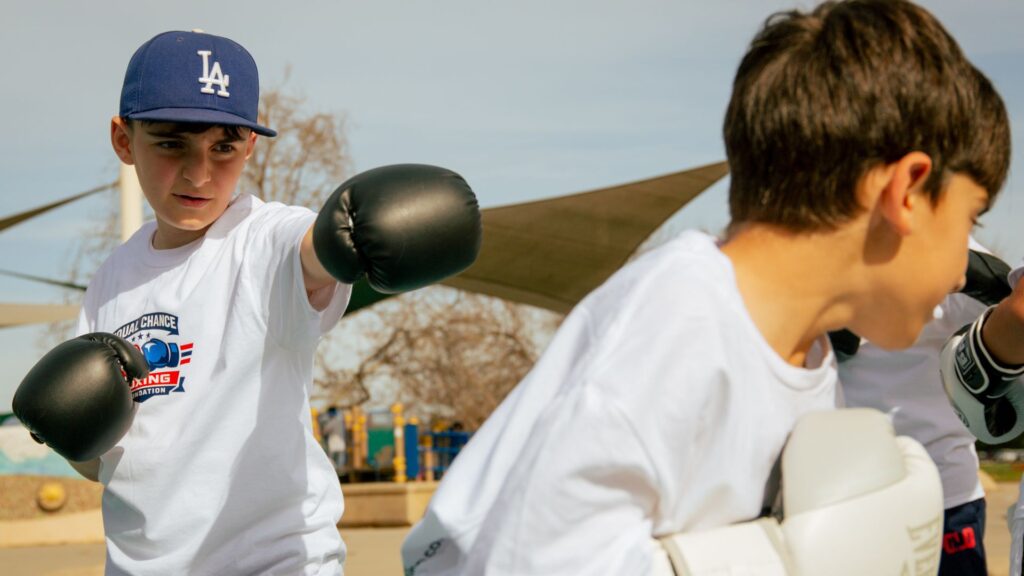
We operate a 100% free sports program for kids in the USA.
- Zero Tuition: There are no monthly fees, no registration costs, and no hidden contracts.
- Professional Gear Provided: We supply all the necessary 16oz gloves, wraps, and protective equipment, ensuring no child trains in unsafe, substandard gear.
If you have been waiting for the right time and the right place to help your child build discipline and confidence safely, that time is now. ENROLL YOUR CHILD IN OUR YOUTH BOXING PROGRAM TODAY
Furthermore, we recognize that commuting to a gym can be impossible for hardworking families. That is why our Community Training initiative brings mobile boxing rings and our elite coaching staff directly to local parks and underserved neighborhoods, ensuring our safe, structured mentorship reaches the youth exactly where they are.
Stand in Their Corner: How You Can Protect the Next Generation
Providing a state-of-the-art facility, elite protective equipment, and the unbroken attention of world-class mentors like Ivan Redkach to hundreds of children—all for absolutely free—is a monumental, daily undertaking.
We can only provide these life-saving low income youth sports programs through the radical generosity of our community.
When you contribute to the Equal Chance Boxing Foundation, you are directly answering a parent’s plea for a safe environment. You are funding the exact equipment, facilities, and outreach required to keep our “brain-first” safety protocols firmly in place.
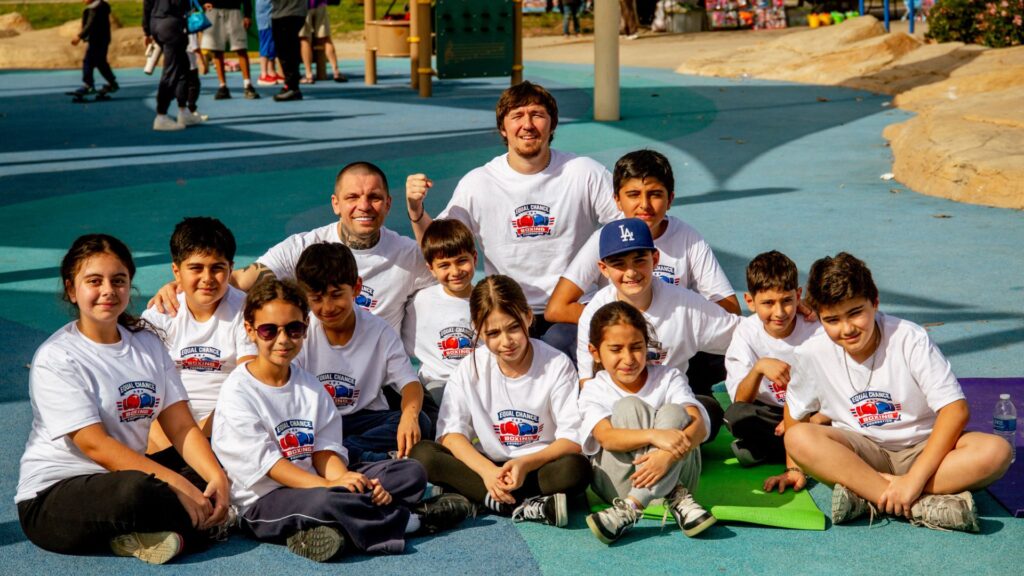
Your vital financial support directly ensures:
- Unrestricted Access: Keeping our developmental programs 100% free for families facing economic hardship.
- Elite Safety Gear: Supplying the high-quality, professional protective equipment that keeps our youth physically safe while they build their mental toughness.
- Street-Level Mentorship: Fueling the vans and equipment necessary to take our safe, structured community training directly into the neighborhoods that need it most.
Be the hero in a child’s corner. Help us prove to them that they are worthy of absolute safety and world-class investment. DONATE TO THE EQUAL CHANCE BOXING FOUNDATION
The Right Age is the Age They Need a Mentor
So, at what age can a child start boxing safely? Physically, they can begin learning the non-contact fundamentals as early as 7 years old. But psychologically, the right age is the exact moment they need a constructive outlet, an authentic mentor, and a safe place to build their resilience.
Boxing, when taught by professionals who prioritize the brain over the scorecard, is a masterclass in human development. Ivan Redkach and the coaching staff at the Equal Chance Boxing Foundation are committed to providing the safest, most supportive, and structurally sound environment possible for your child.
We are here to help you guide them through the chaos of growing up, providing them with the unshakeable confidence and discipline they need to face their future head-on.
Questions?
We’ve got answers.
For non-contact training—focusing on coordination, stance, and basic movement—the ideal age is between 6 and 8 years old. At this stage, the brain is like a sponge for “motor patterns.” We don’t teach them to fight; we teach them how to move their bodies with precision. This early start builds a foundation of balance and athletic confidence that serves them in every sport they will ever play.
Between ages 8 and 11, children develop the focus required for technical boxing. This is when they start working on heavy bags and mitts with a coach. The training remains strictly non-contact or “shadow-boxing” based. The goal here is “technical mastery”—learning the angles, the defense, and the rhythm. This stage ensures that when they do eventually reach an age for contact, their defensive reflexes are already second nature.
According to USA Boxing regulations, children can begin competing in sanctioned amateur bouts starting at age 8, but most coaches recommend waiting until 10 or 12 depending on the child’s maturity. Competitive boxing is strictly regulated by age and weight classes to ensure safety. At the Equal Chance Boxing Foundation, we only clear a student for competition when they demonstrate both physical skill and the emotional maturity to handle the pressure of the ring.
Never. In fact, starting as a teenager (ages 13-17) can be incredibly effective because the athlete has better body awareness and can grasp complex strategies faster. Many legendary champions didn’t pick up a pair of gloves until their mid-teens. Whether a teen wants to compete or just find a productive outlet for stress, boxing provides the discipline and community they need during these formative years.