

Picture this familiar scenario: A teenager is sitting on the edge of their bed, staring at their phone, feeling entirely overwhelmed by the social pressures of high school, the anxiety of their future, or a recent failure. A well-meaning adult steps into the room and offers the classic words of wisdom: “You just need to believe in yourself. Don’t worry about what other people think. You have so much potential.”
The adult means well. But to the teenager, those words evaporate the second they hit the air.
We live in a culture obsessed with self-help slogans, positive affirmations, and unsolicited advice. But if you are a young adult navigating the brutal, high-speed reality of today’s world, you already know a fundamental truth: You cannot think your way into self-confidence. True, unshakeable self-esteem isn’t inherited through lectures, podcasts, or perfectly timed parental advice. It is forged in the fires of physical action. It is built by confronting a challenge, failing, sweating, trying again, and eventually realizing your own undeniable strength.
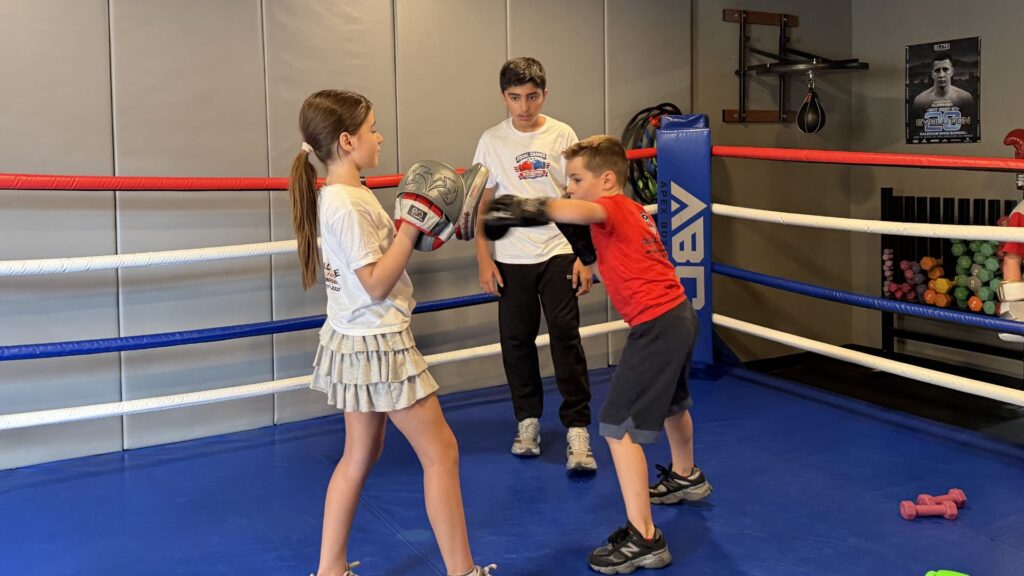
Whether you are a teenager tired of feeling stuck in your own head, or a parent searching for a real-world intervention that actually works, this comprehensive guide explores why stepping into the arena—specifically, the boxing ring—is the ultimate catalyst for human transformation.
The Breakdown: Why Words Bounce Off
To understand why action is the only reliable builder of confidence, we first need to dissect why advice fails. The modern youth experience is radically different from previous generations. Teenagers are not suffering from a lack of information; they are suffering from an overload of it.
The “Evidence Gap” in the Teenage Brain
The human brain is an incredibly logical machine when it comes to self-preservation and social hierarchy. When you tell a teenager that they are strong, capable, or resilient, their brain immediately searches its internal database for evidence to support that claim.
If they have spent the last year avoiding challenges, quitting when things get hard, or hiding from social judgment, their brain will find zero evidence of strength. Therefore, it rejects the compliment as a lie. Confidence requires proof. Without the physical evidence of having overcome a struggle, “believing in yourself” feels like a delusion.
[ecbf_donate_banner_1]
The Paralysis of Overthinking
Anxiety lives in the future; depression lives in the past. When young people are inactive, their minds become echo chambers of “what-ifs.”
- What if I fail this test? * What if I look stupid trying this new sport? * What if I never figure out what I am supposed to do with my life?
Advice usually asks a teenager to change their thoughts using more thoughts. This only deepens the mental quicksand. Action, on the other hand, forces the mind to snap to the present moment. You cannot worry about tomorrow’s math test when you are trying to dodge a left jab today.
The Science of Sweat: How Action Rewires the Mind
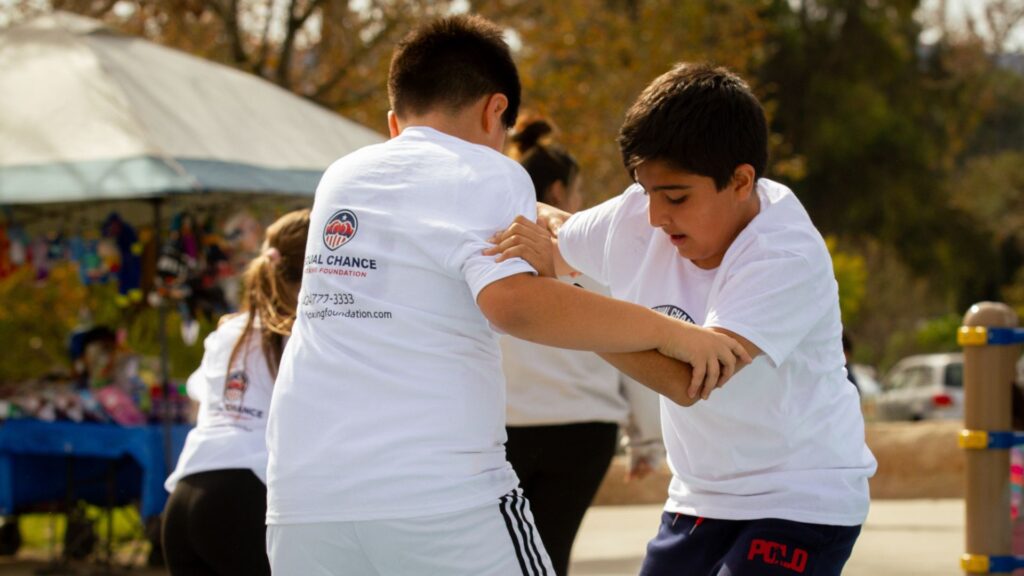
Taking physical action does not just distract the mind; it fundamentally alters brain chemistry. When a teenager steps away from their digital screens and engages in a high-intensity, disciplined environment, a biological transformation occurs.
Earning the Dopamine
Today’s youth are drowning in “cheap” dopamine—the instant, unearned chemical hits provided by scrolling through social media or playing video games. This type of dopamine spikes quickly and crashes hard, leaving them feeling empty and unmotivated.
Physical action—like hitting a heavy bag, mastering footwork, or completing an exhausting workout—provides “earned” dopamine. This is the neurochemical reward for surviving physical stress and achieving a difficult micro-goal. Earned dopamine builds a permanent foundation of self-worth because the teenager knows exactly what they did to get it.
The Eradication of “Fake It Till You Make It”
For years, people have touted the phrase “fake it till you make it” as a valid strategy for confidence. But teenagers have highly tuned radars for inauthenticity. They know when they are faking it, and the imposter syndrome that follows is exhausting.
In a boxing gym, there is no faking it. You cannot pretend to have cardiovascular endurance. You cannot bluff a perfect sparring session. You have to face the absolute, raw reality of your current skill level. And while that might sound terrifying, it is actually incredibly liberating. Once you strip away the pressure to be perfect, you are free to simply be a beginner and put in the work.
The Boxing Ring: The Ultimate Proving Ground
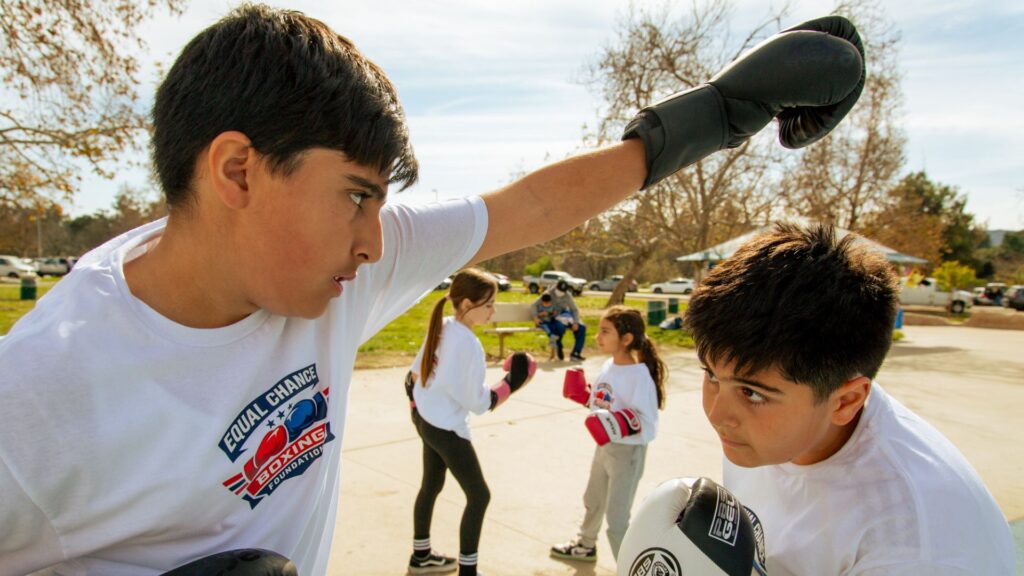
Of all the physical disciplines available to a young person, the “Sweet Science” of boxing offers the most direct, unfiltered path to self-belief. It is a sport that strips away the noise and leaves you face-to-face with your own willpower.
Normalizing Failure as a Stepping Stone
In school and on social media, failure is often treated as a fatal blow to your reputation. In the boxing gym, failure is the curriculum. When a teenager first puts on gloves, they will feel awkward. They will miss punches, lose their breath, and stumble over their own feet. But as they look around the gym, they will see advanced athletes doing the exact same thing while trying to learn more complex combinations.
Boxing normalizes the struggle. It teaches youth that looking foolish, getting tired, and making mistakes are not signs of weakness—they are the mandatory requirements for getting stronger.
Physical Resilience Breeds Mental Armor
The physical exertion of boxing mimics the somatic symptoms of anxiety. Your heart races, your breathing gets shallow, and adrenaline floods your system.
By repeatedly exposing themselves to this physical stress in a controlled, safe environment, teenagers learn to regulate their emotions under fire. When a teen who boxes eventually faces a stressful situation at school or in their personal life, their nervous system doesn’t panic. They have already trained their mind to stay calm, keep their eyes open, and breathe through the adrenaline.
The Standard: Mentorship Through Shared Struggle
To truly embrace action over advice, a teenager needs the right environment and, more importantly, the right mentors. They do not need more lecturers; they need leaders who are willing to sweat alongside them.
At the Equal Chance Boxing Foundation, our methodology is anchored by the real-world experience of our Head Coach and professional boxer, .
Leading from the Front
Did not build his career on theories or motivational speeches. He built his life through relentless, unforgiving action. Moving from the rigorous sports boarding schools of Ukraine to the bright lights of professional boxing arenas, knows what it takes to quiet the doubts in your own head.
His approach to youth mentorship is profound precisely because it relies so heavily on action. When a teenager walks into the ECBF gym carrying the heavy weight of social pressure or insecurity, doesn’t sit them down for a long philosophical chat. He wraps their hands, points them to the heavy bag, and tells them to give him three hard rounds.
[ecbf_donate_banner_4]
Action as the Great Equalizer
Teaches our youth that the heavy bag does not care about your social status, your grades, your background, or how many followers you have. It only respects work.
Under guidance, teenagers learn that respect is earned through discipline and consistency. He pushes them past the point where they thought they would quit, effectively destroying their self-imposed limitations. When a young athlete realizes they can survive an intense training camp curated by a professional fighter, the everyday anxieties of teenage life suddenly feel entirely manageable.
A Direct Challenge to the Youth: Step Out of the Echo Chamber
If you are a young adult reading this, let’s be honest. You probably know exactly what it feels like to be paralyzed by overthinking. You know the frustration of wanting to be confident but feeling trapped by the fear of looking awkward or failing in front of your peers.
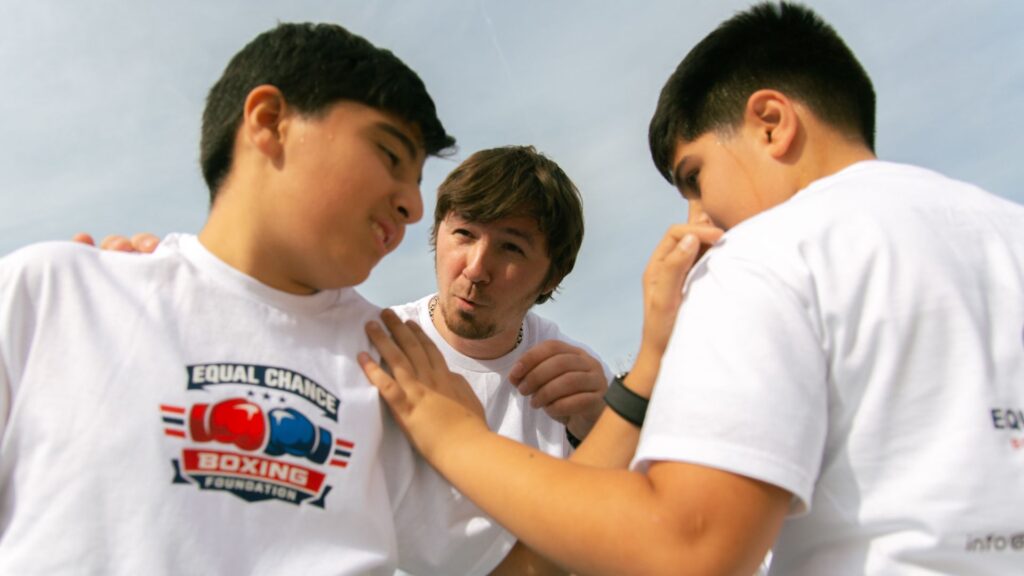
You have heard enough advice to last a lifetime. It is time to try something else.
- Stop waiting to “feel” ready. Action must come first. The feeling of confidence is the reward for taking action, not the prerequisite.
- Embrace the awkwardness. The person you want to become is waiting on the other side of the discomfort you are avoiding right now.
- Build undeniable proof. Give your brain a reason to believe in you.
You do not need to fight this battle alone, and you do not need money to start. The Equal Chance Boxing Foundation exists to give you the platform to prove your strength to yourself. We provide the facility, the professional gear, and the elite coaching entirely for free.
It is time to get off the sidelines. Step into an environment where your effort is the only currency that matters.
TAKE ACTION TODAY: Join our Youth Boxing Program and start building your armor.
If getting to the gym is a challenge, we bring the discipline and the training to you. Find your strength in your own neighborhood with our specialized outreach sessions.
TRAIN WHERE YOU ARE: Explore our Community Training options.
To the Parents and Mentors: The Architects of Action
If you are a parent watching your child struggle with their confidence, your instinct is to protect them, comfort them, and offer advice. While your love is essential, your strategy might need an adjustment.
Shifting from Telling to Facilitating
You cannot talk your teenager into having high self-esteem. But you can be the architect of the environment that forces them to build it.
- Stop rescuing them from struggle. When they face a difficult physical or mental challenge in a safe environment like a gym, let them fail. Let them figure out how to get back up. That is where confidence is born.
- Praise the action, not the outcome. Stop focusing on whether they are “naturally gifted” and start praising the fact that they showed up when they were tired. Reward the grit, not the talent.
- Provide the platform. Your job is to open the door. Show them the gym, introduce them to the coaches, and then step back and let them do the heavy lifting.
Fueling the Transformation: How You Can Build the Arena
Transforming a generation of anxious, stressed-out teenagers into resilient, confident leaders requires more than just goodwill. It requires a dedicated, state-of-the-art environment.
The Equal Chance Boxing Foundation operates on a radical premise: World-class mentorship and elite youth sports should never have a price tag. We absorb 100% of the costs—from professional 16oz gloves and headgear to the operation of the facility—so that financial barriers never stand between a youth and their potential.
But we cannot sustain this vital mission without the strength of our community. When you look at the youth mental health crisis, it is easy to feel helpless. But you have the direct power to fund the solution.
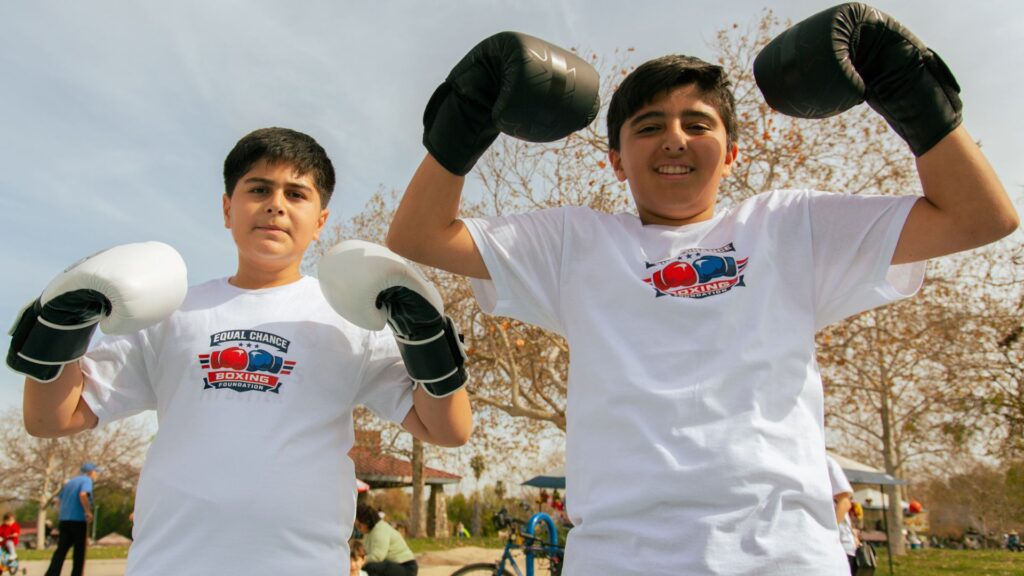
For the Individual Believers
Your financial contribution does not just buy boxing gloves; it buys a safe haven. It funds the exact moment a teenager realizes they are stronger than they ever imagined. Be the vital support system in a young person’s corner.
BE THE CATALYST FOR CHANGE: Donate to ECBF today.
For the Visionary Businesses
Corporate leadership is about more than profit; it is about community impact. By partnering with ECBF, your business stands on the front lines of youth development, mental health advocacy, and community resilience. Align your brand with the raw, authentic power of action-based mentorship.
LEAD BY EXAMPLE: Become one of our Corporate Sponsors.
The Final Bell
Confidence is not a secret code you can decipher by reading enough articles or listening to enough advice. It is a physical structure you have to build with your own two hands.
The world will always offer you excuses to stay small, stay quiet, and stay comfortable. The digital algorithms will always try to sell you the illusion of effortless perfection. But the boxing ring offers you the ultimate truth: You are capable of enduring far more than you think.
It’s time to stop talking about getting stronger. It’s time to wrap your hands, step into the gym, and let your actions speak for themselves. The bell has rung. It is time to work.
Questions?
We’ve got answers.
Words only go so far. When we tell a teen to “believe in yourself,” it’s just an abstract idea. But when they throw a punch they couldn’t throw yesterday, or push through a grueling training session at the Equal Chance Boxing Foundation, they earn undeniable proof of their own capability. Confidence built on real-world action is permanent, whereas advice often fades when things get hard.
The gym is a mirror. It exposes fear, but it also reveals courage. When a teen faces a challenge head-on—like learning complex footwork or hitting the heavy bag—they realize they can survive discomfort. This physical resilience naturally transforms into mental resilience. They stop doubting their abilities in school or social situations because they know they have already conquered demanding physical challenges.
Teens are naturally skeptical of being lectured by adults. Boxing removes the lecture. Under the guidance of mentors like , there is no preaching—only doing. The heavy bag doesn’t judge, and the jump rope doesn’t nag. The physical challenge demands focus and respect, allowing teens to internalize lessons about discipline and self-worth purely through their own effort and sweat.
Well-meaning advice usually tries to protect teens from failure, but boxing embraces it. Getting tired, missing a block, or losing balance are daily occurrences. By constantly failing and trying again in a safe, structured environment, teens learn that failure isn’t the end—it’s just feedback. When the fear of failure disappears, true, action-based confidence takes its place.